

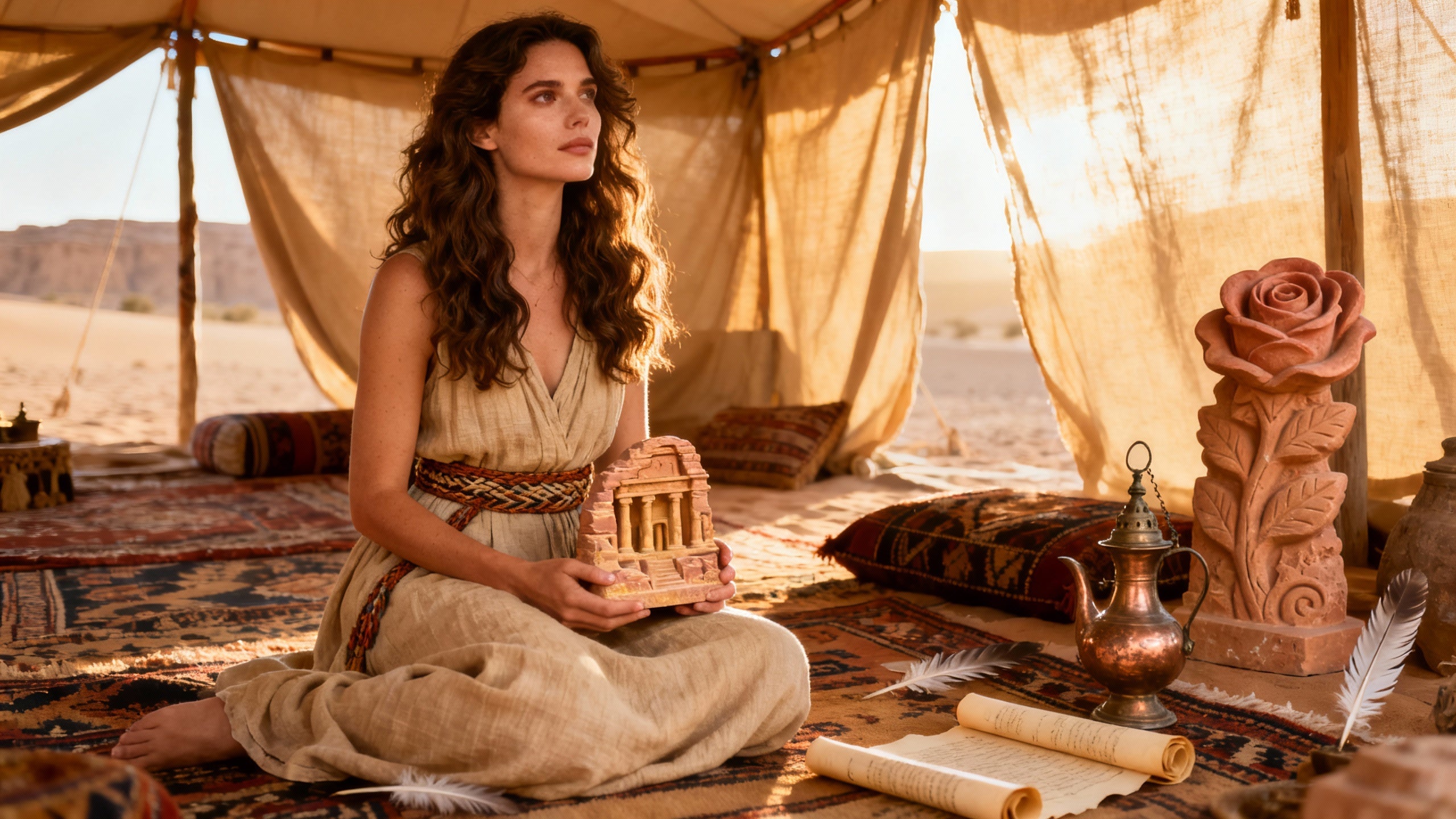
Understanding Jordanian Pride in Customized Petra Artifacts
There is a particular hush that falls over a room when someone unwraps a Petra-inspired gift. The rose-red cliffs, the shadowed Siq, the luminous Treasury all seem to glow for a moment in miniature. As an artful gifting specialist, I have seen Jordanian friends run their fingers over a carved façade or a printed Petra skyline and straighten with quiet pride. These are not just pretty souvenirs. They are small, personal ways of carrying a whole country’s heart in your hands.
In this article, we will explore why Petra touches such a deep chord in Jordan, how its history and architecture shape the meaning of customized artifacts, and how you can choose or commission Petra pieces that feel both beautifully personal and deeply respectful. Along the way, we will lean on archaeological research, conservation work, and heritage studies to ground the emotion in real knowledge, then translate that into warm, practical guidance for gifting.
Petra: The Rose-Red Heart of Jordanian Identity
Petra sits in southern Jordan, carved into rose and copper-colored sandstone cliffs and approached through the narrow gorge known as the Siq. Ancient sources and modern scholarship agree that it was the greatest city of the Nabataeans, a resourceful Arab trading people who controlled luxury caravan routes linking Arabia, Egypt, Syria, and the wider Mediterranean. According to research summaries from EBSCO and National Geographic, those caravans carried frankincense, myrrh, spices, silks, and other high-value goods, and Nabataean leaders funded their city in part through customs duties, with one historical account describing an import tax of around a quarter of the cargo’s value.
By the 1st century AD, Petra had become a flourishing metropolis. Estimates gathered in sources such as Wikipedia, Greek cultural reporting, and long-form historical overviews suggest a population in the tens of thousands, often around 20,000 to 30,000 residents. They were supported by an extraordinary water-management system carved and built into rock: dams, cisterns, rock-cut channels, terracotta pipes, and tunnels that captured rare desert rain and diverted dangerous flash floods. Geo‑archaeological work discussed by researchers in Jordan and by the American Center of Oriental Research shows how the Nabataeans built a roughly 40 ft‑high dam at the head of the Siq and tunneled through the rock to channel floods away from the city. Walking the Siq today, you can still see channels and pipe traces running along the walls.
Culturally, Petra is more than the sum of its engineering. The city’s façades display a stunning fusion of Hellenistic, Near Eastern, and local traditions. The Treasury, Al‑Khazneh, carved at the end of the Siq and widely studied by Smarthistory and architectural historians, rises to about 127 ft high and roughly 82 ft wide, with ornate Corinthian columns, broken pediments, and a central circular tholos. Other great monuments, such as the Monastery (Ad‑Deir), reach about 160 ft high and blend classical motifs with distinctly Nabataean simplifications. Archaeological writing emphasizes that Petra’s rock-cut monuments number in the thousands and that they were not only tombs but also dining halls, dwellings, and theaters carved from the cliffs.
In the modern era, UNESCO inscribed Petra as a World Heritage Site in 1985 and, as travel writers and heritage organizations like UNESCO and KE Adventure Travel often repeat, called it one of the most precious cultural properties of human heritage. In 2007 it was named one of the New Seven Wonders of the World. Tourism briefs note that before the pandemic, annual visitor numbers approached a million, and Petra is consistently described as Jordan’s most valuable national treasure and its greatest tourist attraction. Cultural-heritage research synthesized by MachuPicchu.org goes further, describing Petra as a core symbol of Jordanian national identity, education, tourism, and artistic inspiration, while contemporary Bedouin communities maintain living links to Nabataean heritage through oral traditions and desert knowledge.
When a Jordanian artisan carves, paints, or weaves Petra onto a keepsake, they are not just depicting a famous ruin. They are distilling this whole story of ingenuity, trade, spirituality, and national pride into something that can sit on a shelf or be worn close to the skin.
Petra facet |
Meaning for Jordanians |
Gift inspiration |
Trade crossroads |
A story of connection between Arabia, Africa, Asia, and the Mediterranean, and a reminder of Jordan’s place on historic routes |
Artworks that trace caravan paths or map Petra within wider desert landscapes |
Rock‑cut city |
Proof that their ancestors carved a metropolis from living stone with skill and daring |
Sculptural or printed pieces that emphasize façades, steps, and cliff silhouettes |
A model of survival and creativity in a harsh desert environment |
Designs that highlight channels, dams, and flowing lines to honor water wisdom |
|
Spiritual landscape |
A place of ancient gods, high places, biblical echoes, and later churches |
Contemplative objects with simple rock forms, arches, or quiet interior spaces |

From Rock-Cut Wonder to Handmade Keepsake
To understand Petra‑the‑artifact, it helps to understand Petra‑the‑architecture. Architectural analyses from Parametric Architecture describe Petra as a masterpiece of subtractive, rock-cut design. Instead of stacking blocks or bricks, Nabataean builders removed stone from living cliffs, working from the top down. In this “carved, not built” approach, there was almost no margin for error. Every misplaced blow was carved forever into the face of the mountain.
This subtractive logic shapes the emotional feel of many Petra-inspired pieces. A hand-carved wooden panel that suggests an arch by removing material rather than adding ornament echoes the way the Treasury emerged from sandstone. Parametric Architecture and Smarthistory both emphasize how Petra’s façades mimic free‑standing Greek and Roman temples but are in fact continuous with the cliff. Columns look structural but carry no load; they are sculpted symbolism. When you commission a customized wall piece that suggests columns and pediments in low relief, you are tapping into that same idea of architecture as storytelling, not just construction.
Scholars like those at Smarthistory and Biblical Archaeology Review also point out that Nabataean religious art was often aniconic—that is, it avoided human or animal figures. Deities could be represented as simple rectangular stones called betyls, sometimes carved directly into rock faces. Research compiled by The Lost Coordinates traces the term to Semitic “house of God” and notes that betyls lined routes like the Siq, marking divine presence in abstract form. This has powerful implications for modern artifact design. A minimalist stone or clay block, subtly engraved or left plain, can be truer to Nabataean spirituality than the most detailed figurative sculpture.
Even the geology matters. Geo‑archaeological studies describe Petra’s cliffs as being carved mostly into Umm Ishrin sandstone, roughly 1,000 ft thick, within a broader sandstone group whose layers are tinted by iron oxides, sulfur, and manganese into reds, yellows, and purple‑blues. That is why travel writers and EBSCO’s reference articles lean on the famous description of Petra as a “rose‑red city half as old as time.” When a Jordanian painter or ceramicist layers coral, amber, and wine tones into a custom piece, they are echoing geological time as much as tourist postcards.
In gifting terms, all of this history turns into practical questions. Do you commission a piece that focuses on the heroic façade of the Treasury, honoring Petra as a global icon? Or do you favor an understated, abstract block that references betyls and invites quieter reflection? Do you ask your artist to heighten the colors, leaning into the rose‑and‑gold drama, or to soften them into the dusty hues of evening in the Siq? Each decision is a way of choosing the Petra you want to honor.

Question 1: Which Petra Story Do You Want Your Gift to Tell?
Every customized Petra artifact carries a narrative, whether you realize it or not. The most meaningful gifts choose that story intentionally. Three threads, in particular, resonate strongly with Jordanian pride and are well documented in historical and archaeological sources.
The Trading Metropolis
National Geographic, EBSCO, and travel histories describe Petra as a bustling commercial hub whose influence stretched far beyond Jordan’s current borders. Nabataean traders served as middlemen linking southern Arabia, Africa, and India to Greek and Roman markets. Caravans brought incense, spices, textiles, and luxury goods across arid landscapes, and the city’s leaders enriched Petra through strategic control and taxation of those routes.
A customized gift that leans into this story is perfect for someone whose life has been shaped by journeys, entrepreneurship, or global connections. Imagine a hand‑drawn map artwork that traces ancient caravan paths converging on Petra, then weaves in the recipient’s own travels or family migrations. Or consider jewelry engraved with tiny stylized camel caravans marching beneath a moon that echoes Petra’s desert skies. When you present it, you can share that, as historians note, Petra once linked goods and ideas from as far away as India and the Mediterranean, turning the gift into a conversation about openness and exchange.
The Sacred City in the Rock
Petra is also a layered sacred landscape. The Lost Coordinates documents open‑air high places on surrounding peaks, where sacrifices and rituals took place. Biblical Archaeology Review and EBSCO explain that the city’s earlier name, Selah or Rekem, appears in ancient texts, and Christian tradition ties the broader region to stories of Moses and Aaron. Later, as sources from the American Museum of Natural History recount, Petra’s inhabitants gradually embraced Christianity, building a grand Petra Church and even converting tombs such as the Urn Tomb into churches.
For recipients who are drawn to spiritual journeys, contemplation, or biblical history, a Petra artifact that highlights arches, quiet interiors, or simple standing stones can feel especially poignant. A carved stone or ceramic block that suggests a betyl, perhaps with a small niche for a candle, becomes a gentle homage to the city’s long line of worshippers—without copying any one tradition too literally. When you share it, citing how archaeologists have found these aniconic stone markers along Petra’s paths, you invite the recipient to see their own inner life as part of a much older story of seeking and listening.
The Engineered Oasis
Modern research groups, from geological teams described by The Lost Coordinates to heritage writers at MachuPicchu.org and Timeless Tours, are consistently amazed by Petra’s water systems. In an environment prone to flash floods and drought, Nabataean engineers cut channels along cliff faces, built dams and tunnels, and created hundreds of cisterns and reservoirs. One early dam near the Siq, reconstructed from archaeological evidence, stood roughly 40 ft high; the gorge around it can rise over 200 ft. That is the kind of scale you feel when you step into the shadow of Petra’s cliffs.
For a gift tailored to someone who admires problem‑solving and resilience, consider a design that foregrounds these water lines. A hand‑thrown mug or vase carved with a thin channel spiraling downward, or a print that layers contour lines and wave motifs over a Petra skyline, can embody the idea of “making an oasis where none seemed possible.” When you mention that scholars have documented over 200 water structures around Petra, supporting tens of thousands of residents, your gift becomes a tribute to ingenious stewardship—something many Jordanians proudly see as part of their heritage.

Question 2: How Close to Petra’s Stone Should Your Artifact Feel?
Once you know the story you want to tell, the next question is how tactile and “stone‑like” you want the artifact to be. Geological and architectural studies show that Petra’s sandstone is not a flat pink, but a complex palette of rose, gold, rust, and violet, with each stratum revealing different mineral traces. Parametric Architecture and The Lost Coordinates both emphasize how the rock’s thermal mass keeps interiors cooler by day and warmer at night, making Petra an early example of climate‑responsive design.
You cannot bring that full thermal magic into a small keepsake, but you can echo its feel and look. Some customized pieces use actual stone or heavy stoneware clay; others translate the cliffs into lighter materials such as wood, metal, or textiles. None is automatically more “authentic.” The key is to match material, meaning, and the recipient’s everyday life.
Look or material |
Feels like |
Pros |
Considerations |
Close to Petra’s cliffs, weighty and grounded |
Tactile, substantial, visually close to the site |
Heavier to ship and display; may chip if handled roughly |
|
Metal with etched façades |
Modern take on ancient motifs |
Durable, good for jewelry or functional pieces |
Can feel colder; color relies on patina rather than sandstone hues |
Textiles or paper prints |
Soft, versatile, easy to integrate in daily spaces |
Lightweight, ideal for wall art, scarves, or runners |
The Petra connection is conveyed through image and color rather than touch |
For example, if your recipient rents a small apartment with limited shelf space, a large stone sculpture of the Treasury, even if beautifully carved, may be hard to place. A customized canvas print that uses Petra’s rose‑red gradient as a backdrop for a silhouette of the Siq, on the other hand, can bring the same emotional resonance in a format that fits their walls. Scaling down the real Treasury, which stands roughly as tall as a twelve‑story building, into a motif only a few inches tall printed across a table runner is itself an act of loving translation: you are compressing a canyon’s worth of awe into the everyday rituals of meals and gatherings.
On the other hand, for someone who feels most grounded by touch, a small palm‑sized carving—whether in stone, clay, or wood—that suggests a façade or a simple doorway can become a kind of “pocket Petra.” When they hold it, it has the satisfying weight and texture of rock, reminding them that the real city is carved into cliffs hundreds of feet high.

Question 3: How Can Your Gift Honor Jordanian Heritage and Protect Petra?
Jordanian pride in Petra is inseparable from concern for its future. Conservation researchers at Yarmouk University, working with Bavarian State Conservation Laboratories, warn that the rate of stone deterioration has increased dramatically in recent decades. Their reports describe how weathering, water infiltration, plant growth in fissures, and human activity all contribute to decay, and caution that if current processes continue unchecked, key monuments could be irreversibly lost, along with the tourism economy that depends on them.
The World Monuments Fund’s account of its work at Petra, through the World Monuments Watch program, highlights the same tension. Preservation is not just about stabilizing stone; it is about improving human well‑being by integrating advocacy, planning, education, and careful physical interventions. Meanwhile, technical projects led by Auburn University and partners in Jordan use high‑precision LiDAR scanning to record changes in Petra’s Treasury, the Siq, and nearby monuments down to about 2 millimeters, building a long‑term dataset that ties erosion patterns to weather and tourism. A parallel Petra Project, led in part by the University of Arkansas and organizations like UNESCO and the Petra National Trust, is constructing a geographic information system that layers topography, water systems, demographics, and built structures into a living management tool.
All of this research points to the same conclusion: Petra is both resilient and fragile. It has survived earthquakes, including a major one in 363 AD that destroyed many buildings and parts of the water network, and centuries of relative obscurity. Yet its rock is still sandstone, vulnerable to rain, salt, and the touch of millions of hands.
Customizing a Petra artifact gives you choices that can either reinforce or gently undermine this conservation story. Heritage tourism studies at Petra Archaeological Park, as summarized in an Academia.edu paper, show that visitors who are strongly motivated by heritage and learning tend to hold more preservation‑oriented values and are more supportive of direct management actions to protect the site. In other words, the more people care about Petra’s meaning, the more likely they are to accept rules and restrictions that keep it safe.
As a gift‑giver, you can lean into that dynamic in several ways. When possible, commission work from artisans who explicitly situate their pieces within Petra’s living culture and conservation context. MachuPicchu.org’s overview of the Nabataean legacy emphasizes how contemporary Bedouin communities near Petra maintain cultural links through oral history and hospitality practices. Supporting artists who draw from those traditions, and who speak openly about loving the site, helps keep both stories and livelihoods alive.
You can also favor designs that educate. For instance, a custom print might pair a stylized façade with a short, artist‑written caption explaining how Nabataean water channels protected the city, or a small card might accompany a carved object, mentioning that thousands of rock‑cut monuments are now being digitally scanned to monitor erosion. Even a brief note that “this piece was inspired by Petra’s role as a World Heritage Site and by current conservation efforts” can encourage the recipient to see the artifact as part of a wider effort to cherish, not consume, the site.
Some buyers worry that choosing a more abstract or interpretive Petra piece—one that focuses on colors, rhythms, or water lines rather than an exact façade—might feel less “Jordanian.” In practice, it is often the opposite. When design draws on research and on the subtler aspects of Petra’s identity that Jordanian scholars and conservators emphasize—water wisdom, aniconic stones, high places, layered trade routes—the result can feel more rooted than a mass‑produced figurine. The key is transparency: share the story behind the choices so the recipient understands that this is not generic desert art, but a thoughtful tribute to a particular place.
Choice |
How it supports Petra pride |
Possible trade‑off |
Commissioned work from a Jordan‑connected artisan who references conservation and local stories |
Aligns with research highlighting Petra as living heritage and supports communities tied to the site |
Often higher cost and longer lead time than generic souvenirs |
Designs that include a short educational or conservation‑focused story card |
Reinforces the preservation‑supportive values noted in heritage‑tourism studies |
Requires a bit more effort from artist and giver to craft clear, respectful text |
Highly literal, mass‑market façades without context |
Immediately recognizable and affordable |
Risk of feeling shallow or disconnected from the deeper Nabataean and Jordanian stories |
Personalized Touches That Feel Respectful
Finally, there is the most intimate layer of all: how you weave the recipient’s life into Petra’s story. Here, it helps to remember that Petra’s very name has shifted across languages and eras. EBSCO notes that earlier names such as Selah mean “rock,” while Greek sources emphasize the stony nature of the site and Christian writers highlighted its role in late antique religious life. Today, Petra is both ancient ruin and modern Jordanian town, both sacred memory and living community.
For a wedding or anniversary, you might commission a custom artwork that pairs a stylized Treasury façade with a favorite line about steadfastness or shelter, drawing on the “rock” meanings without directly borrowing religious texts unless they hold personal significance for the couple. For a graduation or new‑job celebration, a piece that focuses on the Siq—a narrow path opening suddenly into a monumental space—can symbolize the move from preparation into a wider world.
If you choose to include names or dates, think about language and script as part of the design story. An English inscription might speak to shared memories; Arabic calligraphy, when created with care by someone comfortable writing it, can honor the region’s contemporary cultural reality as well as its Nabataean past. Rather than crowding the main image, inscriptions can sit quietly along the base or back, so that Petra’s own motifs remain center stage.
You can even combine tangible and intangible gifts. The “Petra Ap Art History” eBook, described in a curated digital library’s notes as part of a quiet, barrier‑free reading space, shows how digital resources can deepen understanding across borders. Slipping a printed card with recommendations for a favorite Petra book or documentary into the box with a customized artifact gently invites the recipient to step beyond the surface image and into deeper learning—exactly the kind of intentional, reflective engagement that both heritage professionals and Jordanian hosts hope visitors will cultivate.
Short FAQ
Is it appropriate for someone who has never been to Jordan to receive a Petra‑inspired gift?
Yes, when it is given with respect and context. Heritage writers from organizations like UNESCO and the World Monuments Fund consistently frame Petra as part of shared human heritage, not just a national treasure. If your gift acknowledges Petra’s roots in Jordanian history and Nabataean culture, and perhaps includes a short note about why the site matters, it becomes an invitation to learn and appreciate rather than a casual borrowing of imagery.
Can a digital or printed Petra artwork feel as meaningful as a heavier stone object?
It can, especially when paired with story and intention. The digital library that hosts “Petra Ap Art History” argues that thoughtful reading can connect people across generations and geographies. A fine‑art print, a beautifully bound book, or a carefully designed digital illustration, chosen for how well it captures Petra’s light, color, and history, may be easier to live with than a heavy sculpture and can be revisited often. What carries meaning is less the material itself than the story you attach, the care shown in its creation, and the connection it fosters.
What occasions suit Petra‑inspired, customized gifts?
Petra artifacts shine whenever you want to celebrate resilience, shared journeys, or rootedness. They feel particularly at home at weddings, anniversaries, housewarmings, graduations, and milestone birthdays, when themes of building a life, finding one’s path, or honoring family heritage are already in the air. When you frame the gift with a few words about Petra’s history as an engineered oasis, a trading crossroads, or a sacred city in stone, you transform it from a beautiful object into a blessing drawn from Jordan’s rose‑red heart.
In the end, a customized Petra artifact is a small act of curation. You choose which story of stone and water, trade and prayer, pride and vulnerability to bring forward, and you entrust that story to someone you care about. When you do it with thoughtful materials, clear respect for Jordanian heritage, and a touch of your own heart, you create what every sentimental curator hopes for: a gift that feels like home to the giver, the receiver, and the desert city that inspired it.
References
- https://www.academia.edu/94043790/Value_orientations_and_heritage_tourism_management_at_Petra_Archaeological_Park_Jordan
- https://cadc.auburn.edu/bsci-researchers-complete-second-digital-scan-of-petra/
- https://geosciences.uark.edu/research/petra-project.php
- https://www.ioa.ucla.edu/content/conservation-stone-monuments-petra-ongoing-research-project-faculty-archaeology-and
- https://en.wikipedia.org/wiki/Petra
- https://admisiones.unicah.edu/Resources/wYnFN2/9OK170/PetraApArtHistory.pdf
- https://www.machupicchu.org/petra-history-and-culture-understanding-the-nabataean-legacy.htm
- https://smarthistory.org/petra-rock-cut-facades/
- https://www.wmf.org/monuments/petra-archaeological-site
- https://www.amnh.org/explore/ology/archaeology/the-ancient-city-of-petra2
