

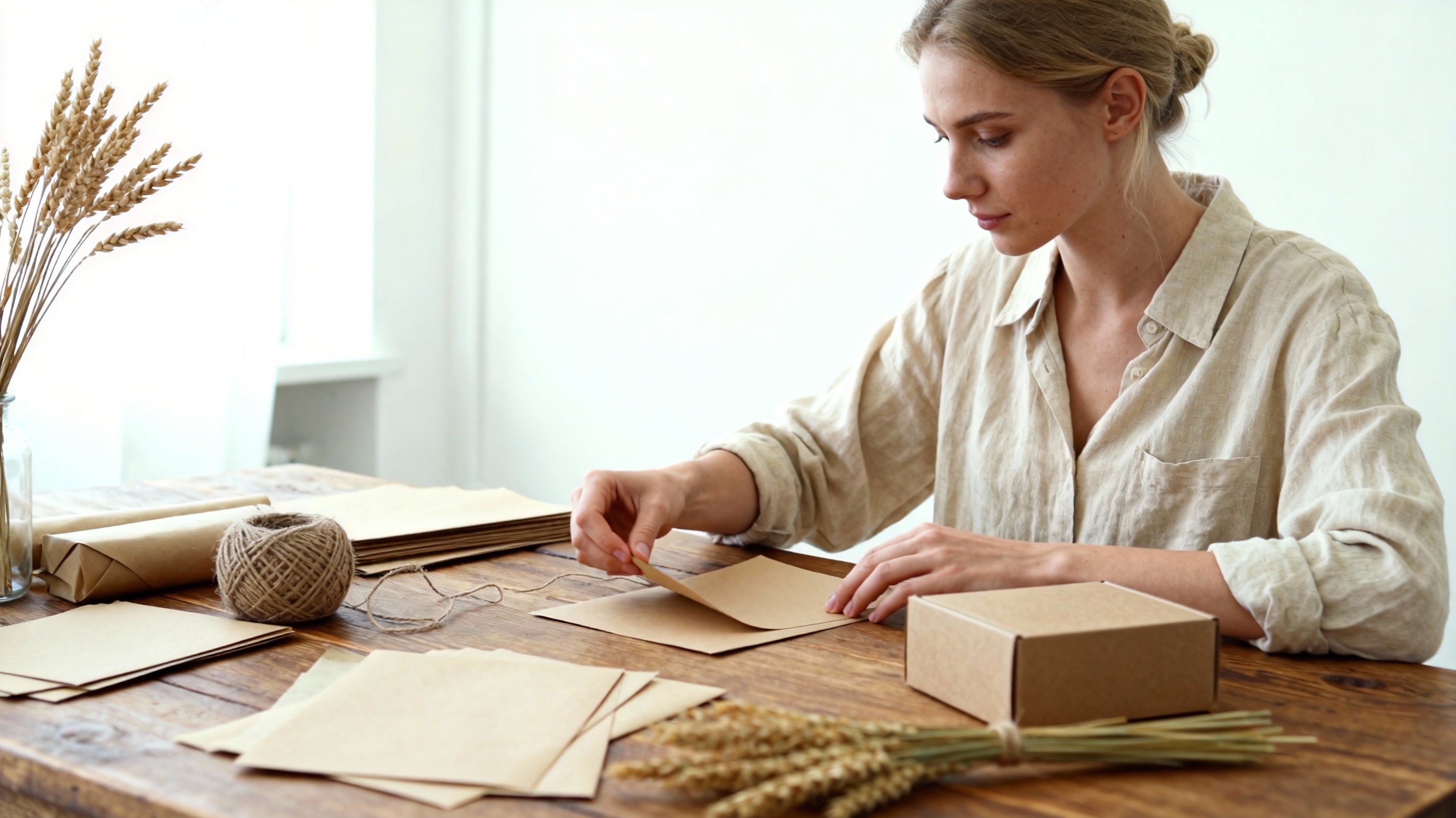
Sugarcane Bagasse vs Paper Packaging: Choosing the Kindest Wrap for Your Gifts
When you pour your heart into a handmade candle, a small-batch chocolate bar, or a custom watercolor, the packaging becomes part of the keepsake. It is the first thing your recipient touches, the stage on which your creation appears, and increasingly, a quiet promise about how gently you treat the planet.
For many creative brands, the big question is no longer “paper or plastic,” but “sugarcane bagasse or paper?” Both can look natural and beautiful. Both can feel more thoughtful than plastic. Yet their eco-footprints and end-of-life stories are quite different.
In this guide, written from the lens of an artful gifting specialist, we will walk through how sugarcane bagasse packaging compares with conventional paper packaging so you can choose the kindest wrap for your craft, your customers, and the earth.
Understanding the Materials: Bagasse and Paper, Unwrapped
Sugarcane bagasse in plain language
Sugarcane bagasse is the fibrous residue left after sugarcane is crushed for juice. Think of it as the plant’s inner scaffolding, rich in cellulose, hemicellulose, and lignin. For a long time, this material was burned as low-value fuel or left as agricultural waste. Now it is being molded into plates, bowls, gift boxes, and protective trays.
Several sources, including Renouvo and Good Start Packaging, describe how abundant this resource is. Global sugarcane production has been on the order of billions of tons per year, with sugarcane reaching harvest in about 12 to 18 months. That fast growth means a steady stream of bagasse without planting extra fields just for packaging.
Manufacturers take that moist, fibrous residue, dry it, and pulp it into a slurry. According to technical descriptions from Prodelpak and The Environmental Blog, the fibers are cleaned, screened, and then molded under heat and pressure into shapes ranging from clamshells and cups to trays, inserts, and even thicker reusable items. Many producers aim to meet compostability standards such as ASTM D6400 or EN 13432, meaning the products are designed to break down completely under industrial composting conditions within about 60 to 90 days.
For a maker, that means a bagasse box or tray started life as a byproduct of sugar, not as a tree planted just to be cut down.
Paper packaging behind the scenes
Paper packaging, in contrast, is built on wood fibers or recycled paper fibers. The YouTube overview of corrugated cardboard manufacturing explains that most cardboard boxes are made from a wavy sheet called the flute, sandwiched between two flat liners to create corrugated board. Large rolls of partially recycled paper are run through a corrugator machine, shaped with steam and pressure, then glued with a water-and-starch adhesive. Cutoffs are returned to paper mills and can be recycled multiple times.
Another video from a pulp and paper company (APRIL) shows the upstream side: plantation-grown acacia and eucalyptus trees are harvested, debarked, chipped, cooked in a digester to remove lignin, and turned into pulp. Water is filtered and reused, and bark is burned as fuel to power the mill, but the system still relies on dedicated tree plantations.
Paperboard used in rigid gift boxes or drawer-style boxes (as seen in a greyboard packaging workflow) starts as thick board cut, glued, and wrapped with printed paper. This is the classic “luxury” box many high-end gifts come in.
So at a glance, both bagasse and paper can feel natural. The key difference is this: bagasse starts as agricultural waste from sugarcane, while much paper packaging still begins with trees grown and cut specifically for fiber, even when mills use plantations and partial recycling.

Eco-Friendliness at the Source: What You’re Really Growing or Saving
When you choose packaging, you are quietly choosing what gets grown, what gets cut, and what gets burned or saved. This is where bagasse often shines for eco-conscious gifting brands.
Feedstock and land use
Renouvo and Enpak-style overviews emphasize that sugarcane grows to harvest in about 12 to 18 months, while trees used for pulp can take seven to ten years. Sugarcane is already cultivated for sugar; bagasse is the residue left after juice extraction. Using it for packaging does not require new land; it valorizes a waste stream.
Good Start Packaging notes that around 1.2 billion tons of sugarcane can yield roughly 100 million tons of bagasse per year, much of which has historically been burned or discarded. Turning that into packaging changes the story from “waste management problem” to “renewable feedstock.”
By contrast, Good Start Packaging also points out that about 40 percent of harvested wood worldwide goes into commercial and industrial uses, including paper, and that paper cups alone account for about 20 million trees cut each year. Even when pulp comes from managed plantations, using virgin wood for packaging creates ongoing pressure on forests and biodiversity.
From a source-perspective, choosing bagasse is a way of wrapping your gifts in a material that would otherwise be thrown away or burned, while paper, especially virgin paperboard, usually depends on dedicated fiber crops or forests.
A quick visual comparison
Here is a simple side-by-side look at how the feedstocks compare.
Aspect |
Sugarcane bagasse |
Conventional paper packaging |
Primary source |
Fibrous residue from sugarcane after juice extraction |
Wood pulp from trees, plus recycled paper fibers |
Land use |
Uses existing sugarcane fields; no new land just for packaging |
Requires plantations or forests dedicated to fiber |
Growth cycle |
Sugarcane harvested in about 12–18 months |
Trees for pulp often grown for several years before harvest |
Waste vs. primary resource |
Upcycles an agricultural byproduct |
Uses a primary resource (wood), even when partly recycled |
Deforestation implications |
Helps reduce burning and waste of sugarcane residues |
Linked to deforestation and biodiversity loss when not well managed, as Good Start Packaging notes |
For an artisan brand that wants to tell a circular-economy story, “from sugarcane field to second life as a gift box” is a compelling narrative grounded in this upstream advantage.

Energy, Emissions, and Water: The Hidden Footprint of Making Each Box
Eco-friendliness is also about what happens in the factory long before a box reaches your studio.
Bagasse production and carbon footprint
Multiple sources, including Bioleader Pack and Prodelpak, describe bagasse as a low-carbon material. A life cycle assessment cited by Bioleader Pack in the Journal of Cleaner Production found that bagasse products can emit roughly 65 to 80 percent less carbon dioxide over their life cycle than PET plastic. Prodelpak notes that life cycle studies suggest bagasse containers have 50 to 70 percent lower overall environmental impact than single-use plastic containers.
Prodelpak also highlights that producing one ton of bagasse paper requires about 1.5 tons of sugarcane pulp, compared to approximately five tons of wood needed to produce one ton of traditional paper. That yield efficiency reduces the mass of raw material that needs to be harvested and processed.
InNature Pack adds another useful data point: manufacturing bagasse containers can use about one-twentieth of the energy required for “traditional” packaging production. Their context is primarily the comparison with conventional plastic and certain legacy materials, but it reinforces the idea that bagasse processing, especially when integrated with existing sugar mills, can be energy efficient.
Paper mills and their environmental context
The pulp and paper video from APRIL shows a modern, more responsible paper mill: tree plantations rather than natural forests, bark used as fuel, water filtered and reused in the process, and clear attention to environmental management policies. Still, the basic reality remains that trees are harvested specifically for pulp, and the pulping and bleaching steps involve significant processing.
Good Start Packaging underlines the environmental load of conventional paper products in another way. They point out that coated paper cups are often lined with plastic, are difficult to recycle, and can take more than 20 years to break down in landfills. They also link the sector to pollution and greenhouse gas emissions, not just deforestation.
For eco-conscious gift packaging, this does not make paper the “villain,” but it does mean that a plain “paper is eco-friendly” label hides a complicated upstream story.
A tiny studio-scale thought experiment
Imagine two scenarios for a small maker who uses five thousand hot drink cups for pop-up markets in a year.
In the first scenario, the cups are standard paper cups with a plastic lining. Based on Good Start Packaging’s discussion, those cups likely required virgin wood, fossil-based plastic, and will sit in landfills for decades, with recycling pathways limited.
In the second scenario, the maker chooses certified bagasse cups that meet ASTM D6400 or EN 13432 standards, as described by Prodelpak and Bioleader. Under proper industrial composting, those cups can turn to nutrient-rich compost in roughly 60 to 90 days. The upstream fibers came from sugarcane waste rather than newly cut trees, and life cycle studies suggest significantly lower greenhouse gas emissions than comparable plastic-based options.
The difference is subtle on the table at the market. In the atmosphere and in the soil, it is not subtle at all.
Performance, Safety, and the Gift Experience
Your packaging has to be kind to the planet and kind to your products. A velvety bath bomb, a delicate cookie, a warm bowl of soup, or a hand-bound journal all ask slightly different things of their “outer shell.”
Strength, heat, and grease resistance
Bagasse has impressive functional performance. Foogo Green, Growood, Prodelpak, Good Start Packaging, AtYourServous, and ECCOCane all converge on a similar picture:
Bagasse products are sturdy and durable, with strength that rivals or exceeds many foam and plastic disposables. They tolerate both hot and cold foods; Good Start Packaging notes that sugarcane fiber packaging can handle temperatures up to about 200°F while remaining sturdy, and The Environmental Blog describes bagasse items withstanding around 203°F. Bagasse containers are typically grease and water resistant, often without plastic linings, and many are microwave and freezer safe.
This means a bagasse clamshell can cradle a hot, saucy meal or an oily pastry without sagging or leaking, which is why catering and food-service brands are adopting it at scale, as Foogo Green, Growood, and Bioleader Pack describe.
Paperboard and corrugated packaging, as seen in the corrugated box and greyboard box videos, excel in structural strength and cushioning, especially for dry goods. Corrugated board’s flute-and-liner structure creates an air cushion that protects items in shipping. However, uncoated paper and board soak up liquids quickly and lose integrity around grease or high moisture. To perform like bagasse for hot or oily foods, paper often needs wax or plastic coatings, which can complicate recycling and composting.
For a maker of hot food gifts or anything with oils or sauces, bagasse usually gives you functional performance similar to plastic without the plastic, while bare paper struggles unless heavily treated.
Food safety and chemical profile
Bagasse packaging is consistently described in the sources as food safe and non-toxic. Biopolylab, Foogo Green, AtYourServous, Prodelpak, and Bioleader Pack all emphasize that it is plant-based, free from harmful resins and heavy chemicals, and designed not to leach toxins into food. Many bagasse products are manufactured to meet or exceed standards such as FDA food-contact guidelines and compostability certifications like BPI or TÜV OK Compost HOME.
Paper packaging for food is also widely used and can be food safe, but problems arise when linings and inks introduce undesirable chemicals. Good Start Packaging highlights concerns with conventional polystyrene foam and plastic linings, while AtYourServous contrasts bagasse’s compliance with food safety standards against traditional polystyrene containers.
For a sentimental food gift—a family-recipe pie, a heritage soup, or a handmade chocolate—the reassurance that the package is not quietly adding toxins into the moment is a meaningful detail.
Tactile feel and brand storytelling
Beyond performance, there is the emotional experience. Bagasse has a natural, slightly textured, almost ceramic feel. Its off-white or warm brown tones, especially when suppliers avoid bleaching as the brand Chuck does in India, signal “earthy” and “unprocessed.” For a brand built around rustic, organic aesthetics, this can be a perfect fit.
Paper packaging, especially high-quality greyboard and art papers, can carry detailed print, foil stamping, and intricate structural design in ways molded bagasse still cannot match. If your brand identity leans toward fine-line illustration, metallic accents, or complex drawer and hinge boxes, paperboard gives you that canvas.
Many creative brands find a blended approach works beautifully: a recycled paper outer mailer or rigid gift box carrying a molded bagasse insert that cradles the product. The outer box sets the visual tone; the inner tray whispers the sustainability story.
End-of-Life Reality: Composting, Recycling, and What Actually Happens
A truly eco-friendly package does not just look green; it has a realistic path to a gentle end.
How bagasse breaks down
Bagasse’s biggest eco advantage is how it returns to the earth when managed well. Across multiple sources—Prodelpak, Bioleader Pack, Good Start Packaging, Foogo Green, InNature Pack, and ECCOCane—the numbers are consistent: under industrial composting conditions, bagasse packaging typically breaks down in about 60 to 90 days. In well-managed home compost, The Environmental Blog and Renouvo note that it can decompose within a few months, even at everyday outdoor temperatures around the upper 70s °F and above, especially if shredded.
Bioleader Pack and Good Start Packaging explain that as bagasse decomposes, it becomes nutrient-rich compost, contributing nitrogen, potassium, phosphorus, and calcium back to soil. This truly closes a loop: sugarcane grows, bagasse becomes packaging, the packaging compost feeds the next generation of plants.
However, there is a catch. Bagasse is not usually recyclable in traditional paper recycling streams, because its fibers and any food residues can contaminate the process. Bioleader Pack stresses that bagasse’s environmental benefits depend heavily on access to suitable composting infrastructure. If bagasse goes into landfill instead of compost, decomposition is slower and, in low-oxygen conditions, can produce methane, a potent greenhouse gas.
So bagasse is at its eco-best when your customers have somewhere to compost it. Without composting, it is still better than plastic in terms of long-term persistence but may not reach its full promise.
How paper fares at the end
Paper’s end-of-life story varies by format.
The corrugated box factory transcript shows a best-case scenario: paper board offcuts are returned to the mill and recycled as many as six times. Corrugated boxes and plain cardboard are among the most widely recycled materials in many countries, and consumers are familiar with flattening and recycling them.
Problems arise when paper packaging is coated, laminated, or heavily contaminated. Good Start Packaging notes that many paper cups are lined with plastic, making them behave more like composites than pure paper. These cups often take more than 20 years to break down in landfills and are difficult to recycle through standard paper streams. Paperboard wrapped in plastic films or foils can face similar issues.
From an eco-friendliness perspective, plain recycled cardboard mailers and boxes are excellent. Laminated, mixed-material paper-based packaging is much less so, especially if there is no facility to separate the layers.
Composting vs recycling: practical guidance
If your customers have access to municipal composting programs that accept certified compostable packaging, bagasse tends to be the stronger eco-choice for food-contact items and single-use trays. It turns from gift wrap to soil amendment in a single season.
If your customers are far more likely to have curbside recycling than composting, and your packaging is dry (for example, jewelry boxes, stationery mailers, candle cartons), high-recycled-content paperboard or corrugated boxes can have a very efficient second life as new paper products.
In other words, the greenest choice is not only about the material, but also about the “bin story” you can realistically expect your recipients to follow.

Comparing Bagasse and Paper for Different Artisanal Scenarios
Many makers tell me they are torn between bagasse and paper because every product line asks something different of its little “stage set.” Here is how the comparison plays out in common gifting scenarios.
Hot or greasy food gifts and catering boxes
For hot meals, savory pies, sticky buns, and holiday platters, sugarcane bagasse has a clear functional and environmental edge. Sources like Foogo Green, Prodelpak, ECCOCane, and Good Start Packaging agree that bagasse clamshells, plates, and trays handle hot and oily foods up to around 200°F without warping, and do so without plastic linings or toxic additives. They are typically microwave safe and can go from freezer to heat with confidence.
Paper-based options for such foods often rely on plastic or wax coatings to avoid leaks and sogginess. That usually undermines recyclability and can slow decomposition. If you are selling hot food at markets or shipping heat-and-eat gifts, a certified bagasse container that your customers can compost is usually the gentler choice.
Dry, delicate gifts and shipping protection
For dry gifts that need structural protection in shipping—handmade ceramics, glass candles, carved wood ornaments—corrugated paper boxes remain excellent. The corrugated flute structure offers cushioning, and boxes are widely recycled when kept free of plastic laminates.
Bagasse can still play a supporting role. Biopolylab notes that bagasse is now molded into protective inserts and cushioning for retail and e-commerce, including electronics. A small-batch potter, for example, might use a recycled corrugated outer box, a molded bagasse insert designed to cradle the mug, and shredded paper or bagasse-based tissue as void fill. The result is protective, brandable, and much kinder than foam peanuts or plastic bubble wrap.
Premium rigid boxes and keepsake packaging
When you want your gift box to be kept and treasured—a jewelry box that lives on a dresser, a keepsake box for wedding letters—the luxury paperboard route still offers the most design flexibility. The rigid drawer-style box workflow shows how greyboard can be cut, glued, wrapped with beautiful printed papers, and even fitted with mirrors or ribbons.
Bagasse is beginning to appear in more refined forms, including thicker reusable cups and cutlery, but the research notes focus mainly on tableware and molded inserts rather than fine rigid keepsake boxes. For now, a thoughtful approach is to use high-recycled-content paperboard, specify inks and adhesives with good environmental profiles (such as water-based inks described in the corrugated box factory), and keep laminates minimal so that the box remains recyclable if it is ever discarded.

Cost, Certifications, and What to Ask Suppliers
Eco-friendliness has a practical side: budgets, labels, and conversations with suppliers.
Several sources, including Biopolylab, Bioleader Pack, Green Olive, and Chuck’s case study from India, note that bagasse packaging often costs a bit more upfront than conventional plastic. In Chuck’s example, a bagasse meal tray was roughly 20 percent more expensive than a plastic one. Bioleader Pack points out that sugarcane packaging still tends to be more expensive than plastic partly because manufacturing is not yet at the same scale, but costs are expected to decline as demand grows.
Compared with paper, price comparisons are more variable and depend heavily on local markets, thickness, and design. What matters most for eco-friendliness is not whether bagasse is a few cents more or less than paper, but whether you are paying for genuinely better environmental performance.
Researchers and manufacturers such as Biopolylab, Bioleader Pack, Prodelpak, and Renouvo consistently recommend checking:
Whether bagasse items are made from pure bagasse fibers without plastic blends that would compromise compostability. Whether the products carry credible third-party compostability marks such as BPI, TÜV OK Compost HOME, or EN 13432. Whether paper packaging uses high post-consumer recycled content and avoids mixed-material laminates when possible.
As an artisan, you can translate that into a simple practice: ask every packaging supplier for their material composition, third-party certifications, and any life cycle data they can share. Then weave those verified details into your brand story, so customers know exactly why your box feels different.

FAQ: Gentle Answers for Curious Makers
Is sugarcane bagasse always more eco-friendly than paper?
Not automatically. At the material level, bagasse has clear advantages: it upcycles sugarcane waste, avoids new tree cutting, and composts in roughly 60 to 90 days in industrial systems, as described by Bioleader Pack, Prodelpak, and Good Start Packaging. Paper made from virgin wood can contribute to deforestation and may take decades to break down when coated. However, if your customers can easily recycle plain cardboard but have no access to composting, a simple recycled paper mailer may have a better real-world outcome than a bagasse tray that ends up in landfill. The greenest choice is the one that fits both the material and your customer’s disposal reality.
Can I put bagasse packaging in regular paper recycling?
In most cases, no. Bioleader Pack and Good Start Packaging explain that bagasse packaging is designed for biodegradation and composting rather than recycling. Its fibers and typical food residues can contaminate paper recycling streams. It is better to send it to compost, whether home compost (if the item is approved for it) or commercial composting facilities that accept certified compostable packaging.
What if my customers have neither composting nor reliable recycling?
In that situation, your influence shifts toward waste reduction and material choice. You can prioritize reusability (for example, sturdy paperboard gift boxes that are meant to be kept), minimize unnecessary layers, and favor materials that degrade more quickly even in the open environment. Good Start Packaging notes that sugarcane fiber packaging can break down in roughly 30 to 90 days even when it ends up as litter, while coated paper cups may linger much longer. You can also gently educate your customers with short care notes inside the box, explaining the best possible way to dispose of or reuse it.
When you wrap your work, you are wrapping more than an object. You are wrapping a story about how you see the world and what kind of future you want your art to live in. Whether you lean toward sugarcane bagasse, recycled paper, or a thoughtful blend of both, choosing with clear eyes and a full heart turns every box, tray, and sleeve into a quiet love letter—to your recipient, to your craft, and to the earth that makes it all possible.
References
- https://www.eccocane.org/why-sugarcane-bagasse
- https://www.theenvironmentalblog.org/2025/04/from-sugarcane-to-table-the-life-cycle-of-bagasse-packaging/
- https://www.researchgate.net/publication/270590601_The_Use_of_Sugarcane_Bagasse-Based_Green_Materials_for_Sustainable_Packaging_Design
- https://renouvo.net/biomass-materials/what-is-bagasse/
- https://www.atyourservous.com/benefits-of-bagasse/
- https://www.bioleaderpack.com/is-bagasse-eco-friendly-unpacking-the-truth-about-sugarcane-waste-and-sustainable-packaging/
- https://www.greenolives.com.cn/biodegradable-sugarcane-bagasse-containers-sustainable/
- https://www.enpaktw.com/blog/26-Sugarcane-Bagasse-101-The-Ultimate-Game-Changer-in-Sustainable-Food-Packaging
- https://www.goodstartpackaging.com/sugarcane-fiber-packaging-guide/?srsltid=AfmBOoqcLGbSiOnULUjhsgpYCs46NaJDhlYOVpLpPOhhryO_geBmkaAJ
- https://www.grandviewresearch.com/industry-analysis/sugarcane-based-packaging-market-report
