

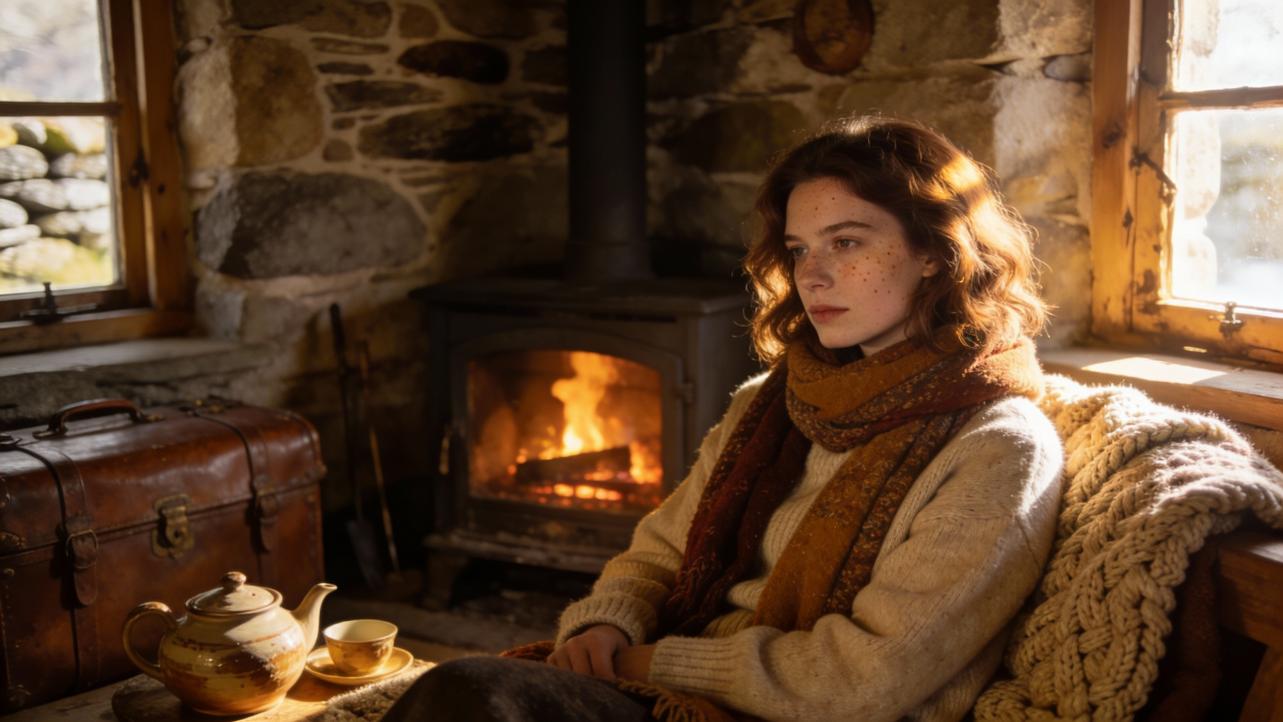
Comparing Wool Custom Scarves and Cashmere Scarves for Quality
Choosing between a wool custom scarf and a cashmere scarf can feel a bit like choosing between two love stories. Both promise warmth, comfort, and beauty, yet the way they age, the way they feel on skin, and the way they fit into a meaningful gift are very different. As an artful gifting specialist, I like to think of this choice not as “Which is better?” but as “Which is the truest match for this person, this moment, and this budget?”
This guide walks you through that decision with a maker’s eye and a giver’s heart, using what fiber experts, heritage mills, and cashmere ateliers have learned about these materials in real-world use.
Meet the Fibers: What Wool and Cashmere Actually Are
Before you choose a custom scarf, it helps to know what you are really putting around someone’s neck.
Textile brands such as N.Peal and Ovcio explain that “wool” is an umbrella term. It usually means the fleece from sheep, but it can also include other animal hair such as merino, lambswool, alpaca, and some goat fibers. These wools are shorn annually and are valued for warmth, elasticity, and durability. Merino and lambswool, in particular, are used widely in scarves because they are softer and more refined than rugged sweater wools.
Cashmere is also a type of wool, but from a very specific source: the ultra-fine undercoat of cashmere goats that live in extremely cold regions of Asia. Brands like Shahkaar, Ovcio, and Rampley & Co describe how these goats grow a soft inner fleece to survive winter temperatures that can drop to around -40°F. That inner fleece is combed and sorted by hand; the best fibers are long, straight, and very fine. N.Peal and Rampley & Co note that high-grade cashmere often measures roughly 14–19 microns in diameter, which is far thinner than most sheep’s wool and much finer than human hair.
Because that delicate undercoat grows slowly and must be carefully harvested and graded, cashmere is naturally limited in supply. Woolgold, Rampley & Co, and Oats & Rice all point out that this scarcity, plus labor-intensive processing, is a major reason cashmere scarves sit in a true luxury category.
To ground the comparison, here is a concise quality snapshot.
Aspect |
Wool Custom Scarf |
Cashmere Scarf |
Fiber source |
Fleece from sheep and related animals (merino, lambswool, etc.) |
Undercoat of cashmere goats from very cold regions |
Feel and texture |
Ranges from robust and slightly coarse to soft (especially merino and lambswool) |
Exceptionally soft, smooth, often described as silk-like by brands such as Shahkaar and Rampley & Co |
Warmth per weight |
Warm and reliable; thickness often provides insulation |
Much higher warmth per ounce; sources like Ovcio and Woolgold cite around three to eight times warmer |
Durability |
Naturally tough, resilient, shape-retaining |
Can last many years but more delicate and prone to pilling if mishandled |
Price expectations |
Generally accessible and budget-friendly |
Significantly more expensive; Woolgold notes quality pieces around $100 to several hundred dollars |
Style personality |
Often rustic, patterned, or casual-elegant |
Sleek, fluid drape, strongly associated with luxury and refined style |
If you picture your gift as a canvas, wool gives you a broad, forgiving surface for patterns, textures, and everyday wear. Cashmere is a finer, rarer paper—exquisite, but asking you to use a careful hand.

Warmth, Weight, and Comfort: How Each Scarf Feels
When someone unwraps a scarf, the first instinct is always the same: they touch it. Comfort around the neck is deeply personal, and this is where wool and cashmere begin to diverge.
Luxury accessory makers such as Ovcio, Woolgold, and Moviestarjacket consistently describe cashmere as dramatically warmer per ounce than standard wool. Ovcio writes that a pure cashmere scarf can be around eight times warmer than a merino wool scarf. Woolgold echoes that cashmere’s hollow, ultra-fine fibers trap heat so efficiently that a light cashmere piece can outperform a much thicker sheep-wool scarf. Chan Luu adds that cashmere is lighter, stronger, and approximately three times more insulating than traditional sheep’s wool in their own testing.
Those numbers differ because they compare different grades and types of wool, but they agree on one crucial idea: for the same level of warmth, cashmere can stay much lighter and less bulky. Shahkaar describes a featherweight cashmere scarf that “gives genuine body warmth for layering—not bulky at all,” while Moviestarjacket notes that cashmere is plush and lightweight yet extremely warm.
On skin feel, the pattern is just as clear. Shahkaar, The Cashmere Studio, and Just Like Red all paint a similar picture: cashmere is silky-soft and gentle, often compared to silk in smoothness but with far better insulation. This makes cashmere particularly appealing for anyone with sensitive or itch-prone skin who still wants serious warmth.
Wool is more varied. Merino and lambswool can be wonderfully soft and breathable, as Regal Fabrics and Just Like Red point out, and in a well-spun scarf they feel cozy rather than prickly. But regular sheep wool, especially in thicker yarns, can feel coarse and even scratchy to some people. Shahkaar and several other brands highlight that difference, noting that some wearers with delicate skin find wool slightly irritating against the neck.
Imagine you are designing a custom scarf for a loved one who complains that sweaters “make them itch.” In that scenario, a high-grade cashmere scarf—or a very fine merino—aligns beautifully with their comfort. For a friend who spends weekends hiking or coaching kids’ games on chilly sidelines, a lambswool or merino custom scarf, perhaps in a favorite tartan or team-inspired palette, can give them reliable, breathable warmth with a touch more ruggedness.

Durability, Care, and Everyday Practicality
Quality is not just how something looks on day one; it is how it behaves in the fifth winter, after real lives and real laundries.
How Long Can Each Scarf Last?
Textile manufacturers such as Ovcio, Woolgold, Moviestarjacket, and The Cashmere Studio agree that high-quality cashmere can last for many years, even decades, when treated well. Ovcio and Moviestarjacket both mention that a good cashmere scarf can last around twenty years with careful care. Rampley & Co explain why: longer, finer fibers and dense knitting help the scarf keep its shape and resist excessive pilling.
At the same time, these sources are frank that cashmere is more delicate than most wools. Woolgold and Shahkaar both point out that wool fibers are naturally more elastic and resilient, better at bouncing back from stretching and general wear. Woolgold notes that wool has self-cleaning tendencies and needs only occasional gentle washing, while cashmere is more prone to pilling and requires more attention.
Pilling—the little bobbles that form where fabric rubs—is normal for both fibers, not a mark of “cheapness.” Chan Luu, The Cashmere Studio, Travelwrap, and Pashmina.com all emphasize that friction is the main culprit. Because cashmere fibers are so fine, the pills can be more noticeable, especially on sleeves or where a scarf brushes against a handbag strap. The good news is that simple tools like sweater combs or cashmere brushes remove pills safely when the scarf is laid flat, and several of these brands recommend occasional de-pilling as part of regular care.
For a gift, this means both fibers can be long-term companions, but wool is more forgiving if you know the recipient will toss the scarf on the back seat of the car, wear it daily, and wash it without ceremony. Cashmere behaves more like a treasured novel; it loves to be read often but prefers not to be dropped in the bathtub.
What Does Real-World Care Look Like?
Cashmere care sounds fussy until you see how simple the ritual really is. A wide range of sources—Chan Luu, Martha Stewart’s team, Pashmina.com, Travelwrap, Ovcio, The Cashmere Studio, and Rampley & Co—describe a remarkably similar process.
They recommend washing cashmere sparingly, often just a couple of times per season. Hand washing in cool or lukewarm water with a gentle wool or cashmere detergent, or even a mild hair shampoo, is the gold standard. The scarf is soaked for a short time, agitated very gently, then rinsed until the water runs clear. Every expert agrees on what not to do: no hot water, no wringing, and no tumble dryers. Instead, excess water is pressed out by rolling the scarf in a towel, then the piece is laid flat on a dry towel to air dry, reshaped to its original measurements. Brands like Chan Luu and Pashmina.com stress avoiding direct heat and sunlight so the fibers do not shrink or fade.
Dry cleaning has its place for embellished pieces or stubborn stains, but both Chan Luu and Travelwrap caution that frequent dry cleaning can leave cashmere feeling stiff compared with the loft and softness you maintain through gentle washing.
Wool care is more relaxed. Ovcio notes that merino and sheep wool scarves can often be washed in both warm and cold water, and that machine washing on a suitable wool or delicate cycle is usually acceptable, as long as heat is avoided to prevent shrinkage. Woolgold points out that wool’s resilience and natural properties mean it does not need frequent washing; occasional cold-water hand washing with mild detergent is usually enough.
Storage is where wool and cashmere share similar needs. Chan Luu, Pashmina.com, Travelwrap, and Ahuja’s Pashmina notes all highlight moths as a real threat. They recommend storing scarves clean, folded rather than hung, in snug drawers or breathable bags, often with cedar blocks or other moth deterrents. Pashmina.com and The Cashmere Studio add that acid-free tissue and avoiding long-term plastic storage can help the fibers breathe and stay beautiful.
Picture a gift recipient who is busy but careful. If you know they are the kind of person who will gladly follow the “wash in cool water, roll in a towel, lay flat” card you tuck into the box, cashmere is absolutely practical. If they are juggling toddlers, pets, and constant laundry, a custom wool scarf they can slip into the gentle cycle will easily fit their reality.

Price, Value, and When to Invest
The price tag is often where givers hesitate, especially when you are weighing a one-of-a-kind custom wool scarf against a ready-made or lightly personalized cashmere piece.
Shahkaar, Woolgold, Moviestarjacket, N.Peal, and Ovcio all agree on the core pattern: cashmere is many times more expensive than regular sheep wool. Woolgold notes that quality cashmere scarves typically sit around $100.00 to several hundred dollars or more. Ovcio goes further and suggests that if a “100 percent cashmere” scarf in a full size costs under about $100.00, even after discounts, there is a strong chance the quality has been compromised, whether through lower-grade fibers, blends, or shortcuts in production.
Wool, by contrast, benefits from abundant supply. Woolgold and Shahkaar describe wool scarves as more affordable and accessible, with a wide range of price points. This makes wool ideal for building a small “wardrobe” of custom designs: perhaps a heritage tartan inspired by family roots, a bold color-blocked pattern for winter weekends, and a quieter neutral for work.
From a value perspective, the real question is not “What does it cost?” but “How will it be used?” Several brands—Ovcio, Moviestarjacket, Woolgold, and The Cashmere Studio—emphasize that a high-quality cashmere scarf can last for many years if cared for properly. If you imagine a mid-range cashmere scarf worn a couple of times a week for five or six winters, the cost per wear can fall into a very reasonable range, especially for a key accessory that elevates every coat it touches.
Wool offers its own version of value. Because it is more budget-friendly and more tolerant of frequent washing, a wool custom scarf makes sense when you expect daily wear, hard winters, or rougher treatment. Think of a teenager who will wear it to school, sports, and on the bus, or a commuter who slings their bag over the same shoulder every day. In those lives, durability often matters more than the last degree of softness.
For gifting, I often see cashmere step forward for milestone occasions—big birthdays, anniversaries, and promotions—where the scarf is meant to feel like an heirloom. Wool shines where the message is “I see your everyday life and I want to wrap it in something beautiful and dependable,” such as holiday gifts for siblings, teachers, or close friends.
Sustainability and Ethics: Looking Beyond the Label
If you care about the story behind your handmade or customized gift, the environmental side of wool and cashmere is worth considering.
Woolgold, a textile manufacturer working with both fibers, notes that wool production is not impact-free. Raising sheep can contribute to methane emissions, land degradation, and water pollution, especially in poorly managed systems. At the same time, the same source points to emerging sustainability initiatives, including bans on harmful animal practices and regenerative agriculture that aims to improve soil health and capture more carbon.
Cashmere has its own challenges. Woolgold explains that in regions such as Mongolia and parts of China, high demand for cashmere has encouraged overgrazing by goats. Their eating habits and sharp hooves can damage fragile grasses and soils, leading to serious land degradation and even desertification. Processing cashmere can also be water-intensive, with potential pollution if wastewater is not handled carefully. To address this, brands and producers are experimenting with sustainable grazing plans, cleaner processing technologies, and certification schemes that signal more responsible practices.
Authenticity also matters. Ahuja’s Pashmina brand, for example, mentions that its Pashmina is certified by the Wildlife Institute of India to verify authenticity and quality standards. That kind of third-party verification helps distinguish true cashmere or Pashmina from blends that trade on the name without the fiber.
For a thoughtful gift, this means two things. First, wool is not automatically “good” and cashmere “bad,” or the reverse. Both can be produced thoughtfully or carelessly. Second, when you are investing in a higher-priced piece—especially cashmere—it is reasonable to look for brands or makers that talk openly about their sourcing, animal welfare, and land stewardship, or that reference recognized certification efforts, as Woolgold describes.
If your recipient is very eco-conscious, a beautifully made wool custom scarf from a small maker using traceable yarn can feel deeply aligned with their values. If they have always dreamed of owning cashmere, choosing a scarf from a company that acknowledges these environmental challenges and mentions concrete steps toward better practices adds integrity to the indulgence.
Gift-Driven Decisions: Matching Fiber to Person and Moment
Once you understand the technical side, you can return to the more poetic question: what story do you want this scarf to tell?
Cashmere naturally carries the language of luxury and elegance. Shahkaar, The Cashmere Studio, Rampley & Co, and Ovcio all describe how cashmere drapes with a fluid, almost liquid movement, making it ideal over tailored coats, evening outfits, and minimal wardrobes that rely on a few perfect pieces. For someone who loves simplicity, neutrals, and long, uninterrupted lines, a solid cashmere scarf or stole in their signature color can feel like a wearable love letter that will follow them from dinners to flights to quiet Sunday walks.
Wool scarves, especially in merino or lambswool, speak a more relaxed dialect. The Cashmere Studio and Just Like Red both highlight the charm of wool in textured weaves and bold patterns such as plaids and tartans. A custom wool scarf is a wonderful canvas if you want to incorporate favorite colors, school hues, or motifs that tell a story about a place or family. It is the perfect companion for denim jackets, leather, hiking shells, and all the beautiful chaos of everyday life.
For a deeply sentimental gift, you might imagine two paths. On one path, you commission or choose a custom wool scarf with an embroidered date, a hidden initial, or colors that echo a shared memory—perhaps the shades of the sunset from a meaningful trip. The wool will wear in, soften over time, and gather stories in its fibers.
On the other path, you select a cashmere scarf meant to become an heirloom. Several sources, including Ovcio, Moviestarjacket, Woolgold, and Rampley & Co, emphasize that high-quality cashmere, treated gently, can last for decades. It can be something your recipient reaches for every winter, then someday passes down with a story about who first gave it and why. When paired with a handwritten note about how you hope it will “wrap you in warmth whenever I cannot,” the material’s luxury becomes a vessel for something much richer.
There is no wrong choice here—only the choice that best honors the person and the way they live.

FAQ: Wool Custom Scarves vs Cashmere Scarves
Is a cashmere scarf really that much warmer than wool?
Multiple textile brands say yes, within context. Chan Luu notes that cashmere is lighter, finer, and about three times more insulating than traditional sheep’s wool, while Ovcio and Woolgold describe pure cashmere scarves as around eight times warmer than comparable merino wool pieces, thanks to hollow, ultra-fine fibers. The exact number varies by grade and by which wool you compare against, but all agree that cashmere delivers more warmth for less bulk than standard sheep’s wool.
If someone has sensitive skin, should I avoid wool entirely?
Not necessarily. Shahkaar and The Cashmere Studio emphasize that cashmere is exceptionally gentle on the skin and is an excellent choice for people who find many wools itchy. However, not all wool feels the same. Fine merino and lambswool scarves, like those highlighted by Regal Fabrics and Just Like Red, are softer and more comfortable than coarse wool. For a very sensitive recipient, a high-grade cashmere scarf is the safest bet; for moderate sensitivity, a custom scarf in soft merino or lambswool can still be a beautiful, comfortable option.
Can a wool custom scarf feel as special as a cashmere gift?
Absolutely. Cashmere has an inherent aura of luxury, and brands such as Rampley & Co and Shahkaar lean into that. But Woolgold and The Cashmere Studio also show how well-designed wool scarves, especially in merino or lambswool, can offer excellent warmth, durability, and style. When you layer in customization—a meaningful color palette, a pattern with personal significance, or hand-finished details—a wool custom scarf can feel every bit as heartfelt and unique as cashmere. The difference is that wool may invite more carefree daily use, which in itself can be a gift.
Every thoughtful scarf carries more than yarn; it carries intention. Whether you choose the rugged reliability of a wool custom scarf or the featherlight luxury of cashmere, what matters most is that the piece feels like a true extension of the person who will wear it. When fiber, lifestyle, and sentiment line up, the scarf stops being just an accessory and becomes a small, enduring piece of someone’s story.
References
- https://www.imfieldcashmere.com/What-s-better-wool-or-cashmere-scarf-id41423196.html
- https://www.oatsandrice.com/cashmere-vs-other-fabrics
- https://smart.dhgate.com/cashmere-feel-vs-wool-scarf-are-cashmere-scarves-really-worth-the-extra-money/
- https://discover.johnstonsofelgin.com/our-story/how-to-care-for-your-fine-fibres
- https://www.marthastewart.com/1517325/how-wash-and-care-cashmere
- https://thecashmerestudio.com/pages/cashmere-scarf-or-wool-scarf-which-one-should-you-choose
- https://www.ahujasons.com/blogs/blog/6-essential-tips-on-how-to-properly-care-for-your-cashmere-shawl-every-day?srsltid=AfmBOoq9QbnCd7VAFWrAqdewVnupsN_YCNdqBnrPuopRvAY2W649aixV
- https://chanluu.com/blogs/news/how-to-care-for-your-cashmere-scarves?srsltid=AfmBOooQXDZ2sMyGKX5Fc51gbAjfNoGQyn8KTqnypHg9v-gCVGUXckWx
- https://dresslemuse.com/blogs/blog/cashmere-vs-wool?srsltid=AfmBOopZsgIlhElR4Kv5okp52UD5oxxPa0d3EPg9uiNDteE-e9I7RLXd
- https://justlikered.com/blogs/just-like-red/how-to-choose-the-perfect-scarf-for-every-season-and-style?srsltid=AfmBOoo2Q4OI0iQ_ep5oe7Pp8rwIgZP3RS1HuBZh-2SPe4tHHbzwIS5v
