

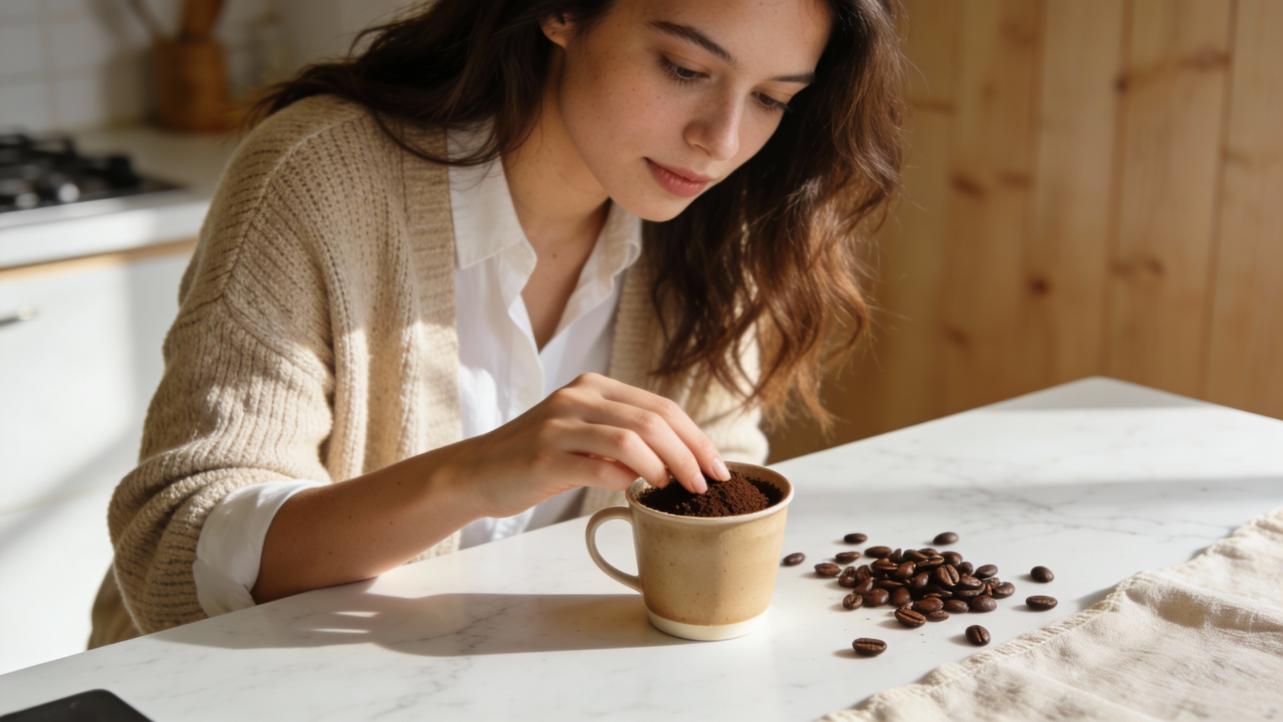
How Custom Coffee‑Ground Cups Release Natural Aromas
There is a quiet magic that happens when you wrap your hands around a cup that has a story. When the cup itself is born from coffee grounds, that story becomes richer: yesterday’s espresso puck becomes today’s vessel, and the aroma you love is woven not only into the drink, but into the object you hold.
As an artful gifting specialist, I see custom coffee‑ground cups as small, everyday sculptures. They carry the warmth of ritual, the comfort of scent, and the satisfaction of knowing waste has been turned into something beautiful and lasting. In this guide, we will explore how these cups are made, how they interact with natural aromas, and how to choose or commission the right one as a heartfelt, sustainable gift.
From Spent Grounds to Scented Ritual
When you brew a morning pot, only part of each coffee bean ends up in your mug. The rest becomes spent coffee grounds, and globally that waste stream is enormous. Research highlighted by Coffeefrom points out that more than 3 billion cups of coffee are consumed every day and roughly 7–8 million tons of grounds are produced each year. Much of that still goes to landfills, where it contributes to greenhouse gas emissions.
Around the world, designers and scientists are asking a different question: what if coffee grounds are not waste at all, but a raw material? Studies published by MDPI, ACS Omega, and ACM have shown that spent coffee grounds can be turned into bioplastics, ceramic aggregates, 3D‑printed materials, even biofuels. Brands like Kaffeeform in Berlin collect grounds by cargo bike, dry them, blend them with bio‑based binders, and mold them into reusable cups and watch casings. Ceramic projects such as ReRoasted in the UK laminate coffee‑infused clays inside conventional ceramic shells, creating vessels that blend waste reuse with serious craftsmanship.
In other words, your custom coffee‑ground cup sits at the intersection of design, material science, and circular economy thinking. It is an object that literally begins as aroma and ends as an heirloom.

What Exactly Is a Coffee‑Ground Cup?
“Coffee‑ground cup” is really an umbrella term. Makers are experimenting with several material approaches, each with its own pros, cons, and aroma personality.
Fired Ceramic Cups with Coffee‑Textured Bodies
One pathway lives firmly in classic ceramics. Dutch artist Wim Borst, profiled by Ceramic Arts Network, mixes crushed coffee beans into colored clay slabs. He lets those slabs rest under plastic for several weeks so the beans soften enough to cut and shape, then dries the pieces slowly and bisque fires them around 1,760°F. During this slow firing, the organic coffee burns out completely, leaving cratered, rocky textures instead of intact grounds. After further sanding and a hotter glaze firing near 2,300°F, the result is a refined surface that visually celebrates the coffee texture without retaining the grounds themselves.
Technical studies on clay bricks and floor tiles echo this behavior. Research on incorporating coffee grounds into clay brick production shows that small amounts of grounds (around 3 percent by weight of the clay) burn out during firing, increasing closed porosity and improving thermal insulation, while preserving mechanical strength. Work in MDPI’s Materials journal on lightweight ceramic aggregates finds a similar effect: coffee grounds act as a pore‑forming agent and fuel source inside the kiln, helping create lighter, more insulating ceramic granules for construction and horticulture.
Translated into cup form, that means a coffee‑inspired ceramic can:
- Be fully food‑safe when glazed correctly, because the coffee itself is gone and only the micro‑porosity remains.
- Feel pleasantly warm yet not scorching in the hand, thanks to that subtle insulation.
- Offer a rich, tactile surface that complements the sensory experience of drinking.
These cups do not literally smell like coffee, because the grounds have been incinerated at very high temperatures. Instead, they support aroma indirectly by holding heat and by inviting you to slow down and notice the textures and visual cues of the material.
Molded Composites Made From Coffee Grounds
A second family of cups keeps the coffee grounds physically present in the material rather than burning them away.
Kaffeeform, for example, dries and stores used grounds from Berlin cafés, then combines them with biological binders to form solid “beans” that are injection‑molded into reusable cups, saucers, and other objects. Their values are circularity, locality, and understated design, and they keep the entire process—from collection by cargo bike to manufacturing—largely within Germany. These cups are designed for everyday use, and after years of service they can be ground up and reprocessed into new products.
Scientific work in ACS Omega on PLA (polylactic acid) feedstock filled with spent coffee grounds reaches similar conclusions for larger objects. By blending PLA with coffee‑based filler, researchers 3D‑printed functional pieces, including a coffee table, and characterized their mechanical, thermal, and rheological behavior. The composites were solid, structurally stable, and visually distinctive, with subtle speckles from the coffee particles.
Another project published in 3D Printing and Additive Manufacturing describes a paste made from spent coffee grounds, brown rice flour, water, food‑based binders, and mycelium. This “Mycofluid” can be 3D‑printed at room temperature and grown into robust biocomposites, then dried to form shapes with the density of cardboard or charcoal. While the study focused on packaging and sculptural objects, the same material logic can be adapted to small vessels and holders.
These molded composites have a few important qualities for aroma‑loving gift givers:
- They keep coffee visible in the material as dark flecks and subtle texture.
- They often run cooler than metal, so they are comfortable to hold while sipping hot drinks.
- Depending on the formulation and surface treatment, they may carry a faint roasted scent when new, though the research you see in journals primarily evaluates structural and sustainability metrics rather than fragrance.
In customized form, makers can vary the wall thickness, handle shape, and rim profile to guide how steam and aroma rise toward the nose, much like wineglass designers work with bouquet.
Sculpted Coffee‑Clay Vessels and Accessories
A more playful, craft‑driven route uses coffee grounds in air‑dry clays and decorative finishes.
Artist Michele Gargiulo shares a “coffee clay” recipe that blends dried used grounds with flour, salt, and water in roughly equal parts by volume, with optional cinnamon, vanilla, or essential oils to enhance scent. The result is a pliable, dark, flecked dough that can be rolled and molded, then air‑dried into rustic ornaments, tags, beads, and small dishes. It is an eco‑friendly modeling material intended for crafts, keepsakes, and garden markers rather than for direct food contact.
Other DIY makers explore coffee grounds as a surface treatment rather than a structural ingredient. In one project from Sadie Seasongoods, plain glass vases are painted with textured terracotta paint, then rubbed with used coffee grounds while the paint is curing. After drying and brushing away excess grounds, the surface takes on an aged, stoneware‑like patina. The coffee functions like a natural antiquing powder, giving visual warmth and an association with aroma without remaining loose on the surface.
These craft approaches are wonderful for accessorizing a coffee‑ground cup: think of a ceramic mug paired with a coffee‑clay tag tied to the handle, or a coffee‑aged vase used as a companion piece on the breakfast tray.
They highlight an important insight: coffee grounds carry both look and scent. How much of each you retain depends on firing temperature, binder choice, and whether you want a functional drinking vessel, a decorative object, or both.

How Coffee‑Ground Cups Release Natural Aromas
When people fall in love with these cups, they often talk about the way the aroma feels more present, more cherished. That effect comes from several intertwined layers rather than a single trick.
Elevating Coffee’s Own Aroma
First, there is the coffee itself. The molecules that make fresh coffee smell so inviting are volatile; they evaporate more readily when the brew is warm, and they are easiest to perceive when they drift toward your nose instead of escaping into the room.
Material research on ceramics and aggregates shows how coffee‑derived porosity can influence heat behavior. Studies on coffee‑enhanced clay bricks and lightweight aggregates demonstrate that the pores created by burning out grounds reduce bulk density and improve thermal insulation. ReRoasted’s laminated vessels put this idea to work: coffee‑infused clay is sandwiched inside sturdier ceramic layers so the interior walls can help regulate temperature while the outer walls remain strong and comfortable to touch.
In practice, this means a well‑designed cup with a coffee‑influenced body can keep your drink in a cozy temperature range for longer than a thin, highly conductive vessel. The longer your coffee sits warm—not scalding hot, not already cold—the more time you have to actually breathe in its delicate layers rather than rushing through the first few sips before it cools.
The shape of the cup matters just as much as the material. Makers inspired by research in personal fabrication and sustainable prototyping will often adjust rim width and height to encourage aroma to pool slightly before you drink. A narrower opening concentrates steam closer to your nose, while a curved interior can guide the liquid to a spot on your tongue that matches the coffee’s flavor profile. Even when the scientific papers are busy quantifying heating values or viscosity, the craft world is translating those insights into sensorial form.
Coffee Grounds as Aroma Ingredients
In some custom pieces, the cup goes beyond merely supporting coffee aroma and becomes an aroma source in its own right.
DIY work on coffee‑scented candles from Eldorado Coffee shows how dried grounds can be embedded in wax to create warm, roasted fragrance as the candle burns. The grounds are packed into the base and middle layers of a candle poured in a simple mold, then the whole candle is burned on a safe surface. As the wax warms, coffee aromatics and any added oils are gently released.
The coffee clay recipe mentioned earlier takes a similar approach: scent is treated as a design parameter. By adding cinnamon, vanilla, or essential oils to the clay, makers intentionally shape how an ornament or tag smells long after the actual brew has been enjoyed.
Pairing these ideas with coffee‑ground cups opens up poetic gift combinations. A small composite cup can cradle a coffee‑scented candle in the evening, turning the mug into a glowing, aromatic centerpiece. A handle charm sculpted from coffee clay can carry a gentle vanilla‑coffee scent every time the recipient picks up the cup. Here, the aroma does not only rise from the drink; it is woven into the physical object itself.
The important caveat is safety. Craft clays based on flour and salt, or cups intended as candle vessels, are not automatically food‑safe. The scientific studies on PLA/coffee composites and mycelium‑coffee pastes treat them as structural or packaging materials and focus on mechanical performance, biodegradability, and energy use, not on compliance with food‑contact standards. For drinking cups, choose makers who clearly state that their glazes, binders, and finishes are certified for food contact, and reserve more experimental coffee clays and candle vessels for decorative or fragrance roles.
Packaging and Inks That Protect Aroma
The aroma story does not end at the cup. How your gift is packaged can either honor or contaminate the scent of the coffee inside.
Packaging specialists at MTPak Coffee point out that many traditional solvent‑ and oil‑based inks used on burlap or paper bags are high in volatile organic compounds. Those VOCs can migrate into green coffee and contribute to unpleasant “baggy” flavors. By contrast, low‑VOC, eco‑friendly inks adhere well to jute sacks, maintain clear designs over repeated reuse, and dramatically reduce off‑aromas.
For a custom coffee‑ground cup gift, that means the story on the outside should match the purity of the experience inside. Choosing packaging printed with low‑impact inks and made from reusable jute or recyclable polyethylene aligns with the ethos of circularity that underpins coffee‑ground materials themselves. It also helps ensure that when your recipient opens the box, the dominant scent is roasted coffee, not chemical ink.

Comparing Aroma‑Forward Coffee‑Ground Gifts
To pull these threads together, it helps to see how different approaches behave side by side.
Type of Object |
How Coffee Grounds Are Used |
Aroma Behavior |
Gift Strengths |
High‑fired ceramic cup with coffee‑generated texture |
Grounds mixed into clay, then burned out around 1,760–2,300°F, leaving pores and cratered surfaces |
Grounds themselves no longer smell; cup supports coffee aroma by holding heat and offering tactile, visual cues |
Durable, food‑safe when properly glazed, timeless aesthetic, subtle nod to coffee’s origin |
Molded composite cup from coffee grounds and bio‑based binders |
Dried grounds blended with biological binders, molded or 3D‑printed into solid bodies |
May carry faint roasted scent when new; material and shape help channel steam toward nose |
Strong circular‑economy story, lightweight, distinctive look, often fully recyclable or compostable at end of life |
Coffee‑clay tag or coffee‑scented candle in a cup |
Grounds combined with flour/salt clay or wax, sometimes with added spices and oils |
Objects themselves release fragrance over time, even without coffee inside |
Highly scented, playful, ideal as accent piece bundled with a more traditional drinking vessel |
Seeing these options side by side makes it easier to design a gift set that suits a particular person. Someone who prizes practicality might gravitate toward the durable ceramic or Kaffeeform‑style composite. Someone who loves cozy evenings and scented candles might treasure a small coffee‑ground cup that becomes a lantern, with a coffee‑scented candle nested inside.

Design Choices When You Commission or Choose a Cup
When you commission a custom cup or choose an artisan piece, you are really shaping three intertwined stories: how the object behaves in daily life, how deeply it honors sustainability, and how it handles aroma.
Is It Ready for Everyday Ritual?
The first decision is whether the cup will be used for drinking, display, or both.
Research on coffee‑enhanced ceramics, bricks, and aggregates shows that properly fired pieces can be mechanically robust and thermally comfortable. When coffee grounds are burned out to form closed pores, the bulk density decreases and insulation improves, all while compressive strength remains close to or even higher than pure clay in optimized mixes around three percent coffee by weight. Those same principles can guide mug design: walls thick enough to insulate, but not so thick that the cup feels heavy; glazes carefully formulated to seal the porous body and meet food‑contact standards.
For composite cups that keep the grounds intact, like those from Kaffeeform or from PLA/coffee research, everyday practicality means checking details such as heat resistance, recommended cleaning methods, and expected lifespan. The scientific studies emphasize that coffee‑filled materials can be reprinted or recycled and are often compostable in local systems, but individual makers will know whether their specific formulation is more at home in a dishwasher, in a gentle hand‑wash routine, or as a desk companion rather than a daily espresso warrior.
When you are gifting, it helps to imagine a single, specific moment: your sister’s Monday morning at the kitchen table, or a friend’s late‑night writing sessions. Ask the maker to tailor handle comfort, volume, and rim profile to that scene. Aroma thrives when the cup fits the ritual.
How Strong Is the Sustainability Story?
A second question is how deeply you want the cup’s story to engage with the coffee‑waste problem itself.
Coffeefrom and the Center for Circular Economy in Coffee describe spent grounds as an underused agricultural byproduct with enormous potential. Their work highlights bioplastics, biofuels, compost, building materials, even gluten‑free flour and cosmetics. MDPI’s Materials journal points out that lightweight aggregates made with coffee grounds can serve in green roofs, horticultural substrates, and filtration systems. ReRoasted demonstrates how a single institution—the British Library—can redirect roughly a ton of grounds every month into clay composites, showing what a localized loop might look like.
Kaffeeform adds another layer by keeping almost every step inside Berlin and Germany, from café collection via cargo bikes to manufacturing with local partners. Their cups become tiny ambassadors of an urban circular‑economy model.
If you are curating a gift for someone who cares deeply about climate and waste, lean into these stories. Ask your maker where their grounds come from: a favorite neighborhood café, a community co‑op, or their own studio. Consider including a handwritten card that explains, in simple language, how many different industries—from construction to cosmetics—are now exploring coffee waste as a resource. The cup becomes a conversation starter, not just a utensil.
What Kind of Aroma Experience Fits the Recipient?
Finally, think about aroma as a spectrum rather than a single note.
Some people want fragrance to be a whisper. For them, high‑fired ceramics with coffee‑generated textures or discreet composite cups are ideal. The only scent comes from the freshly brewed drink, and the cup’s job is to cradle that aroma with good heat retention and a comfortable, thoughtfully shaped form.
Others delight in stronger scents. A coffee‑scented candle poured into a small coffee‑ground vessel becomes a rich sensory experience, combining firelight with roasted notes. A coffee‑clay charm laced with vanilla oil may be perfect for someone who smiles at the smell of a bakery.
There are also those who are scent‑sensitive. They might love the sustainability aspect of coffee‑ground materials but prefer neutral smell day‑to‑day. For them, the path is clear: choose a neutral ceramic or composite cup and keep the more aromatic elements—candles, scented tags—optional and separate, so they can enjoy them when and how they wish.
Simple Gift Concepts That Celebrate Aroma
To make this more concrete, imagine a few scenarios.
One idea is a morning ritual set built around a molded coffee‑ground cup. You might pair a locally made composite mug with a small bag of beans and a note telling the story of how the grounds for the cup could have once lived in a café just down the street. Every time the recipient lifts the cup, they are reminded that their daily coffee now lives in a loop, not a line.
Another concept is an evening wind‑down altar. Here, a coffee‑textured ceramic vessel becomes a candle holder. Inside it sits a coffee‑scented candle made with dried grounds and wax, as described in Eldorado Coffee’s DIY projects. When the candle is burning, the room fills with a gentle, roasted aroma; when it is not, the vessel stands alone as a sculptural accent.
A third approach is a desk companion for someone who works long hours at a computer. A coffee‑clay catch‑all dish or tag with their initials can sit beside a coffee‑ground composite cup. The dish, scented lightly with cinnamon or vanilla, can hold paperclips or tea bags. Together, they create a small, aromatic sanctuary in the middle of a busy workday.
In each case, the goal is not to overwhelm the senses but to layer scent, touch, and story in a way that feels intimately tailored to one person.
Caring for Coffee‑Ground Cups and Their Aromas
Thoughtful care preserves both the object and its sensorial charm.
Used coffee grounds need to be thoroughly dried before they go into clays, paints, or candles, both to prevent mold and to ensure consistent scent. Eldorado Coffee’s DIY guidance recommends patting grounds dry, air‑drying them, and never rinsing large amounts down the drain to avoid plumbing problems. Similar common‑sense steps apply to artisans: dry grounds completely, store them in airtight containers, refrigerate for short‑term use, and freeze for longer periods if needed.
For cups themselves, follow the maker’s instructions carefully. High‑fired ceramic mugs with glazed interiors can usually be treated much like any artisan pottery. Composite cups and mycelium‑based pieces may ask for gentler hand‑washing or avoidance of prolonged soaking, so their bio‑based binders and textures are not compromised. Coffee‑clay ornaments and scented tags last longer if they are kept dry, out of direct sunlight, and refilled or refreshed with a drop of oil if their fragrance fades.
Coffee‑scented candles, whether poured into coffee‑ground vessels or not, benefit from standard candle safety: trim wicks, burn on nonflammable surfaces, and stay within sight while they are lit.
These small acts of care turn your gift into a long‑lasting ritual rather than a fleeting novelty.
Custom coffee‑ground cups are more than quirky eco‑objects. They are invitations: to slow down, to breathe in, to remember that even something as humble as yesterday’s grounds can be reimagined as tomorrow’s cherished ritual. When you gift one, you are not just giving a cup; you are gifting a story of transformation, carried to the nose on the warm, familiar tide of coffee’s own natural aroma.
References
- https://scientiairanica.sharif.edu/article_23237.html
- https://www.academia.edu/47422259/Incorporation_of_coffee_grounds_into_clay_brick_production
- http://gpbib.pmacs.upenn.edu/cache/bin/cache.php?dang:2024:Sustainability,http___dx.doi.org_10.3390_su16010338,http://dx.doi.org/10.3390/su16010338
- https://pubs.acs.org/doi/10.1021/acsomega.3c05669
- https://ceramicartsnetwork.org/daily/article/Caffeinated-Texture
- https://dl.acm.org/doi/fullHtml/10.1145/3563657.3595983
- https://utilityresearchlab.org/assets/research/coffee-3d-printing/dis23-coffee-3d-printing.pdf
- https://www.iieta.org/journals/ijdne/paper/10.18280/ijdne.190336
- https://www.azom.com/news.aspx?newsID=64262
- https://www.michelegargiulo.com/blog/coffee-clay-recipe
