

Is Gifting Customized Planters to Plant-Killing Friends Ironic?
There is always that friend whose home is full of candle stubs, coffee mugs, and the quiet ghosts of plants past. Every new succulent that crosses their threshold seems to have a countdown clock hidden in its leaves. And yet, as an Artful Gifting Specialist and Sentimental Curator, I see people gravitate toward one particular idea for this very friend: a beautiful, customized planter.
On the surface, it sounds like the perfect inside joke: “Here, try again.” But is that actually kind, or just cleverly wrapped sarcasm? The answer depends far less on the planter itself and far more on what you pair with it, how you personalize it, and the story you attach to the gift.
Drawing on practical plant-gifting guidance from brands like Lively Root, plus gift editors at places such as Wirecutter from The New York Times and Architectural Digest, and container-design advice from Better Homes & Gardens and Southern Living, let’s untangle whether this gift is ironic or genuinely thoughtful—and how to make sure it lands in the second category.
Who Are “Plant-Killing Friends,” Really?
When people tell me, “I kill every plant I touch,” what they usually mean is something more nuanced. In practice, plant mishaps cluster around a few patterns that reputable plant and garden sources describe again and again.
Lively Root emphasizes that many plant failures are really mismatches between plant and environment: tropical plants in very dry homes, shade-lovers on blazing windowsills, or large floor plants gifted to people in tiny apartments with no room to spare. Southern Living’s indoor container garden advice stresses grouping plants by similar light and watering needs and using containers large enough, around 12 inches across, for certain species to thrive. Those details are easy to overlook when a plant is bought quickly as a gift.
Gift guides for plant lovers from Ed’s Plant Shop and Lively Root both underline how often beginners and busy people need “easy-care” plants such as Golden Pothos, succulents, or air plants. BloomsyBox highlights air plants specifically as forgiving, soil-free companions that only need occasional misting or a quick soak. In other words, the market for low-maintenance plants exists because many people struggle, not because they are careless or indifferent.
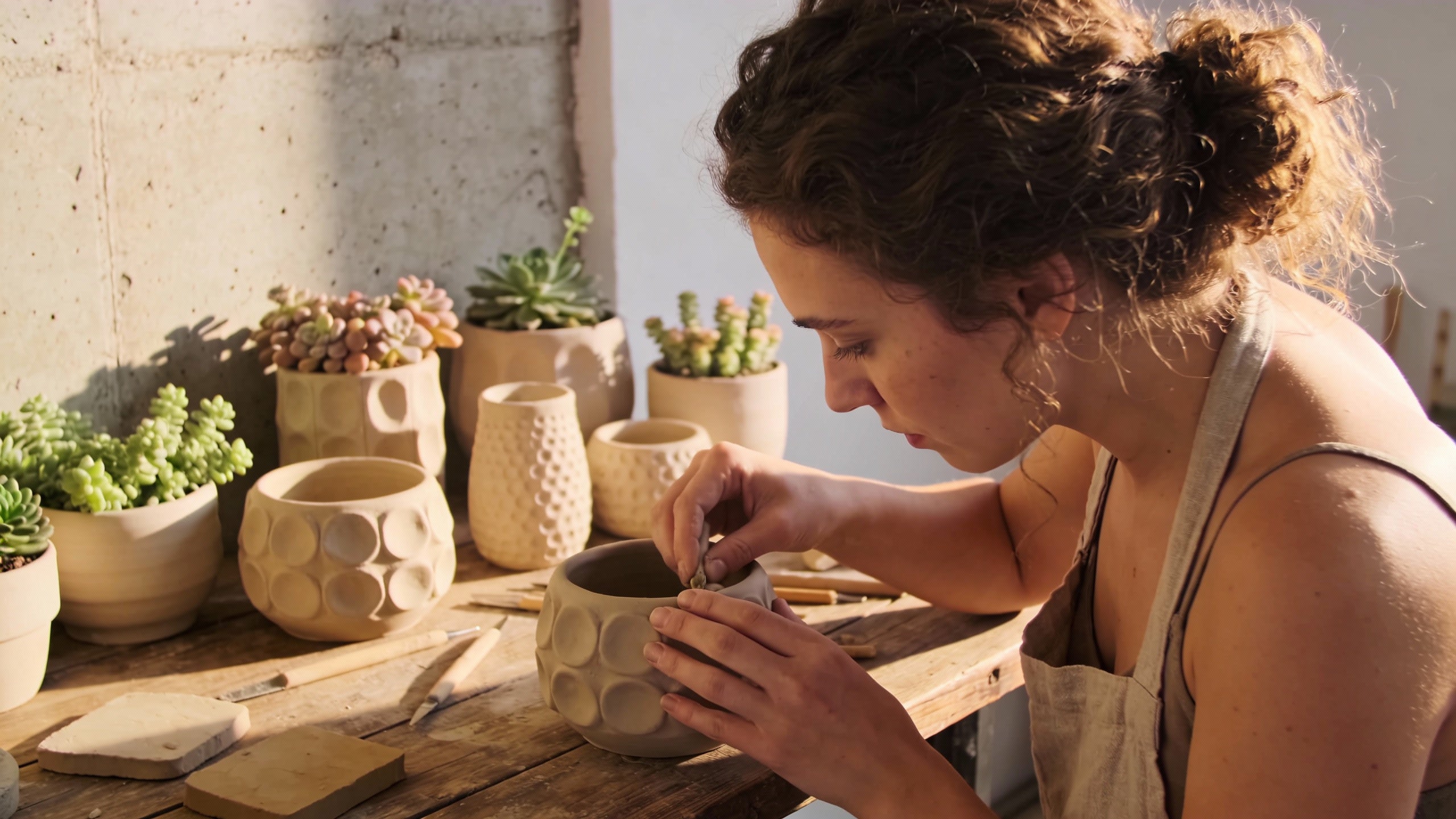
In my own studio, when I run planter-personalization sessions, the “plant killers” are often the most excited participants. They love the idea of greenery, they enjoy the creative act of painting or decorating a pot, but they quietly admit they never quite crack the care routine. Their struggle is usually about systems and fit, not about heart.
So your planter gift is not arriving in a vacuum. It lands in a very human tangle of desire, guilt, and prior disappointments. Understanding that context is the first step toward deciding if your customized planter will feel like a loving nudge or a pointed joke.

The Emotional Question: Irony, Shame, Or Gentle Encouragement?
When we talk about irony in gifting, we are really talking about intent and impact. You might intend a customized planter as a warm wink; your friend might feel it as a spotlight on their “failure.” The same object can be a hug or a jab depending on the details.
Guides from Wirecutter and Lively Root both highlight a simple but powerful principle: the best plant gifts meet people where they are. Wirecutter’s plant gift guide urges givers to pick items that enhance a recipient’s existing setup, whether that is a sunny patio or a small apartment windowsill, instead of forcing them into a new maintenance routine they never asked for. Lively Root recommends choosing plants based on the recipient’s space, climate, lifestyle, and experience, and even suggests tools like gift finders and “jungle calculators” to make that match.
Those same principles apply to customized planters.
When A Planter Feels Like A Punchline
Imagine your friend has a track record of crispy ferns and overwatered succulents. For their birthday, you present a planter painted with “Try Not To Kill Me This Time” in bold letters and tuck inside a thirsty, high-maintenance fern.
Even if you both laugh when they unwrap it, what happens three weeks later when the fern is struggling again? The planter becomes a reminder not just of a gift, but of a joke at their expense. Instead of inviting them into plant joy, you have set them up for a repeat performance of guilt.
This is the risk of leaning too hard into irony. You make the plant’s survival a test of their worthiness, not a shared experiment. Gift editors at places like Wirecutter explicitly caution against “one-size-fits-all” tools that do not align with the recipient’s actual conditions; the same caution applies to a witty planter paired with the wrong plant.
When A Planter Feels Like A Love Letter
Now imagine a different scenario. You design a planter that carries a phrase your friend loves, maybe a favorite book quote or a private joke that has nothing to do with plant failure. Inside, instead of a fussy plant, you nestle a small air plant perched on a bed of sand and stones, plus a tiny card that reads:
“This little one only needs a quick soak every week or so—no soil, no drama. If it ever gets too much, the planter can hold your pens, brushes, or midnight snack spoons. Either way, I wanted you to have a small piece of living, growing beauty nearby.”
This version fits much more closely with the spirit of guides from BloomsyBox and Southern Living, which describe air plants and tough succulents as forgiving, sculptural pieces of decor, and with Lively Root’s framing of live plant gifts as symbols of care and long-term connection. The planter becomes a versatile canvas—first for a low-pressure plant, later perhaps for something else entirely.
In that light, a customized planter is not ironic at all. It is a sentimental object that holds space for your friend’s current life while leaving room for growth.

The Practical Question: Will The Plant Survive This Time?
Emotions matter, but plants also live or die by concrete factors: light, water, and container design. If you want your gift to be more loving than ironic, it needs to quietly stack the odds in your friend’s favor.
Start With Plants That Have Training Wheels
Multiple sources converge on one core recommendation for new or busy plant owners: choose forgiving species.
Lively Root singles out resilient plants such as Golden Pothos and certain succulents as nearly indestructible options that tolerate imperfect watering. Ed’s Plant Shop highlights easy-care classics like Pothos and ZZ plants as particularly suited to beginners or people with hectic schedules. BloomsyBox describes air plants as small, soil-free, and low-maintenance, thriving on occasional misting or a brief water soak. Southern Living points to succulents and other hardy “tough guys” as excellent candidates for indoor containers because they tolerate varied conditions and do not demand constant attention.
If you pair your customized planter with plants from this low-maintenance family, you shift the gift from “test” to “training wheels.” You are not asking your friend to become a different person; you are designing around who they already are.
Here is a simple, real-world example. Suppose you gift your friend a small, hardy succulent in a planter that holds about 4 inches of soil, and you include instructions inspired by Southern Living and Lively Root: check the soil with a fingertip about half an inch down, and only water when it feels dry rather than cool. For most such plants, that might work out to roughly once a week or less, depending on your friend’s home. Even if each watering session takes just a minute, that is about an hour a year of care—far more realistic for someone who already feels overwhelmed.
Designing your planter gift around this kind of honest time investment keeps it in the realm of manageable care rather than a new part-time job.
Choose A Planter That Quietly Helps Them Succeed
The planter itself can either work with your friend or against them. Practical container advice from Better Homes & Gardens and Soltech emphasizes something unglamorous but vital: drainage. Repurposed planters in Better Homes & Gardens’ article, whether boots, barrels, or toolboxes, are only truly effective when they have drainage holes or a layer of pebbles or moss to prevent water from pooling. Soltech’s DIY planter guide likewise warns that any upcycled container should either be drilled for drainage or set up with a gravel layer to keep roots from sitting in water.
For plant-killing friends, this is not just horticultural detail; it is built-in forgiveness. A planter with a drainage hole and saucer, or a self-watering reservoir, means that a slightly heavy-handed watering does not automatically doom the plant.
Wirecutter’s plant gift guide specifically recommends a self-watering pot as a way to ease the care burden. Architectural Digest’s gift ideas include well-designed planters and terrariums that combine beauty with function, demonstrating that containers can be both stylish and care-supportive. Lively Root, again, underscores the importance of adequate root space, proper soil, and consistent watering for any plant gift to thrive.
A customized planter that incorporates these features—good drainage, enough room, maybe even a hidden reservoir—turns from a potential symbol of past failures into a small tool for future success.
Smart Gift Combos For “Plant Killers”
To make this concrete, here is a quick comparison of planter-based gift ideas that work especially well for plant-anxious friends, and the reputable sources that inspire them.
Gift Idea |
Why It Helps A “Plant Killer” |
Inspired By |
Self-watering ceramic planter with an easy-care Pothos or ZZ plant |
The reservoir smooths out irregular watering, while tough plants tolerate low light and small lapses in care. The customized surface makes it feel personal, not clinical. |
Self-watering pot from Wirecutter; easy-care plant suggestions from Ed’s Plant Shop and Lively Root |
Open glass or ceramic planter with an air plant on sand and stones |
Air plants need no soil and only occasional soaking or misting, which BloomsyBox notes makes them great for beginners and busy people. The container doubles as sculptural decor even if the plant is temporarily removed. |
BloomsyBox’s air plant gift ideas; Southern Living’s use of air plants and terrarium-style displays |
Shallow, repurposed container painted by you and planted with small succulents |
Better Homes & Gardens encourages repurposed planters, especially for drought-tolerant succulents that do not need constant watering. Your custom artwork turns a toolbox, drawer, or bucket into something special. |
Better Homes & Gardens on repurposed planters; Soltech on DIY planter personalization |
Customized planter left intentionally empty, plus a gift card to a plant shop |
The friend chooses the plant when they feel ready and can match it to their space and climate, which Lively Root strongly recommends. The planter becomes décor from day one, with no immediate care obligations. |
Lively Root’s emphasis on matching plant to recipient; gift card ideas from Nativo Gardens and BloomsyBox-style DIY kits |
DIY terrarium kit with air plants in a personalized container |
Terrarium kits, described by BloomsyBox as engaging and stylish, let the recipient assemble their own tiny ecosystem. With air plants or succulents, the care remains minimal. |
BloomsyBox’s terrarium kits; Soltech’s terrarium and DIY container guidance |
None of these gifts depends on your friend suddenly becoming a meticulous plant parent. They depend on you designing a planter experience that aligns with what credible plant and gift sources say actually works for real people.

Customization Ideas That Feel Personal, Not Pressuring
Once you know you want to support success rather than test it, the fun part begins: how to personalize the planter itself so it feels like a cherished keepsake, not homework.
Play With Surface Art, Not Just Words
Soltech’s guide to DIY planters focuses on creative surface treatments: painting pots with acrylics, adding mosaics from broken tile, glass, or ceramic, and wrapping containers in fabric or burlap. This is a wonderful blueprint for turning an ordinary planter into a one-of-a-kind gift.
Instead of slogans about plant survival, consider patterns, colors, and motifs that tie into your friend’s life. You might echo the palette of their living room, sketch their favorite city skyline, or paint tiny abstractions of the music they love. Southern Living and Sanctuary Home Decor both emphasize how containers can harmonize with existing decor—gray galvanized metal against bright flowers, layered clay pots echoing rustic interiors, or baskets and buckets that repeat a room’s textures.
In practice, that might mean a soft gray metal planter with white line art if they love minimalism, or a riot of warm oranges and reds if they gravitate toward cozy, autumnal tones. You are sending the message, “I see your style,” not “Prove you can keep this alive.”
Use Stories And Symbols Thoughtfully
Lively Root points out that many plants carry traditional meanings. Money Trees and Lucky Bamboo symbolize fortune and prosperity, Peace Lilies are often given as sympathy gifts, Peacock Plants can stand for new beginnings, and Olive Trees have long been linked with peace and reconciliation.
You can carry those meanings into your planter design. A customized planter for a friend starting a new job might feature subtle leaf motifs inspired by Money Trees, even if you actually plant a simpler, easier care species inside, like a Golden Pothos. A planter meant to celebrate healing after a hard year might borrow shapes and colors from the Peace Lily or Olive Tree, even if the physical plant is a low-maintenance succulent.
By tying the planter’s artwork to a story—new beginnings, peace, prosperity—you shift the focus from “Will this plant die?” to “What chapter of your life are we honoring?” The plant is a supporting character, not the main plot.
Let Them Redefine “Planter”
Better Homes & Gardens and Sanctuary Home Decor both celebrate using unexpected containers as planters: bathtubs, drawers, old buckets, lanterns, even shopping carts. The bigger idea is that containers can be playful, multi-purpose objects in a living space.
If you gift a customized planter to a plant-killing friend, give them explicit permission to repurpose it. You might say, “Today it is a plant home. Tomorrow it can be a place for paintbrushes, remote controls, or your growing stack of favorite pens.”
Uncommon Goods’ gardening gift collection leans heavily into quirky, multi-use objects, and brands like BloomsyBox and Nativo Gardens suggest gift cards and kits partly because they offer flexibility. Your personalized planter can share that spirit. This reduces pressure and keeps the gift firmly in the realm of affection, not obligation.

Pros And Cons Of Gifting Customized Planters To Plant-Killing Friends
Even with the most thoughtful intentions, it helps to be honest about what you are offering. Live plants and planters are not neutral objects; they have emotional and practical consequences. Looking at both sides, through the lens of credible plant and gift guides, will sharpen your decision.
On the positive side, Lively Root frames live plant gifts as sustainable, long-lasting symbols of care. Unlike disposable items, plants change over time, reflecting attention and growth. BloomsyBox notes that small plants and DIY kits make meaningful mini gifts or party favors, precisely because they feel personal and interactive. Architectural Digest and Wirecutter highlight the way beautifully designed planters and terrariums can double as decor, adding genuine joy to daily routines. For a friend who secretly still longs for a thriving windowsill, a customized planter can be a tangible vote of confidence.
On the cautionary side, every plant requires at least some consistent care. Lively Root’s general guideline that most plants need weekly watering, plus occasional repotting and fertilizing, is not nothing. Wirecutter’s emphasis on self-watering pots implicitly acknowledges how many people struggle to remember regular watering. Better Homes & Gardens spends significant time explaining drainage and container prep because it is such a common failure point.
Here is a simple way to think about it.
Upside |
What To Watch For |
Emotional meaning: live plants can symbolize growth, resilience, and presence over time. |
Guilt: a dying or dead plant in a customized planter can feel like a failed test of friendship. |
Practical beauty: planters and containers, as shown by Architectural Digest and Southern Living, can become focal points in decor. |
Maintenance: even forgiving plants need occasional watering, light, and check-ins, which your friend may not want to add. |
Sustainability: many guides, from Lively Root to Nativo Gardens, frame plant gifts and reusable containers as eco-minded alternatives to disposable items. |
Mismatch: if the plant and planter do not suit your friend’s space, climate, or lifestyle, the gift can become clutter. |
Personalization: DIY surfaces and symbols, showcased by Soltech and Better Homes & Gardens, turn an everyday object into a sentimental keepsake. |
Pressure: overt jokes about “not killing this one” or plant-care instructions that feel like a manual can overshadow the tenderness of the gift. |
The key is to amplify the left column and soften the right. That means choosing low-maintenance plants, forgiving container designs, and gentle, open-ended messaging.

A Real-World Gifting Scenario, Step By Step
To bring all of this down to earth, imagine a complete gifting journey for your hypothetical plant-killing friend.
You start by considering their space and habits, following the advice of Lively Root and Wirecutter. They live in a small apartment, travel occasionally, and work long hours. The only reliable light source is a bright but indirect window above the kitchen sink.
Instead of a large floor plant, you decide on a compact planter that can live by that window. You choose a self-watering ceramic pot or a planter with a built-in saucer, inspired by Wirecutter’s recommendation for self-watering containers and Architectural Digest’s love of design-forward pots. The size is modest, maybe around 4 to 6 inches across and tall enough to give roots room without dominating the counter.
For the plant, you select a resilient choice that many sources recommend: perhaps a Golden Pothos or a small ZZ plant, echoing the suggestions from Ed’s Plant Shop and Lively Root. Alternatively, you might pick a small cluster of succulents or an air plant arrangement if the light is strong and the air not too dry, aligning with BloomsyBox and Southern Living guidance on low-maintenance species.
Then comes the customization. Drawing from Soltech’s DIY ideas, you paint the pot with a simple, meaningful design—maybe a constellation from a night you shared, or an abstract pattern in their favorite colors. You avoid any phrases that reference plant death or “fixing” them. Instead, you might tuck a short note inside the planter before you pot the plant that says something like:
“I know your schedule is wild, so I chose a plant that does not need constant fussing. If you can give it a little drink about once a week and a spot near this window, it should be happy. And if life changes and you need a break from plant care, this pot will be honored to hold your paintbrushes, spoons, or secrets instead.”
You include a small, handwritten care card based on Lively Root’s simple guidelines: light needs, approximate watering frequency, and a reminder to let the top half inch of soil dry before watering again, echoing Southern Living’s test-the-soil tip.
When you present the gift, you emphasize the story and the flexibility, not performance. You might mention that indoor plants have been associated with stress reduction and better mood in studies, as Lively Root notes, and that you wanted them to have a bit of that benefit within arm’s reach—but that there is no pressure for this plant to be perfect.
In this scenario, every decision is informed by the best practices and gentle realism found across gift and gardening guides, and the final impression is far from ironic. It is quietly supportive.
Gentle FAQ For The Overthinking Giver
What if they really do not want any plant responsibility at all?
If your friend has told you clearly that they do not want to care for plants, believe them. In that case, consider gifting a customized planter intentionally without a plant, paired with a gift card to a plant shop or nursery. Brands like Nativo Gardens and Lively Root both position gift cards as excellent options when you are unsure what someone wants. The planter then becomes a piece of decor or storage right away, and your friend can decide later if they ever want it to hold something living.
Should I mention their history of killing plants when I give the gift?
Usually, no. Let the planter and your thoughtfulness take center stage. Most people already know their track record. If you need to acknowledge it, keep it light and self-inclusive, perhaps saying something like, “I picked one that forgives missed watering, because I forget too.” This echoes the empathetic tone you see in “lazy gardener” gift guides and low-maintenance product recommendations rather than singling them out.
How do I handle it if the plant dies again?
First, remember that plant loss happens even to experienced gardeners; many guides, from Better Homes & Gardens to Southern Living, implicitly acknowledge this by offering troubleshooting advice. If the plant dies, reassure your friend that the planter is still very much “alive” as an object in their home. Offer to help choose a different, perhaps even lower-maintenance plant next time, or to repurpose the planter for another use. The goal is to make the gift feel like an ongoing relationship, not a one-time test.
A Heartfelt Closing
Gifting a customized planter to a plant-killing friend can be sharply ironic or deeply tender—it all depends on whether you design it as a spotlight on their past or a soft landing for their present. When you choose forgiving plants, supportive containers, and personal, pressure-free customization, your gift stops saying, “Do better,” and starts whispering, “I love the way you grow, at your own pace.”
That is the quiet magic of artful, sentimental gifting: it turns even a humble planter into a small, steady companion on a friend’s shelf and in their story.
References
- https://www.apartmenttherapy.com/how-to-display-houseplants-36607205
- https://www.southernliving.com/indoor-container-gardens-6533541?srsltid=AfmBOooMa7M5nK0WmdidG9n9U-nBmL3lmEarpj1aXBSEhggB1cEx6SxR
- https://www.amazon.com/Unique-Planters-Indoor-Plants/s?k=Unique+Planters+for+Indoor+Plants
- https://www.architecturaldigest.com/story/gifts-for-gardeners-and-plant-lovers-alike
- https://www.buzzfeed.com/sallyelshorafa1/plant-gifts
- https://edsplantshop.com/collections/giftable-goodies?srsltid=AfmBOorBXS5cdbGxU0rjffaPl4LOlYCVUrCZgj7Uap_SHRLK3qAUewSW
- https://www.etsy.com/market/unique_gifts_for_plant_lovers
- https://gardenartisans.com/gift-ideas/?srsltid=AfmBOoqHrn56XJe3D0KsiMKxTJ3t6yxX_nPXuFypgl8AhmNwAkHWJscH
- https://www.livelyroot.com/collections/plants-as-gifts?srsltid=AfmBOoqkosjSJxGCEGsEARqlfbEuPnLLkD52i_kH3ZkaVDNJuSMZY4M1
- https://modernsprout.com/collections/gifts-for-indoor-plant-parents?srsltid=AfmBOop2FR6Rgi6PI8sR9XzrNhIry-ulDhKZNdC49Bw6al4kW9knszAG
