

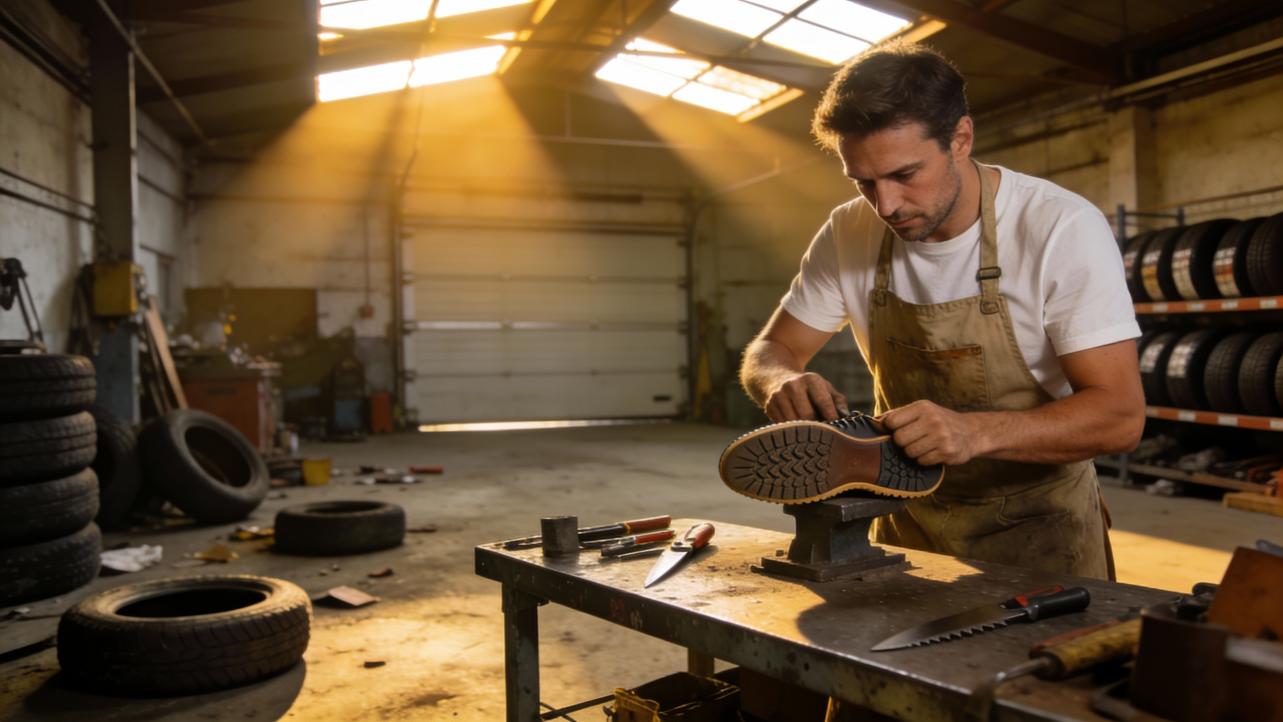
Evaluating the Durability of Custom Soles Made from Recycled Tires
When you gift someone a pair of handcrafted shoes, you are really giving them future memories: errands run on rainy mornings, travel photos, walks with a loved one. For footwear lovers who care about both artistry and the planet, custom soles made from recycled tires feel especially soulful. They turn yesterday’s roads into tomorrow’s journeys.
But sentiment only matters if the soles actually last. Eco claims can be poetic; durability is practical. As an artful gifting specialist and sentimental curator, I want your thoughtful shoe or sandal gift to feel good on day one and still be going strong long after the occasion flowers have faded.
This guide walks you through how to evaluate the durability of custom soles made from recycled tires, grounding every claim in what manufacturers, researchers, and sustainable brands are actually measuring and reporting.
Why Tire-Sole Footwear Captures Hearts And Helps The Planet
Before we zoom in on durability tests and tread patterns, it helps to understand why so many designers are reaching for discarded tires in the first place.
A 2012 Greenpeace report, cited in a case study from Ecü, highlighted fashion as one of the world’s most polluting industries, responsible for a significant share of global wastewater and carbon emissions. At the same time, the World Business Council for Sustainable Development estimates that about 1 billion tires reach end-of-life every year. Many still end up in landfills or informal dumps, where they can leach chemicals and become breeding grounds for pests.
Recycled-tire soles sit right at the intersection of these two problems. Brands like Ecü in Mexico, Tiresoul in the Basque region, Indosole in Indonesia, and Uzuri K&Y in Rwanda all tell the same story in different ways: take an ultra-durable material that already exists, divert it from waste streams, and give it a second life under our feet.
Huadong, a manufacturer that specializes in recycled rubber soles, notes that more than 250 million tires are recycled each year globally and that over 90% of tires are now reused in some way. They estimate that recycling four car tires can avoid about 323 lb of CO₂ emissions, roughly the footprint of using 18 gallons of gasoline. When you imagine a single pair of sandals cut from what used to be tire tread, you begin to see how these small choices add up.
At the same time, an article shared by Trederra on sustainable footwear cites an MIT study: producing a single pair of running shoes can generate up to 30 lb of environmentally harmful emissions, much of it from manufacturing. If you choose a pair with soles that last longer, you are potentially avoiding those emissions from a second, replacement pair. Durability isn’t just a comfort issue; it is a climate issue.
So the emotional appeal of gifting tire-sole shoes is real. You are handing someone a story about transformation: old rubber, new journeys. To honor that story, we need to understand what makes these soles actually durable in everyday life.

What “Durability” Really Means For A Shoe Sole
Durability is more than “it doesn’t fall apart.” In technical terms, it is a combination of how the sole resists wear from friction, how it flexes with your foot without cracking, how it holds its cushioning over time, and how it behaves in heat, cold, and humidity.
Researchers writing in the journal Sustainability, in a study on innovative insoles made from recycled polyester and polyurethane, stress that durability is the most critical feature of functional footwear yet is often missing from everyday products. They point to abrasion resistance, flexibility, and long-term stability as central to true performance.
Practical insole makers echo this. Tread Labs, a company that builds high-performance insoles, talks at length about compression set: the way foams flatten and fail to bounce back. They point out that materials like EVA foam can feel lovely on day one but compress and lose support quickly, while open-cell polyurethane and rigid arch supports hold their shape much longer. OrthoLite, another insole specialist using open-cell PU foam with recycled rubber content, reports that its foams compress less than 5% over the product’s life, which keeps the original fit and cushioning intact.
Although these examples focus on insoles rather than outsoles, they reveal a shared truth: long life comes from the right material recipe and the right construction, not just the material label.
Huadong explains that for rubber soles, five characteristics matter most: hardness, elasticity, wear resistance, slip resistance, and cold resistance. They tune each one using different rubber types (such as NBR, BR, NR, and SBR) to match the climate and usage. That same tuning can happen with rubber derived from tires.
To pull these threads together, here is a simple way to think about durability in custom recycled-tire soles.
Durability factor |
What it means for daily wear |
Evidence from industry and research |
Abrasion and tread wear |
How quickly the sole thins at the heel and ball of the foot |
Huadong highlights wear resistance as a key design variable; Tiresoul reintroduces tire rubber specifically because of its strong resistance to weather and wear. |
Flexibility and crack resistance |
Whether the sole bends with your foot without forming creases or splits |
Tire rubber is engineered to withstand constant flex on the road; ExtraLife Materials repurposes that property for insoles, reporting that its recycled-tire material outperforms traditional foams by about 2x in durability. |
Compression and cushioning over time |
Whether cushioned layers stay supportive instead of flattening |
OrthoLite’s open-cell PU and Tread Labs’ PU top covers are designed to resist compression; the MDPI study on rPET insoles recommends PU laminations to maintain structure and shock absorption. |
Climate and weather performance |
Grip and feel in rain, cold, and heat |
Huadong describes recycled rubber soles as balancing flexibility and durability, with cold-resistant and slip-resistant options; Tiresoul emphasizes that tire rubber offers notable resistance to adverse weather conditions. |
When you hold a pair of custom sandals or boots with tire-based soles, these are the invisible properties you are really asking about.

How Recycled Tire Soles Are Engineered For Longevity
Not all tire soles are created in the same way. Some small artisans literally cut strips from old tires, clean them up, and stitch them directly to the shoe. Larger suppliers often break down tires and rebuild the rubber into engineered compounds. Understanding these approaches can help you gauge how durable a custom pair is likely to be.
From Tire To Outsole Compound
Trederra, a company focused on sustainable footwear outsoles, offers a useful window into modern tire-derived rubber technology. In an exclusive partnership described by Scrap Tire News, Tyre Recycling Solutions in Switzerland uses its Water Pulse process to turn end-of-life tire tread into fine rubber powder. This process uses high-pressure water jets instead of the usual harsh chemicals or high-energy grinding. Trederra then partially devulcanizes this powder and blends it into a rubber compound called Trederra CT-50.
Their masterbatch contains about 67% recycled content; finished outsoles can still carry more than 40% recycled material while meeting the chemical safety standards on industry Restricted Substance Lists. The point is important: they explicitly design this compound to match or exceed performance expectations for mainstream footwear brands, not just niche eco-lines.
Huadong takes a similar “engineer-first” stance. They point out that recycled rubber soles can be molded into countless styles, with features like air cushions and energy-return systems built in, and argue that recycled rubber molded products can have a carbon footprint around 20 times lower than virgin plastic resin products. At the same time, their soles are tuned for hardness, elasticity, and wear.
In Spain, Tiresoul collaborates with a major recycler, RMD, to reclaim tire rubber and turn it into outsoles with fresh tread designs. Basque Science reports that tire rubber was used in shoe manufacturing for years but fell out of favor; Tiresoul is bringing it back with new patterns that maximize material value. Their director notes that tire rubber offers remarkable resistance to adverse weather and wear, which they lean on as a durability advantage.
Across these cases, the pattern is consistent. When recycled tire soles are engineered as modern compounds rather than improvised slabs, the durability story becomes more predictable, and the soles can be tested and tuned just like conventional rubber.
Recycled Tires Under The Footbed
Durability does not stop at the bottom of the shoe. The insole or footbed matters just as much to how “long-lasting” a pair feels. That is where another wave of tire rubber innovation shows up.
ExtraLife Materials, profiled by Rev1 Ventures, is a startup that turns recycled tire rubber into high-performance insoles. Their origin story is wonderfully human: a founder watched his young son pull a worn insole out of an old sports shoe, and the idea sparked that tire rubber could make a far tougher replacement. After nearly five years of research and development, the company reports that its recycled-tire insole material outperforms traditional petroleum-based foams by about twice the durability while providing strong comfort.
Importantly, ExtraLife is positioning itself as a supplier of premium components for big brands, working to deliver price points comparable to fast-fashion materials so that durability doesn’t mean “only for luxury.” That suggests the material is not just theoretically rugged but economically viable, a strong signal for long-term adoption.
Meanwhile, insoles from OrthoLite and Tread Labs show how recycled rubber and durable foams can be combined. OrthoLite includes 5% recycled rubber in its open-cell PU foam, which they describe as retaining long-term cushioning and resisting compression set, and their foams are breathable and machine washable. Tread Labs uses semi-rigid arch supports with a lifetime-like “Million Mile” guarantee, paired with replaceable PU top covers, explicitly to keep support and cushioning from breaking down.
Taken together with the MDPI research on recycled polyester and PU-laminated insoles, these examples make one thing clear: truly durable footwear, whether it uses tires in the outsole, insole, or both, is usually the result of layered systems that share the workload between rugged rubber and smart cushioning.

Practical Ways To Judge The Durability Of Custom Tire Soles
When you are holding a handcrafted pair in your hands or comparing photos online, you do not have a lab in your pocket. What you do have is a set of questions and small tests that can reveal a lot about how a recycled-tire sole might behave over time.
Think of this as the quiet ritual before the gift wrapping: one last check that this beautiful object will become a faithful companion, not a short-lived disappointment.
Start by asking the maker how the sole is constructed. If they mention working with a specialist supplier that engineers recycled-tire compounds, such as the way Trederra or Huadong describe their products, that is a good sign that the material has been tested for wear, flexibility, and safety. If the sole is cut directly from old tires, durability against abrasion and punctures is likely high, but flexibility and bonding to the upper depend heavily on the craft of the shoemaker. In that case, you might ask how long their customers typically wear similar pairs and whether they offer repairs.
Next, look at tread thickness and design. Tiresoul’s renewed tread patterns highlight that design is not only aesthetic; it spreads contact and grip to reduce uneven wear. Deep, well-defined grooves at the heel and ball of the foot can withstand more miles than almost-flat slick designs, especially on rough sidewalks or gravel. In photos, zoom in on these areas; in person, run a fingertip across them and notice how much height the pattern has.
Flex the sole gently in your hands. Tire rubber tends to feel firm and resilient rather than squishy. When you bend the forefoot, watch for any whitening of the rubber or fine surface cracks, which can signal overly stiff or dried-out material. A quality recycled-tire compound should flex smoothly and then spring back without visible stress marks.
Press your thumb into any cushioning layers above the tire sole, especially in sandals and sneakers. If the maker uses PU foams similar to those described by Tread Labs, OrthoLite, or the MDPI study, the material should push back with a steady, supportive feel rather than collapsing like memory foam. Remember that very soft, marshmallow-like cushioning often feels luxurious for a few weeks but tends to pack down, while slightly firmer foams hold their shape far longer.
Durability also lives in the bond between upper and sole. Brands inspired by Ecü’s model of partnering with B Corp–certified suppliers and publishing impact reports often apply that same rigor to testing adhesives and stitching. When you inspect a handmade pair, look closely where rubber meets leather or fabric. Even, dense stitching and clean glue lines, without gaps or bubbles, reduce the risk of delamination long before the rubber itself wears out.
Finally, consider what the brand is willing to promise. Tread Labs’ Million Mile guarantee on its arch supports and YourSole’s 90-day satisfaction guarantee for footbeds show that serious durability claims are often backed by generous return or replacement policies. If a small maker of tire-sole footwear offers resoling, repair services, or clear guidance on expected life, that transparency is itself a durability signal.
Comfort, Weight, And Weather: Pros And Cons Of Tire Soles
Eco-conscious gifting does not mean asking your loved one to walk in stiff, unforgiving shoes. So how do custom soles from recycled tires feel in real life, and what trade-offs should you watch for?
Recycled tire soles generally excel at ruggedness and weather resistance. Tiresoul’s director emphasizes that tire rubber resists adverse weather and wear. Huadong describes their recycled-rubber soles as able to maintain flexibility and slip resistance even at low temperatures, and Trederra’s compounds are designed to meet performance expectations for outdoor footwear. Brands like Cariuma, which uses recycled rubber in sneaker soles, focus on traction, flexibility, and shock absorption, aiming to keep shoes light and grippy enough for everyday city wear.
The main potential trade-off is that tire-based rubber can feel firmer underfoot than some foam-heavy soles. This is not a flaw; it is a characteristic. That is why many brands pair rugged rubber outsoles, whether recycled or not, with softer insoles or midsole layers. The MDPI study recommends combining sustainable non-woven fabrics like recycled polyester with PU lamination to add shock absorption without sacrificing durability. OrthoLite’s and Tread Labs’ examples show how PU foams and molded supports can keep feet cushioned while outsoles handle abrasion.
You can think of it this way: the tire-derived sole does the heavy lifting against the ground, and the insole does the hugging around the foot. When both are thoughtfully chosen, you get a shoe that is both tough and kind.
Here is a high-level comparison to guide your eye when choosing between tire soles and conventional options.
Aspect |
Recycled tire soles |
Conventional rubber or foam soles |
Abrasion resistance |
Typically very high, especially when drawing on tire tread heritage; highlighted by Tiresoul, Trederra, Huadong, and Uzuri K&Y. |
Varies widely; some foams wear quickly at the heel, as noted by Tread Labs. |
Weather performance |
Strong resistance to rain and temperature changes; tire rubber is built for outdoor extremes. |
Depends on material; some EVA and basic foams can harden in cold or become slick when wet. |
Cushioning feel |
Often firmer at the ground contact layer, balanced by insoles and midsoles. |
Softer-feeling soles may use thick foam, which can compress and lose support. |
Environmental story |
Diverts tires from landfills, reduces demand for virgin rubber, and can dramatically reduce carbon footprint, as Huadong and Trederra describe. |
Standard foams and virgin plastics often carry higher emissions and resource use, according to sustainability guides like those from Overlook Boots. |
Design aesthetic |
Runs from rustic, visibly tire-like sandals to sleek compounds visually indistinguishable from normal outsoles. |
Anything from minimalist leather to heavily branded sneaker designs, with or without eco intent. |
The right choice depends on the wearer’s lifestyle. Someone who walks city streets in all seasons or loves weekend hikes will typically appreciate the grounded, reliable feel of a tire-derived sole. A formal office-only shoe might still lean toward slimmer outsoles, but even here, subtle recycled rubber compounds are starting to make their way in as brands experiment.

Durability As A Gift Of Story And Stewardship
One of my favorite examples of durability entwined with meaning comes from Uzuri K&Y in Rwanda. As CNN reports, founders Kevine Kagirimpundu and Ysolde Shimwe transform discarded tires into sandals while training young people, especially women, in shoemaking. The company has already removed about 10 metric tons of rubber from Rwandan landfills, which is roughly 22,000 lb of material that now carries people through their days instead of sitting as waste. Their factory can produce more than 4,500 pairs of sandals each month, and around 1,500 young people have completed their training program.
When you choose a pair of tire-sole sandals from a workshop like that, you are not only betting on the inherent toughness of tire rubber. You are also investing in the durability of skills, incomes, and community stories. The same is true when you support brands like Ecü, which partners with B Corp–certified suppliers and publishes monthly impact reports, or Indosole, whose mission is to “turn waste into value” while engaging local communities.
Durability, in this sense, becomes bigger than the sole. It becomes a promise that the care you put into your gift will echo through many steps, many seasons, and many lives.

Short FAQ: Choosing Long-Lasting Recycled Tire Soles
Are recycled-tire soles really as durable as traditional soles?
Evidence from multiple directions suggests they can be as durable or more so when engineered well. Huadong reports that recycled rubber soles can match or exceed traditional soles in flexibility and wear resistance while drastically lowering carbon footprint. Trederra formulates compounds with more than 40% recycled content that still meet mainstream performance standards and chemical safety lists. ExtraLife Materials reports that its recycled-tire insoles outperform conventional petroleum-based foams by around twice the durability, and Uzuri K&Y’s sandals are built from tire rubber that was originally designed to hold up under the weight and friction of vehicles. The common thread is that durability comes from thoughtful compounding and construction, not just the word “recycled.”
What should I prioritize if I want both comfort and longevity?
Look for a pairing: a rugged recycled-tire outsole plus a well-engineered insole system. Studies summarized in the MDPI Sustainability article indicate that laminating recycled textiles with PU can dramatically improve durability while keeping comfort, and makers like OrthoLite and Tread Labs show how open-cell PU foams and molded supports resist compression over many miles. When a custom shoemaker combines a tire-derived sole with this kind of stable cushioning, you are much more likely to get a shoe that stays both comfortable and supportive over the long term.
How does choosing durable tire soles actually help the environment?
Trederra highlights that producing typical running shoes can emit up to 30 lb of CO₂ per pair, based on the MIT study they cite. Huadong estimates that recycling four car tires avoids about 323 lb of CO₂, similar to burning 18 gallons of gasoline, and that recycled rubber molded products can have a carbon footprint about 20 times lower than those made from virgin plastic resin. If a single pair of shoes with recycled-tire soles lasts longer, you are not only using rubber that has already lived one life, you are also postponing or avoiding the emissions and resources needed to make a replacement pair. Over years of wear, those saved pairs add up.
Stepping back, durable custom soles from recycled tires are a beautiful blend of art, science, and quiet activism. When you choose them for someone you love, you are gifting more than a footprint-friendly fashion statement. You are offering them the steady confidence that every step is supported by materials designed to last, by makers who have thought about the long arc of wear, and by a story that begins on old highways and continues wherever their life leads.
References
- https://research.cnr.ncsu.edu/sustainablebioproducts/wp-content/uploads/sites/55/2020/08/Sustainable-Materials-and-Components-for-Footwear.pdf
- https://www.huadongsoles.com/recycled-rubber-soles-striding-towards-sustainable-development.html
- https://indosole.com/?srsltid=AfmBOopvDt0haUPmGrT-7eHY4vnuq4qApmoh7W2qv4Azhhen2xXND1uv
- https://yoursole.com/us?srsltid=AfmBOoqTv6yAR_F6mJt-HB2IAHx8FgZiB1Pq4UQQDKhS0T8Y00zsZhO2
- http://aim2flourish.com/innovations/ecu-is-transforming-footwear-by-recycling-wasted-tires-in-mexico
- https://basque.science/tiresoul-transforms-used-tires-into-sustainable-shoe-soles/
- https://evocoltd.com/designing-comfortable-and-sustainable-footwear-exploring-insole-material-innovations/
- https://www.ortholite.com/ortholite-benefits/
- https://revolve.media/features/creating-flipflops-out-of-old-tires
- https://shoemakersacademy.com/what-makes-a-shoe-sustainable/?srsltid=AfmBOoqUNN1W4FGmT1o48Oi7p0OkyGNxYJ7GeBRoKZ0b26T7zwIend1S
