

Understanding Laotian Reactions to Custom Mekong River Artifacts
Custom artifacts inspired by the Mekong River can feel like the perfect gift: poetic, place-based, and deeply personal. Yet along the riverbanks of Laos, where the Mekong is both a “Mother of Water” and a source of daily survival, these pieces carry emotional weight you cannot see at first glance.
As an artful gifting specialist, I want to help you hear the heartbeat behind the river imagery, so the next Mekong-inspired keepsake you commission or give feels like a gesture of care rather than a decorative misunderstanding.
The Mother River In Lao Life
To understand Laotian reactions to Mekong-themed art, you first need to understand the place the river holds in everyday life. Travel writers and researchers describe the Mekong as a roughly 2,700‑mile ribbon of water that starts on the Tibetan Plateau and winds through six countries before reaching the sea. In Laos, it is not a backdrop. It is the spine.
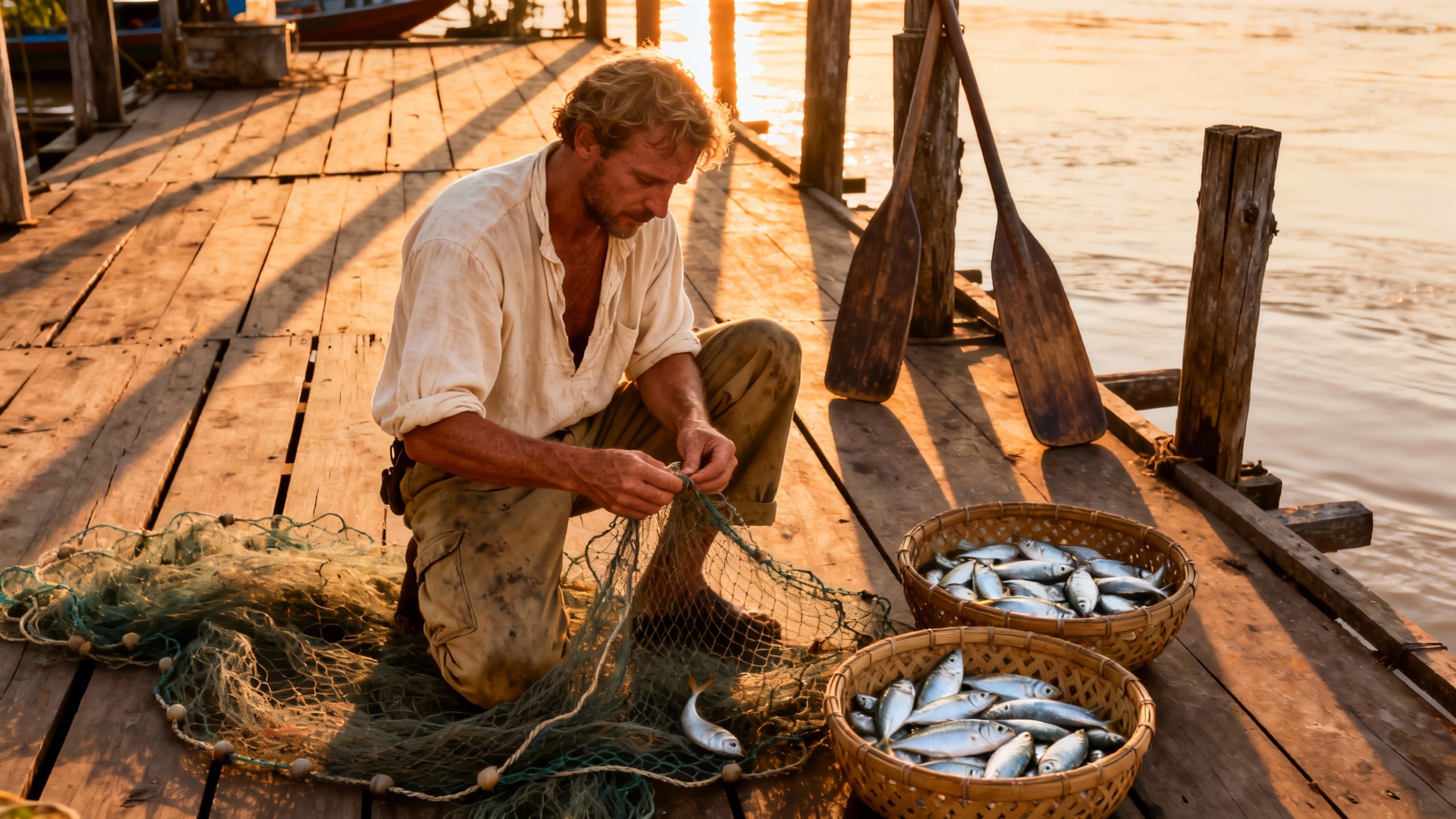
According to accounts gathered by Michigan State University’s Mekong Culture WELL project, nearly 60 million people across the basin depend on the river for freshwater, food, and transportation. In Laos specifically, reports from Lao tourism and travel writers describe the Mekong as a major fishing ground where fish are a primary protein source. Style and culture writers have documented that for families living along the river, about 80 percent of their protein can come from fish, mollusks, and other aquatic animals.
If you imagine a family cooking river fish five evenings a week, that becomes more than 250 dinners a year whose flavor, aroma, and stories all flow from the Mekong. When you place this river on a pendant or a hand-carved panel, many Laotians are not just seeing scenery. They are seeing what feeds their children.
Agriculture, too, clings to the riverbanks. Travel essays on southern Laos describe mineral‑rich soils along the Mekong and nearby plateaus producing much of the country’s vegetables and nearly all its coffee, using irrigation that ultimately traces back to the river. Rice farmers around Muang Champasak, for example, rely on Mekong-fed paddies yet brace for floods when the river rises in the monsoon. One farmer famously compared the Mekong to a “mistress” who can be generous or punishing, a metaphor that reveals how emotionally charged these waters feel.
Transport follows the same current. Wooden “slow boats” running between towns like Houay Xai, Pakbeng, and Luang Prabang carry villagers, monks, schoolchildren, and tourists. In the far south, longtail ferries thread through the Four Thousand Islands, where the river spreads into shallows and tangled channels. For many communities, these boats are the only way to reach markets, healthcare, and schools.
From the perspective of a gift, that means a simple carving of a long, narrow boat can evoke daily commutes, childhood journeys, or the first time someone left their village to study. A river motif in Laos is never just an abstract design.
Sacred currents and quiet rituals
The Mekong is also a spiritual presence. Writers documenting Lao Buddhism describe the river as sacred, central to ideas of purification and life-giving power. Temples cluster along its banks, culminating in places like Wat Phu, an ancient Khmer Hindu temple later adopted by Buddhists and kept alive through local pilgrimage, incense offerings, and flower crafts.
Research from Laos and the wider Mekong region describes how dams and climate-change‑related droughts have already flooded certain sacred fishing grounds and forests, disrupting rituals and ceremonies that once anchored community life. When those same communities participate in collaborative art and mapping projects, as Michigan State University partners have chronicled, they use weaving, storytelling, and painting to reclaim and record river memories.
For someone in Laos, then, a custom Mekong artifact can feel like a portable shrine, a memory capsule, or even a small act of resistance against forgetting. But it can also stir grief if the art hints at places or species that have vanished.

Custom Mekong Artifacts: What Are You Really Gifting?
In the global handmade market, “Mekong River artifacts” can mean many things: hand‑woven wall hangings with river motifs, carved wooden maps tracing the currents past Luang Prabang, jewelry etched with coordinates, or tableware in riverweed-inspired textures.
At their best, these objects function as sentimental bridges. They say, “I see the river that shaped you” or “I honor the place that changed us.” They can comfort a Laotian student studying overseas, commemorate a shared boat journey, or serve as a daily reminder of a village left behind.
Yet the same objects can also slide into tourist trinket territory: generic silhouettes of boats, anonymous “river village” scenes, or mass‑produced “bamboo” products that only pretend to be natural. The difference is not just aesthetic. It shapes how Laotian recipients may react.
Imagine two gifts that cost the same. One is a cheap, laser‑engraved plaque of a random river bend stamped “Mekong” without context. The other is a small hand‑woven piece from a community on the Lao bank, purchased from a cooperative that can name the weaver, the village, and the plant fibers used. Both look “Mekong” at first glance. Only one carries a story that respects the people who live there.

How Laotian Communities May Feel When The River Becomes An Object
Every Laotian perspective is unique, and reactions will vary by age, background, and personal history. But the research on Laos and the wider Mekong basin suggests a few recurring emotional currents you should keep in mind.
Pride, recognition, and tenderness
When custom artifacts capture real river life with care, they can spark strong feelings of pride. Travel accounts from Laos describe children playing on mid‑river sandbars, novice monks swimming where two rivers meet, and women selling hand‑woven baskets to passing boats. The Mekong is woven into childhood memories, work routines, and small economies.
So when a Laotian recipient sees a custom illustration that shows the river bending around Luang Prabang at sunset, or a carving of a slow boat that actually resembles the wooden hulls they know, they may feel seen in a way mainstream global gifts rarely deliver. For someone from the south, an image of the Khone Phapheng Falls or the maze of the Four Thousand Islands can tug on memories of ferry crossings and glimpses of Irrawaddy dolphins.
Writers on the region often joke that “Laos PDR” stands for “Please Don’t Rush,” capturing the unrushed tempo of life around the river. A gift that reflects that unhurried, river‑paced rhythm can feel like a quiet love letter to that way of being.
Unease, grief, and the shadow of dams
However, the Mekong today is not the same river older generations knew. Community‑engaged scholars and photographers have shown how hydropower dams, industrial agriculture, and “water grabbing” have changed the river’s flow, sediment, and fish migrations. In Laos, one dam collapse in 2018 released a wall of water that destroyed villages, killed more than 70 people, and left thousands homeless.
Photographic projects focusing on dam sites like Xayaburi and Don Sahong document villagers losing access to fisheries, fertile sediments, and ancestral ritual spaces. Environmental experts warn that the cluster of planned and existing dams could cause irreversible damage to fisheries and biodiversity that sustain more than 50 million people downstream.
All of this context shapes how a Laotian recipient might feel if your gift, for example, celebrates hydropower as a simple symbol of “modern progress” without acknowledging its human cost. A sleek, abstract sculpture of a dam on the Mekong might feel impressive to an outsider. To someone whose relatives were displaced or whose fishing grounds shrank, it can read very differently.
Even without dams in the imagery, some recipients carry a quiet grief whenever the river appears. As one research initiative framed it, communities describe the Mekong as “effectively dying” in places. A gift that romanticizes the river as untouched paradise can unintentionally rub against those realities.
Hope in sustainability stories
At the same time, there are hopeful currents that many Laotians and their Mekong neighbors care deeply about. Environmental organizations have highlighted sustainable models across the region, where communities turn local resources into livelihoods that protect, rather than deplete, their ecosystems.
In the Mekong Delta, women entrepreneurs have built businesses around bamboo weaving, mangrove crab, coconut nectars, and palm sugar, earning national awards while embracing organic, circular, and climate‑resilient practices. Conservation groups in Vietnam’s delta promote “nature‑based solutions” like flood‑friendly rice and integrated shrimp–rice systems that reduce chemicals and protect wetlands.
Closer to Laos itself, the Mekong River Commission has supported a modernized riverweed product based on Khai Paen, the nutrient‑rich river algae that riverside communities have eaten for generations. Farmers receive training in eco‑friendly cultivation, drying, and packaging, with an eye toward better incomes and river health.
For Laotian recipients who follow these stories, a gift that clearly aligns with sustainable practices can feel like a small vote for the river’s future. Conversely, a piece that markets itself as “eco” without substance can trigger suspicion, especially among younger, globally connected Lao who read about greenwashing.
Materials And Meaning: When “Eco” Is Real And When It Is Not
Material choice is one of the clearest ways you signal what kind of relationship your artifact has with the Mekong. Some materials are deeply rooted in local culinary and craft traditions; others are borrowed from the language of sustainability without truly reflecting it.
BambooVision, a company working in Southeast Asia, offers a cautionary tale. They developed a “bamboo flask” inspired by Mekong Delta artisans but ultimately discovered that the mass‑market version was essentially a stainless‑steel bottle with a thin bamboo veneer, less than one‑tenth of the material by weight. The team later described their own product as a form of greenwashing, arguing that a genuine bamboo flask should be at least half bamboo by composition.
This kind of story matters because it shows how easy it is for a material to become a costume. A Laotian artisan who has worked with real bamboo for generations understands how it feels, smells, and wears. If they encounter a “Mekong bamboo” piece that is mostly metal and plastic, they may read it as a marketing image rather than a sincere homage.
Compare that to riverweed snacks tied to the Mekong River Commission initiative. Khai Paen has long been a local delicacy in Laos. Turning it into a carefully processed, higher‑value product with eco‑friendly methods, better shelf life, and training for farmers directly honors both tradition and livelihood.
Here is a simple way to think through likely reactions, based on the examples documented in regional research and projects.
Design choice |
Likely emotional reaction in a Lao context |
Evidence base behind the reaction |
Thin‑veneer “bamboo” products billed as fully natural |
Possible skepticism once composition is known; feeling that the river is used mainly as a marketing image |
BambooVision’s analysis of its own “bamboo flask” as mostly steel with bamboo as a cosmetic layer |
Riverweed‑inspired or riverweed‑based gifts that clearly reference Khai Paen projects |
Potential pride and curiosity, especially if farmers’ stories and sustainable production are explained |
Mekong River Commission initiative linking traditional riverweed to climate‑smart livelihoods |
Hand‑woven baskets or textiles using known local fibers and patterns from the Mekong region |
Warm recognition, connection to daily life, appreciation of preserved craft |
Travel accounts of Lao riverside villages where children sell hand‑woven baskets to slow‑boat passengers |
Art that glorifies dams without acknowledging impacts |
Mixed feelings; some may see development, others may recall displacement or fish losses |
Community accounts and research on dam‑related displacement and ecological disruption in Laos |
None of this means you must only gift certain materials. It does mean that if you choose something like “bamboo” or “eco‑resin,” you should understand how honest those labels are and be transparent about what the piece actually contains. For a Laotian recipient, integrity often matters as much as appearance.

Story‑First Design: From Token To Tribute
Thoughtful Mekong artifacts begin long before you choose a material or motif. They begin with listening. Research projects led by sociologists and geographers in the basin combine satellite mapping with community storytelling, weaving, and collaborative art to document what the river means to people. Those same principles can guide you as a gift‑giver or brand.
Instead of starting with, “What will sell?” start with, “Whose story is this?” and “Who is telling it?” For example, if your Lao friend grew up near Si Phan Don, the “Four Thousand Islands,” ask which island, which ferry route, which sandbar meant home. A carved map that traces that exact channel, or a watercolor that places a small dot roughly where their village sits, can carry far more emotional weight than a generic “Mekong” outline.
If you are commissioning from a Lao artisan, invite their ideas rather than imposing yours. Share the sentiment you hope to convey—gratitude, remembrance, celebration—and ask which motifs they would choose for that feeling. Artisans whose families have lived alongside the river for generations may propose symbols you would never think of: a particular fish trap, a sandbar tree, a style of riverbank stilt house.
Consider a simple example. Suppose you want to honor a couple’s engagement that took place on a slow boat to Luang Prabang. You could order a generic boat illustration for a similar price. Or you could ask an artisan familiar with that route to sketch the actual profile of the wooden hulls used there, with the low, open decks and roofline that travelers and locals recognize. The cost may be similar, but the second option honors lived experience more faithfully.
Collaboration, Not Extraction
Many of the most inspiring Mekong projects documented by universities, commissions, and NGOs share one trait: they are co‑created with communities, not imposed on them. Michigan State University’s Mekong Culture WELL work, for instance, emphasizes participatory mapping, listening sessions, and collaborative art that foreground local voices. The Mekong River Commission’s riverweed initiative trains farmers and includes local government in scaling the model.
In Vietnam’s Mekong Delta, women‑led cooperatives around bamboo weaving, mangrove crab, coconut nectar, and palm sugar show how local treasures can be turned into sustainable prosperity when communities lead the design. These co‑ops provide dozens of jobs, export to demanding markets in the United States and Europe, and still maintain ties to traditional practices.
When you purchase a custom Mekong artifact that emerges from this kind of collaborative ecosystem, Laotian recipients may sense the difference. There is often a label or story card that names the village or cooperative, explains how sales support training or conservation, or shows photographs of real makers rather than anonymous factory silhouettes.
By contrast, artifacts that only borrow motifs while routing value elsewhere can feel hollow. If the only Laotian trace on a Mekong-themed gift is the word “Laos” printed on a box made far away, that tension may be palpable, especially among recipients who know how much their communities have given to the river and how little they often receive back.

Practical Guidance For Designing Or Choosing A Custom Mekong Artifact
You do not need a development degree to make wiser choices. You just need to let a few grounded questions guide your decisions, drawing on the patterns evident in regional research.
First, ask about origin whenever possible. Where was this piece made? Which side of the river? By whom? Vendors connected to real artisan groups or cooperatives usually have specific answers. If you hear vague phrases like “from the Mekong region” without any detail, that is a gentle signal to dig deeper.
Second, ask about materials and processes. Does the “bamboo” piece actually contain substantial bamboo, or is it mostly metal with a thin veneer, like the flasks critiqued by BambooVision? Are plant‑based materials such as riverweed, rattan, or coconut linked to known sustainable efforts like the riverweed project in Laos or coconut value chains that make full use of husks and shells in the Mekong Delta, where even brick kilns can be fueled by rice husks and the ash reused as fertilizer? While those coconut examples come from Vietnam, they show what circular, low‑waste systems can look like in a Mekong setting.
Third, consider how the artifact speaks to the river’s current struggles. A piece that depicts endangered species, like the Irrawaddy dolphin, without any mention of their vulnerability may feel incomplete. Travel accounts from southern Laos already frame these dolphins as rare sightings in the shifting currents. Including a short note that acknowledges their fragility—and perhaps mentioning that your purchase supports conservation or community projects—can transform a pretty image into a meaningful statement.
Finally, think about the conversation that will unfold when you give the artifact. A simple sentence such as, “I chose this from a cooperative on the Lao bank of the Mekong because I know how much the river means to you,” signals that you are honoring their world, not just acquiring an exotic object.
FAQ: Gentle Answers To Quiet Questions
Is it appropriate to gift Mekong art that shows dams or power lines?
It depends on the recipient and the tone of the piece. Research on Laos shows that hydropower projects bring both national revenue and painful local consequences, including displacement and reduced fish stocks. For someone whose family gained electricity or a new road, a stylized dam might symbolize progress. For someone whose fishing grounds vanished, it might recall loss. If you are not sure of their personal story, it is safer to focus on motifs that celebrate the river’s life—boats, fish, riverweed, sandbars, temples—rather than the infrastructure that has damaged it.
How can I talk about environmental issues without turning a gift into a lecture?
Let the artifact open the door rather than carry the whole message. For example, if you give a riverweed‑based snack set linked to the Mekong River Commission’s project, you might say, “This is made from Khai Paen, the riverweed your country has eaten for generations. The farmers behind this version are working with a regional commission to grow it in a climate‑friendly way.” You are naming the positive effort without overwhelming the moment. If they want to talk more, they will invite that conversation.
What is a safe first custom Mekong gift idea for someone from Laos?
Pieces that echo daily river life, made by people who live along the Mekong, are usually a gentle starting point. Think of hand‑woven baskets or textiles from Lao riverside communities, small artworks of slow boats or sandbar scenes, or thoughtfully sourced riverweed products that tie into existing sustainable projects. These artifacts lean on widely shared river memories and livelihoods rather than contested symbols, and their makers often participate in the same river‑centered culture as your recipient.
A Closing From The Heart
When you place the Mekong on a wall, around a wrist, or in someone’s hands as a gift, you are not just framing a river. You are touching a living, complicated relationship between water and people. By choosing stories over stereotypes, real sustainability over surface “eco,” and collaboration over extraction, you can turn a custom Mekong artifact into what it wants to be at its best: a small, beautiful way of saying to a Laotian friend or client, “I see the river that made you, and I honor it with you.”
References
- https://pdxscholar.library.pdx.edu/cgi/viewcontent.cgi?article=1000&context=is_student
- https://engagedscholar.msu.edu/enewsletter/volume16/issue2/flaim.aspx
- https://www.mrcmekong.org/media-releases/pr-07nov2025
- https://wwfasia.awsassets.panda.org/downloads/key_findings_mekong_river_in_the_economy.pdf
- https://www.ipen.org/sites/default/files/documents/fisheries_mekong_case_study_final.pdf
- https://en.mae.gov.vn/mekong-delta-from-rice-bowl-to-sustainable-green-region-8832.htm
- https://alittleadrift.com/mekong-river-photos-laos/
- https://www.aquaexpeditions.com/blog/top-five-mekong-river-facts
- https://www.bamboovision.com/post/the-bamboo-flask-a-story-of-innovation-reality-and-lessons-learned?srsltid=AfmBOopm6Pq1dnv_rYvYwr3KQPbg2SdVj7Yj__-3PX6g1tgn-VQqIhoI
- https://www.mordorintelligence.com/industry-reports/mekong-delta-logistics-market
