

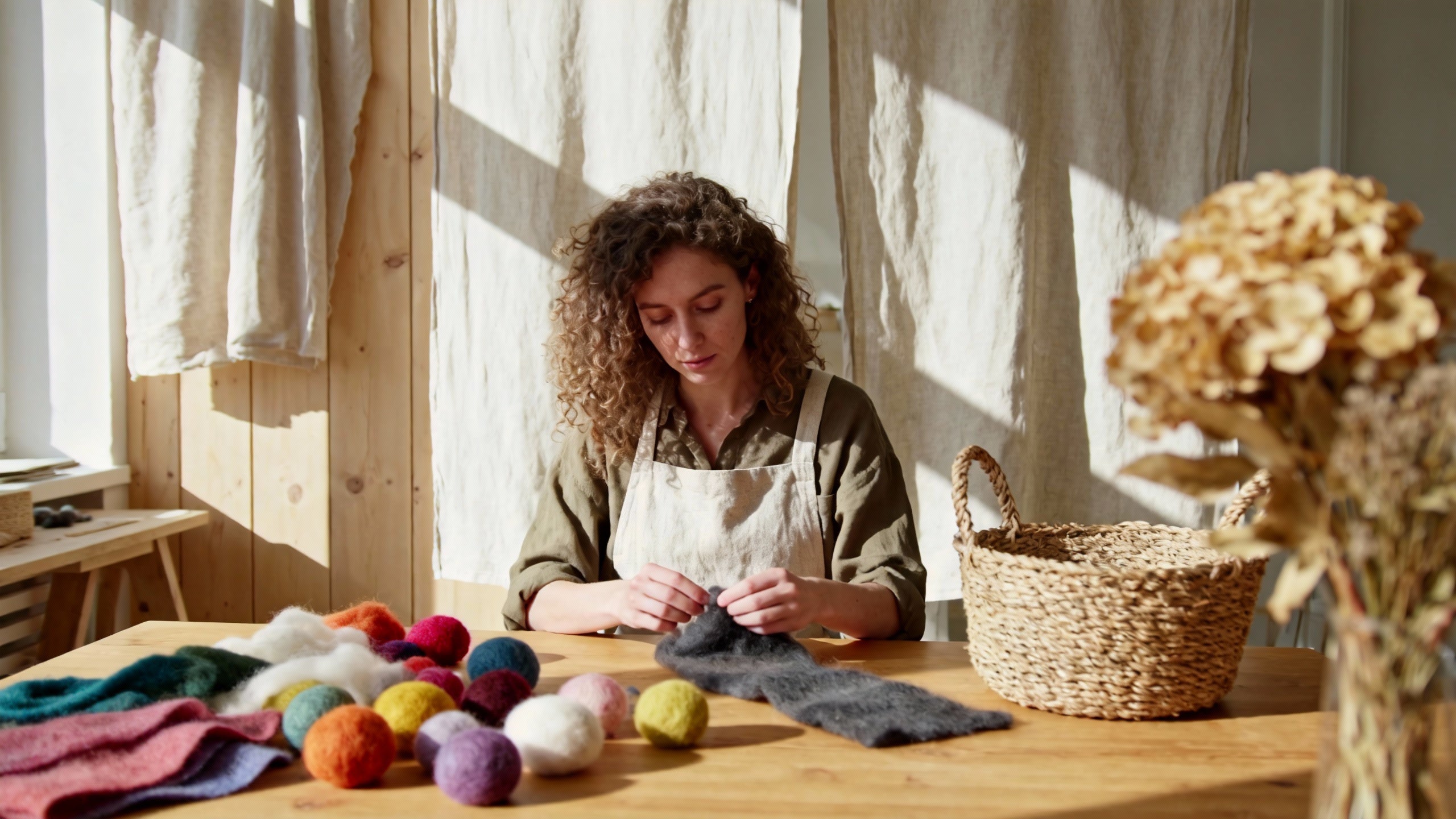
Understanding the Superior Quality of Custom Felt Products
When someone unwraps a handmade felt gift, they are not just receiving an object. They are holding centuries of craft, a whisper-soft texture, and a quiet promise that this piece was made to live with them, not just pass through their hands. As an artful gifting specialist, I reach for custom felt again and again because the material itself carries story, soul, and surprising technical strength.
To truly appreciate why the best custom felt products feel so special, it helps to look beneath the surface: what felt is, which fibers are used, how it is made, and how it performs in everyday life. That is where superior quality reveals itself.
Felt 101: An Ancient Textile With Modern Magic
Felt is not woven or knitted. As textile experts at Tote Bag Factory and GentlePK explain, it is a dense, nonwoven fabric made by compressing fibers with heat, moisture, and pressure until they interlock into a smooth, uniform surface that does not fray. Traditional felt is usually pure wool; contemporary makers also use blends with rayon, polyester, recycled PET, and plant fibers.
Historically, felt is one of the oldest textiles known. Research summarized by Liamique and Felt Right traces it back over thousands of years to nomadic tribes in Central Asia, who relied on thick wool felt for yurts, clothing, and blankets in harsh climates. In Mongolia and neighboring regions, felt is still wrapped around yurts for insulation and weather resistance, while in Turkey, Sufi traditions treat the felting process as a spiritual metaphor, transforming loose wool into a unified whole. Scandinavian bedding, Japanese minimalist crafts, Hungarian ceremonial pieces, and Andean saddle blankets all tell the same story: felt has always bridged function and meaning.
When you choose a custom felt gift today—a wall piece, a keepsake box, a pet cave—you tap into that lineage. You are not just buying decor; you are joining a living tradition that has been refined, reimagined, and made safer and more sustainable by modern makers.

The Materials That Define Quality
Felt’s quality begins long before it becomes a bag, wall panel, or ornament. It starts with fiber choice. Different felts feel and perform differently in the home, and the best custom makers are very deliberate about what they use.
Natural Wool Felt: Warmth, Safety, And Soul
Many specialists still consider wool the gold standard for felt, and the technical details explain why.
FilzFelt describes its German-milled 100% Wool Design Felt as biodegradable, renewable, moisture resistant, self‑extinguishing, and naturally insulating against heat and sound. Bouckaert Industrial Textiles (BIT Felt) notes that wool felts dampen sound, insulate, wick moisture, and resist flame, making them suitable for everything from automotive interiors to office acoustic panels. Liamique goes further, emphasizing handmade felt crafted from pure sheep wool, olive soap, and plant-based dyes, free of synthetic fibers and chemicals.
When I compare premium wool felt to cheaper alternatives in my studio, the difference is immediate. Wool has a springy resilience when you press it, a quiet warmth when you hold it, and a depth of color that comes from the way natural fiber accepts dye. Brands like Brand Felt and Submaterial use Merino wool for architectural panels and wall art because its very fine fibers combine durability with a surprisingly soft hand feel.
From a safety and health perspective, wool felt has compelling advantages. FilzFelt reports no volatile organic compounds in its Wool Design Felt and notes Oeko‑Tex Standard 100 certification, meaning the material meets human‑ecological requirements for direct skin contact. Liamique highlights wool felt’s breathability and hypoallergenic nature, and Lost Horizon Handicraft underscores that wool felt is fully biodegradable and does not shed microplastics at end of life.
There are trade-offs. Wool felt usually costs more than synthetic craft felt. Cotton-based felts, which BIT Felt mentions as popular in some industries, are more flammable than wool, so they are less suitable where fire codes are strict. GentlePK also notes that untreated wool can be vulnerable to moths if stored improperly. Yet for heirloom-quality gifts that will be handled and cherished—baby mobiles, table runners, keepsake boxes, wall art—natural wool felt offers a depth of comfort and safety that justifies the investment.
A concrete example: Lost Horizon Handicraft estimates that a pair of handmade wool slippers can generate up to 70 percent fewer carbon emissions than synthetic slippers, and lifecycle data cited in their work puts wool felt’s carbon footprint up to about 73 percent lower than polyester. That means when you gift wool felt, you are choosing a material that feels better and quietly carries a lighter environmental burden.
Recycled PET Felt: Turning Bottles Into Beautiful Gifts
Recycled PET felt offers a different kind of superiority: it transforms waste into something beautiful and useful.
Material Logiq describes PET felt as a textile made primarily from recycled plastic bottles, pressed into sheets that look and feel like traditional felt and can be recycled again. This process diverts plastic from landfills and oceans and uses fewer new raw materials than many conventional textiles. PET felt panels deliver strong sound absorption, good thermal insulation, and a soft, design-friendly surface that can be colored or printed; colors are embedded into the material so they remain highly colorfast over time.
Morgans Consult highlights PET felt acoustic panels made from recycled bottles as a practical solution for offices and meeting rooms, combining superior sound absorption with durability and low maintenance. Their Ffeel Acoustics range shows how far this material can go: lightweight panels in many shapes and colors, designed to be installed with simple adhesives or frame systems.
From the gifting perspective, PET felt is ideal when you want pieces that are:
- Child- and pet-resilient, thanks to moisture and mold resistance noted by Material Logiq.
- Easy to clean with a soft cloth and water.
- Strong enough to hold their form as wall tiles, organizers, baskets, or laptop sleeves.
One caveat from Material Logiq is crucial: PET felt, like polyester, should not be used near open flames or in situations where cotton protective gear is required because polyester melts under high heat. PET felt is also still a plastic. Its environmental strength lies in using recycled content and supporting recyclability, not in biodegrading like wool. For gifts that will live on walls or desks—acoustic art panels, geometric tiles, or custom organizers—this trade-off often makes sense.
Imagine a home office wall filled with modular PET felt tiles in a palette that echoes someone’s favorite painting. Morgans Consult recommends placing panels around typical speech height, about a few feet above the floor, to reduce reflections and improve communication. Material Logiq notes that these panels help mitigate noise-related health risks like stress and concentration problems. In everyday terms, that means your custom gift can literally make conversations in that room calmer and clearer.
Plant And Mixed Fibers: Rayon, Jute, Hemp, And More
Beyond wool and PET, makers have a growing palette of natural fibers.
BIT Felt describes rayon felts, derived from wood pulp, as renewable and biodegradable, used as hydroponic growing media and in medical and orthopedic padding where softness and absorbency matter. Cotton felts, often made from recycled denim “shoddy,” appear in furniture padding and insulation, especially in sustainable construction, though BIT notes that cotton is more flammable than wool and therefore less favored in some applications.
Bast fibers like jute and hemp are strong, lightweight, and biodegradable. BIT Felt reports that they are increasingly used in automotive molded parts and acoustic insulation for door panels, trunk liners, dashboards, and eco‑friendly packaging. In agriculture, hemp and jute felts help control erosion and weeds before decomposing back into the soil.
For custom gifts, these fibers shine when you need structure and a clear eco story: think sturdy organizers, storage bins, or packaging that a recipient can reuse. Teeocreations also mentions plant-fiber and seagrass-based felts in eco-friendly home decor, underscoring a broader trend toward renewable fibers.
Their main limitations are feel and specialization. Jute and hemp can be coarser to the touch than Merino wool, and cotton felts require careful fire-safety consideration. These fibers are excellent structural actors and sustainability heroes, but they are rarely the first choice for a child’s toy or a scarf that brushes against the neck.
A Quick Comparison Of Felt Materials
Here is a concise way to think about the main felt types when choosing a gift.
Felt type |
Core qualities (from sources) |
Gift strengths |
Trade-offs |
Natural wool felt |
Renewable, biodegradable, moisture resistant, self‑extinguishing, excellent acoustic and thermal insulation; strong, elastic fibers that felt tightly (FilzFelt, BIT Felt, Liamique) |
Luxurious hand feel, deep color, warmth and breathability, safe on skin, compostable at end of life; ideal for heirloom decor, wearables, baby and pet items |
Higher price, needs gentle care and moth-safe storage; cotton-based felts are more flammable |
Recycled PET felt |
Made from recycled plastic bottles, durable, colorfast, moisture and mold resistant, strong sound absorption (Material Logiq, Morgans Consult, Felt Right) |
Great for acoustic wall art, office gifts, organizers, and kid- and pet-friendly surfaces; uses waste plastic and supports recyclability |
Still a plastic, not biodegradable; must be kept away from high heat or flames |
Synthetic acrylic or blends |
Budget-friendly, widely available in many colors and thicknesses; easy to cut and glue (Tote Bag Factory, Teeocreations, GentlePK) |
Good for cost-conscious crafts, seasonal decor, and quick DIY packaging; accessible entry material for makers |
Derived from petrochemicals, can shed microplastics, less breathable, may feel less premium |
Plant and mixed fibers |
Rayon, jute, hemp, recycled cotton; renewable, often biodegradable, strong and moldable (BIT Felt, Teeocreations) |
Strong structure for organizers, packaging, and eco-themed designs; compelling sustainability narrative |
Texture may be coarser, and cotton felts are more flammable; best for structural rather than cozy items |
No single felt is “best” in every situation. The superior choice is the one whose fiber story matches how your recipient will live with the gift.

The Craftsmanship Behind Custom Felt
Fiber choice is only half the story. Two felt gifts can use similar materials yet feel completely different because of how they are made. Custom work tends to shine in three areas: density and construction, surface finish, and design.
Density, Thickness, And Needlework
Industrial and artisanal producers alike use techniques such as wet felting, needle punching, and pressing to control density and thickness. BIT Felt focuses on high‑performance needle‑punched felts starting from about 6 oz per square yard, engineered for durability and acoustic performance. HSFelt describes pressed wool felt as a sustainable material that delivers strong insulation and durability, with modern machinery allowing precise control of thickness and shape.
Tote Bag Factory explains that pressed and needle felts are built up in layers, then heated and rolled to control density. That density is not just a technical detail. For a bag or laptop sleeve, denser felt means better impact protection and shape retention. For acoustic art, it means better sound absorption. For coasters or table mats, it means they stay flat and resist wear.
In everyday practice, you can feel this difference. A discount-store synthetic felt sheet often flops and pills. By contrast, Designer Felt from Brand Felt, made from Merino wool, is short‑sheared to minimize pilling, lightly treated to repel water, and thick enough to behave as a structural material. A custom maker working with such felt can cut crisp shapes that hold up year after year.
Surface Finish, Dyes, And Health
The most thoughtful felt makers treat dye and finish as part of the gift’s wellbeing story.
Liamique crafts 100 percent wool felt using olive soap and plant-based dyes, avoiding synthetic fibers and added chemicals. Lost Horizon Handicraft emphasizes azo‑free dyes and soap-based felting that keeps water use low. FilzFelt’s Wool Design Felt uses plant‑based textile dyes and meets Oeko‑Tex Standard 100 for human-ecological safety, with low VOC emissions verified by testing. Brand Felt notes that its Designer Felt uses eco-friendly, vegetable-based dyes and meets Oeko‑Tex Standard 100 as well.
The result is not just a beautiful palette of colors; it is a felt surface that is safe against bare skin and suitable for nurseries, meditation rooms, and spaces where people breathe deeply and rest their faces on the material. Submaterial, working with FilzFelt’s wool, adds that their wall panels have natural moisture resistance and self‑extinguishing behavior, which helps in commercial settings where fire performance matters.
For a custom gift, ask your maker what dyes and finishes they use. A felt baby mobile made from Oeko‑Tex-certified wool and plant-based dyes tells a very different story than one cut from unknown synthetic felt. Both may look adorable on day one, but the former aligns with a larger intention: to surround someone with materials that respect their body and the planet.
Artistic Design And Personalization
Felt is remarkably sculptable. That is one reason architects and designers love it.
Submaterial’s design stories with FilzFelt show how designers use wool felt to build deeply dimensional wall systems like the Imprint wallcovering, inspired by the pitted limestone of New Mexico’s Sandia Mountain. Pieces are cut, stacked on edge, and arranged into seemingly random yet mathematically thoughtful surfaces that soften sound and draw the eye. Each piece is handmade in their New Mexico studio, with options for bespoke sizes and colorways.
Companies like Felt Right invite everyday users to design their own acoustic art walls from modular tiles, turning felt into a creative canvas. Laser Felt focuses on eco-friendly felt wall coverings, hanging panels, and tiles that merge what they call “sustainable elegance” with artistic freedom. Brand Felt offers custom fabrication services, taking sketches or digital files and converting them into intricate cut shapes or branded panels.
In packaging and soft goods, GentlePK and Tote Bag Factory both emphasize how felt can be customized in color, thickness, texture, and branding. Logos can be cut out or printed, and felt tote or wine bags can be tailored to specific products or events.
This personalization is where felt becomes especially powerful for sentimental gifting. You can echo the muted rose of a wedding bouquet in a wall panel, match a baby’s birthstone color in a crib organizer, or design a cat cave in the exact shade of a beloved pet’s fur. The same technical qualities that make felt an industrial workhorse allow you to craft a story-driven, deeply personal object.

Performance Benefits You Can Feel Every Day
Superior felt quality is not just theory. It changes how a piece behaves in the home: how it sounds, how it insulates, how long it lasts, and how gently it treats the environment.
Acoustic Comfort: Quieting Life’s Background Noise
Sound-absorbing felt panels work by letting sound waves enter their porous structure, where friction between fibers converts sound energy into tiny amounts of heat instead of bouncing it back.
Arturel describes sound-absorbing felt panels as dense, fibrous wall or ceiling treatments that reduce echo and reverberation in offices, studios, classrooms, and homes. They highlight applications not just on walls but as ceiling clouds, movable partitions, and even sound-absorbing rugs. The benefits are human-centered: clearer speech, reduced distractions, and a more tranquil atmosphere.
Material Logiq and Morgans Consult echo this, emphasizing how PET felt acoustic panels reduce noise in workspaces and how strategic placement—at typical speech height on walls or as overhead baffles—improves communication and comfort. Canadian Interiors notes that many acoustic felt products, when properly configured, achieve Noise Reduction Coefficient values in the approximate range of 0.6 to 0.9, while FilzFelt reports NRC values up to about 1.2 for its acoustic baffles. In simple terms, a panel with an NRC of 0.7 absorbs about 70 percent of the sound energy in tested mid‑ to high‑frequency ranges, which listeners perceive as a noticeable softening of the room.
Imagine gifting a set of custom wool or PET felt panels for a loved one’s open-plan living room. With panels placed along the wall behind the sofa and a few overhead, the sharp ring of conversation and clatter softens. Movie dialogue becomes clearer, shared meals feel more intimate, and the whole space shifts from echoey to enveloping. That is superior felt quality at work.
Thermal Comfort, Protection, And Longevity
Felt’s dense yet soft structure simultaneously cushions and insulates. Tote Bag Factory highlights its thermal and acoustic insulation and impact protection, which is why felt appears in chair pads, table protectors, and laptop sleeves. BIT Felt and HSFelt emphasize durability under high loads in industrial contexts; those same qualities make a felt table runner or storage basket far more than decorative.
Submaterial notes that wool felt wall coverings help insulate commercial spaces thermally as well as acoustically. Lost Horizon points out that wool felt slippers and cat caves keep wearers warm while allowing breathability. Liamique and Teeocreations both describe wool felt as durable and resistant to wear and tear when properly made, with a tendency to maintain its shape over time.
For gifting, this means a custom wool felt trivet can protect a wooden table from both heat and scratches, a thick Merino felt tote can shield a laptop from bumps without hard plastic, and a felt jewelry tray can soften the clink of metal while protecting surfaces. These pieces do quiet work in the background, extending the life of other belongings.
Environmental Impact: When Quality And Sustainability Align
Superior quality in felt is increasingly intertwined with sustainability, and here the numbers are striking.
Lost Horizon Handicraft positions wool felt as extremely eco‑friendly. They describe wool felt as 100 percent biodegradable, decomposing in around 12 to 18 months when composted, and note that felt production uses about 30 to 40 percent less energy than cotton and synthetic textile production. They also present carbon-impact data showing per‑kilogram carbon emissions for polyester, non‑organic cotton, and wool felt, with wool felt offering up to a 73 percent lower carbon footprint than synthetics. Specific product examples include wool dryer balls, cat caves, and slippers, each with estimated energy use and carbon‑saving percentages in the range of roughly 68 to 80 percent compared with synthetic alternatives.
FilzFelt highlights the relatively low environmental impact of wool processing, the rapid renewability of sheep’s fleece, and the suitability of their Wool Design Felt for commercial composting at end of life. They also point to animal welfare practices where sheep are well‑fed, kept comfortable, and shorn regularly for their own health.
On the synthetic side, Material Logiq and Morgans Consult frame PET felt as part of a circular story. By using post‑consumer plastic bottles, manufacturers divert waste from landfills and oceans and reduce demand for virgin plastics. Material Logiq notes that PET felt manufacturing can be more energy-efficient than some traditional materials, and that the resulting products are durable and recyclable.
Laser Felt and Felt & Yarn emphasize that choosing eco-friendly felt—whether wool, recycled PET, or other natural fibers—is a practical step consumers and designers can take toward a greener future. HSFelt points to growing demand for pressed wool felt in construction as part of broader circular-economy trends.
When you give a custom felt gift, especially one made from natural wool or recycled PET with verified certifications like Oeko‑Tex, Fair Trade, or ISO 9001 (as recommended by Lost Horizon), you are not only gifting an object. You are gifting a carefully considered environmental stance.
How To Choose Superior Custom Felt Gifts For Your Occasion
With so many options, how do you decide which custom felt piece is truly right for your recipient and occasion?
Start With How The Gift Will Be Used
Think first about daily life rather than the product category. For something worn against the skin, such as a scarf, hat, slippers, or baby booties, premium wool felt from sources similar to FilzFelt, Liamique, or Brand Felt is often the best choice. Its breathability, softness, and lack of harmful finishes matter more there than extreme structural stiffness.
For gifts that live on walls or in workspaces, like acoustic art, pinboards, or room dividers, you might choose either dense wool felt or recycled PET felt panels such as those described by Arturel, Material Logiq, and Morgans Consult. The superior choice depends on whether compostability or plastic-waste reduction speaks more to you and your recipient.
For organizers, packaging, or sturdy storage pieces, blends, plant‑fiber felts, or structurally robust PET and wool felts described by BIT Felt, GentlePK, and Teeocreations can be ideal. Their strength and moldability lend themselves to baskets, bins, and reusable gift bags that keep their shape.
Ask Makers The Right Questions
The most reassuring custom pieces are the ones whose makers can answer your questions clearly. Drawing on guidance from Lost Horizon Handicraft, FilzFelt, GentlePK, Tote Bag Factory, and Brand Felt, consider asking about fiber content, dye and finish, origin, and thickness.
You might ask whether the felt is 100 percent wool, a wool blend, PET from recycled bottles, or primarily synthetic acrylic. You can inquire whether dyes are plant-based, low-impact, or certified azo‑free, and whether the finished felt meets standards such as Oeko‑Tex Standard 100, Fair Trade, Sedex, or ISO 9001. Those certifications, especially in the case of Lost Horizon’s fair‑trade workshops in Nepal or FilzFelt’s human‑ecological compliance, indicate attention to both people and planet.
It is also reasonable to ask about thickness or weight. Makers familiar with industrial references from BIT Felt or HSFelt may describe their felt in ounces per square yard or by millimeter thickness. You do not need to become a technician; simply listen for confidence and specificity. A maker who can tell you, for instance, that their wall panel uses thick Merino wool felt similar in density to the materials Submaterial uses for commercial wall coverings is signaling craft awareness.
Balance Budget, Impact, And Sentiment
Teeocreations notes that wool felt sheets commonly retail around a few dollars each for small craft sizes, while premium architectural felts and handcrafted pieces naturally command higher prices. Synthetic and blended felts offer accessible entry points for larger pieces or experimental designs.
The secret is to align budget with impact. For a corporate client, a set of PET felt acoustic panels made from recycled bottles might offer the most compelling story: better acoustics, visible sustainability, and customized colors or branding. For a new baby, perhaps just one or two small, meticulously crafted wool felt items—a mobile, a wall banner with the child’s name—carry more meaning than a dozen cheaper decorations.
The most enduring felt gifts are often those that blend a well-chosen material with deeply personal design: a wall panel in the colors of a favorite landscape; a felt tote with a subtle monogram; a set of wool dryer balls packaged with a simple note about their estimated carbon savings compared with synthetic alternatives, drawing on Lost Horizon’s eco facts. When the story behind the piece is clear, even a modest item feels luxurious.
FAQ: Caring For And Comparing Custom Felt Gifts
Is wool felt really better than synthetic felt for gifts?
“Better” depends on the gift’s purpose. For items that touch skin, live in nurseries, or are meant to last for years, wool felt has strong advantages. FilzFelt and Liamique emphasize its breathability, natural flame resistance, and lack of harmful finishes, and Lost Horizon documents its biodegradability and lower carbon footprint versus synthetic fibers. That makes wool an excellent choice for heirloom-quality decor, wearables, and baby or pet items.
Synthetic and PET felts, as described by Tote Bag Factory, Material Logiq, and Morgans Consult, can be superior when you need budget-friendly materials, extreme color variety, or large acoustic installations that must be light, tough, and recyclable. For many gifting situations, a mix is ideal: wool for pieces that comfort the body, PET felt for panels that comfort the room.
How do I care for a custom wool felt piece so it lasts?
Liamique recommends gentle spot cleaning with a damp cloth and mild soap, avoiding excessive water and storing pieces away from direct sunlight to protect plant-based dyes. Teeocreations suggests washing wool felt carefully in cool water with mild detergent, never using bleach, and avoiding wringing or twisting; instead, press out excess water and lay the item flat to dry to prevent distortion. Submaterial adds that wall panels can be lightly vacuumed with a brush attachment or cleaned with a lint roller, with tougher stains addressed using mild detergents approved by the maker.
In practice, this means treating wool felt a bit like a fine sweater. Regular light care—dusting, spot cleaning, mindful storage—goes a very long way. Always check maker-specific care notes, especially if the felt includes special finishes, embroidery, or mixed materials.
Will felt gifts trigger allergies or feel “sheepy”?
Liamique describes wool felt as breathable and resistant to dust mites and common allergens, and FilzFelt’s Oeko‑Tex certification and low‑VOC testing support its use in sensitive interior environments. Many people who react to cheap “itchy” wool garments are surprised by how soft Merino felt can feel, especially when it is carbonized to remove impurities, as Brand Felt notes for its Designer Felt.
That said, a small percentage of people may be sensitive to lanolin or to any animal fiber. For those recipients, recycled PET felt as described by Material Logiq and Felt Right can be a safe alternative, especially for wall art and organizers that do not directly touch skin. If you are unsure, ask the maker for a small swatch first; that simple step can reassure both you and your recipient.
When you choose a custom felt piece, you are curating more than color and shape. You are choosing between fibers that grow back year after year on a hillside, plastics rescued from the waste stream and given a second life, and blends engineered for strength and structure. You are also honoring artisans who coax warmth, quiet, and beauty out of those fibers, whether in a tiny workshop or a design studio.
If you let performance, material story, and personal meaning guide you, the felt gifts you choose will not just decorate someone’s space. They will live with them, soften their days, and quietly remind them that someone cared enough to choose a material with heart.
References
- https://www.filzfelt.com/felt
- https://www.icemoto.com/why-customize-wool-felt-products-for-sustainability.html
- https://brandfelt.com/designer-felt/
- https://www.csicreative.com/poshfelt/
- https://www.gentlepk.com/what-is-felt-fabric/
- https://liamique.com/handmade-felt-the-timeless-art-of-crafting-with-natural-wool/
- https://losthorizonhandicraft.com/sustainable-felt-crafts-eco-facts-retailers-can-use/
- https://www.refelt.com/the-basics-of-pet-felt-material/
- https://arturel.com/blogs/archives/sound-absorbing-felt-panels-acoustic-solutions?srsltid=AfmBOoq5oUI3NU0EVagkiZsK4yBEpvQR1ZW_e_nfbiXt6NuvmbXCRMRg
- https://bitfelt.com/resources/natural-fiber-nonwoven-felts-eco-friendly-applications-across-industries/
