

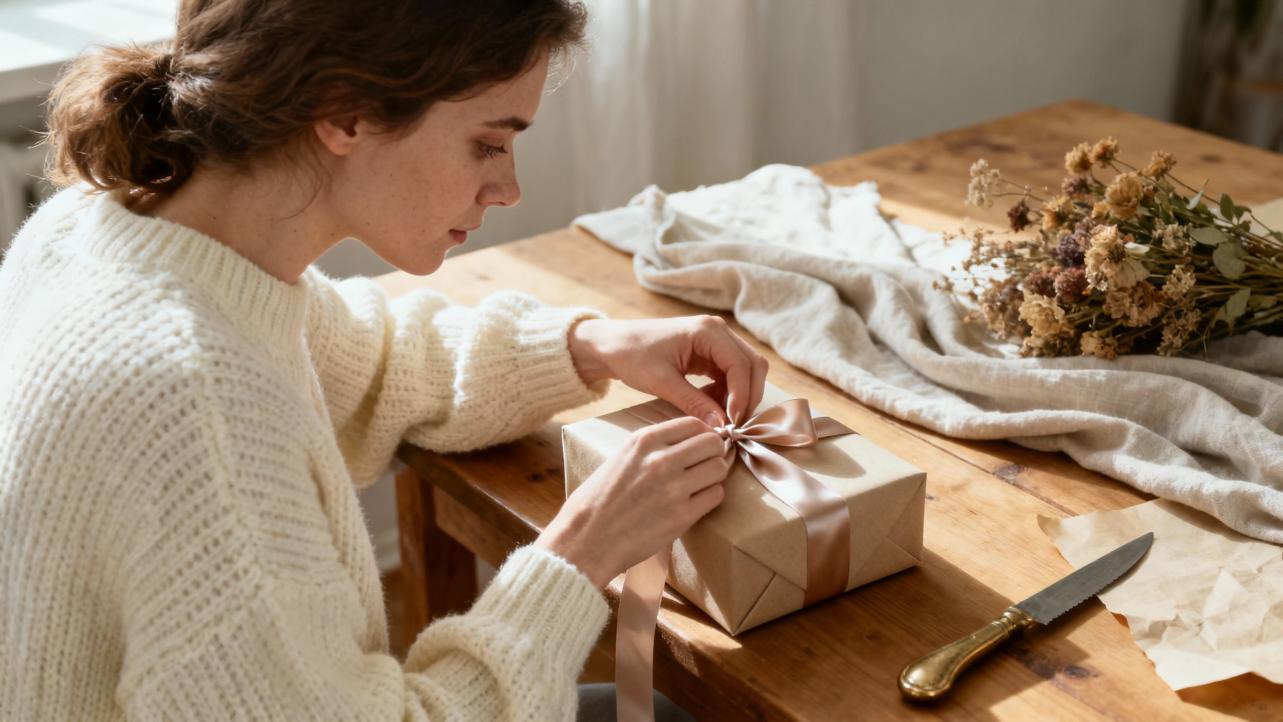
The Heart Behind the Gift: Cultural Meaning and Taboos in Chinese Gift‑Giving
When I help people choose meaningful presents, I see again and again that the most moving gifts are rarely the most expensive ones. Nowhere is that more true than in Chinese culture. A simple swan feather, carried miles as in the old Chinese fable, becomes more precious than gold because of the effort and intention behind it. One university exchange program described how a Chinese student gave an American visitor the tiny pocketknife his father had given him at seven years old; materially it was modest, symbolically it was immense. To understand Chinese gifts is to understand a whole way of seeing relationships, duty, and affection.
In this guide, I will walk you through the cultural roots of Chinese gift‑giving, how gifts sustain relationships, the most important taboos to avoid, and how to design thoughtful artisanal or personalized gifts that feel deeply respectful. The goal is not to make you anxious about “rules,” but to give you the cultural literacy to let your generosity shine clearly instead of being misunderstood.
From Li to Liwu: Ritual Roots of the Chinese Gift
One of the most illuminating insights comes from Chinese scholars who unpack the word for “gift,” liwu. As reported in a Chinese culture exhibition on rites and gifts, liwu is composed of two parts: li and wu. Li carries meanings of rites, etiquette, politeness, and ceremonial order. Wu refers to the physical object. Put together, a “gift” is not merely a thing; it is an object wrapped in ritual, relational meaning, and moral expectations.
Researchers who trace the history of li point out that the character originally resembled a sacrificial vessel holding jade pieces. In early China, these vessels were used in offerings to gods and ancestors. Over time, li came to refer not only to sacrificial offerings but also to etiquette, ceremonies, and proper conduct in political and family life. Before there was a modern legal code, li helped structure society: regions sent tribute to the court, the court offered to ancestors and deities, and through this web of giving, hierarchy and solidarity were maintained.
Later thinkers contrasted li with fa, or law. Law punishes wrongdoing after it happens. Li, by contrast, sets norms and expectations so people do not cross certain boundaries in the first place. Confucius emphasized this again and again, urging people not to look, listen, speak, or move in ways that violated propriety. Within this framework, gift‑giving became an everyday ritual through which respect, loyalty, and moral character were expressed.
You can still see these roots today in rural ritual life. One contemporary researcher’s fieldwork in a village called Juxi describes how, year after year, families gather to offer pork, chicken, alcohol, incense, candles, and paper ingots to their ancestors. Every ten years, the village holds a large ceremony with offerings as large as a whole cow, pig, and sheep. These are “gifts” too, but they are directed toward ancestors and shared history. The offerings knit together generations, affirming that people are who they are because of a long line of relationships.
Li and Wu at a Glance
You can think of the li–wu pairing this way:
Concept |
Meaning in Chinese tradition |
How it shapes gifts |
Li |
Rites, etiquette, propriety, ceremony, relational rules |
Governs when, how, and to whom you give; keeps hierarchy and respect clear |
Wu |
Objects, things, material items |
The physical carrier of sentiment, obligation, and cultural symbolism |
Liwu |
Gifts as ritual objects |
Every present is both a thing and a tiny ceremony in itself |
When you choose or design a gift for a Chinese recipient, you are not just picking an object; you are stepping into this older world where things are never neutral. They are vessels for respect, affection, and sometimes obligation.

Gifts, Guanxi, and Face: The Social Glue
Modern research on Chinese society often uses the word guanxi to describe informal social networks and the exchange of favors that runs through them. Scholars define guanxi as a system of ties where asymmetric exchanges are normal; one person gives today, another repays in a different way later. It is not a simple barter. It is a long, unfolding conversation.
Guanxi has three emotional pillars that show up clearly in gift‑giving. Ganqing refers to affection, sentiment, and emotional closeness. Renqing refers to favors and obligations, the sense that a kindness should be remembered and eventually repaid. Mianzi, or face, is the prestige and respect one enjoys in the eyes of others. A gift can strengthen ganqing by saying “you matter to me,” increase renqing by creating a debt that will be repaid with care, and protect or enhance mianzi by showing that the giver knows what is appropriate.
Scholars of literature have even shown how gift exchange drives the plot in classic novels. In detailed studies of the late‑Ming masterpiece Jin Ping Mei, researchers note that the main character’s fortunes rise and fall through a dense network of gifts and counter‑gifts. Because gifts are often unequal in value and timing, the imbalance creates tension and suspense. The same asymmetry appears in real life: when someone gives more than they “need” to, they are often signaling a desire for a deeper, longer‑term relationship.
Western observers sometimes misinterpret this. As one analyst writing for a Christian organization on Chinese culture points out, many foreigners see unbalanced reciprocity as manipulative or corrupt. They may treat every generous gift as potential bribery, or rush to repay every kindness immediately so they will not “owe” anyone. In Chinese settings, that can backfire. If you repay a gift instantly and exactly, you may unintentionally signal that you do not want an ongoing relationship. You are closing the account instead of allowing a gentle, long‑term give‑and‑take.
This does not mean that all gifts in China are innocent. Business scholars and ethicists have documented how gift‑giving can slide into outright bribery. A key insight from social research, though, is that gift exchange as such is not simply economic. It is a space of emotion and moral signaling. The challenge for you, as a thoughtful giver, is to honor the emotional and relational side without creating ethical concern.

When Gifts Are Given: Family, Festivals, and Everyday Rituals
In everyday Chinese life, gifts show up at nearly every important threshold. Educational advisors in the United States who work with Chinese students note that common occasions include Chinese New Year, weddings, births, and birthdays. When you are invited to someone’s home, bringing a present for the host is considered basic courtesy. Teachers and mentors often receive modest gifts at major holidays as a way to express respect.
Chinese New Year holds special weight. Travel and culture guides explain how red envelopes filled with money, called hongbao, are central to the season. Older relatives give them to children; guests give them to newlyweds or to the children of the household. The bills inside should be crisp and new, not crumpled. Amounts that contain the number four are avoided because the word for four sounds like the word for death in several Chinese languages. Even numbers are generally favored, especially amounts featuring six, eight, or nine, which are associated with smooth progress, prosperity, and longevity.
Gifts also mark the end of a shared season of life. A small university team from Oklahoma, after several weeks of teaching English at a Chinese university, described how the final banquet became a cascade of gifts. Administrators exchanged presents according to rank. Teaching partners gave their foreign friends mementos. One student gave away a treasured knife from his own childhood. Tour guides, bus drivers, dorm workers, and kitchen staff received small tokens of gratitude. The Americans struggled at first with how freely their hosts insisted on paying for meals and showering them with presents despite modest incomes, but they came to see this generosity as a core expression of hospitality.
At the more formal end of the spectrum, rural villages still sustain elaborate communal rites. In the Juxi case study mentioned earlier, villagers gather every September 28 to honor Confucius with temple ceremonies, and every decade they shoulder the cost of large animal offerings. In this context, the “recipient” of the gifts is not an individual but a tradition itself. The message is that moral character, loyalty, and filial piety matter more than wealth.
The Symbolic Language of Numbers, Colors, and Objects
To give well in a Chinese context, you need to understand the symbolic language that runs silently under the surface. Numbers, colors, and everyday objects can carry meanings that surprise Western givers.
Numbers that Bless or Burden a Gift
Many guides and etiquette experts emphasize that numbers matter. Four is the most famous example. In Mandarin, the word for four sounds very similar to the word for death. Because of this, sets of four items and cash amounts containing a four are widely avoided, especially for celebratory occasions like Chinese New Year or weddings. A set of four cups, four plates, or four wine glasses can feel ominous rather than generous.
By contrast, six, eight, and sometimes nine are seen as auspicious. Six is linked to the idea of things going smoothly. Eight sounds like words related to wealth and flourishing. Nine can be associated with long duration. Travel and culture publishers describe how people favor cash amounts like 8, 18, or 88 in red envelopes, and how even numbers in general feel more balanced and fortunate than lone, odd ones. Pairs are especially beloved in wedding culture, where a saying roughly translates as “good things come in twos.”
When you design a personalized gift, you can subtly embed these numerological cues. For example, a handcrafted tea set with six cups, or a series of eight hand‑painted bookmarks, communicates blessing without a single word.
Colors, Ink, and the Art of Wrapping
Color speaks loudly in Chinese gift culture. Red and gold dominate joyful scenes. They are associated with happiness, luck, and prosperity, which is why red envelopes, red decorations, and red clothing are so common for New Year and weddings. Several business etiquette guides also mention pink and metallic silver as festive and acceptable wrapping colors.
On the other side, white and black are strongly tied to mourning and funerals. White chrysanthemums, white envelopes, and mostly white wrapping paper are all connected in people’s minds to grief. Travel guides advise avoiding white and black wrapping for celebrations, and using white primarily when you are expressing condolences. Dark blue can also carry somber or death‑related associations during New Year.
Ink color matters, too. Chinese university advisors warn against writing someone’s name in red ink or crossing it out in red, because historically this has been linked to death or cutting a person off. That is why many etiquette sources recommend black or blue ink for cards, and red ink mainly for ornamental seals or teacher grading, not for names.
Wrapping itself is a kind of li. Gifts should be attractively and neatly wrapped rather than handed over in a store bag. When you are traveling, one international communications firm recommends waiting to wrap gifts until after customs, and then using local wrapping services that understand which colors feel auspicious in that region of China. As an artisan, you can treat packaging as your canvas for cultural respect: warm reds and golds, elegant textures, and clear care in the presentation.
When Objects Say More Than Words
The most delicate part of Chinese gift‑giving is the way everyday objects take on layered meanings. Many taboos arise from homophones, where the word for an object sounds like a negative concept. Others arise from long‑standing associations with death, separation, or misfortune.
Here is a concise overview of some widely documented taboo gifts and what they may imply.
Item |
Cultural association |
Risked message |
Clocks and watches |
“Giving a clock” sounds like “attending a funeral” and suggests time running out |
Hinting at death, especially for elders |
Shoes |
The word overlaps with words for evil or walking away |
Wishing the recipient would leave, or bringing bad luck |
Umbrellas |
The word sounds like “to scatter” or “to separate” |
Suggesting breakup or parting of ways |
Pears |
The word echoes “to part” or “to leave” |
Symbolizing separation in relationships |
Sharp objects (knives, scissors) |
Idioms link cutting with severing ties |
Cutting off the relationship |
Handkerchiefs |
Associated with tears, farewells, funerals |
Signaling goodbye or ongoing sadness |
Green hats |
Idiomatic symbol of an unfaithful spouse |
Insulting a man by implying infidelity |
White chrysanthemums and white flowers |
Strongly tied to funerals and graves |
Evoking death rather than celebration |
Mirrors and some dolls |
Believed to attract spirits, easily broken |
Inviting misfortune or broken relationships |
Other items can be problematic in certain contexts. Cloth dolls can be associated with bad influences and spirits. Candles, especially when given at New Year, may evoke offerings to the dead more than warmth. Wallets might suggest giving away money and fortune unless exchanged between very close family who already share finances. Intimate accessories such as necklaces, ties, and belts are seen as romantic gifts; given to colleagues or casual friends, they can feel awkwardly personal.
Because sharp objects are both taboo and genuinely useful, Chinese etiquette has developed a workaround. Multiple sources explain that if a knife or pair of scissors is given, the recipient will often hand over a small payment, even as little as about $1.00, so that it becomes a “purchase” rather than a gift. This symbolic payment cuts the negative meaning and lets both parties enjoy the practicality.

Business, Friendship, and Family: Adapting Your Gift to the Relationship
The right gift in China depends not only on symbolism but also on the nature of the relationship. A handcrafted leather wallet that feels perfect for a close friend may be inappropriate in a government office. Understanding these nuances helps you choose, or design, with confidence.
Business Gifts: Respect without Pressure
Law firms and cross‑border consultants who advise on Chinese business etiquette agree on several points. Gift‑giving and hospitality are long‑standing ways of showing respect and building connections. At the same time, anti‑bribery enforcement and reputational concerns mean that business gifts must be modest, clearly symbolic, and never timed to influence negotiations.
In a corporate context, the ideal gift is practical, tasteful, and not so expensive that it embarrasses the recipient or obligates them beyond their means. Examples mentioned by business advisors include quality pens, good wine or whisky for appropriate recipients, coffee‑table books on national history or art, sports‑team memorabilia chosen carefully for color, or small pieces of local handicraft from your own region. It is especially appreciated if a gift reflects the giver’s home culture or a product not easily obtained in China.
Hierarchy matters. When giving to a company or delegation, you present the main gift to the most senior person, and you keep gifts to others at similar levels roughly equivalent. This avoids the loss of face that comes when one person is singled out with a much more valuable item. Because people are sensitive to appearances, personal gifts to a single executive are often given privately rather than in front of staff.
Business etiquette also covers the moment of exchange. Gifts are offered with both hands, sometimes accompanied by a short phrase downplaying the gift’s importance, such as “just a small token.” Recipients may politely refuse once, twice, or even three times before accepting, to show modesty. In many formal settings, gifts are not opened on the spot; they are set aside and opened later in private. If you are unsure, it is perfectly polite to ask, “Would you like to open it now or later?”
Friendship and Romance: Warmth, Not Drama
In personal relationships, the rules soften, but the symbolism remains. Cultural guides on traditional customs note that for friends and hosts, practical and shareable gifts are safe and appreciated. Quality tea, fruit baskets, snacks, local specialty foods, or modest bottles of alcohol can all work well. Small gifts for children, such as candies or tiny toys, delight families when you visit their home.
Cash in red envelopes is common for New Year, weddings, and sometimes birthdays, but handing cash to a friend in ordinary circumstances can feel transactional unless it is clearly within a holiday custom. When you do give red envelopes, remember the number and color rules: crisp bills, no fours, and preferably amounts based on sixes or eights.
In romantic contexts, some items that are taboo in friendships become welcome. Warm clothing, jewelry, or carefully chosen accessories can feel protective and intimate between partners. The key is that you should never unintentionally send the wrong message. Shoes, for example, are particularly discouraged for couples, because they can suggest walking away from the relationship. Green hats, even as a joke, are extremely offensive because of the infidelity implication.
Re‑gifting exists in Chinese culture as it does elsewhere, but it should be done discreetly. Guides warn against re‑gifting within the same circle or passing on items that clearly show previous use. The guiding principle remains the same: preserve everyone’s face and feelings.
Family and Festivals: Honoring Generations
Within families, gifts often reflect concern for health, comfort, and continuity. For elders, health supplements, good tea, or fitness equipment are seen as caring choices. For newlyweds, small home appliances or elegant tea sets fit the new home they are building together. At Chinese New Year, fruit, sweets, and symbolic foods arrive at doorsteps in bright, lucky wrapping.
Education advisors note that when a Chinese student visits an American home, they may bring gifts that express their home region’s identity, such as teas, local snacks, or small artworks. In reverse, when you visit a Chinese home, bringing something authentically from your own area rather than a mass‑produced trinket “made in China” feels more sincere. One cross‑cultural consultant even cautions against giving certain kinds of jade from outside Asia as “high‑end” gifts, because connoisseurs may see them as inferior; this reminds us that specialization matters when you step into traditional categories like jewelry or fine art.
The pros of all this ritual are clear: gifts keep generations connected, mark new beginnings, and put gratitude into tangible form. The downside is that expectations can create pressure, especially for families with fewer resources. That is why many sources stress that while value cannot be completely ignored, sincerity and appropriateness should outweigh sheer cost.
Practical Guidance: Thoughtful, Culturally Sensitive Gifts
So how do you translate all of this into a real gift, especially if you love handcrafted or personalized pieces?
First, ground yourself in three questions. What is my relationship to the recipient? What occasion am I marking? What story do I want this object to tell? Once you are clear on those, you can layer on Chinese symbolic cues rather than being ruled by them.
Second, choose categories that are culturally safe. Cross‑cultural guides consistently mention tea, quality snacks, fruit, health products, tasteful home décor, and books (in non‑business contexts) as reliable categories, provided you avoid taboo motifs like clocks or white lilies. If you are unsure about an object, check whether its Chinese name sounds like anything unfortunate, or consult a culturally knowledgeable friend.
Third, design with numbers and colors in mind. If you are curating a set of artisanal items, aim for numbers like two, six, or eight rather than four. Wrap in red, gold, or other bright, warm colors rather than stark white or black. Avoid writing names in red ink. If you are engraving or printing Chinese characters, verify their form and meaning carefully.
Here are a few examples of how an artful, handmade approach can harmonize with traditional etiquette.
Gift idea |
Cultural alignment |
Small refinement that adds heart |
Hand‑painted ceramic tea set |
Tea is a classic, respected gift; sharing tea builds ganqing |
Include six cups and a note about enjoying tea together in future visits |
Custom leather journal |
Practical and thoughtful for students or professionals |
Use red or warm‑toned cover, avoid writing the person’s name in red on the first page |
Framed artwork from your hometown |
Showcases your own culture, appreciated in long‑term partnerships |
Choose imagery that evokes harmony or nature, not clocks or lone, stark trees |
Small batch chocolates or sweets |
Shareable, suitable for families and offices |
Pack in a red or gold box, include a brief, humble message such as “just a small taste from home” |
Finally, remember the choreography of the exchange. Offer your gift with both hands. Expect at least one polite refusal and gently insist once or twice. Do not pressure the recipient to open it immediately. Afterward, a simple follow‑up message expressing how glad you were to share time together reinforces the relationship without putting anyone on the spot.

Navigating Taboos with Grace
What if you have already bought a gift that turns out to be taboo? One practical suggestion from Chinese culture educators is to transform sharp objects into purchases rather than gifts through a symbolic payment. If you absolutely must give a knife set, for example, you can invite the recipient to “buy” it from you for a token amount, so it no longer signifies cutting the relationship.
For items like clocks, umbrellas, or green hats, there is no such easy fix. In such cases, your best option is to pivot before the exchange, or to give the item in a purely practical, emergency context rather than as a formal gift. For instance, handing someone an umbrella during a sudden downpour as simple help does not carry the same ritual weight as wrapping one in red paper and presenting it ceremonially.
If you accidentally give something problematic, sincerity still matters. Many sources across cultures affirm that what softens missteps is humility: listening if your hosts explain a taboo, apologizing lightly, and showing willingness to learn. In that way, even a mistake can become a bridge rather than a barrier.

A Closing Note from Your Sentimental Curator
Chinese gift‑giving is not a maze of superstitions meant to trap outsiders; it is a centuries‑old language of care, obligation, and beauty. When you learn even a little of that language, your gifts stop being generic objects and become vessels for story and respect. If you let the principles of li, guanxi, and face guide you, and you weave them together with your own artisanal creativity, your presents can honor both your heart and the cultural tapestry you are stepping into.
References
- https://scholarworks.calstate.edu/downloads/9306t513k
- https://www.missouristate.edu/Advising/International/china.htm
- https://www.okbu.edu/news/2004/11/gifts-from-china.html
- https://admisiones.unicah.edu/scholarship/vgevDD/5OK103/ChineseCommunicatingInTheCulture.pdf
- https://read.dukeupress.edu/sungkyun-journal-of-east-asian-studies/article/22/1/65/299040/Social-and-Literary-Function-of-the-Gift-Exchange
- https://studycli.org/chinese-culture/chinese-gift-ideas/
- https://en.chinaculture.org/a/202309/25/WS6510cc10a310d2dce4bb789b_2.html
- https://www.chinasource.org/resource-library/blog-entries/the-meaning-of-gifts/
- https://www.digmandarin.com/chinese-taboos-gifts.html
- https://www.cheng-tsui.com/blog/10-dos-and-don%E2%80%99ts-of-gift-giving-in-chinese-culture
