

The Importance of Custom Camera Bags for Photographers
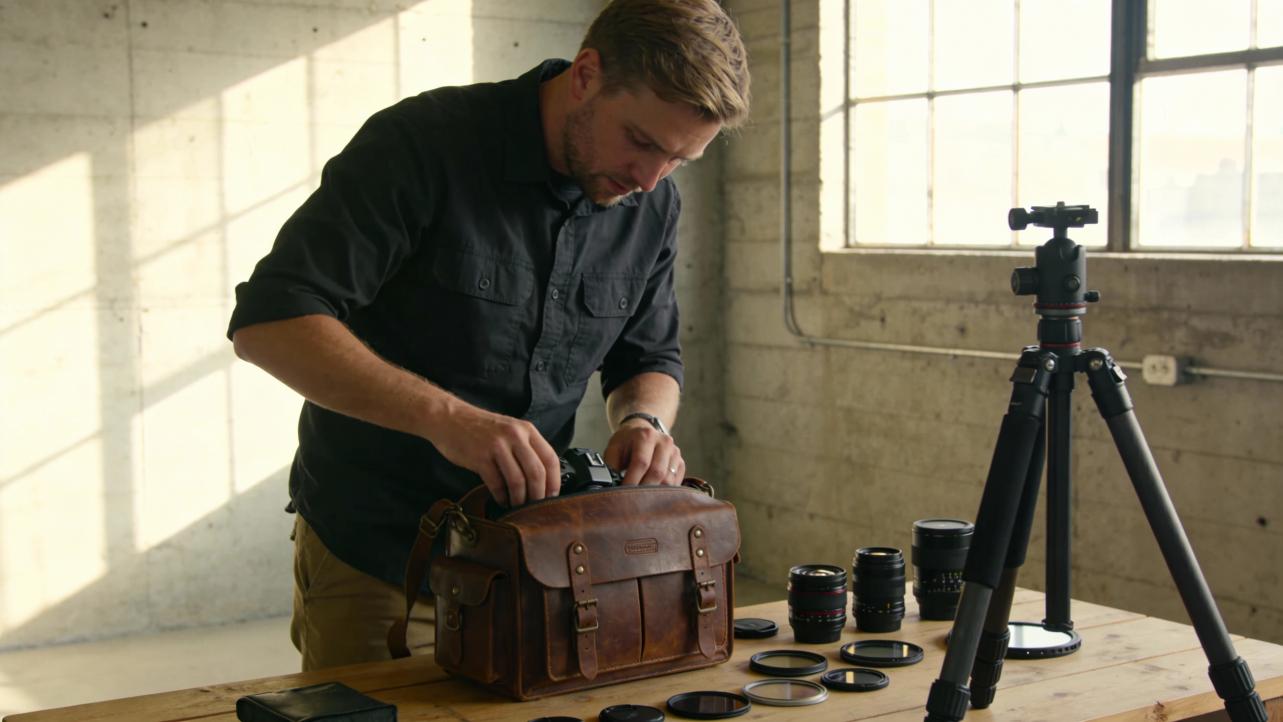
When I sit down with a photographer to design a camera bag, I am not just sketching pockets and straps. I am helping build a portable studio, a traveling darkroom, and a little shrine for the stories they will go out and capture. For photographers, a camera bag is where fragile glass meets wild weather, where inspiration meets airport security, and where a very expensive livelihood is either protected or put at risk.
A growing body of practical advice from camera-bag specialists and working photographers agrees on one thing: a proper, well-fitted camera bag is non‑negotiable. Brands like Steel Horse Leather warn that a single drop, bump, or rainstorm can wipe out thousands of dollars of gear in seconds, while guides from Initibag and Crdbag show how the right layout and materials can keep that very same kit safe, organized, and ready at a moment’s notice.
Custom camera bags take that protection and turn it into something more personal. They can be tailored to the way you shoot, the way you move, and the way you express yourself. And when they are handcrafted or thoughtfully customized, they make extraordinary, deeply sentimental gifts for the photographers you love.
In this article, we will explore why custom camera bags matter so much, how to choose and design one, and how to turn a practical carry solution into a meaningful companion or keepsake.
What Makes a Camera Bag Truly “Custom”?
At its simplest, a camera bag is a dedicated carry solution with padded, compartmentalized space for camera bodies, lenses, a laptop, and accessories. Steel Horse Leather and ProPrints both describe camera bags as a category separate from ordinary backpacks: they are engineered around protection and fast access, not just hauling stuff from place to place.
When we talk about a custom camera bag, there are two intertwined dimensions.
First, there is functional customization. Crdbag and Szoneier’s bag guides emphasize adjustable dividers, foam or Velcro partitions, and modular inserts that can be rearranged to cradle specific bodies and lenses. A custom interior layout means your camera and favorite lens are snug, your backup lens has its own safe pocket, and batteries, filters, and cards live in dedicated spaces where your hands can find them on instinct.
Second, there is aesthetic personalization. The world of custom canvas and leather bags, from Technoaid and Szoneier Fabrics to Woosir’s canvas camera bags, shows just how far you can go: choosing the weight of canvas, the color of waxed fabric, the grain and tone of leather, the stitching, the lining print, and the way your name, logo, or a short phrase appears. Custom tote and canvas bag specialists like Itendee and Chinaprinting4u have proven how powerful personalization can be as self‑expression; the same printing, embroidery, and heat‑transfer techniques adapt beautifully to camera bags.
In other words, a custom camera bag is not just a bag you picked in your favorite color. It is a bag that has been deliberately shaped around your gear, your body, and your story.
Why Generic Bags Fall Short
Generic backpacks and fashion bags are tempting. They are cheaper, easy to find, and sometimes even prettier at first glance. But nearly every specialist source in our notes, from Initibag to Steel Horse Leather, warns against relying on them for serious gear.
Generic bags lack:
Soft yet dense padding around camera compartments, especially 360‑degree foam for bodies and laptops.
Raised or reinforced bases that keep gear off the floor when you set the bag down.
Dividers that stop lenses from colliding and bodies from shifting.
True weather resistance: coated fabrics, sealed zippers, or rain covers.
Add in the risk that zippers and seams are not designed to hold heavy, fragile contents, and you can see why Steel Horse Leather positions a quality camera bag as insurance, not a luxury.
A quick mental example makes the trade‑off very real. Imagine a kit worth $5,000. If a dedicated camera bag costs even a few hundred dollars and protects that kit for years, the cost lives somewhere between a thoughtful tool and a long‑term gift to your future self. If a generic bag fails once, the “savings” disappear in an instant.

Protection and Comfort: The Non‑Negotiables
Before we talk about prints, leather patina, or monogrammed straps, we need to honor the two foundations a camera bag must get right: protection and comfort. Without these, any customization is just decoration.
Protection: Keeping Glass and Sensors Safe
Protection comes from a combination of structure, padding, and weather sealing.
Crdbag’s organizing guide and Steel Horse Leather’s technical breakdown both highlight the same core features. Inside the bag, look for adjustable foam or EVA dividers, padded walls, and compartments that fully surround cameras and lenses. Steel Horse Leather recommends raised or lifted bases so gear never rests directly on the ground; this detail alone can soften the impact when a bag is set down a bit too quickly.
Externally, the materials matter. Szoneier and Szoneier Fabrics identify heavy canvas in the eighteen to twenty‑four ounce range and ballistic or high‑denier nylon as ideal for tool and camera bags because they resist abrasion and maintain structure. Steel Horse Leather adds waxed canvas, full‑grain leather, and 1000D‑plus nylon with durable water‑repellent coatings to the list of reliable options. Crdbag reinforces this by recommending rain covers, water‑resistant fabrics, and waterproof zippers where possible.
Beyond impact and weather, there is the quiet threat of humidity. A thoughtful thread on the Photography Life forum describes a photographer who stores gear in hard cases with silica gel and hygrometers to control moisture. Even if your day‑to‑day custom camera bag is soft canvas or leather, giving it a dry resting spot and occasionally airing it out extends both the bag’s life and your camera’s.
A simple real‑world scenario illustrates how these features work together. Imagine a travel photographer caught in a sudden downpour while changing trains. The photographer with a waxed canvas or 1680D nylon bag that has taped seams and a rain cover can keep walking, knowing that the sensor and lenses inside are shielded. The one with a thin fashion tote will likely sprint for cover, then spend the evening wiping gear and worrying.
Comfort: Protecting Your Body, Too
Comfort is as essential as padding. Long, heavy days with the wrong bag lead to sore shoulders, tight necks, and even chronic issues. Steel Horse Leather cites ergonomics research linking proper strap design, weight distribution, and hip belts to reduced musculoskeletal strain over eight‑plus hour sessions. Initibag’s practical advice echoes this: look for thick padding on straps and back panels, plus adjustable shoulder, waist, and sternum straps.
Bag style plays a big role. Szoneier’s guide to camera bag types and ProPrints’ overview of pro essentials make a clear case for matching carry style to load and environment.
Backpacks use two straps and often a hip belt to distribute weight evenly, making them ideal for loads in the eight to twenty kilogram range that Szoneier attributes to serious kits. Crossbody slings and messenger bags favor quick access but concentrate weight on one shoulder, which becomes uncomfortable above about five to seven kilograms. Holster bags and waist packs keep a single body and lens at your hip, freeing the upper body for movement.
Custom camera bags allow you to tune comfort in ways off‑the‑shelf solutions rarely do. Strap length, padding thickness, sternum strap placement, and even the curvature of the back panel can all be adjusted in artisanal or small‑batch builds. Materials matter here too; Woosir’s travel‑oriented canvas camera bags emphasize ergonomic designs and padded straps for walking days.
Think of a full‑day wedding assignment. A photographer carrying a backpack with padded straps and a hip belt, as recommended by Steel Horse Leather and Szoneier, can distribute the load and move freely between ceremony, portraits, and reception. A similar kit carried in a shoulder‑only messenger bag without support will feel romantic at the start of the day and punishing by the final dance.

Choosing the Right Custom Camera Bag Style
Once you know you need protection and comfort, the next question is style. Not style as in fashion alone, but the basic geometry of how the bag sits on your body and functions in your life.
Szoneier, Initibag, ProPrints, and Crdbag together paint a rich picture of the core camera bag families and their ideal use cases. A custom build lets you keep those functional advantages while tailoring proportions, materials, and details.
Here is a quick overview of the main styles and the role customization can play.
Bag Style |
Best For |
Key Trade‑off |
Customization Focus |
Backpack |
Travel, hiking, long days with multi‑lens kits |
Slightly slower access |
Interior modules, back panel fit, hip belt, laptop and tripod integration |
Sling |
Street, urban, light kits |
Uneven shoulder load if heavy |
Strap geometry, compact dividers, quick‑access openings |
Messenger |
City work, short walks, discreet carry |
One‑shoulder fatigue with heavy gear |
Flap design, stealthy exterior, padded camera cube |
Holster / Waist pack |
Fast “one‑camera” shooting, weddings, wildlife |
Limited capacity |
Holster depth, belt system, quick‑release closures |
Rolling / Hard‑shell case |
Air travel, studio moves, large kits |
Bulk and poor performance on stairs |
Foam layout, label panels, telescoping handle, matching soft bag insert |
Backpacks: Your Mobile Studio
Camera backpacks, described in detail by Szoneier and ProPrints, usually fall in the fifteen to thirty five liter range and comfortably support substantial loads. They shine when you need to carry multiple bodies, several lenses, a tripod, and perhaps a laptop.
Customizing a backpack‑style camera bag often means:
Designing the internal “cube” of dividers around your exact kit, with space for future lenses as Initibag recommends.
Building in dual‑purpose zones so personal items stay separate from gear, inspired by travel‑oriented designs highlighted in ProPrints’ reviews.
Adding tripod attachment points matched to your specific tripod type, a feature Crdbag emphasizes for freeing internal space.
For an outdoor landscape photographer, a handcrafted waxed‑canvas backpack in the thirty to forty liter range, like the “winning formulas” Steel Horse Leather cites, can become the one bag that handles everything from sunrise hikes to airport terminals.
Sling and Messenger Bags: Fast‑Access Storytellers
Slings and messengers prioritize speed and discretion. Sling bags pivot from back to front in under a second, a detail Szoneier underscores, which makes them beloved by street and travel photographers. Messenger bags, as Initibag and Szoneier describe, sit at the hip with top‑flap access and typically include space for a tablet or small laptop.
Custom work here focuses on:
Optimizing strap width, padding, and angle so the bag rides comfortably across your torso.
Refining the size of the main compartment to match a compact kit: perhaps one body, two lenses, and a flash.
Designing interior pockets that hold cards, batteries, and filters exactly where your hand expects them, as Crdbag’s organizing strategies recommend.
A photographer who spends most of the day weaving through city crowds may choose a custom messenger bag in a neutral canvas that does not scream “camera bag.” Szoneier notes the appeal of camera purses and fashion‑forward designs for influencers and bloggers; custom materials and colors can make functional padding look like part of an everyday handbag.
Holster Bags and Waist Packs: Minimalist Moments
Holster bags and waist packs are small but mighty. They carry one camera with an attached prime lens, plus perhaps one extra lens and a couple of accessories. Szoneier’s guide shows how wildlife and wedding photographers use holsters for “quick draw” access at the hip while leaving their shoulders free.
Customizing these compact bags can include:
Fine‑tuning the depth and width of the holster to your specific camera body and lens combination.
Designing the belt system to work over coats or under jackets, depending on your climate.
Choosing closures that are silent and secure so you can work in hushed ceremonies or wildlife hides without Velcro ripping through the air.
For a wedding photographer, a dual holster setup, which Initibag and Szoneier mention as a common professional choice, can be personalized with different color stitching or subtle initials to differentiate “wide” and “telephoto” bodies at a glance.
Rolling and Hard‑Shell Cases: Traveling With a Portable Vault
Rolling cases and hard‑shell cases are more than bags; they are mobile vaults. Szoneier describes them as forty to seventy liter containers with crush‑proof shells, wheels, and telescoping handles, weighing seven to ten kilograms even when empty. Steel Horse Leather and ProPrints both emphasize their role in air travel and large productions where multiple camera bodies, drones, gimbals, and lights need serious protection.
Customization here often focuses on the foam or padded inserts inside the case. Photographers cut or arrange these to the exact shape of their gear, much like the hardcase approach described in the Photography Life forum, where one case is dedicated to Nikon Z lenses and another to adapted vintage optics.
A thoughtful combination many professionals use is a rolling hard case as a home base and a smaller custom canvas or leather backpack as the “working bag.” You pull from the case into your everyday bag for each shoot, then return everything to its labeled spots afterward. This echoes the “base station” method from the Photography Life discussion and keeps both storage and daily carry beautifully organized.

Materials with Soul: Canvas, Leather, and Hybrids
Once the structure is right, the material palette gives your camera bag its personality and performance characteristics. For an artful, gift‑worthy piece, materials need both substance and story.
Canvas: The Creative Workhorse
Canvas sits at the heart of many custom, handmade camera bags. Szoneier Fabrics describes medium to heavy canvas, especially fourteen to twenty four ounce weights, as structurally strong enough for boxy backpacks and tool rolls. For camera bags, they recommend eighteen to twenty four ounce canvas, sometimes waxed, to balance rigidity and protection.
The advantages of canvas in camera bags, highlighted by Qtees, Troop London, Universepack, and multiple canvas specialists, include:
Impressive strength and load capacity. Troop London notes that sturdy canvas totes can carry around fifty pounds of groceries or other items, a useful benchmark for heavy camera setups.
A forgiving surface for printing and embroidery. Szoneier Fabrics and Dhgate’s logo customization guide explain how canvas accepts screen printing, digital pigment printing, heat‑transfer vinyl, and embroidery, which opens up endless possibilities for artwork, logos, or sentimental text.
High adaptability through coatings. Wax, PU, PVC, and other finishes, detailed by Szoneier Fabrics, can add water resistance, vintage patina, or a sleek feel, turning raw canvas into everything from a rugged field pack to a polished city bag.
Eco‑conscious appeal. Technoaid India and Universepack both frame canvas as a reusable, biodegradable alternative to single‑use materials, attractive to photographers and brands who care about sustainability.
From a gifting perspective, canvas also holds memories well. It softens slightly over time, takes on subtle creases and marks from each trip, and can be cleaned and rewaxed to keep looking loved rather than worn.
Leather and Waxed Canvas: Heirloom Feels
Leather and waxed canvas hybrids carry another kind of magic. Steel Horse Leather points to full‑grain leather, waxed canvas, and crazy horse leather as materials that offer not only durability and weather resistance but also a patina that deepens over years. Their “2025 market benchmarks” highlight combinations like a thirty five to forty five liter leather and waxed canvas hybrid backpack with a hip belt as a best‑overall choice for many photographers.
Compared with pure canvas, leather adds:
Increased abrasion resistance in high‑wear areas like corners and strap attachment points.
A distinctive aesthetic that feels timeless and premium, especially for corporate gifts or milestone presents.
A gradual aging process; Steel Horse Leather, referencing research by Senthilkumar and colleagues, notes that these leathers can maintain structural integrity while developing a unique surface character.
The trade‑offs are weight and cost. Steel Horse Leather suggests aiming for empty bag weights under about two kilograms for leather builds and under one and a half kilograms for nylon, to keep overall loads manageable. This is where a custom maker’s skill shows: carefully balancing leather panels with lighter canvas or fabric to maintain comfort without sacrificing beauty.
For a photographer receiving such a bag as a graduation gift, anniversary present, or corporate thank‑you, the patina that develops over ten years of travel becomes part of the story. It is no longer just a bag; it is a visual diary.

Designing Your Custom Camera Bag Step by Step
Whether you are commissioning a handcrafted piece, customizing an existing design, or carefully selecting a bag from specialized brands, the process works best when you approach it thoughtfully.
Start With Your Gear and Shooting Scenarios
Initibag’s advice could not be clearer: before choosing a bag, lay out every camera body, lens, and accessory you regularly use. Photograph this layout with your cell phone so you have a reference. Include batteries, chargers, memory cards, filters, a flash or speedlight, cables, cleaning kits, and, if relevant, a laptop or tablet.
Then, classify your kit the way Initibag does.
A compact kit might be a small mirrorless camera with one or two lenses and a few accessories. An SLR or mirrorless pro kit might include one or two larger bodies, several lenses, and more lighting gear. Szoneier’s capacity ranges, from five to fifteen liters for slings up to thirty five liters or more for backpacks, help translate those lists into real volumes.
Next, think in scenarios rather than in abstract. Crdbag recommends choosing bag size and design to match each shoot. Perhaps you have:
A light street‑shooting setup.
A full wedding or event kit.
A travel and landscape kit that includes a tripod and weather gear.
You might eventually commission or choose more than one bag. Many photographers, as Initibag notes, end up with different bags for different needs. Customization lets each of those bags feel purposeful rather than random.
Map the Interior: Dividers, Modules, and Weight
Once your kit is clear, sketch the interior. Crdbag talks about core zones: camera body storage, lens compartments, and accessory pockets. Adjustable dividers let you reshape these spaces over time, while modular components, such as dedicated blocks for batteries or cards, keep tiny items from swimming around.
Protection strategy here is practical, not abstract.
Heavier items belong low and close to your back to improve balance, a packing principle Crdbag and Initibag both highlight. Tripods benefit from dedicated exterior attachment systems, freeing internal volume. Separate pouches for cables, filters, and cleaning tools, like the filter bag and accessory cases in the Photography Life setup, mean you can move those modules between bags without re‑sorting everything.
A simple layout example might be:
Central channel for your main body with lens attached, surrounded by dividers.
One side column for lenses, each in its own snug bay.
The opposite side for a flash, compact backup body, or drone.
A top or side quick‑access opening aligned with the main camera compartment, inspired by bags with side access that ProPrints and Crdbag discuss.
You do not have to be an industrial designer to sketch this. Even a hand‑drawn rectangle with labeled boxes can help a custom maker understand how to build a bag that feels intuitive to you.
Leave Room for Future You
Gear changes. Initibag warns against bags that are too small for future growth or so large they feel empty and cumbersome. Steel Horse Leather similarly recommends modern camera backpacks in the twenty five to forty five liter range as a versatile sweet spot that can grow with your kit without becoming an unwieldy suitcase.
When designing a custom camera bag, this means:
Leaving at least one or two flexible bays that can accept another lens or body.
Choosing divider systems that can be reconfigured rather than permanently stitched partitions.
Selecting exterior dimensions that comply with typical airline cabin standards, as Szoneier and Shimoda’s Explore V2 case in ProPrints’ guide point out, so your bag can follow you into the cabin as your assignments expand.
In sentimental terms, leaving room is a way of honoring the photographer you are becoming. A custom bag that only fits today’s gear is a snapshot. One that can adapt is a quiet blessing for your next season of work.
Personalization That Serves Both Heart and Hands
Now, the fun part: aesthetic customization. The world of custom totes and canvas bags offers a treasure box of ideas that can be adapted to camera bags.
Dhgate’s step‑by‑step guide to customizing bags with logos, along with Itendee’s creative tote designs and Technoaid’s canvas bag overview, spotlight these techniques:
Screen printing for bold, durable graphics and logos.
Embroidery for textured, high‑end monograms or simple motifs.
Heat‑transfer or vinyl for small runs and multicolor artwork.
Digital printing for complex gradients or photographic images, especially on lighter canvas.
For a photographer, this might mean a subtle embroidered monogram under the flap, a line of text inside the lid that reads “Dad’s First Camera,” or a small brand mark for a studio. Itendee and Universepack both show how personalized names, initials, or phrases on bags instantly turn them into sentimental gifts; the same is true when those words are stitched into a camera bag’s strap or lining.
Chinaprinting4u and ToteBagFactory add another dimension: bags as mobile advertising. They estimate that a single custom canvas bag can reach thousands of people and stay in circulation for over seven months. For a studio, agency, or brand, putting a logo on a high‑quality camera bag, as Steel Horse Leather recommends for corporate gifting, is both a heartfelt nod to a photographer’s craft and a quietly effective marketing move.
The key is balance. Good design, as Itendee stresses for tote bags, respects legibility, color contrast, and placement. On a camera bag, you want personalization that delights you or the recipient every time the bag opens, without shouting at passersby or drawing unwanted attention in risky environments.

Custom Camera Bags as Meaningful Gifts
From the perspective of an artful gifting specialist, custom camera bags sit in a rare category of gift: deeply practical, intensely personal, and long‑lived.
Canvas and tote bag experts like Itendee, Bagandtote, and Technoaid describe how personalized bags have become favorites for weddings, corporate events, and family gifting because they are reusable, expressive, and eco‑friendly. Steel Horse Leather extends this idea to camera bags specifically, framing a well‑chosen camera backpack or messenger as a premium corporate gift designed to last ten or more years, often in the two hundred eighty to seven hundred fifty dollar range.
Translating those insights to individual occasions is where the magic happens.
Imagine a parent commemorating a child’s graduation from art school with a handcrafted waxed‑canvas camera bag tailored to the student’s first professional kit. Inside the strap, an embroidered phrase only the two of them understand waits quietly, while the exterior remains understated and professional.
Picture a company honoring a staff photographer’s ten years of service with a full‑grain leather camera messenger, configured to their everyday carry, with the studio’s logo discreetly embossed on the back panel. Chinaprinting4u’s marketing research suggests that such reusable bags function as high‑value brand pieces with excellent cost per impression; Steel Horse Leather emphasizes the emotional message such a gift sends: we see your craft, and we expect you to keep creating for many years.
Or think of yourself. Maybe you have been working out of a generic black backpack for years. Commissioning or choosing a custom bag that feels like your aesthetic—earthy canvas, clean modern nylon, or richly toned leather—can be a way of acknowledging the photographer you have become. You are not just “someone who takes photos” anymore; you are an artist whose work deserves a proper home.
FAQ: Custom Camera Bags and Practical Questions
Do I really need a dedicated camera bag if I already have a sturdy backpack?
Specialized guides from Initibag, Crdbag, and Steel Horse Leather strongly suggest that a dedicated camera bag is worth it. Generic backpacks lack the padded, compartmentalized structure that prevents lenses from knocking together and bodies from shifting. They also typically miss weatherproofing details and reinforced bases designed to protect delicate gear. You can certainly tuck a padded camera insert into a normal backpack, but once you factor in the cost of inserts and the compromises in access and comfort, a well‑designed camera bag usually offers better long‑term value and safety.
What size custom camera bag should I choose?
Initibag recommends starting with a full list of your gear and choosing a bag that fits everything you actually carry plus a bit of breathing room. Szoneier’s ranges, from compact five to fifteen liter slings up to thirty five liter backpacks, and Steel Horse Leather’s twenty five to forty five liter “sweet spot” for versatile backpacks, provide useful benchmarks. If you mainly carry a compact kit, a smaller custom sling or messenger will feel better than an oversized pack. If you regularly shoot events, travel, or landscapes with several lenses and a laptop, a backpack in the mid‑to‑large range with adjustable dividers is more appropriate. Always load a candidate bag with your gear and walk around, as Initibag advises, before committing.
Are canvas camera bags safe in bad weather?
Heavy canvas, especially in the eighteen to twenty four ounce range that Szoneier Fabrics recommends for gear and tactical bags, can be very robust, particularly when combined with wax coatings or PU finishes. Woosir’s travel‑focused canvas camera bags and Troop London’s sturdy canvas carry‑alls both emphasize water resistance and durability. However, canvas is rarely completely waterproof on its own. For very wet environments, Steel Horse Leather and Crdbag suggest pairing canvas with wax treatments, waterproof zippers, and a dedicated rain cover, or choosing a ballistic nylon or hybrid leather and waxed canvas bag with sealed seams. The goal is not to baby the bag, but to ensure that a sudden shower does not put your cameras and lenses at risk.
A custom camera bag, especially one crafted in canvas, leather, or a thoughtful blend of both, is more than storage. It is a traveling sanctuary for your tools, a quiet guardian of your images, and often a gift that continues to give every time a zipper opens and a story begins. When you honor your craft—or someone else’s—with a bag that truly fits, you are not just organizing gear. You are curating a creative life, one carefully padded compartment at a time.
References
- https://www.canvaspromobags.com/post/top-benefits-of-custom-canvas-bags?srsltid=AfmBOorPqWOUfXKhlajntJubyU8mdWY-NiMfGGKzmYGCA_zkd_UFig48
- https://www.chinaprinting4u.com/blog/how-to-create-custom-canvas-bags
- https://smart.dhgate.com/a-step-by-step-guide-to-customizing-bags-with-your-logo-for-maximum-brand-impact/
- https://e-huahao.com/custom-bags-solutions-for-usage-scenarios/
- https://www.gentlepk.com/personalized-canvas-bags-for-business-guide/
- https://initibag.com/how-to-choose-a-camera-bag/
- https://itendee.com/the-best-personalized-tote-bags-your-guide-to-stylish-options/
- https://www.proprints.com/blog/pro-essentials-camera-bags-for-professional-photographers
- https://qtees.com/why-you-need-a-heavy-duty-canvas-bag-with-zipper-for-your-next-adventure/
- https://szoneierfabrics.com/the-versatility-of-canvas-material-in-custom-bag-manufacturing/
