

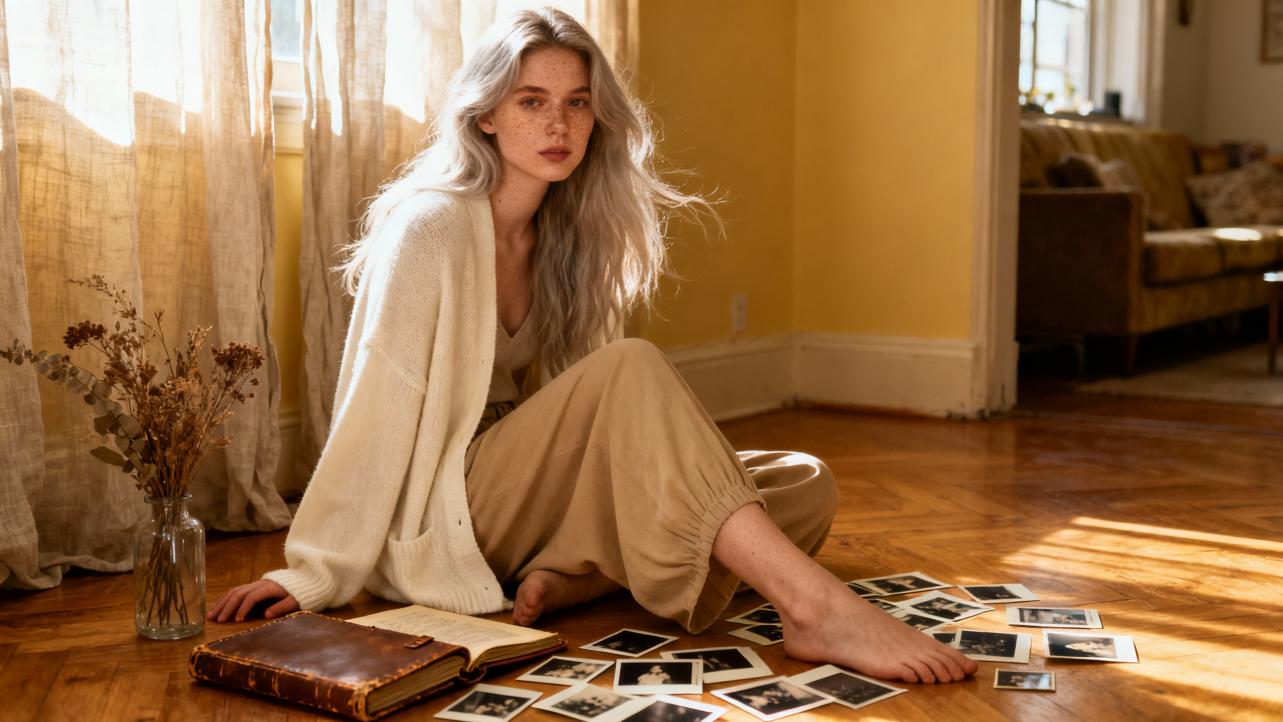
Understanding How Machine Vision Identifies Photo Emotions and Matches Filters
When you create a keepsake photo book for an anniversary, or a framed print for a new baby’s nursery, you are not just arranging pixels on a page. You are curating feelings: the catch of a breath, the quiet ache of nostalgia, the sparkle of shared laughter. As an artful gifting specialist and sentimental curator, I spend a lot of time sitting between those feelings and the tools we use to shape them, including something that sounds surprisingly technical: machine vision.
Today, machine vision is learning to “feel” our photos. It can look at faces, body language, and even tiny micro-expressions, estimate the emotion in a scene, and then help match that mood to a filter or editing style. Used well, this can be a gentle ally in crafting more meaningful, personalized gifts. Used blindly, it can slide into over-editing, unrealistic beauty standards, and privacy risks.
This guide walks through how machine vision identifies emotions in photos, how it can be used to suggest filters, and how to work with these tools thoughtfully when you create sentimental, handmade gifts.
Machine Vision 101 for Human Moments
Machine vision is the technical term for giving cameras and computers a kind of sight. Instead of just capturing an image for a human to inspect, a machine-vision system uses cameras plus image-processing software to extract information automatically and trigger actions.
In manufacturing, as described by industrial automation experts and integrators, machine vision cameras watch assembly lines, measure parts, read tiny codes, and catch defects that human eyes would miss at high speed. Sensors detect when a product is in place, cameras capture an image, software analyzes it, and robots accept, reject, sort, or adjust, often with accuracy and speed that exceed human capability. Analysts at IoT-focused research firms note that these systems tend to deliver a strong return on investment, often paying for themselves in well under two years.
That same core recipe—camera, algorithms, decision—now moves beyond bolts and barcodes into something much more delicate: human emotion.
Researchers in emotion AI explain that modern systems combine computer vision with deep learning to recognize facial expressions, body posture, and even subtle movements. A systematic review of deep-learning emotion recognition studies found that most systems now rely on convolutional neural networks (CNNs) and related architectures to decode expressions from images and video. In other words, the same class of technology that spots a hairline crack in a car part can also notice the difference between a real smile and a strained one.
For those of us curating photos for keepsakes, that means machine vision can become a quiet assistant in the background, helping us notice what the heart is already feeling in an image.
From Factory Floors to Photo Feels
To understand the leap, imagine two scenes.
In the first, a machine-vision camera stares at a conveyor belt of glass bottles. It measures their height and shape, looking for cracks or missing labels, and kicks flawed ones aside. The goal is consistent quality.
In the second, a camera on your laptop or editing app scans a snapshot from a birthday party. It detects faces, locates eyes, mouths, and eyebrows, and infers that the main subject shows high arousal and positive valence: excited joy. In response, the software quietly suggests a warm, high-contrast filter that amplifies the golden tones and confetti colors.
Technically, both scenes rely on similar building blocks. Emotion-aware photo tools simply point those blocks toward human expressions instead of industrial parts. They extract features from an image, compare them to learned patterns, and make a prediction—about a defect, or about a feeling.
The difference is that in creative gifting, the stakes are emotional, not just operational. That calls for a gentler, more reflective approach.

How Machines Learn to Read Emotions in Images
Faces, Micro-Expressions, and Body Language
Emotion recognition from images usually starts with the face. Technical explainers from cloud-computing providers describe a common pipeline: first, the system uses face-detection algorithms to locate one or more faces in a frame. Then it extracts facial landmarks such as the corners of the eyes, the outline of the lips, and the curve of the eyebrows.
These landmarks are turned into numerical features: distances, angles, curvatures. Classic systems drew heavily on the Facial Action Coding System (FACS), which maps combinations of specific muscle movements—called Action Units—to expressions like frowning or smiling. Newer systems still echo that logic but rely on deep networks to learn patterns automatically from data rather than hand-coded rules.
Research on micro-expressions, those tiny flashes of genuine emotion that appear when people try to hide how they feel, shows just how sensitive machine vision can become. In one widely reported study, a research team created a high-speed video database of micro-expressions recorded at about 100 frames per second in genuinely high-stakes situations. Their machine-vision system learned to detect and categorize these fleeting cues more reliably than human observers. This kind of work shows that emotion AI does not just look at big, obvious smiles; it can track momentary tension around the eyes or a fractional tightening of the mouth.
Body language adds another layer. Systematic reviews distinguish facial emotion recognition (FER) from pose emotion recognition (PER). FER focuses on what the face does, while PER looks at static poses and dynamic gestures below the neck. Slumped shoulders, unfolded arms, and animated hand movements all contribute to how a system interprets the emotional tone of an image.
For a curated gift, that means a photo where a couple leans in, shoulders relaxed and hands intertwined, may register as warm connection even if their smiles are small and subtle.
From Pixels to Feelings: Deep Learning Under the Hood
Once the system has features, it needs to turn them into feelings. This is where deep learning comes in.
A comprehensive review of computer-vision emotion detection studies found that CNNs dominate the field. A CNN takes raw pixel data or preprocessed images and passes them through layers of filters that learn to pick out patterns: edges, textures, shapes, and eventually higher-level features like “smile patterns” or “furrowed brows.”
Other architectures, such as region-based CNNs and vision transformers, are increasingly used for more complex tasks, including multi-face scenes or images with unusual viewpoints. Many commercial platforms combine multiple models in a hybrid way, sometimes fusing visual inputs with audio or text when available.
According to industry overviews on emotion AI, modern systems also incorporate temporal analysis (how expressions change over time) and contextual cues. For example, they may track how a person’s expression evolves across a sequence of photos or frames in a video, noticing the shift from nervous anticipation to relief or joy. That is especially relevant for gifts like time-lapse prints of a proposal, or a sequence in a wedding album where emotions unfold across the day.
Sentiment, Emotion, Valence, and Arousal
Emotion AI practitioners often distinguish between sentiment and emotion. Sentiment is the broad attitude: positive, negative, or neutral. Emotion refers to specific categories such as happiness, sadness, anger, fear, disgust, surprise, or contempt.
Technical guides on sentiment-analysis machine vision systems explain that many platforms estimate both at once. They assign an overall sentiment label and then refine it with discrete emotions. Beyond that, some systems compute valence and arousal:
Valence captures how pleasant or unpleasant the state is, from deeply negative to intensely positive.
Arousal represents how activated the state is, from calm or sleepy to highly energized.
An advanced emotion-analysis platform described in the research notes goes even further. It assigns unique IDs to each face in an image, then calculates valence and arousal per person, and can visualize the emotional distribution in an “emotion graph” across a whole dataset or scene. That means a team can see not only that a crowd is mostly positive, but also that a few individuals show anxious arousal while others are quietly neutral.
In psychology, marketing, and education, this kind of structured emotional data is already being used to measure reactions to ads, classroom activities, or therapy exercises. For gifting, we can borrow the same language and think of each photo’s emotion in terms of valence and arousal when we choose how to edit it.
High positive valence and high arousal might feel like a fireworks proposal or a surprise party.
High positive valence and low arousal might feel like a peaceful Sunday-morning cuddle photo.
Recognizing these nuances helps us match filters more intentionally.

Matching Detected Emotions to Filters and Looks
When a photo app or service claims to “auto-match” a filter to a mood, it is usually doing a simplified version of what researchers describe in academic and technical sources.
The system detects faces and perhaps body posture, extracts features, and runs them through trained models to estimate basic emotions and overall sentiment. From there, a rule set or a secondary model maps those emotional labels to filter categories. This mapping is not standardized across the industry; it is more like a creative palette built on top of technical insights.
Since detailed, published mappings are rare, think of the following as a practical design guide rather than a guarantee of how any specific app works. It reflects how emotional patterns can be translated into visual styles that feel coherent for personalized gifts.
Detected emotional pattern |
Typical visual cues in the photo |
Filter or edit style that harmonizes |
Gift mood this supports |
High joy, high arousal |
Big smiles, wide eyes, lively gestures, bright surroundings |
Warm, saturated colors, slightly higher contrast, subtle sharpening to emphasize sparkles and confetti |
Celebration gifts like birthday canvases, graduation photo blocks, party collages |
Warm affection, low arousal |
Gentle smiles, relaxed shoulders, soft eye contact, cuddling or hand-holding |
Soft contrast, warm or creamy tones, slight vignette to pull focus inward |
Intimate gifts like anniversary albums, newborn photo prints, family story books |
Reflective nostalgia |
Small or half smiles, distant gaze, older environments or vintage objects |
Desaturated or muted palettes, film-like grain, sepia or cool shadows |
Memory boxes, heritage photo walls, “then and now” framed sets |
Serious focus or determination |
Neutral or concentrated expressions, strong posture, work or sports settings |
Crisp contrast, cooler color balance, clean highlights, minimal softening |
Achievement gifts like sports prints, milestone career plaques, skill-practice photo series |
Calm sadness or quiet grief |
Downturned gaze, gentle touches, subdued body posture |
Softened contrast, lowered saturation, gentle cool or neutral color grading, no harsh clarity |
Memorial pieces, letters-in-photo prints, reflective art with handwritten notes |
Mixed emotions (joy with tears, laughter after stress) |
Smiles with moist eyes, hugging after a challenge, expressive gestures |
Balanced contrast, natural color with selective warmth, careful skin tones to keep authenticity |
Recovery stories, “we made it” albums, milestone journeys like medical recoveries or graduations after hardship |
In practice, an emotion-aware system might suggest a few candidate styles based on its reading. Your role as a curator is to sense which one aligns with the story your client wants to tell.
Where Machine Choices Shine
Emotion-aware filters can be powerful helpers when used with intention.
They are fast. Research on industrial machine vision shows that once systems are in place, they can analyze images in real time, and an emotion-detection review found that models can classify emotions with accuracy comparable to untrained humans, sometimes using as little as about one and a half seconds of audio or a single frame of video. Translating that speed to still images, a tool can scan a whole folder of party photos and cluster them into “high energy,” “soft connection,” or “neutral” groups long before you could tag them manually.
They are consistent. Unlike our moods, the model does not have off days. Given similar images, it will apply the same criteria over and over, which helps when you are building a coherent look across a large album or wall gallery.
They can surface subtle patterns. An image that feels “fine” at first glance might actually show small signs of discomfort: a tense jaw, a forced smile. Platforms that visualize valence and arousal distributions can reveal that a series of photos is emotionally mixed, helping you choose the ones that best honor the tone your client wants. For marketers, this is used to refine campaigns; for gift-making, it can help ensure that the hero image on a canvas actually reflects joy rather than social pressure.
Where They Fall Short
At the same time, the science is clear that faces and bodies do not always reveal inner emotional states reliably. A major review of facial-expression research highlighted that the same expression can mean very different things depending on culture, context, and individual habits. Someone might smile politely when they feel anxious or sad, or appear stern while deeply content.
Emotion AI scholars also warn that training data can be biased. If a system has mostly seen expressions from a narrow demographic or cultural group, it may misinterpret faces from other backgrounds. Technical overviews emphasize that cross-cultural differences in emotional display are a major challenge.
On top of that, the filter stage brings its own risks. Articles in business and psychology outlets have documented the impact of AI beauty filters such as TikTok’s Bold Glamour, which can dramatically reshape faces in real time, sculpting chins, refining noses, and smoothing skin until users look almost unrecognizable. A Forbes analysis noted that such filters are “dangerously realistic,” clinging perfectly to faces even when users move or cover parts of them.
Psychological research synthesized in sources like Psychology Today and peer-reviewed studies of Instagram users suggests that heavy photo editing and beauty-filter use are linked to self-objectification, more frequent upward appearance comparisons, and lower self-esteem. One survey of 403 Instagram users found that more frequent photo editing was associated with lower self-perceived attractiveness and higher self-objectification, which in turn related to lower self-esteem.
Put simply: the same tools that can help us match mood and filter can also push images toward an unrealistic ideal, with real emotional costs.

The Human Side: Filters, Self-Esteem, and Authentic Gifting
For sentimental gifts, emotional accuracy and self-kindness matter more than surface perfection.
Studies of beauty-filter use summarized in psychology and mental health outlets paint a consistent picture. Large surveys find that a very high percentage of young users edit or filter their photos, often starting in early adolescence. Many report feeling intense pressure to look a particular way online. Research shows that people with lower self-esteem and poorer body image are more likely to use filters, which reinforces the belief that their unedited appearance is not good enough.
Experimental work where participants view idealized social media images, or take and edit selfies, shows that the more time they spend editing, the more dissatisfied they tend to feel with their faces afterward. Additional research on Instagram photo editing indicates that editing behavior correlates with self-objectification and frequent appearance comparison, which are in turn linked to reduced self-esteem.
These findings matter for anyone who touches images of real people, especially in contexts meant to uplift: anniversary albums, memorial prints, coming-of-age photo books, adoption stories, gender-affirming portraits, and more.
As a sentimental curator, I have seen both sides. Light touch-ups that gently brighten a dim room or soften harsh shadows can make a shy grandparent more comfortable gifting and displaying their photo, leading to more shared memories. At the same time, aggressive reshaping, skin smoothing, or “perfect face” filters can create a painful gap between the printed image and the person in the mirror, especially for teens and young adults already navigating intense social comparison.
The goal is not to ban filters, but to wield them in a way that preserves dignity and intimacy.
Designing Photo Gifts that Heal, Not Harm
When you bring emotion-aware tools into your gifting practice, consider a simple guiding question for each image: does this edit deepen the story and self-compassion, or does it erase and idealize?
If an auto-suggested filter brightens the warmth in a family hug or enhances the sense of movement in a laughing group shot, it is serving the story. If it slims faces, elongates noses, or erases every line and freckle until the subject no longer recognizes themselves, it is serving an abstract beauty ideal instead.
Research on photo editing and self-esteem suggests that a strong focus on appearance, coupled with heavy editing, encourages people to view their bodies from the outside, as objects to be evaluated rather than lived in. For printed gifts that may hang in a child’s bedroom or a shared living room for years, choosing authenticity over perfection can quietly support healthier self-perception.
You can also mix filtered and unfiltered images. For example, let an emotion-aware system help you find the most joyful frames from a chaotic party, then apply a gentle, consistent filter to those. At the same time, include a few candid, minimally edited moments in each project: a slightly blurry laugh, a wind-tousled hairstyle, a quiet in-between glance. These are often the images that recipients cherish most because they feel like the person they know.
A Creative Workflow with Emotion AI as a Gentle Assistant
Think of emotion-aware technology as another brush in your artistic kit, not the artist itself.
You might begin by loading a batch of photos into a tool that clusters them by estimated mood or sentiment: groups of “high joy,” “soft connection,” and “neutral” frames. Rather than accepting its labels blindly, you scroll through each cluster and notice which images resonate with your lived sense of that event.
Next, you audition the suggested filters or styles the system pairs with each cluster. For high-energy scenes, you might accept a warm, saturated look for prints destined for a game room or kid’s play area. For tender, quiet moments, you might swap a dramatic suggested filter for a softer, more timeless grade that you choose yourself.
Throughout, you check in with your client or your own heart. Does this filtered image feel like the memory they describe when they talk about that day? Would they feel proud to hang it where they can see it every morning? Are you choosing edits that future versions of them will thank you for?
By continually interweaving machine suggestions with human reflection, you create pieces that are technically polished but still recognizably and lovingly real.
Ethics and Privacy When Photos Become Feelings Data
Emotion AI is not just more editing; it is a new category of data about people’s inner lives. That deserves care.
Analyses of emotion AI and affective computing point out that these systems rely on deeply personal inputs: faces, voices, gestures, sometimes even biometric signals like heart rate or skin conductance. This allows interfaces to respond in a more “human-like” way but raises important questions about surveillance, consent, and control.
Consent and Context
Before you feed someone’s face into a system that analyzes their emotions, consider whether they have meaningfully agreed to that. In many consumer contexts, people are barely aware that their images are being used to train or run such systems.
Ethics-focused reports recommend explicit, informed consent for capturing and analyzing emotional data, especially beyond one-to-one interactions. In a gifting context, that might mean clarifying in your client agreement whether you use any cloud-based services that analyze faces, and how long images are kept on those servers.
Context also matters. A candid laugh at a public festival is different from a vulnerable tear during a private ceremony. Even if the same system processes both images, you might choose to limit emotion analysis in more sensitive scenarios, relying instead on your own human reading of the moment.
Bias, Culture, and Fairness
Researchers reviewing computer-vision emotion detection repeatedly highlight the problem of biased training data. If datasets mostly feature posed expressions from a narrow cultural or demographic group, models may misclassify or misinterpret emotions in more diverse faces and bodies.
Emotion AI articles emphasize that emotional expression is not universal. A smile, a frown, or a particular gesture can carry different meanings across cultures and contexts. Overreliance on automated labels risks imposing one cultural reading of emotion onto everyone.
For handmade gifting, this means staying humble about what the algorithm “knows.” If an emotion heatmap suggests that a grandmother’s face is “neutral” in a photo where her family insists she was deeply moved, trust the story, not the score. Use the model’s output as a hint, not a verdict.
Storage, Ownership, and Tools
Technical overviews from cloud providers note that emotion-recognition capabilities are often offered via web APIs and managed services. This makes them accessible without building models from scratch, but it also means images and extracted data may pass through external servers.
Ethical guidelines recommend minimizing the amount of data you send, storing it only as long as necessary, and choosing vendors with clear documentation about how emotional data is handled. When you can, prefer local or on-device processing for particularly sensitive projects, such as gifts involving children, medical journeys, or intimate relationships.
For small creative businesses, that might look like using emotion-aware features built into local editing software for rough clustering, and reserving cloud services for less sensitive, large-scale tasks where the trade-offs are clearer.
Practical Tips for Artful, Emotion-Aware Photo Gifts
Bringing all these strands together, you can design a workflow that honors both the science and the soul of your projects.
Begin with intention before technology. Before you open any app, ask what feeling you want the recipient to experience when they unwrap and live with this piece. Is it playful delight, quiet reassurance, proud recognition, or shared remembrance? That intention becomes your compass.
Use machine vision to explore, not dictate. Let emotion clustering and auto-filter suggestions show you patterns you might have missed: the frames where typically reserved relatives suddenly sparkle, or the overlooked candid that holds more tenderness than any posed shot. Then curate with your human eye and heart.
Keep edits story-centered and body-kind. As research on photo editing and self-esteem suggests, heavy appearance-focused editing can erode how people feel about themselves. When you do use filters, aim to clarify the story rather than conform faces to a narrow ideal. Preserve scars, wrinkles, and quirks that carry history and identity.
Invite recipients into the process when possible. For bespoke gifts, ask clients how they feel about filters and retouching. Some may crave a bit of polish; others may be on a journey toward more authenticity and would prefer minimal editing. Aligning your approach with their emotional needs is itself a form of care.
Finally, remember that an imperfectly lit, authentically emotional photo can be more powerful than a technically flawless but emotionally hollow one. Machine vision can help you find, understand, and gently enhance those true moments, but the most meaningful decisions still come from your side of the screen.

FAQ
Are emotion-detecting photo tools accurate enough for sentimental projects?
A systematic review of deep-learning emotion-recognition systems found that many models achieve performance comparable to untrained humans in controlled settings, especially for basic facial expressions. That is generally “good enough” to cluster photos by broad mood or to suggest plausible filter styles. However, accuracy drops when images are noisy, lighting is poor, or cultures and expression styles differ from the training data. For sentimental work, treat the model’s judgment as a helpful second opinion, not a final truth.
Can I safely use beauty filters if my clients love them?
Research summarized by Psychology Today and peer-reviewed studies of Instagram users indicates that frequent and intensive beauty-filter use is linked to more self-objectification, higher appearance comparison, and lower self-esteem, particularly among young women. That does not mean all filters are harmful, but it does suggest using them gently and transparently. You can explain to clients that subtle, story-focused edits tend to support healthier self-perception than radical reshaping, and you can offer side-by-side previews so they can choose what feels right for them long term.
Do I need advanced technical skills to benefit from machine vision in my creative business?
Technical guides from cloud providers and emotion AI companies emphasize that many emotion-recognition capabilities are packaged as ready-made tools and APIs. Some consumer and prosumer photo applications already include emotion-aware features without requiring any coding at all. If you do move toward custom workflows, you can collaborate with developers or use low-code platforms that wrap machine-vision models behind simple interfaces. Your most important skills remain curatorial and relational: sensing feelings, telling stories, and honoring the people in the photos.
In the end, every handcrafted, emotion-aware gift is an invitation: “I see you, and I treasure this moment with you.” Machine vision can help us perceive and polish those moments, but the true art lies in how gently and honestly we choose to represent the people we love.
References
- https://pmc.ncbi.nlm.nih.gov/articles/PMC10080933/
- https://trendsresearch.org/insight/emotion-ai-transforming-human-machine-interaction/?srsltid=AfmBOopxOWb_mp8G4sQiBOjwt35UA7Kz8-lMKZgSEZ_376cg39eViAbJ
- https://www.frontiersin.org/news/2024/03/20/machine-learning-predict-emotion
- https://www.adimec.com/4-unexpected-applications-of-machine-vision-cameras-including-car-racing-and-fingerprint-analysis/
- https://iot-analytics.com/top-7-upcoming-machine-vision-applications/
- https://www.tencentcloud.com/techpedia/125464
- https://www.unitxlabs.com/sentiment-analysis-machine-vision-system-explained/
- https://visionify.ai/articles/emotion-recognition-ai
- https://www.xenonstack.com/blog/machine-vision-application
- https://www.cognex.com/blogs/machine-vision/smart-cameras-in-machine-vision
