

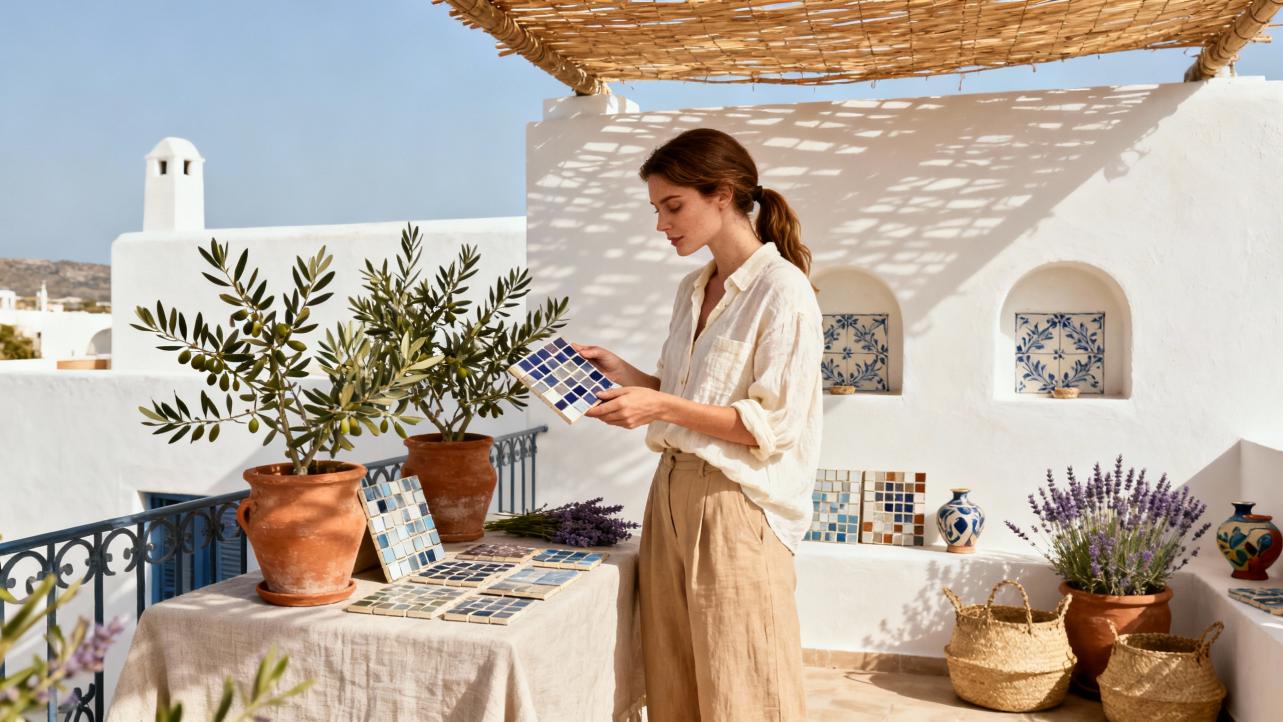
Cultural Significance of Custom Tile Art in Portuguese Homes
Walk into a Portuguese-inspired home where the hallway floor shimmers with patterned tiles, the kitchen backsplash reads like a story, and a single hand-painted tile by the door quietly blesses everyone who enters. You are not just stepping into a house; you are stepping into a living gallery. For many families who love Portuguese culture and the azulejo tradition, custom tile art is far more than decoration. It is identity made visible, memory made durable, and everyday life wrapped in a layer of quiet celebration.
As an Artful Gifting Specialist and Sentimental Curator, I have watched custom tiles transform plain walls into love letters to family history. The research on tile art and mosaics backs this up: designers and artisans consistently describe tile as a storytelling medium, a cultural touchstone, and an anchor of home life. When you weave that perspective into a Portuguese home, every tile becomes an opportunity to honor heritage and heart.
Tile as a Storytelling Medium at Home
Contemporary mosaic studios describe mosaic tile art as an ancient storytelling medium that has simply moved into a new era. MEC Artworks, for example, frames mosaics as a bridge between tradition and innovation, noting how modern bathrooms, feature walls, and outdoor spaces carry forward a global legacy that includes Byzantine works, Islamic Zellij, Persian patterns, Japanese compositions, azulejo traditions, Moroccan designs, and many European examples. When you choose custom tile art for a Portuguese home, you are tapping into that same narrative current.
Interior designers echo this narrative power. Homes & Gardens shares how a tiled fireplace called the “Legacy Wall” uses individually pressed, crackled tiles to tell a story about the Black diaspora. Each tile is slightly different, and together they form a coherent narrative about fracture and resilience. That project is not Portuguese, but it illustrates what tile can do culturally: it can speak, remember, and reclaim.
In a Portuguese-inspired home, custom tile art can work the same magic. Instead of generic patterns, you might commission a small mural that evokes a coastal hometown, a beloved neighborhood square, or symbolic motifs that feel true to your family. Because mosaic tile art is suited to detailed pictures and scenes, as MEC Artworks emphasizes, it is especially powerful for moments you want to “live with” every single day rather than keep hidden in an album.
Even smaller gestures can carry big emotional weight. The Granite and TREND Transformations team highlights artistic tile murals and tile “rugs” that act almost like framed art embedded into the architecture of a room. A kitchen backsplash becomes a wave of pattern and color. A tiled section of floor becomes a permanent welcome mat for guests. When you infuse those surfaces with Portuguese-inspired motifs, names, or dates, the home begins to function like a private museum of your own story.

Handmade and Custom: Why the Human Touch Matters
The cultural significance of tile in Portuguese homes is inseparable from the idea of craft. In research from Carly Quinn Designs, a small tile studio in Tucson, tiles are treated as individual works of art. The workshop uses an old-world technique called Cuerda Seca, where artists hand-glaze, hand-paint, and fire tiles around 2,000°F. No two tiles are exactly alike, and the studio explicitly identifies as an artisan workshop rather than a manufacturing facility.
That distinction resonates deeply with families who care about heritage. When a tile is hand-painted, it carries evidence of the person who made it: the slight variations in glaze, the micro-brushstrokes, the tiny imperfections that mass production filters out. Those variations become part of the charm. Carly Quinn Designs even celebrates them as part of the inherent beauty of the finished piece.
Another example from the research is “Custom Mosaics by Connie,” where mosaic artist Connie Williams works one-on-one with clients to design handmade mosaics. Clients choose themes, color palettes, and sizes; Connie hand-cuts, kiln-fires, and glazes each piece. Sea turtles for a backsplash, jellyfish for a shower insert, an octopus for a focal wall—each one a one-of-a-kind collaboration between artist and homeowner.
When you translate this kind of process into a Portuguese home, the custom tile becomes more than a design choice. It becomes a relationship. Perhaps a ceramicist in your city creates azulejo-inspired panels and invites you to choose the motifs that speak to your family. Perhaps you design a set of hand-painted tiles that show key moments in your story. The result feels like a cultural heirloom even on the day it is installed.
MEC Artworks reinforces that, even with modern technologies like AI-generated patterns or laser cutting, artisanal hand-cut techniques remain crucial. Careful tessera selection, cutting, and placement create a texture and character machines cannot replicate. That human element is the reason a hand-cut Portuguese-style mosaic in a family kitchen can feel almost sacred: it is the visible trace of someone’s care.

Memory, Sentiment, and the Tiles We Cannot Throw Away
One of my favorite glimpses into the emotional side of tile comes from a simple project on Upcycle My Stuff. The author had a few souvenir tiles from Mexico that were deeply tied to memories of a late father. For years, those tiles stayed in a drawer because they felt too precious to risk breaking. The solution was deceptively simple: turn them into wall art. With invisible disc hangers and a thoughtful layout, the tiles moved from hidden objects to everyday companions on a stairway wall.
The project is not Portuguese, but the sentiment is universal. Many families who love Portuguese culture have orphan tiles too—perhaps a handful of azulejo-style pieces, samples from an old renovation, or tiles brought back from a meaningful trip. Turning them into art keeps those memories visible and safe.
The author’s process is delightfully attainable: gently clean the back of each tile, attach an invisible plate hanger, let it dry for about a day, then hang the tiles on small nails. The layout can be color-blocked, stepped, or perfectly gridded. What matters is that each tile is no longer “leftover material” but a visible touchstone of a relationship or a journey.
In a Portuguese home, you could create a small “family azulejo wall” along a hallway, mixing custom tiles with sentimental ones. Every walk down the hall becomes a slow stroll through your own personal history, stitched together in ceramic.
Even in fluid-art communities, people are thinking in this direction. An acrylic pour artist writing in a beginners’ group described their dream of creating poured-ceramic tiles for someone’s kitchen or bathroom as unique accents. They wanted to move beyond canvases, into surfaces that families touch and see daily. That urge—to place art where life actually happens—is at the heart of why custom tile art matters in homes rooted in Portuguese sensibilities.

Portuguese Aesthetics in a Global Tile Language
Tile companies and designers often group Mediterranean and Iberian patterns together because of their recognizable character. Mineral Tiles, for instance, describes Mediterranean and Iberian tile families with names like Del Mar Iberian, Alicante, and Marina Alta, positioning them for feature walls, kitchen backsplashes, living rooms, and outdoor spaces. These patterns evoke specific regions and moods, including coastal energy and European streetscapes.
MEC Artworks’ historical overview places azulejo alongside other major tile languages such as Byzantine mosaics, Islamic Zellij, Persian tiles, Japanese motifs, Moroccan work, and European traditions. That positioning is quietly powerful: azulejo is not treated as a niche curiosity but as part of a respected global canon.
When you bring custom tile art into a Portuguese home, you are consciously choosing to speak that visual language. You may lean into Mediterranean and Iberian patterned tiles for an entryway, or reference azulejo-inspired motifs on a feature wall. In doing so, you align your home with a broad, centuries-spanning conversation about pattern, geometry, and story.
Because the research highlights such a wide range of aesthetics—from Art Deco to Asian Zen, glam to modern farmhouse, minimalist to industrial—Portuguese-influenced tiles can also coexist with many different interior styles. MIR Mosaic’s design guides show how tile can anchor core styles through pattern and finish. That means a Portuguese home does not have to feel like a museum. It can feel modern, cozy, or minimal, with tile as the thread connecting old-world artistry and contemporary life.
The Design Language Behind Custom Tile Art
Underneath the emotional resonance, tile is still design. CreativeMaterials explores how tiles bring together the elements of design—color, line, texture, shape, space, and value—to shape mood and function in a room. When you understand these elements, it becomes easier to create custom tile art that feels culturally meaningful and visually harmonious in a Portuguese-inspired home.
Color and Mood
Color may be the most influential element. CreativeMaterials notes that soft pastels create serene, calming atmospheres, while bold, vibrant colors inject energy and personality. Color theory guides designers as they mix and match hues, pairing neutrals with complementary accents to keep spaces engaging but not overwhelming.
Other sources reinforce how color strategies show up in tile-heavy interiors. House Beautiful describes “mineral drenching,” where entire rooms are wrapped in a single color family, sometimes using small-format tiles for immersive effect. TileClub’s work on monochromatic interiors shows how one hue, applied thoughtfully across tiles, furniture, and textiles, can feel both bold and soothing.
In a Portuguese-inspired space, you might embrace a cohesive color family for tile floors, walls, and textiles, using slight shifts in shade and texture to keep the room from feeling flat. Or you might take a cue from MEC Artworks, which highlights bold palettes like emerald green, cobalt blue, burnt orange, and mustard yellow for mosaics that radiate personality. Whether you choose quiet neutrals or saturated tones, color becomes part of your home’s cultural “accent.”
Line, Pattern, and Rhythm
Line is the guiding element, according to CreativeMaterials. The orientation of tiles—horizontal, vertical, diagonal—can change how a space is perceived. Horizontal lines can make a room feel wider, while vertical lines can emphasize height. Patterns like herringbone, chevron, and brick layouts create rhythm and direction for the eye.
MEC Artworks notes a geometric revival in mosaic art: hexagons, chevrons, and interlocking triangles are all on the rise, blending historical tessellations with minimalist symmetry. Decorative tile collections from Mineral Tiles echo this, offering geometric and ethnic-inspired patterns that bring a sense of movement and narrative to floors and walls.
In a Portuguese home, the rhythm of a patterned tile floor might echo the feeling of walking through an old town square. A chevron feature wall in the dining room might recall historical tessellations without copying them outright. The key is to think of pattern and line not just as “design trends” but as visual music your family will live with daily.
Texture, Light, and Value
Texture gives tile its tactile and visual depth. CreativeMaterials distinguishes between tactile texture—how a tile feels to the touch—and visual texture, which affects how tiles catch and reflect light. Glossy surfaces feel sleek and modern, bouncing light around a room; matte and textured tiles feel more grounded and can make a space feel cocoon-like.
House Beautiful observes that matte, honed, and more organic ceramics are increasingly favored for their warmth and softness, especially in bathrooms that might otherwise read as clinical. Three-dimensional and fluted tiles add subtle shadow lines and a spa-like quality without relying on busy patterns. Designers interviewed in Homes & Gardens use earthy-toned, textured tiles to turn living room walls into sculptural backdrops.
Value—the contrast between light and dark—also matters. Light tiles reflect more light, which is especially useful in spaces without large windows. Darker tiles, when paired thoughtfully with light ones, create dramatic contrast and guide attention to architectural features.
In a Portuguese-inspired home, combining glossy tiles in a kitchen with softer matte finishes in a living area or bedroom can distinguish zones while keeping the whole home visually connected. A darker patterned tile on a fireplace surround can become a focal point against lighter walls, just as Homes & Gardens suggests for feature fireplaces.
Where Custom Tile Art Lives in Portuguese Homes
To understand cultural significance, it helps to look at where tiles show up in everyday life. Research across design and tile companies paints a rich picture of how custom mosaics and decorative tiles are used in homes today. Those patterns translate beautifully into Portuguese interiors.
Thresholds and Entryways
Designer Drains describes custom mosaic tiles as tiny, durable art pieces that can form statement “welcome mats” at the entrance to a home. Sunbursts, family monograms, and other motifs make a first impression that feels warm and personal. Granite and TREND Transformations and Homes & Gardens both highlight tiled porches and front steps as powerful tools for curb appeal and identity.
In a Portuguese-style home, an entry tiled in Mediterranean or Iberian patterns—like the collections highlighted by Mineral Tiles—can act as a visual handshake. It announces the home’s character and, if customized, can include initials, dates, or symbols meaningful to the family. Every shoe that crosses that threshold participates in a small, daily ritual of welcome.
Kitchens as Cultural Heart
Kitchens are natural homes for tile. Designer Drains and Granite and TREND Transformations both emphasize mosaics as functional art in backsplashes, where they shield walls from splashes while tying together the decor. Many homeowners commission sea-life mosaics, geometric patterns, or abstract art for this space so that cooking happens against a backdrop that feels uniquely theirs.
Original Mission Tile shows how decorative cement tiles can clad tabletops, kitchen islands, and even window sills, turning practical surfaces into focal points. Homes & Gardens documents designers wrapping kitchen islands in tile to evoke grand European café bars, making the kitchen as glamorous and social as a living room.
In a Portuguese home, custom tile backsplashes or island panels can carry cultural motifs, family scenes, or meaningful patterns. The kitchen becomes a place where heritage is not just cooked and eaten but also seen and touched.
Bathrooms as Everyday Sanctuaries
Multiple sources describe bathrooms as prime stages for tile art. Designer Drains highlights mosaic murals around showers and tubs that turn bathrooms into spa-like retreats. MEC Artworks points to bathrooms as key places where mosaic storytelling and bold geometry meet practical durability. House Beautiful notes that in 2025, bathrooms are treated as design statements, with sculptural tiles, retro patterns, and full-room tile installations.
TileShop’s bathroom inspiration shows that even small bathrooms can mix four different tiles successfully, as long as there is a strong visual through-line, such as a consistent grout color or repeated shapes. That insight is particularly useful in compact Portuguese apartments where every square foot counts.
Custom tile art in a Portuguese bathroom might take the form of a small mosaic mural above a tub, a patterned floor that feels like an old courtyard, or a monochrome tile scheme softened by texture and light. The cultural significance lies in treating a utilitarian room as worthy of beauty and narrative.
Fireplaces, Furniture, and Unexpected Surfaces
Homes & Gardens, House Beautiful, and other design sources push tile well beyond kitchens and baths. Tiled fireplace surrounds become storytelling centers. Tiled stair risers turn everyday climbs into mini-gallery experiences. Furniture—benches, tabletops, kitchen islands—can be wrapped in tile for easy cleaning and strong visual impact.
Original Mission Tile suggests decorative cement tiles for tabletops, stair risers, and accent walls, always with the reminder to coordinate patterns and colors with existing decor so spaces feel cohesive rather than chaotic. BHG shows how leftover tiles can refresh a headboard, mirror frame, bookcase, or lamp, proving that you do not need a full renovation to incorporate tile art.
In a Portuguese home, these ideas come together beautifully. A tiled fireplace might echo patterns from a Lisbon square. A stairway wall lined with sentimental tiles could tell a family migration story. A small, tiled coffee table in a living room might become the spot where you place your morning coffee and your evening wine, the tile quietly tying together countless everyday moments.
Practical Guidance: Designing and Installing Custom Tile Art
Cultural meaning is only sustainable if the tile work itself is durable and well-planned. The research offers several practical lessons that apply directly to custom tile art in Portuguese homes.
F&F Floor Covering stresses the importance of preparation. Substrates must be clean, dry, level, and free of cracks to prevent failure. Tiles and adhesives should be matched carefully; ceramic, porcelain, and natural stone can require different setting materials. Pre-installation trial layouts help you visualize the final design and catch issues before any adhesive is applied. For custom art, this step is crucial: you do not want to discover that a name or motif is off-center once everything is set.
Emser highlights how ceramic and porcelain tiles support modern design trends because they are durable, moisture-resistant, hypoallergenic, and easy to clean. They also note that these tiles are made from naturally occurring materials and support sustainability—important considerations for families who want their homes to align with environmental values.
CreativeMaterials reminds manufacturers and designers to consider function alongside aesthetics. Slip resistance, ease of cleaning, and suitability for specific settings must inform choices about surface finish and layout. In a Portuguese home where tile often appears on staircases, entries, and patios, this is more than a design detail; it is a safety consideration.
For those who want a more hands-on approach, BHG’s leftover tile projects and Upcycle My Stuff’s wall art tutorial demonstrate that small-scale tile art is accessible even without professional training. A single Portuguese-style tile framed as art, a mosaic tray with Iberian-inspired patterns, or a tiled planter can be deeply meaningful gifts and decor pieces, even if you do not undertake a full-scale renovation.

Pros and Considerations of Custom Tile Art in Portuguese Homes
You may already feel the emotional pull of custom tile art; understanding its practical advantages and tradeoffs can help you plan projects with clarity. The following table gathers key points drawn from the research in a way that applies directly to Portuguese-inspired homes.
Aspect |
Advantages |
Considerations |
Cultural identity |
Connects home to Mediterranean and Iberian aesthetics and azulejo lineage noted by MEC Artworks and Mineral Tiles, making heritage visible in daily life. |
Requires thoughtful pattern and color selection to avoid clichés or visual clutter. |
Personalization |
Custom mosaics and hand-painted tiles, as seen with Carly Quinn Designs and Custom Mosaics by Connie, allow motifs, names, and scenes unique to each family. |
Commissioning bespoke work can be time-intensive and may cost more than off-the-shelf tiles. |
Durability |
Ceramic, porcelain, and cement tiles highlighted by Emser and Original Mission Tile are long-lived, easy to clean, and suitable for high-traffic and wet areas. |
Poor substrate prep or incorrect adhesives, warned against by F&F Floor Covering, can undermine longevity. |
Emotional value |
Upcycled tiles and sentimental pieces, as in Upcycle My Stuff’s project, keep memories in view and can become heirlooms. |
Highly personalized designs may not align with future buyers’ tastes if resale is a priority. |
Design flexibility |
Tiles can be used on floors, walls, furniture, stair risers, fireplaces, and outdoor areas, as shown across Homes & Gardens, Granite and TREND Transformations, and Original Mission Tile. |
With so many options, it is easy to overdo pattern; sources like TileShop advise using a strong unifying element such as grout color or repeated shapes. |
Sustainability |
Many manufacturers prioritize recycled materials and energy efficiency, according to CreativeMaterials and MEC Artworks, aligning tile with eco-conscious values. |
Verifying specific environmental credentials can take extra research when selecting manufacturers. |
When you consider these points in the context of a Portuguese home, the picture is clear: custom tile art is both a cultural choice and a practical one, as long as you balance emotion with planning.

Thoughtful Ways to Use Custom Tile Art as Gifts
Custom tile art is not only for your own walls. It can also be a deeply sentimental gift, especially for loved ones connected to Portuguese culture.
An address plaque made from patterned ceramic tile, similar in spirit to Carly Quinn’s address signs, can turn a house number into a meaningful emblem. A set of cement-tile coasters or trivets, as Original Mission Tile suggests, can bring Iberian-inspired color to everyday meals while protecting tables. A small mosaic tray, crafted with leftover tiles following BHG-style techniques, can become the place where someone sets their keys every evening, quietly reinforcing the feeling of “I am home.”
In each case, the gift is not just an object. It is a miniature cultural landscape, something the recipient touches and lives with. Tiles are durable enough to withstand time, spills, and many seasons of life. That makes custom tile gifts ideal vehicles for sentiments like “May this home prosper” or “May our stories continue here.”
If you commission a custom piece, borrowing from the collaborative process described by Connie Williams can be helpful. Share photographs, talk about favorite colors and motifs, and articulate how the recipient uses their space—do they love to cook, to host, to read near the fireplace? The artist can translate these details into tile, creating a gift that feels as specific as a handwritten letter.
A Few Common Questions
Is custom tile art realistic for everyday Portuguese homes, not just luxury spaces?
Yes. Emser and Granite and TREND Transformations both emphasize that ceramic, porcelain, and cement tiles are practical, durable, and suited to busy, real-life homes. Even a small tiled niche, stair riser detail, or upcycled tile artwork can introduce cultural richness without requiring a full remodel or a luxury budget.
Will highly personalized tile designs hurt resale value?
Designers in several sources, including Emser and House Beautiful, acknowledge that bold or highly specific looks may not appeal to every buyer. However, they also note a growing trend toward homes that reflect personal taste rather than purely resale concerns. If resale is a major factor for you, consider placing the most personal tile art on surfaces that can be changed more easily, such as furniture, small accent walls, or removable wall art.
How do I keep the design from feeling chaotic when mixing patterns?
TileShop’s guidance is particularly helpful here: repeat at least one unifying element, such as grout color, linework, or tile shape, across different areas. Mirroring shapes between a floor and a shower, or using the same grout color on a feature wall and a backsplash, keeps even lively patterns feeling cohesive rather than scattered.
Closing Thoughts from a Sentimental Curator
Custom tile art in a Portuguese home is a quiet but powerful form of storytelling. Every patterned stair, every hand-painted kitchen tile, every little square of ceramic on a porch step is a chance to say, “This is who we are, and this is how we choose to live together.” When you choose handmade, thoughtfully designed tiles—whether commissioned from an artisan or lovingly arranged at your dining table—you are not just decorating. You are curating a living, breathing archive of your culture and your heart, one tile at a time.
References
- https://carlyquinndesigns.com/?srsltid=AfmBOopW4MPdA2ZWQG5oDGLtzLpCiUHX25U3KYtPmQ4dcQg5LmuIbTLn
- https://fandffloorcovering.com/the-art-of-tile-installation-creating-masterpieces-through-patterns-and-mosaics/
- https://www.homesandgardens.com/interior-design/interior-designers-on-how-they-creatively-use-tile
- https://krmcustomhomes.com/blog/mixing-metals-tiles-textures-home-design-tips
- https://mecartworks.com/designing-spaces-mosaic-tile-art-trends/?srsltid=AfmBOooYvbDWOvZOF-2sPTDJOZB55bZDHeEix2JRmtF9PNv7iNM95PxS
- https://mir-mosaic.com/6-core-interior-design-styles-to-know/
- https://originalmissiontile.com/10-creative-ways-to-incorporate-decorative-cement-tiles-in-your-home-decor/
- https://upcyclemystuff.com/how-to-upcycle-tiles-as-wall-art/
- https://www.creativematerialscorp.com/tile-talk/is-there-synergy-between-tile-elements-of-design/
- https://www.crossville.com/product-design-trends/embracing-quiet-luxury-in-interior-design-with-tiles/
