

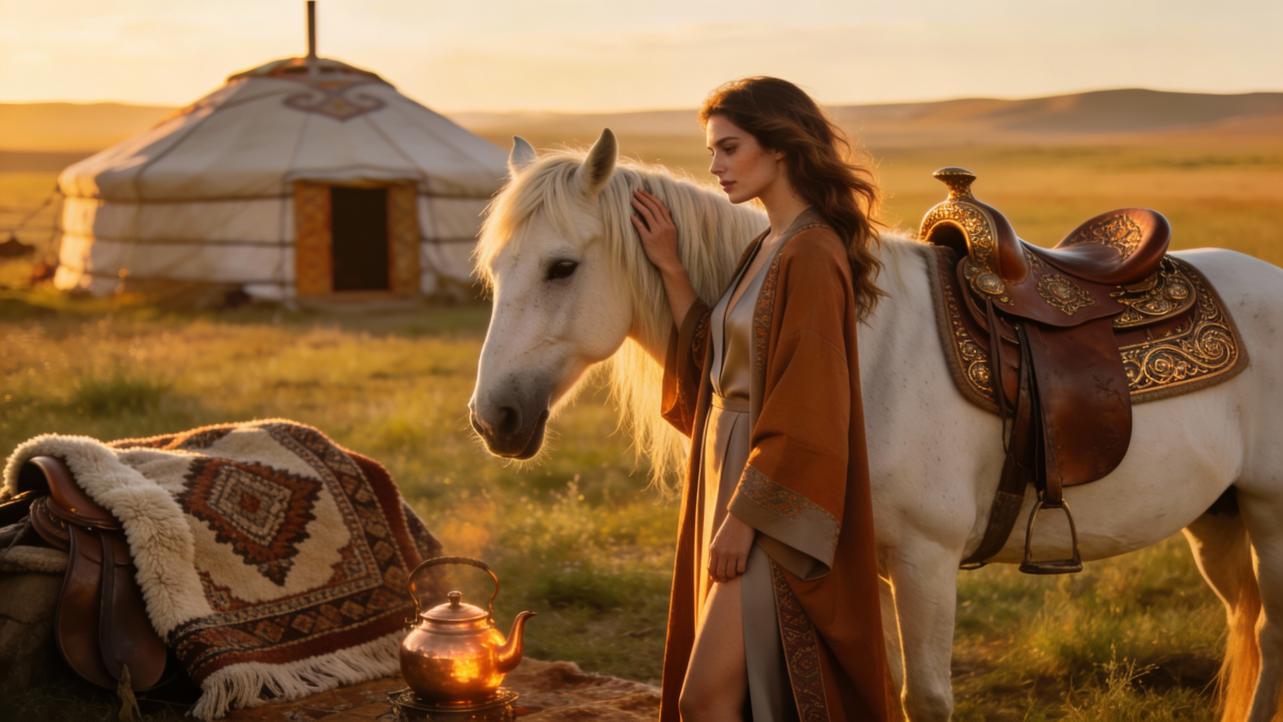
Understanding Mongolia’s Connection to Customized Grassland-Themed Gifts
Mongolian grasslands have a way of settling into people’s hearts. Even if you have never stood on the steppe, you have probably seen its symbols: a round white ger against a wide horizon, a small rider on a sturdy horse, a blue scarf fluttering in the wind. When these images show up on a mug, a scarf, or a hand-carved keepsake, they are not just “pretty designs.” They carry a deep story of land, movement, and memory.
As an artful gifting specialist, I often think of Mongolian‑inspired, grassland‑themed pieces as tiny, portable steppes. The goal is not only to make something beautiful but also to honor the culture and ecosystems that inspire it. To do that well, it helps to understand why grasslands matter so much to Mongolian life and how that meaning can thoughtfully infuse customized gifts.
In this guide, we will explore what the grasslands represent in Mongolia, how nomadic life shapes symbols and materials, what sustainability actually looks like on the steppe, and how you can design personalized pieces that feel both heartfelt and respectful.
The Mongolian Grasslands: A Living Story, Not Just a View
When you choose a grassland motif, you are drawing from one of the world’s great landscapes. Multiple ecological and cultural studies describe Mongolia as roughly four‑fifths grassland, stretching from forest steppe in the north to desert steppe in the south. The Mongolian–Manchurian grassland ecoregion alone covers close to 343,000 square miles across eastern Mongolia and neighboring regions, forming a vast corridor between taiga forests, deserts, and hills.
Researchers writing about this ecoregion describe a strongly continental climate, with long, bitter winters and short, warm summers. Average January temperatures often sit well below 5°F, sometimes plunging toward about –40°F in extreme events, while July temperatures tend to stay in a mild 60–75°F band. Much of the grassland receives only about 8–18 inches of rain a year, and some areas get as little as 6–8 inches, with most moisture arriving in a brief summer window.
That sounds abstract, but it shapes everyday life in very concrete ways. Over thousands of years, Mongolian grasses evolved to handle intense grazing and harsh weather. They grow from protected crowns close to the soil, ready to be eaten down and regrow. In turn, nomadic pastoralism evolved with them. Scholars describe this as a “quiet” mobile system, where herders move horses, sheep, goats, cattle, and camels across shared pastures as grass and water shift through the seasons.
In practical terms, that means when you look at a painting or textile showing a ger under a deep blue sky with animals scattered like beads, you are seeing a portrait of a working landscape. It is not wilderness untouched by people; it is a partnership between land and herders. Articles from environmental researchers and organizations such as The Nature Conservancy and The Solutions Journal emphasize that pastoralism is still central to Mongolia’s economy and identity. Livestock production accounts for more than a fifth of national GDP and supports a large share of households, and about a quarter to nearly a third of the population is still nomadic or semi‑nomadic according to cultural studies.
Imagine this on a small scale: a family might manage several hundred animals spread across miles of grassland, shifting camps so that no patch of pasture is pushed past its limits. When a custom artist sketches a lone rider or embroiderers stitch horses along the hem of a scarf, they are drawing from this daily choreography of movement.
For your gifting decisions, it helps to remember that a “grassland scene” is not just scenery. It is a snapshot of a livelihood system where land, animals, and people are tightly intertwined. That understanding can guide both the stories you tell with your gift and the makers you choose to support.

Ger, Home, and the Comfort of Portable Circles
If the grassland is the stage, the Mongolian ger is the beating heart at its center. The ger, often called a yurt in English, literally means “home” in Mongolian, and UNESCO has recognized traditional ger craftsmanship as an element of Intangible Cultural Heritage. Detailed descriptions from ichLinks, World Wildlife Fund, and cultural linguists paint a picture of a surprisingly sophisticated piece of portable architecture.
A common “five‑wall” ger consists of five lattice wall segments that hinge into a circle, joined to a door frame and topped with a central round roof ring called the toono, supported by two columns and dozens of roof poles. The frame is wrapped in canvas and thick felt, often from sheep wool, and tied with ropes made from animal hair. Craftspeople have refined this design over centuries to withstand fierce spring winds that can reach around 40–45 mph. A small family can dismantle a ger in about half an hour and reassemble it in roughly an hour; World Wildlife Fund notes that, depending on size, a single ger can house up to fifteen people, serving as bedroom, kitchen, and living space in one.
Inside, the space is carefully organized. Sources on Mongolian culture describe how the door usually faces south or southeast. The west side is traditionally associated with men’s items such as saddles and airag (fermented mare’s milk), the east with women’s tools and cooking, the honored northern section with religious images and family heirlooms. The central stove anchors everything, warming the home in winters that can dip near –40°F and venting through the skylight in summer.
One cultural profile notes that in rural areas a ger is still considered an essential gift for newlyweds, a complete, living home offered as they start their life together. Ger makers are treated as treasured experts; people bring blue silk scarves and payment to request their work.
For gift design, the ger gives you a vocabulary of shapes and textures that are rich with meaning. A round pendant etched with a central circle and radiating lines can quietly echo the ger’s toono and roof poles. Felt coasters in soft white and warm brown can recall the layered felt covers that keep families warm on the steppe. Even the way a keepsake box opens—perhaps with a circular lid that lifts to reveal a “hearth” of color inside—can nod to the rhythm of entering a ger and gathering around the stove.
The key is to treat the ger not as a generic “cute tent” but as a symbol of resilience, hospitality, and portability. When you customize a housewarming print with a stylized ger and the phrase “Wherever we pitch our home,” you are quietly aligning with a tradition where home is something you can carry with you, even as life changes.

Symbols of the Steppe: Motifs that Actually Mean Something
Mongolian grassland‑themed products often feature recurring icons. Understanding them will help you choose or commission designs that go deeper than surface aesthetics.
Ethnographic and cultural sources consistently highlight horses and the “five types of livestock” as central. Horses are so important that Mongolians have been called the Horseback People. Outside the capital, they remain essential for herding, travel, and sports. Sheep, goats, cattle or yaks, and camels complete the traditional herd, each with specific grazing habits and uses, from milk and meat to wool and transport.
Then there are spiritual and communal symbols. Studies of Mongolian religion and custom describe rock cairns called ovoo, usually adorned with blue or multi‑colored cloth, where people circle clockwise to pray and make offerings. Shamanic belief in the sky god and the spirits of mountains, water, and fire later mingled with Tibetan Buddhism, so prayer flags, blue silk scarves, and mountain silhouettes all carry spiritual weight. Cultural travel writing also emphasizes Naadam, the summer festival that features wrestling, archery, and long‑distance horse racing, often depicted in art as wild, joyful motion under wide skies.
Ecological research adds another layer of symbolism through wildlife. The eastern Mongolian steppe still supports migrations of Mongolian gazelles that number in the millions, along with steppe eagles, cranes, wolves, and even reintroduced wild horses in some regions. Conservation groups highlight this as one of the last places on Earth where large migratory mammals roam across mostly intact temperate grasslands.
Here is one way to translate those meanings into customized pieces:
Motif or element |
Cultural and ecological meaning |
Example customization idea |
Ger (yurt) |
Portable home, family unity, adaptability in harsh climates, recognized cultural heritage |
A round wood wall piece engraved with a family name inside a stylized ger outline, given as a housewarming or wedding gift |
Horse and rider |
Mobility, freedom, partnership with animals, historical power along the Silk Roads |
A hand‑painted leather journal cover showing a small rider crossing the grassland, personalized with a travel date or a favorite quote about journeys |
Livelihood, wealth, interdependence of species and pasture |
A custom felt mobile for a nursery featuring a horse, sheep, goat, cow, and camel, with the baby’s name embroidered inside a tiny toono circle |
|
Blue scarf or ribbon |
Respect, blessing, sky reverence, often used in greetings and rituals |
A gift wrap detail: a reusable blue silk ribbon tied around a box containing a grassland‑themed keepsake, with a note explaining its inspiration |
Ovoo or mountain cairn |
Spiritual center, prayer, connection to land spirits and ancestors |
A small ceramic sculpture of stacked stones, with initials or a date inscribed discreetly on the base, marking a meaningful new beginning |
Gazelle or steppe birds |
Wild freedom, intact ecosystems, shared space between herders and wildlife |
A limited‑edition art print where the recipient’s name is subtly incorporated into the trail of running gazelles or flying cranes |
When you brief an artist or browse ready‑made items, look at which motifs are used together. A ger standing alone might evoke intimacy and home. A ger with far‑off gazelles and a rider suggests the full social‑ecological system of the steppe. That complexity adds emotional depth to a gift.

Sustainability and Responsibility: Beyond “Eco” Labels
Many buyers understandably want their grassland‑themed gifts to support the very landscapes they celebrate. On the Mongolian steppe, sustainability is not a buzzword but an urgent concern documented by scientists and community projects.
Climate data compiled by researchers and organizations such as Conservation International show that Mongolia has already warmed by about 4°F since the mid‑20th century, more than three times the global average. Droughts have lengthened, water sources have shrunk, and extreme winters known as dzud have become more frequent and severe. In one recent dzud, more than seven million livestock died; in another earlier event, about twenty percent of the national herd was lost in a single winter. For herder families relying on animals for food and income, that is not just environmental news; it is a life‑altering disaster.
At the same time, policy and economic shifts since the 1990s have encouraged rapid growth in herd numbers. The national livestock population rose from tightly managed levels under the planned economy to tens of millions of animals grazing more freely. Environmental assessments cited in scientific work estimate that up to about thirty percent of grassland biomass has been degraded over several decades, with the edge of the Gobi Desert creeping northward. In some areas of Inner Mongolia, mining has contributed a large share of heavy metals like arsenic and selenium in soils, threatening plants, soil microbes, and downstream water.
Yet the story is not only one of decline. Initiatives described by The Solutions Journal, Al Jazeera, and Conservation International highlight herder‑led innovation. Community groups have signed co‑management contracts with local governments, setting seasonal pasture boundaries, preparing hay together, reducing herd sizes while improving animal quality, and diversifying income. Assessments report that under these arrangements, household incomes have grown while knowledge and resilience improved.
More recently, projects supported by organizations such as Conservation International and Good Growth blend traditional knowledge with satellite monitoring. Herders walk their valleys with scientists, mapping degraded patches and co‑creating grazing plans. Remote sensing tools then help estimate how long each pasture can sustain animals before needing rest, shifting management from emergency reactions to proactive rotations. Some initiatives even work with global fashion brands to pay higher prices for fibers produced under regenerative grazing standards, especially important in cashmere, which can represent around ninety percent of a herder household’s income.
What does this mean when you are choosing a grassland‑inspired gift?
It suggests that the “material story” matters as much as the imagery. A cashmere scarf embroidered with steppe scenes can be a deeply moving present, but goats are also the animals most likely to damage vegetation if herds are too large, because they nibble plants down to the roots. Felt ornaments made from sheep wool, wooden decor from carefully managed sources, and textiles produced by cooperatives that follow sustainable grazing plans can all carry a gentler footprint.
Whenever possible, ask makers or brands questions such as how their wool or cashmere is sourced, whether they work with specific herder groups, and whether any of their pricing supports pasture restoration or community training. Research in behavioral economics suggests that when communities share strong social norms, trust, and willingness to invest in conservation, they manage common grasslands more sustainably. Your purchasing choices can help reward those very norms.
In a simple mental calculation, imagine two similar scarves: one cheaper piece with anonymous materials, and one slightly more expensive design that channels an extra five or ten dollars back to a herder cooperative working on sustainable grazing. Over the lifetime of the scarf, that small difference is not just a price change; it is a quiet contribution toward keeping the “world” shown in its pattern alive.
Designing Customized Pieces that Honor Nomadic Values
Mongolian grassland culture is not only defined by landscape and animals; it is also woven from hospitality, ritual, and everyday etiquette. Travel accounts and ethnographic notes describe a society where guests are welcomed with milk tea, offered food and drink with both hands, and seated around the stove in a gesture of inclusion. Water and fire are treated as sacred. Visitors are asked not to wash dirty items or certain clothing in rivers and never to throw trash into the stove or dry shoes over the flame.
These customs reveal how people see themselves in relation to elements: not above them, but in conversation with them. That same sense of respect can inspire how you customize a gift.
Start from the feeling you want to celebrate. A couple who loves the idea of “home wherever we go” might resonate with the portability of the ger and the way nomads circle back to seasonal grazing grounds year after year. A friend going through a tough time might connect with the resilience embodied in surviving dzud winters and dust storms. Someone devoted to environmental work may appreciate the balance between tradition and modern science on the steppe.
Translate those feelings into design choices that echo, rather than copy, specific customs. Instead of printing sacred prayers or religious diagrams you do not fully understand, you could choose colors and compositions that suggest the sky, mountains, and cairns, paired with a short explanation card referencing Mongolian practices of honoring land and spirits. Instead of using a blue silk scarf purely as a trendy accessory, you might include a note about how blue scarves in Mongolia can symbolize respect and blessing when given to elders or used in ceremonies.
Modern Mongolian life is also changing, and contemporary culture includes cell towers near gers, solar panels on felt roofs, and young people toggling between city education and countryside roots. Articles on nomadic culture describe herders charging cell phones with solar panels, using mobile apps for weather alerts, and selling handmade crafts to tourists alongside traditional livestock work. If your recipient is tech‑savvy or fascinated by this blend of old and new, you might commission an illustration of a ger glowing softly at night, with a discreet solar panel on its side and a starlit sky overhead, along with a custom caption about “ancient rhythms, modern light.”
The most meaningful customized pieces often sit at the intersection of authenticity and personalization. They respect that the motifs come from a real, evolving culture, not a fantasy world, while still making space for the recipient’s own story.

Matching Mongolian Grassland Motifs to Real‑Life Occasions
Thoughtful gifting is about the fit between object and moment. Mongolian grassland themes offer especially rich possibilities for life transitions, because they carry built‑in metaphors of movement, endurance, and kinship.
For weddings and partnerships, the ger is a powerful symbol. In rural Mongolia, cultural documentation notes that a ger is still considered a classic, big‑hearted wedding gift: a complete home in portable form. You probably will not ship an entire ger, but you can echo that sentiment with a circular wall hanging or a custom print of a ger pitched under the “eternal blue sky,” with the couple’s names and wedding date nestled near the door. Decorations inside the ger, such as painted furniture and patterned felt floorings, can inspire border motifs or color palettes for invitation suites and keepsake boxes.
For housewarmings and new beginnings, consider the way nomadic families negotiate space. They move at the end of winter from sheltered valleys to open steppe pastures, returning to familiar spots year after year. A customized map print that stylizes a family’s past moves—different cities, neighborhoods, or even continents—as a series of seasonal pastures leading to their current “camp” can quietly mirror this rhythm. Little gers or horses can mark each place, with short captions printed underneath.
For birthdays and personal milestones, Naadam imagery links beautifully with themes of courage, achievement, and play. Cultural notes on the festival describe long‑distance horse races often ridden by children, alongside wrestling and archery. A personalized linocut or digital artwork showing a favorite animal racing across the grassland, with the recipient’s birth year subtly patterned into the hills, can celebrate both childlike joy and adult strength.
Seasonal timing can also add a deeper thread. Tsagaan Sar, the Lunar New Year celebration in Mongolia, usually falls in late winter. Families wear their best traditional clothes, visit elders, and share rich meals. A gift given around this period that features warm interior ger scenes or detailed depictions of traditional clothing like the long silk deel robe can echo that sense of renewal and family connection, even if the recipient does not celebrate the holiday but appreciates the symbolic freshness of the season.
In all cases, a short, thoughtfully written card can be the bridge between Mongolian context and the recipient’s life. A sentence or two explaining that in Mongolia, grasslands are not just scenery but the foundation of home, livelihood, and spirituality can transform a pretty object into a story people remember.
A Few Practical Pros and Cons to Weigh
Because Mongolian grassland‑inspired gifts are so evocative, it is easy to get swept up in romance and forget practicalities. A clear, compassionate look at pros and cons can keep your choices grounded.
On the positive side, customization allows you to match motif and message precisely. You can combine a ger silhouette with specific dates, favorite verses, or family names. You can request specific animals, such as including a camel for someone who loves deserts or highlighting gazelles for a conservationist. Working directly with artisans, especially those with Mongolian heritage or close partnerships in the region, can channel funds toward communities who are actively navigating climate change and economic transition on the steppe.
However, custom work often takes time. Ger‑inspired wood carvings or hand‑stitched felt pieces may require several weeks or more, especially when artisans are balancing seasonal workloads, just as traditional ger craftsmen historically rush to fill wedding orders before autumn while preparing wood in winter. Pricing may reflect not only labor and materials but also the cost of sourcing sustainable fibers or maintaining fair relationships with herders. Additionally, some symbols such as religious images, specific ritual objects, or sacred texts may not be appropriate to alter or repurpose without guidance.
Balancing these factors is much easier when you see yourself as a collaborator rather than a consumer. Share your intentions with makers. Ask which motifs they feel comfortable adapting and which they prefer to leave in their traditional forms. The conversation itself can be part of the gift’s story.
FAQ: Thoughtful Questions People Often Ask
Is it appropriate to give Mongolian‑inspired grassland gifts if neither the giver nor receiver is Mongolian?
It can be, if approached with respect. The key is to avoid treating the culture as a costume and instead honor it as a living tradition. Work with artists and brands who acknowledge their inspirations clearly, credit Mongolian sources, and ideally have real connections or partnerships in the region. Including a short note about what the motifs mean and why you chose them helps frame the gift as appreciation rather than appropriation.
How can I tell if a grassland‑themed item is supporting herders or just using their imagery?
Many responsible makers will tell you where their wool, felt, or cashmere comes from, sometimes naming specific cooperatives or regions. Look for mention of community‑based grazing, regenerative practices, or collaboration with conservation initiatives like those described by research groups and organizations working on the Mongolian steppe. When in doubt, ask direct questions; sincere artisans usually welcome the chance to explain their sourcing.
Are cashmere products always a bad choice for the steppe?
Not necessarily. Research and conservation work make a distinction between unmanaged growth in goat numbers and carefully managed, regenerative herds. Cashmere can be part of sustainable livelihoods if herd sizes, pasture rotations, and prices are set with the land’s limits in mind. Choosing pieces from producers who openly address these issues, rather than focusing only on softness and luxury, supports the healthier side of the industry.
A Mongolian grassland‑themed gift can be much more than a lovely object; it can be a small, tangible bridge between your world and a landscape where sky, grass, animals, and people have danced together for millennia. When you understand the stories beneath the motifs and choose makers who honor both culture and ecosystem, you turn a simple present into a quiet, enduring blessing—one that carries a whisper of the eternal blue sky wherever it goes.
References
- https://uknowledge.uky.edu/cgi/viewcontent.cgi?article=4333&context=igc
- https://digitalcommons.unl.edu/context/greatplainsresearch/article/2078/viewcontent/Reading.pdf
- https://www.britannica.com/place/Mongolia/Daily-life-and-social-customs
- http://pdf.wri.org/wr2000_grasslands_mongolia.pdf
- https://www.conservation.org/news/can-mongolia-s-oldest-traditions-survive-a-changing-climate
- https://en.unesco.org/silkroad/content/did-you-know-mongolian-nomadism-along-silk-roads
- https://www.worldwildlife.org/news/stories/the-home-and-life-of-mongolian-nomadic-herders/
- https://openknowledge.fao.org/server/api/core/bitstreams/d1c7cb77-3414-46ff-8aad-30f1b3cd6442/content
- https://www.nature.org/en-us/about-us/where-we-work/asia-pacific/mongolia/stories-in-mongolia/mongolia-s-amazing-grasslands/
- https://seeingthewoods.org/2014/01/22/the-grasslands-of-mongolia/
