

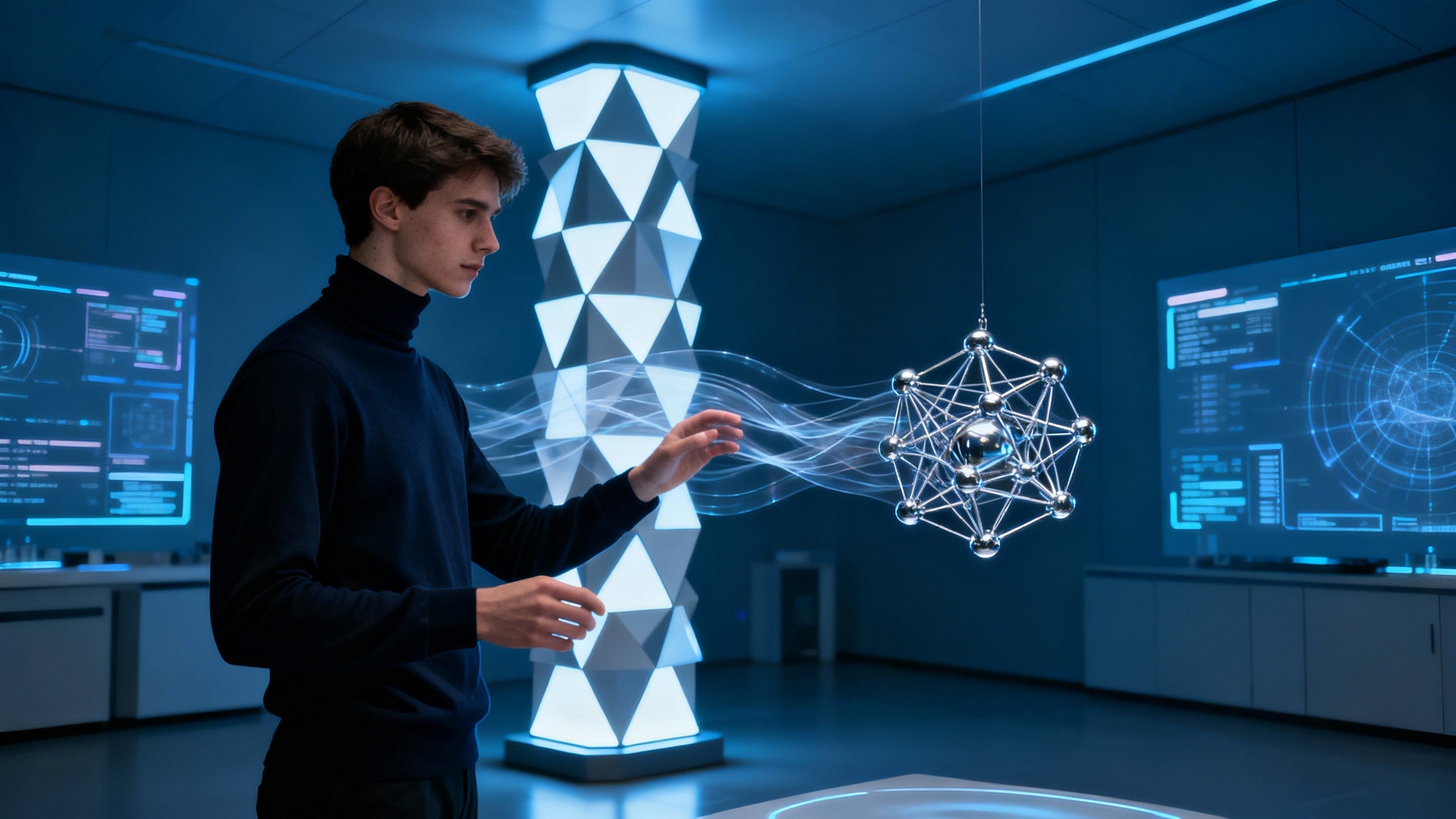
Can AI Create Personalized Totems Based on Your Profession?
When someone walks into my studio and asks for a “piece that feels like my work,” they are rarely talking about their job title. They are talking about the late nights, the tiny victories, the people they serve, the values they refuse to compromise. In other words, they are asking for a totem: a small, tangible object that carries a whole inner world.
Today, more and more of those worlds are shaped by artificial intelligence. Marketers test campaigns with AI insights, nurses chart on AI‑assisted systems, designers sketch with generative image tools, and even brand‑new roles like prompt engineers or AI ethicists are appearing in job listings. A World Economic Forum–linked guide estimates that AI could help create tens of millions of new roles in the coming years. The question I hear often now is simple and surprisingly emotional: can AI itself help design a personalized totem for your profession?
As an artisanal gifting specialist who also works hands-on with generative tools, I believe the answer is yes—but only if we keep AI in its proper place: as a tool in human hands, not the totem on the pedestal.
In this article, I will unpack what professional totems really are, how AI currently “sees” professions, where AI can meaningfully help, and where it falls short. Along the way, I will share practical, step-by-step guidance for co‑creating an AI‑assisted totem that still feels deeply handmade and human.
What Do I Mean by a “Personalized Totem”?
In my practice, a totem is a small, symbolic object that anchors someone to who they are and what matters most. It might be a hand‑carved wooden figure that sits on a desk, a ceramic token tucked into a lab coat pocket, a tiny mixed‑media tableau in a shadow box, or an engraved pendant that rests against the heart.
For professionals, a personalized totem usually weaves together three strands.
First, there is the visible layer: familiar tools of the trade such as a stethoscope for a nurse, a sketchbook for a designer, a stack of contracts for a lawyer, a flight map for a pilot. Second, there is the invisible layer: the values underneath the work, such as calm under pressure, fierce advocacy, quiet patience, or playful experimentation. Third, there is the story layer: the specific person, their milestones, their inside jokes, and the people who supported them.
When someone asks me to design a totem for, say, a teacher, we do not simply stamp an apple on a charm and call it a day. We talk about the one student who came back years later to say thank you, the personal library, the exhaustion, the sense of calling. The final piece might mix a tiny book stack, a cup of tea, a subtle sunrise, and a favorite quote hidden on the underside.
So where does AI fit into this very human, very sentimental process?

How AI “Sees” Professions Right Now
Before trusting AI to help with personalized symbols of work and identity, it helps to study the way it already imagines professions.
A My Modern Met article looked at a BuzzFeed writer’s experiment using the image generator Midjourney. The prompt was simple: create portraits of the “average” person in thirty‑six common professions, from astronauts and doctors to baristas and tattoo artists. At first glance, the results looked impressive. Firefighters wore the correct gear, dentists flashed perfect smiles, news anchors smoldered at the camera. Everything was glossy and camera‑ready.
But when you linger on those images—as I often do when scouting visual references for clients—pattern after pattern emerges. Almost everyone looks like a model. Bodies are trim and toned, hair is immaculate, faces could walk onto a movie set. Age-wise, the set feels strikingly youthful. The My Modern Met piece notes that among the women depicted, only the female teacher clearly appears over fifty. In AI’s visual imagination, once you reach middle age, your presence in many careers seems to fade.
Other quirks pop up too. The astronauts look oddly intense, with one female astronaut appearing almost spooked. The actors are dressed as though they are starring in a 1930s period film, and the morticians resemble characters from the late nineteenth century, not contemporary funeral professionals. Authors are rendered as generic hipsters whose main “literary” signal is a pair of glasses.
These are not random oddities. They reflect what generative models learn from their training data: polished stock photos, film stills, fashion shoots, and the biases encoded in them. According to a conference report on generative art and ownership published by DigiCon, artists and engineers consistently describe generative AI as a mirror of its data, not a mirror of reality.
For someone who designs sentimental objects meant to honor real humans with wrinkles, scars, and messy desks, that gap matters. AI’s default vision of professions is idealized, filtered, and sometimes ageist or stereotypical. If we let it lead the design process without question, our totems risk feeling more like glossy stock photos than cherished keepsakes.
AI as Tool, Not Totem
At a recent digital arts conference, creators were invited to think about generative AI as either a tool or a totem. The phrase has stayed with me, because in my studio I work with literal totems and digital tools every day.
The artists and musicians at that event largely agreed that AI should remain a tool. It is a will‑less servant that automates and accelerates tasks: extending a music track, cleaning an audio stem, generating alternate backgrounds, or helping with editing. When it begins to supply not only the execution but also most of the core ideas, it risks becoming a totem on a pedestal. Creators start waiting for the model to “speak,” and their own instincts atrophy.
There are legal and ethical reasons to keep humans firmly in the driver’s seat. Both European and U.S. copyright frameworks still hinge on human authorship and originality. If a generative model does the bulk of the ideation and production for a piece, courts may not consider that work eligible for strong protection. That matters if you sell your handmade pieces, but it also matters emotionally. A totem that feels generic or unowned rarely becomes a family heirloom.
The DigiCon report quotes artists like Ai Weiwei, who calls art that can be endlessly reproduced by generative models “meaningless,” and musician Nick Cave, who argues that AI can mimic the shape of a song but cannot live the creative journey. Their point is not that AI is useless. It is that the worth of creative work lies not only in its efficiency but in the time, risk, and inner struggle poured into it.
Even companies that build their identities around AI tread carefully. One Totem, a technology studio that publishes on generative AI, has a public policy stating that core narrative work remains strictly human-led. They use AI for grammar, structure, debugging code, summarizing calls, and generating images for blog illustrations, but they reserve the heart of the writing and the overarching system design for “Team Human.”
As a sentimental curator, I adopt a similar stance. AI belongs on my workbench, not on my altar. It can help us brainstorm, visualize, and refine, but the totem itself should still bear the fingerprints—literal or metaphorical—of a human story.
A Quick Look: Tool Versus Totem
Perspective |
AI As Tool |
AI As Totem |
Role in creation |
Assists with ideas, drafts, variations |
Supplies most ideas and execution |
Human effort |
Directs, edits, and embodies the final work |
Waits for the “answer” from the model |
Legal standing |
Clearer human authorship and copyright claim |
Risk of work not qualifying as human authored |
Emotional impact |
Carries human intention, AI just supports |
Feels generic, less rooted in lived experience |
Long‑term effect on craft |
Strengthens skills with a new power tool |
Encourages creative laziness and over‑reliance |
In the rest of this article, I will treat AI firmly as a tool, while the totem—your totem—remains a human-centered object.
Where AI Truly Helps with Profession-Based Totems
When you keep that tool mindset, AI becomes a surprisingly lovely studio partner.
Sparking Visual Ideas for Complex Jobs
Generative image systems like Midjourney and DALL·E can generate high‑quality, style‑flexible images from short prompts. Design analysts writing about tools such as Midjourney, DALL·E 2, and similar platforms note that these systems can mimic a wide range of styles—from minimalism to pop art to photorealism—and produce variations faster than any one human could sketch.
In practical gifting terms, this means that if you are designing a totem for a software developer who now spends half their time orchestrating AI tools, you can ask an image model to show you “a cozy desk with code, glowing neural network motifs, and a hand‑drawn checklist of bug fixes.” You can try that concept as a woodcut, as a watercolor, as a stained‑glass window. A single evening of exploration might yield a moodboard of ten or fifteen visual directions to discuss with your artisan.
Smart workplace guides to AI imaging describe business teams using these tools to generate unique stock‑style photos, branded slide backgrounds, moodboards, and even visual aids for interviews. Those same workflows translate beautifully to profession totems. Instead of accepting the default “doctor with perfect smile” aesthetic, you can nudge the model toward “tired but proud emergency nurse in worn sneakers, sunrise outside the hospital window,” then hand that emotional palette to a ceramicist or jeweler.
Translating Workflows into Symbols with Language Models
Large language models such as ChatGPT, Claude, and Gemini excel not only at writing but at pattern‑finding. A practical course on working with these models emphasizes how understanding their “thinking” helps you predict outputs, avoid misinterpretations, and get more precise answers with advanced prompting techniques.
For totem design, language models shine at turning messy life stories into short lists of symbols, metaphors, and phrases. I often invite clients to free‑write about a single workday: the first task they do when they arrive, the moment that makes them smile, the part that drains them, the way they know they have made a difference. Feeding that into a model, I might ask for recurring themes or symbolic objects that could represent those patterns.
The result might highlight “bridge‑building” for a project manager, “guardian” for a cybersecurity analyst, or “quiet translator” for an interpreter. Those words, in turn, suggest visual motifs: arches, shields, overlapping circles, intertwined scripts. According to One Totem’s own AI policy, they use language models in a similar way—summarizing conversations, bridging ideas, and stress‑testing arguments—while keeping the final narrative voice human.
Used thoughtfully, a language model becomes another pair of eyes on your story, pointing out connections you might be too close to see.
Honoring New Hybrid and AI‑Infused Roles
As AI reshapes the workplace, it also reshapes the kinds of professions people want to honor. An Identity Review feature on the future of work describes how AI is transforming marketing, supply chains, healthcare, finance, education, law, customer service, and more. It emphasizes that the highest value lies in human–AI collaboration rather than wholesale replacement.
Parallel research on AI careers highlights the rise of roles such as prompt engineer, AI trainer, AI ethicist, and human–AI interaction designer. A career guide from OpenCusp notes projections of around ninety‑seven million new AI‑related jobs globally within just a few years, alongside a global AI market heading toward hundreds of billions of dollars.
For gifting, this means we are no longer only crafting totems for “teacher” or “lawyer.” We might be asked to celebrate an AI‑assisted nurse who relies on predictive analytics for fall risk, a marketing director who oversees generative content systems, or a non‑technical AI ethics lead who focuses on fairness and transparency. A Momen article on entering AI without a technical background stresses that communication, empathy, and ethics skills are increasingly central to such roles.
Here, AI tools are particularly useful because they already “speak the language” of these new professions. A language model can help a gift giver understand what their friend the “AI operations specialist” actually does all day. An image generator can visualize “human and AI thinking together” as overlapping constellations or weaving threads. That gives a human maker solid ingredients for a totem that feels both current and deeply personal.

The Limits and Risks of Letting AI Design Your Totem
For all of AI’s helpfulness, there are real pitfalls when you let it guide a sentimental object uncritically.
Stereotypes and Beauty Filters
The My Modern Met experiment with thirty‑six AI‑imagined professionals is a vivid reminder that generative models default to stereotypes. The polished, model‑like faces, the narrow age range, and the recycled fashion tropes reveal the biases of internet imagery more than the diversity of real workplaces.
A broader generative AI guide from Intuz highlights amplification of existing bias as one of the key ethical risks of these systems. If most images of CEOs in the training data are white men in dark suits, the model is more likely to reproduce that pattern unless prompted otherwise. If older women are underrepresented in certain professions online, they will likely be underrepresented in generated images as well.
For totems, this means an AI‑generated “average nurse” might not look anything like your grandmother who went back to nursing school at fifty, or your friend who wears her natural hair and speaks three languages with patients. If you accept the default imagery, you risk baking those biases into a gift meant to honor the very person who defies them.
Ownership, Originality, and Authenticity
Several sources in our research point to deep concerns around intellectual property. A World Economic Forum piece on creative industries adapting to generative AI notes tensions around how training datasets are assembled from existing works and how to credit or compensate original creators. A New York Times report on DALL·E 2 and creative jobs describes how these systems are trained on vast datasets of captioned images scraped from the internet, which likely include many copyrighted artworks and styles.
For a profession totem, this raises two issues. First, if your AI‑generated design leans heavily on the recognizable style of a living artist, you may unintentionally cross an ethical line by reproducing that look without consent or payment. Second, if you rely on AI to produce the entire design and then simply fabricate it physically, questions about authorship arise. Is it truly your work, or a derivative of the model’s internal collage of others’ work?
Legal experts and creative leaders consistently recommend transparency about AI’s role, careful choice of tools, and a bias toward using AI for ideation rather than final, style‑specific outputs. That aligns with the One Totem stance that core narrative and creative direction should stay human.
Emotional Depth and the Human Journey
Perhaps the most important limitation is the subtlest: AI does not live a life. It does not remember the day your client stayed late to hold a patient’s hand, or the humiliation of a failed pitch that later taught resilience. It cannot feel the weight of a retirement ceremony where an entire team lines up with thank‑you notes tucked into their palms.
The DigiCon workshop report echoes this, noting that many creators see irreducible value in the “transcendent journey” of making art—struggling with materials, making mistakes, revising, and slowly discovering what the piece means. A totem meant to carry decades of work and care benefits from that same depth of human wrestling.
AI can propose symbols, refine wording, and suggest color palettes. It cannot decide what matters to you. That is your work, and in a sentimental object, that work is precisely what people feel when they hold it.

A Practical Workflow: Co‑Creating Your Profession Totem with AI and a Human Maker
With those caveats in mind, how do you actually collaborate with AI on a meaningful profession totem?
I follow a sequence in my studio that you can adapt whether you are designing for yourself or commissioning a piece as a gift.
First, start with story, not software. Take a page or two and write about a day in your professional life, or your recipient’s life if this is a gift. Capture a few specific scenes. A nurse might describe the quiet of the ward at 4:00 AM, the joke that always breaks the tension, the weight of the name badge. A software developer could recall the thrill of solving a stubborn bug, the team stand‑up circle, the whiteboard diagrams that look like galaxies. If you feel stuck, record a voice note instead.
Next, distill the values hiding in those scenes. Maybe you notice themes of guardianship, curiosity, advocacy, or bridge‑building. This is where a language model can help. You can paste a cleaned‑up version of your story into a tool like ChatGPT and ask which values, metaphors, and object‑symbols appear repeatedly. Practical courses on working with these models emphasize the power of specific prompts, so be direct. You might write something like: “Here is a short story about a pediatrician’s workday. Identify the three strongest values expressed and suggest ten small objects or natural motifs that could symbolize those values in a piece of physical art.”
Then, translate those ideas into rough visual concepts. Choose two or three of the suggested symbols that resonate most and feed them into an image generator, together with material hints. For a teacher’s totem, you might explore “well‑worn bookshelf, mug of tea, soft morning light, tiny wildflowers growing out of open pages, style of a hand‑painted ceramic tile.” Try the same idea in a few different moods such as cozy, bold, minimalist, or whimsical. Design articles on AI image tools suggest treating this phase like rapid prototyping: aim for many low‑stakes variations rather than one perfect image.
After that, bring a human maker into the process. Share your story, your distilled values, and a small selection of AI images with an artisan whose style you love. Explain what came from the model and what came from you. Invite them to adapt, remix, and even discard AI suggestions. A designer‑focused article on generative tools notes that future roles will likely combine traditional craft with AI fluency. In this collaboration, the AI sketches are reference material, not final instructions.
Finally, add the personal finishing touches that only you can provide. This might be a date on the back, a phrase in your own handwriting, a texture that recalls the workplace, or a tiny hidden symbol known only to you and the recipient. These touches transform a clever concept into something that feels lived‑in and loved.
To visualize the balance, it may help to see the workflow as shared responsibilities.
Stage of Creation |
What AI Can Do Helpfully |
What the Human Artisan and Giver Do |
Gathering meaning |
Suggest themes and summarize stories |
Share real experiences and emotions |
Finding symbols |
Propose metaphors and object ideas |
Choose which symbols genuinely resonate |
Visual exploration |
Generate multiple concept images and styles quickly |
Curate and interpret which visuals feel authentic |
Designing the object |
Offer structural suggestions if asked |
Decide materials, scale, construction, and feasibility |
Finishing and blessing |
Nothing |
Add handwork, inscriptions, and ceremonial presentation |
The most powerful part of this process is not the technology. It is the conversation it sparks between you, the recipient, and the maker, with AI playing the role of patient sketching assistant.

Pros and Cons of AI‑Assisted Profession Totems
When people ask whether they “should” involve AI in designing a totem, they usually want a balanced view. Research on creative industries and AI can help us weigh the benefits and drawbacks.
A World Economic Forum article on generative AI and creative work argues that the biggest impact is on tasks rather than entire jobs. Generative tools excel at first drafts, rough sketches, and quick variations, freeing humans to focus on concept development, curation, and storytelling. In gift design, that translates into faster exploration of shapes, motifs, and color stories, especially for professions the maker may not know intimately.
The Intuz generative AI guide reports that the market for such systems is growing rapidly, with forecasts of the broader generative AI market rising from tens of billions of dollars in 2023 to hundreds of billions by 2030 at a very high annual growth rate. A Salesforce study cited there notes that roughly two‑thirds of senior IT leaders plan to prioritize generative AI within about a year and a half. That suggests these tools will only become more accessible and better integrated into the everyday apps you already use to brainstorm gifts, store photos, or communicate with artisans.
On the other hand, the DigiCon workshop summary and the New York Times piece on AI‑generated art underline serious risks: devaluation of creative labor, flooding of platforms with “good enough” content, and training on unlicensed artworks that undermines artists’ livelihoods. Many creators fear that if companies replace too much human‑made work with generative output, they will lose the client commissions that currently fund more experimental or heartfelt projects.
There is also a psychological risk. If you lean too heavily on AI to decide what a nurse or engineer “should” look like, you might unconsciously adopt the model’s biases about gender, race, age, body type, and even style of dress. Over time, that can make your gifts feel oddly similar, as though the same invisible art director shaped every profession.
One constructive way to hold both sides is to consciously design your process so that AI handles what research consistently describes as its strengths—speed, scale, pattern recognition—while humans handle what studies and creator testimonies emphasize as our strengths: judgment, ethics, empathy, narrative sense, and tactile making.
Here is a concise comparison framed around that idea.
Dimension |
Benefit When AI Is Used Thoughtfully |
Risk When AI Is Over‑Relied On |
Speed |
Rapid brainstorming of symbols and layouts |
Rushed, under‑considered designs |
Personalization |
Ability to test dozens of niche, profession‑specific ideas |
Generic “average professional” stereotypes reproduced |
Cost |
Lower initial concepting cost, especially for complex roles |
Pressure to undervalue human craft and unique labor |
Creativity |
Unexpected combinations and cross‑disciplinary metaphors |
Homogenized aesthetics if default prompts dominate |
Ethics |
Chance to consciously correct data‑driven biases |
Unseen copyright, privacy, and representation violations |
Used with intention, AI can absolutely have a place in the creation of personalized profession totems. Left unchecked, it can flatten precisely the human richness such gifts exist to honor.

So, Can AI Really Create a Personalized Totem Based on Your Profession?
After years of sitting between a carving bench and a glowing screen, my answer is nuanced.
AI can generate images and descriptions that feel eerily tailored to your job. It can suggest symbols you might not have thought of, translate complex workflows into simple metaphors, and give you ten visual variations in the time it once took to sketch one. It can help a non‑artistic manager brainstorm a meaningful retirement gift, or help an overworked nurse articulate why their work matters.
What AI cannot do is care.
It cannot know the weight of your professional promises, the memories layered into your tools, or the private vows you have made about the kind of colleague or caregiver you want to be. It cannot decide which of its suggestions make your chest ache a little in recognition. It cannot sand the edges of a wooden charm while thinking of the hands that will hold it, or adjust a glaze because the original color does not quite match the hospital scrubs you described.
In that sense, AI can contribute to a profession totem in the same way a good sketchbook, mentor, or brainstorming partner does. It can expand your options and clarify your thinking. But the totem itself—especially the kind meant to live on a desk for decades or be passed through a family—still needs the warmth of human judgment and handwork.
If you treat AI as the compass and yourself as the traveler, you can absolutely let it help you find the path toward a more precise, more resonant profession totem. If you reverse the roles and ask the compass to take the journey for you, the object you end up with may be clever, but it will rarely be cherished.
Short FAQ
Is using AI to help design my totem “cheating” or less meaningful?
In my experience, no. Studies of creative industries from groups like the World Economic Forum emphasize that generative AI is best used as a collaborator that automates repetitive tasks and sparks ideas, while humans handle final decisions and emotional nuance. When you are honest about AI’s role and still pour your own story into the piece, the totem’s meaning comes from your intention, not the tool.
What if my profession is niche or brand‑new, like AI product manager or responsible AI lead?
That is where AI can be especially helpful, because language and image models have been trained on descriptions of emerging roles across sectors. Articles on AI careers without a technical background show how many non‑coding roles now exist in ethics, communication, and change management. You can use those descriptions as raw material and then work with an artisan to distill them into symbols that feel specific to your path.
I am not tech‑savvy. Can I still have an AI‑assisted profession totem?
Absolutely. Many artisans, including my own studio, now quietly use AI in the background for research, ideation, or layout exploration. One Totem’s public policy is a good example: they use AI behind the scenes for grammar checks, summarizing conversations, and generating draft visuals, while keeping the core creative work human. You do not have to touch the tools yourself to benefit from them; you only need to choose a maker whose values you trust.
In the end, the most meaningful gifts are not those that use the newest technology, but those that see us clearly. AI can help sharpen that vision. The heartwork of honoring a life in an object is still beautifully, irreducibly human.
References
- https://www.tiffin.edu/wp-content/uploads/AI-Tools-with-Descriptions.pdf
- https://www.bls.gov/opub/mlr/2025/article/incorporating-ai-impacts-in-bls-employment-projections.htm
- https://arxiv.org/pdf/2507.07935?
- https://digi-con.org/perspectives-from-creators-tools-vs-totems/
- https://www.weforum.org/stories/2023/05/generative-ai-creative-jobs/
- https://www.researchgate.net/publication/389007689_Comparing_Demographic_Representation_in_AI-Generated_and_Stock_Images_of_Occupations
- https://www.intuz.com/the-generative-ai-guide
- https://onetotem.com/generative-ai-policy
- https://www.opencusp.com/ai-career-guide
- https://www.ai-supremacy.com/p/a-practical-guide-for-design-tools
