

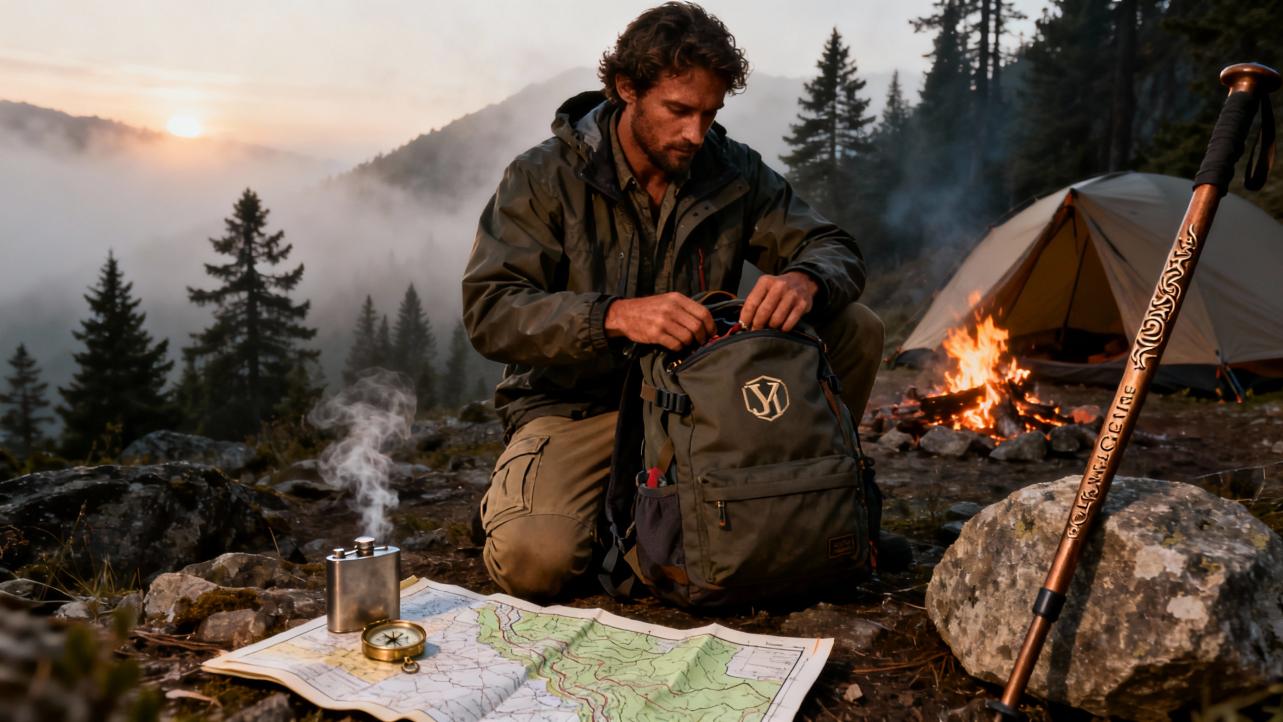
Understanding the Preference for Outdoor-Themed Custom Products in Australia
The Outdoor Heartbeat of Australian Life
If you spend any time listening to Australian stories, you notice something quickly: the most treasured memories rarely happen under fluorescent lights. They unfold on beaches, in bushland, around campfires, and under big skies. That outdoor heartbeat explains a great deal about why outdoor-themed custom products feel so right in the Australian context, both as heartfelt gifts and as branded keepsakes.
Research backs up what many of us see every day. Ken Research reports that more than half of Australians participate in outdoor sports each year, and about 67% of adults were regularly physically active in 2023, up roughly ten percentage points over five years. Outdoor recreation spending has climbed by about $1.30 billion AUD, with outdoor gear sales alone estimated at around $1.90 billion AUD. In parallel, Expert Market Research notes that tourism directly contributed 1.6% to national GDP in 2021–22, employing about 713,000 people, and that “glamping” – luxury, comfort-focused camping – is growing as travelers seek nature with a softer landing.
In my work helping brands and gift-givers design custom pieces, I see how often the brief includes words like “beach”, “camping”, “weekend escape”, or “bushwalk”. People are not just asking for a mug, a blanket, or a backpack. They are asking for reminders of the moments they cherish outside. That emotional connection, layered on top of a genuinely outdoor-loving culture, is the soil in which the preference for outdoor-themed custom products has flourished.

What Counts as an Outdoor-Themed Custom Product?
Outdoor-themed custom products sit at the crossroads of function, place, and story. They are items that either belong outside or carry the imagery and feeling of the outdoors, then are customized to fit a person, a brand, or an occasion.
At the practical end, they include things like branded picnic blankets, camping gear, cooler bags, UV-protection hats, and adventure-ready backpacks. Australian promotional specialists like Promotion Products and YAY! Promos highlight outdoor items such as picnic sets, portable grill tools, UV hats, and field-ready backpacks as key themes for 2025, especially when personalized.
There is also a softer, more artisanal side. Think of hand-etched enamel camp mugs bearing the coordinates of a favorite lookout, linen picnic throws printed with a custom illustration of a family’s favorite bay, or leather-bound nature journals embossed with a wedding date and a line of poetry. In the corporate world, the same spirit shows up in curated outdoor gift sets: maybe a sustainably made blanket, a locally crafted timber cheese board, and a custom-engraved multitool, all designed to be used in the park rather than left in a desk drawer.
Outdoor-themed custom products do not have to be hardcore technical gear. They simply need to be objects that make it easier, more beautiful, or more memorable to step outside, and to carry a personal or brand-specific story in the way they are designed, decorated, or packaged.

Market Clues: Why Brands Are Moving Outdoors
Beyond instinct and taste, there are hard-market signals showing why outdoor-themed custom products resonate so strongly in Australia.
AdventureCo’s 2025 outdoor-gear insights reveal a clear shift in how Australians outfit themselves for nature. Their internal sales data and external references show surging interest in minimalist and “barefoot” footwear: about 62% of hikers under 40 have tried barefoot or minimalist shoes in the past year, and searches for barefoot styles are up 58%. Lightweight and ultralight camping products have grown about 31% year-on-year, while daypacks now outsell multi-day packs two-to-one, signaling a preference for shorter, frequent adventures.
Sustainability is not a niche expectation anymore; it is the baseline. AdventureCo reports that about 73% of outdoor consumers in Australia prefer products made with recycled or sustainable materials, and revenue from sustainable gear categories has grown by about 44%. Ken Research echoes this on the equipment side, noting that roughly 60% of Australians say they are willing to pay a premium for eco-friendly sports and outdoor equipment.
Promotional product specialists are reading the same signals. Promotion Products describes sustainable and eco-friendly items, outdoor gear, and personalized pieces as central trends for 2025. Reusable coffee cups, eco tote bags, bamboo office supplies, and seed-infused products are framed as “must-have” rather than “nice-to-have.” YAY! Promos likewise emphasizes eco-friendly corporate gifts, outdoor merchandise, and tech-enabled items like smart water bottles and Bluetooth trackers as top promotional themes for brands wanting to stay relevant.
Outdoor equipment itself is a sizable and structured market. Statista’s outlooks for outdoor furniture and outdoor equipment in Australia show that these categories are treated as distinct B2C segments within broader home and leisure spending, modeled from national statistics, consumer spending, and household counts. A LinkedIn-summarized market view suggests that outdoor apparel and equipment in Australia could reach around $1.80 billion AUD by 2028, growing at roughly 3.9% annually.
When you put those strands together, the picture is clear. Australians are investing in outdoor gear, expecting sustainability, and engaging in active lifestyles. Promotional strategists and gift planners are simply following, and sometimes leading, by bringing outdoor themes into the realm of customized, sentimental and branded products.
The Emotional Appeal: Why Outdoor Gifts Feel So Personal
Numbers explain the “how much,” but the “why” of outdoor-themed custom products lives in the feelings people attach to them.
Outdoor experiences are inherently charged with emotion. A picnic blanket remembers the day a couple got engaged. A well-traveled daypack still smells faintly of eucalyptus and campfire. A sunhat carries the memory of children building sand castles at the same beach their parents grew up visiting. When you customize those objects – with a name, a date, a line drawing of a favorite skyline or a trail map – you bind that emotion to something tangible.
Australia’s particular relationship with sun and climate adds another layer. Euromonitor notes that Australia has a high UV index and strong sun-safety awareness, with the sun protection market worth about $215.00 million in 2024 and growing steadily. Aftersun and self-tanning products make up about 27% of that market, far higher than the Asia-Pacific average, and daily use of high-SPF products is rising quickly. About 11% of Australians used SPF 50+ daily in 2024, up from 6% in 2018, and 15% used it three to five times a week.
That context makes outdoor-themed gifts like UV-protective hats, custom SPF kits, or beach umbrellas feel doubly thoughtful. They are not just on-theme for a coastal or outdoor lifestyle; they also say, “I want you safe, well, and able to enjoy the sun for years.” For corporate gifts, a personalized sun-care and hat set can express genuine care for staff or clients in a climate where sun damage is a real risk, not an abstract concern.
As an artful gifting specialist, I often ask clients to recall a specific outdoor moment that felt important: a sunrise surf, a first hike with a child, a quiet evening under a sky full of stars. Once that memory is on the table, it becomes much easier to design an outdoor-themed custom piece that feels like a keepsake rather than a campaign. The emotional resonance is what sets these products apart from yet another generic mug or pen.

Sustainability, Longevity, and Repair Culture
Outdoor-themed custom products sit at the intersection of two powerful Australian values: love of nature and growing environmental consciousness.
In the sports and outdoor retail market, Ken Research finds that about 60% of Australians are willing to pay more for eco-friendly equipment, representing a potential incremental revenue opportunity of roughly $600.00 million AUD. The same report highlights supply-chain disruptions and rising costs, which make throwaway items less attractive both commercially and ethically. When consumers invest in durable gear, they want it to last.
A vivid example comes from Whippa, a rare Australian pack maker that still manufactures locally. Their article on making outdoor equipment in Australia reveals that producing a high-end pack offshore can cost as little as about $10.00 AUD, with machinists earning around $2.00 AUD per hour, versus about $40.00 AUD per hour for local machinists. Yet those packs often still retail for $500.00 to $700.00 AUD once every layer of the supply chain adds margins. Whippa, by contrast, sells direct from its Blue Mountains workshop and emphasizes lifetime service. They routinely repair twenty-year-old packs by replacing zippers or worn bases, getting customers “back out adventuring” with the gear they already love.
This repair culture dovetails beautifully with outdoor-themed custom products. A personalized, well-made pack that can be repaired and refreshed over decades becomes more precious with each trip. A picnic rug designed to be re-stitched and re-bound instead of discarded is a truer expression of care for both the recipient and the environment. When I help clients design outdoor gifts, we talk a lot about how the item will age and what it will look like not just after a launch event, but after five summers or ten camping seasons.
AdventureCo’s data also suggests that Australians are embracing lightweight, functional simplicity in their outdoor gear, with ultralight camping equipment sales up around 31% and daypacks dominating multi-day packs. Outdoor apparel research from Future Market Insights and Mordor Intelligence shows global outdoor clothing and accessories markets growing at roughly 6–7% per year, driven by performance and sustainability. That blend of function and responsibility is exactly what discerning recipients look for when they choose which branded pieces to keep and which to quietly pass on.

Pros and Cons of Outdoor-Themed Custom Products
Outdoor-themed custom products are powerful, but like any category, they come with trade-offs. For clarity, it can help to compare them with more conventional desk-bound gifts.
Aspect |
Outdoor-themed custom gift |
Conventional desk gift |
Real-world use |
Often used on weekends, holidays, and micro-adventures, creating vivid memories and photos. |
Used at workstations, sometimes daily but often competing with other clutter. |
Visibility |
Brand or personal mark appears in social, family, and travel settings, not just the office. |
Visibility is mostly limited to work hours and office environments. |
Emotional impact |
Tied to leisure, rest, and shared experiences in nature, which many people cherish. |
Tied to productivity and routine, which can feel less emotionally rich. |
Longevity |
High if the item is well made and suitable for the recipient’s lifestyle; repairability adds years. |
High for quality items, but many low-cost desk gifts are quickly discarded or forgotten. |
Complexity and cost |
Often higher per unit due to materials, weatherproofing, and safety standards. |
Wide range of low-cost options with simpler specifications. |
From a practical standpoint, outdoor-themed gifts come with a few considerations. They can be more seasonal; a picnic set lands beautifully in spring but may feel less relevant in mid-winter. Technical items, such as performance apparel or specialized gear, require careful sizing and safety considerations. And while quality outdoor gifts often justify their price through longevity, the initial outlay per piece is usually higher than for basic stationery.
Yet when an organization wants to align with wellness, sustainability, or an adventurous brand story, the pros tend to outweigh the cons. The key is to design with intention rather than chasing novelty for its own sake.
Designing Outdoor-Themed Custom Pieces Australians Truly Use
Thoughtful design is where outdoor-themed custom products move from “on-trend” to “unforgettable”. Here are some principles I rely on when curating or creating these pieces with clients.
Start With the Experience, Not the Object
Instead of asking, “What product should we print on?” I like to begin with, “What outdoor moment do we want to support?” For a company running wellness programs, that moment might be a lunchtime walk or a sunrise yoga session in the park. A glamping venue may want to highlight star-gazing or campfire storytelling. Tourism operators might focus on coastal drives or vineyard picnics.
Once the experience is clear, the product almost chooses itself. Walking and outdoor fitness might suggest lightweight, personalized hats and bottles designed for everyday carry. Glamping might call for beautifully finished enamelware sets or cozy throws that match the tents’ aesthetic. A coastal council could choose artist-designed, sand-resistant picnic rugs featuring local flora and fauna.
Choose Materials That Match Australian Conditions
Australia’s climate is generous but unforgiving. High UV levels, salty air, and changeable weather quickly expose flimsy materials. Euromonitor’s sun-care market analysis shows Australians are already tuned into UV risk through their skincare choices; the same expectation for protection extends to apparel and accessories.
For outdoor-themed custom gifts, that means favoring fabrics and finishes that actually perform. AdventureCo’s market insights emphasize demand for cold-weather and four-season gear, smarter hydration systems, and functional simplicity. When customizing, it is wise to choose base products that already have solid technical credentials: UV-rated hats, durable water-resistant blankets, corrosion-resistant hardware on coolers, and bottles designed to withstand being dropped on rock or sand.
As a sentimental curator, I also look for how materials age. Raw canvas that softens over time, full-grain leather that patinas, and enamelware that collects tiny chips can all add character when designed with care. The goal is not perfection, but a life well lived outdoors.
Balance Craftsmanship With Function
Outdoor-themed custom products sit in a sweet spot between technical gear and art object. They need to work, and they need to feel special.
Future Market Insights notes that direct-to-consumer outdoor brands are using personalization and online tools to tailor fit, materials, and colors. In the gifting space, similar thinking applies. Maybe a glamping retreat offers a small batch of packs in a limited color-way only available to guests, each with a subtle deboss of the property name. Perhaps a winery commissions a local ceramicist to make picnic tumblers in a glaze inspired by the surrounding hills, then laser-etches guest initials on the base.
The craft becomes a conversation: the maker’s design language, the land’s palette and textures, and the recipient’s personal story all meet in a functional piece that belongs outside. The best compliments I hear from recipients are not “What a generous gift,” but “I actually use this all the time.”
Lean Into Personalization That Feels Intimate
Personalization is not new, but its emotional power in outdoor settings is easy to underestimate. Both Promotion Products and YAY! Promos highlight personalized drinkware, notebooks, and bottles as fast-growing categories because they feel more like gifts than generic giveaways.
For outdoor-themed items, personalization can go beyond names. A few possibilities I have seen resonate deeply include coordinates of a meaningful location, a line drawing of a favorite trail or coastline, a significant date subtly incorporated into a pattern, or a short phrase that captures a shared value, such as “here’s to slow mornings” or “see you at the trailhead”.
When designing for a group, such as staff at a company retreat or guests at a milestone celebration, consider a unifying artwork paired with optional individual touches. That way, the collection feels cohesive, yet each person still feels seen.
Respect Culture and Place
Australia’s outdoor story is inseparable from its cultural story. World Fashion Exchange notes that Indigenous designers and culturally diverse voices are increasingly shaping the Australian fashion and lifestyle landscape, with sustainability and transparency as core values.
When incorporating Indigenous or local motifs into outdoor-themed custom products, it is essential to collaborate respectfully with artists and communities, ensuring fair compensation and clear attribution. A blanket adorned with an Indigenous artwork, properly licensed and accompanied by the artist’s story, becomes far more than an object; it becomes a bridge between people and Country.
Even without explicit cultural motifs, grounding designs in local landscapes – from bush textures to coastal horizons and city parks – creates a sense of belonging that is hard to fake.
When Outdoor-Themed Custom Products Are Not the Best Fit
There are moments when outdoor-themed gifts, however beautiful, are not the right choice. Extremely formal contexts, where dress codes and traditions call for classic objects like pens or framed artworks, may not lend themselves to picnic gear. Recipients with mobility limitations, or those who live in settings where outdoor access is restricted, may find more comfort and relevance in indoor rituals, such as tea, reading, or crafting.
There are also practical constraints. Some teams simply do not have storage space for bulky items like chairs or coolers, or they are managing hybrid workforces spread across apartments where a folding desk accessory is more useful than a beach umbrella. In these cases, it is still possible to honor the spirit of the outdoors through imagery – perhaps a notebook with a custom landscape illustration – while keeping the product itself compact and everyday.
As a rule, if a product would require someone to radically change their lifestyle to use it, it is better treated as a statement piece for a small sub-group rather than a universal gift.
Looking Ahead: The Future of Outdoor-Themed Gifting in Australia
Looking forward, several trends suggest that outdoor-themed custom products will not only remain relevant, but become even more nuanced and sophisticated.
Research from Future Market Insights and Mordor Intelligence indicates that global outdoor apparel and accessories markets are on track for steady growth, around 6–7% annually over the next decade, powered by rising outdoor participation, advanced fabrics, and lifestyle cross-over. In Australia, LinkedIn-summarized forecasts for outdoor equipment point to solid mid-single-digit growth, while Ken Research’s analysis shows e-commerce already accounting for about 30% of sports equipment sales, with online volumes growing from about $800.00 million AUD toward an expected $1.10 billion AUD.
In parallel, Euromonitor’s sun-care findings show Australians weaving sun protection into daily routines, not just holiday beach days, and outdoor-focused tourism segments like glamping are expanding as part of broader visitor-economy strategies.
For gifting and branded merchandise, that means three things. First, outdoor themes will increasingly blur into everyday life: a “hiking” fleece may be worn to the cafe, and a “camp” mug may live permanently on a home office desk. Second, personalization and small-batch production will become easier as digital tools and direct-to-consumer models mature, enabling brands to offer bespoke outdoor pieces at more accessible scales. Third, sustainability will continue to move from promise to proof: recipients will expect not just recycled labels, but credible stories about materials, manufacturing, and repair.
For artisans, small brands, and thoughtful marketers, this is a fertile moment. Outdoor-themed custom products are no longer about slapping a logo on a cooler bag. They are about designing objects that feel like invitations: to step outside, to care for the land and each other, and to remember the moments that matter.
FAQ
Are outdoor-themed custom products too niche for corporate gifting?
Not in the Australian context. With more than half the population engaging in outdoor sports and a strong culture of beach, bush, and park life, outdoor-themed items can feel more universally relevant than many desk-bound objects. The key is to choose products that match your audience’s reality: a simple, well-made hat or bottle is more inclusive than very technical gear only serious hikers will use.
How can I avoid “greenwashing” when choosing eco-friendly outdoor gifts?
Rely on more than a single buzzword. AdventureCo, Ken Research, and World Fashion Exchange all highlight that consumers now look for credible sustainability, not just recycled claims. Ask suppliers about material sources, manufacturing locations, and repair options. Favor items designed for long life – and ideally repair – over ultra-cheap pieces that will wear out quickly.
What is a good starting point if I want one outdoor-themed piece in my next campaign?
Begin with a product that fits both everyday life and weekend adventures. In practice, that often means a thoughtfully designed hat, bottle, or bag with strong sun protection or hydration features, made from durable, responsibly sourced materials, and personalized in a way that feels like a gift, not just an advertisement. From there, you can build out into more specialized gear once you understand how your audience actually uses the pieces you give them.
In the end, outdoor-themed custom products in Australia are about more than trends. They are about honoring a way of life that unfolds under open skies and offering gifts that are sturdy enough, and soulful enough, to follow people wherever their next adventure leads.
References
- https://www.researchgate.net/publication/363763380_Consumer_preferences_for_circular_outdoor_sporting_goods_An_Adaptive_Choice-Based_Conjoint_analysis_among_residents_of_European_outdoor_markets
- https://assets.ctfassets.net/pn8wbiqtnzw9/ng85gON4EZm8EHe9tSEIa/c9fd9696888d35a4bdabf4ef7082e06b/Outdoor_Retail_Industry_in_Australia_-_June_2023.pdf
- https://www.kenresearch.com/australia-sports-equipment-and-outdoor-gear-market
- https://www.6wresearch.com/industry-report/australia-outdoor-sports-apparel-market
- https://www.accio.com/business/trending-products-australia
- https://www.atlantis-press.com/article/126004310.pdf
- https://www.yaypromos.com.au/trending-promotional-products-in-2025-in-australia/
- https://www.credenceresearch.com/report/australia-toy-market
- https://www.expertmarketresearch.com/reports/australia-glamping-market
- https://www.futuremarketinsights.com/reports/outdoor-apparel-and-accessories-market
