

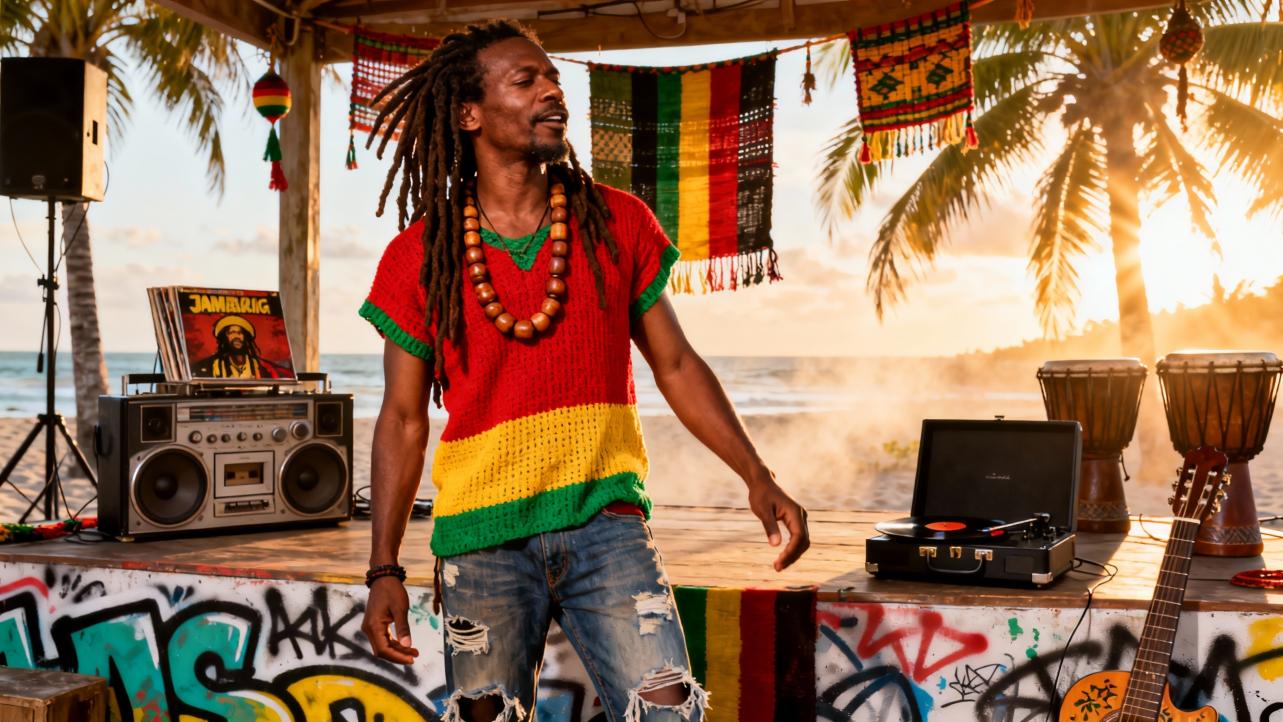
Understanding Jamaican Preferences for Customized Reggae Elements
When you design a reggae-inspired gift for someone with Jamaican roots, you are not just choosing colors and motifs. You are touching a living archive of memory, resistance, joy, and spiritual searching. As a sentimental curator who spends a lot of time working with reggae lovers and Jamaican artisans, I have learned that the most cherished customized pieces are the ones that honor this deeper story, not just the aesthetic.
This article explores how Jamaicans relate to customized reggae elements, drawing on cultural research and on-the-ground perspectives from music, fashion, souvenirs, and symbolic marketing. Along the way, you will find practical guidance for designing heartfelt, reggae-infused gifts that feel authentic and deeply personal.
Reggae Elements As Cultural Memory, Not Decoration
Reggae as a vessel of Black cultural memory
A study published by Iris Publishers, drawing on the work of cultural theorists Jan and Aleida Assmann, describes culture itself as a form of memory. Through symbols, stories, and rituals, culture creates a shared “life vision” that binds a community across generations. Reggae, this research suggests, is one of the key vessels of Black cultural memory in Jamaica and the wider African diaspora.
The article emphasizes that Black racial identity in consumer society is not expressed only in how reggae is produced or sold. It is crystallized in reggae’s cultural memory: the way the music condenses ancestral trauma and pride, slavery and liberation, oppression and hope, into sound, imagery, and ritual. Reggae functions as a spiritual glue for Black communities, helping people recognize one another as part of an “imagined community” with shared history and origin.
When you customize a gift with reggae elements for a Jamaican recipient, you are interacting with that memory. A painted lyric or a carved Lion of Judah is not neutral decoration. It carries echoes of slave plantations, anti-colonial struggles, Rastafarian faith, and everyday ghetto life. Understanding this makes your design choices more tender and more careful.
From Creole songs to reggae’s global heartbeat
The same Iris Publishers study traces reggae’s genealogy over more than four centuries. It begins with Creole music born in the Caribbean slave market, where African labor songs collided with French and Spanish dance music and British folk and religious tunes. This hybrid form, sung in Creole dialect, evolved into a multi-melody, syncopated style that became a rare autonomous space for cultural and political freedom under slavery.
Even when slave owners tried to suppress African traditions, these sounds carried African values forward into the emancipation era. After slavery formally collapsed in Jamaica in 1838, Black communities began to blend African ritual practices such as drumming, dance, and spirit summoning into Christian worship. This fusion contributed to Rastafari music that openly addressed Black social problems and liberation.
Through the 1930s and 1940s, Mento music absorbed European polka and waltz while keeping Creole syncopation and African satire. With industrialization in the 1940s, Jamaican youth turned toward U.S. rhythm and blues to relieve urban pressure. Out of this mix, musicians consciously “re-Africanized” their sound and pushed back against colonial cultural dominance, developing slow rock. Slow rock amplified electronic bass, foregrounded political and historical themes, and eventually evolved into reggae around 1968.
Reggae’s signature rhythms came from a new level of interaction between guitar, keyboard, and bass. Guitars added half-beats to the classic off-beat emphasis; keyboards reinforced this feel; bass lines sometimes omitted or paused beats to create tension and release. These choices marked reggae as proudly non-European and explicitly Black.
For Jamaican listeners, all of this history sits quietly inside a single bassline or color palette. That means a customized reggae-themed bracelet or print can resonate on a much deeper level if it references this genealogy: rural labor, spiritual struggle, urban transformation, and the stubborn insistence on joy.

Symbols Jamaicans Tend To Cherish In Reggae-Themed Design
Different Jamaican people relate to reggae in different ways. Some are devout Rastafarians. Others simply enjoy the riddims at a street dance or on a long bus ride. Yet across fashion, souvenirs, and music culture, certain reggae symbols appear again and again because they are loaded with shared meaning.
The following table brings together themes described in studies and style guides from Iris Publishers, ReggaeGroove, Virblatt, Jamaica Reggae Music Vacation, DancehallMag, Vocal, and others.
Reggae element |
What it tends to signal in Jamaican and reggae culture |
According to reggae fashion guides, these colors carry specific meanings: red for the blood and struggles of martyrs, gold for the abundance and prosperity of Africa, green for the land of Africa, and black for African people. Together they turn clothing, jewelry, and décor into wearable stories of resistance and pride. |
|
Jamaican flag colors |
The black, green, and gold of the Jamaican flag appear in resort wear, tracksuits, and souvenirs. DancehallMag notes that luxury brands have been criticized when they misrepresent these colors, underscoring how sensitive and important correct flag use is for Jamaicans. |
Dreadlocks (locks) |
Reggae fashion and cultural histories trace locks back to Ethiopian soldiers loyal to Emperor Haile Selassie, then to Rastafarian identity in Jamaica. Locks symbolize spiritual commitment, natural living, and Black pride. Historical accounts also recall periods when Jamaicans were jailed, forcibly shorn, or even killed for wearing locks, which makes them a powerful but sensitive motif. |
Tams, beanies, and headwraps |
Knitted tams and hats in Rasta colors, along with headwraps, are iconic markers of Rastafarian and reggae style. Fashion guides describe them as both practical (protecting hair) and symbolic (signaling faith, heritage, or affinity with reggae culture). |
Lion of Judah and Haile Selassie motifs |
Vocal and other sources highlight the Lion of Judah as representing Haile Selassie, regarded in Rastafari as a messianic figure. These emblems often appear on clothing, jewelry, and stagewear and are deeply tied to Rastafarian spirituality and Black liberation. |
Bob Marley and other reggae pioneers |
Travel and fashion pieces consistently cite icons such as Bob Marley, Peter Tosh, Burning Spear, Jimmy Cliff, and Gregory Isaacs. Marley especially has become the face of reggae worldwide, so his image on apparel or home décor immediately signals Jamaican roots and messages of love, resistance, and spirituality. |
Patois and mixed language |
The Iris Publishers analysis describes “mixed language” as a blend of African languages and English used in reggae lyrics and everyday speech. It can function as a communication tool, a marker of in-group belonging, and even a way for non-Jamaicans to signal affinity with Black culture, though misuse can be seen as parody or disrespect. |
Vinyl records and sound system imagery |
Research published in the Michigan Journal of Jazz Studies emphasizes how Jamaican sound systems and rare vinyl pressings built reggae’s golden age. Vintage records and speaker imagery now function as signs of authenticity and deep musical knowledge, prized by collectors from Kingston to Tokyo. |
When you customize a gift for a Jamaican recipient, these elements are often the building blocks you will reach for. The key is understanding how and when to use them.

Symbolic Marketing And Everyday Reggae Gifts
How reggae symbols circulate in consumer life
The Iris Publishers article introduces the idea of “symbolic marketing.” Marketers study consumer psychology and then craft symbols that connect products to certain meanings through artistic, stylized choices. In reggae, those marketing symbols include photos of musicians, lyrics, melodies, instruments, performance styles, clothing, mixed language, and Rastafarian imagery.
In Britain in the 1960s and 1970s, Black-run reggae businesses used local radio, record shops, and direct selling agencies to spread these symbols through bars, nightclubs, shopping districts, parks, and dance halls. Over time, reggae’s symbolic marketing crossed from Black communities into white youth culture, where it was often taken up as “rebel” music, class-based “reality,” or just a cool look. This produced both cross-racial friendships and serious tensions, especially when white teenagers used Black cultural codes only as amusement or fashion.
On a more intimate scale, customized reggae gifts function in much the same way. A hand-painted drum, a laser-etched record, or a custom Rasta bracelet is a tiny symbolic marketing campaign aimed at one beloved person. The imagery and phrases you choose will shape how that person feels seen, honored, or misunderstood.
From craft markets to mass wholesale
Articles from travel writers and gifting guides consistently note how central music and reggae are to Jamaican souvenirs. In pieces from outlets like The Wander Club, Royal Caribbean, and Jamaica So Nice, recommended keepsakes include:
Hand-carved drums and maracas inspired by local bands and street performances.
Artwork depicting reggae legends and everyday Caribbean life.
Apparel and accessories in Jamaican colors or with musician portraits.
Blue Mountain Coffee, rum, and jerk seasonings, which tap into the island’s sensory “soundtrack” alongside the music.
On the other side of the spectrum, a research brief on wholesale “reggae gifts” on a major global marketplace describes more than eighty products labeled as reggae-themed, ranging from Rasta figurines and Jamaican flag sarongs to red-gold-green bracelets, silicone wristbands, lanyards, and even reggae music books for children. Many of these items are sold in large minimum orders, often with the option to add custom logos or graphics.
This contrast reveals something important for anyone curating personalized reggae gifts. Jamaicans are surrounded by reggae symbolism, from local art to cheaply produced bracelets. A mass-market keychain can still be fun, but what tends to feel special is when a gift moves away from generic slogans and factory graphics and toward genuine artistry, meaningful personalization, and respect for the culture that created reggae in the first place.
Digital music, physical meaning
Modern consumption patterns complicate the picture even more. An article on reggae consumers in WiredJA observes that global music listening has shifted heavily to streaming, with platforms like Apple Music and Spotify dominating. Yet many Jamaican fans and diaspora listeners still rely on compact discs and YouTube, which can leave their support undercounted in industry metrics.
In another study of Jamaican vinyl in Japan, published in a University of Michigan journal, researchers describe how Japanese collectors built a small but vibrant market for vintage reggae records as a countercurrent to digital streaming. For these fans, owning a physical Jamaican pressing is a way to claim authenticity and resist music being reduced to invisible data.
Taken together, these findings suggest that physical objects still matter deeply in reggae culture. A customized record sleeve, a hand-bound lyric book, or a carved drum is not just a nice extra. It becomes part of how someone remembers their favorite artists, their community, and their own story.

Designing Customized Reggae Gifts Jamaicans Will Treasure
Begin with the person, not the palette
Before you pick up red, gold, and green paint or order a Rasta-colored wristband, pause and reflect on the recipient’s relationship with reggae.
Some Jamaicans grew up on roots reggae and associate it with Rastafarian spirituality, anti-colonial politics, and reflections on slavery and oppression. Their playlists are full of Burning Spear, Peter Tosh, and the deeper cuts of the Marley catalog. For them, a gift featuring lyrics about liberation, Haile Selassie iconography, or a meditative Nyabinghi drum rhythm might feel like a sacred acknowledgment.
Younger Jamaicans may be more immersed in dancehall, which a Harvard-affiliated essay in Transition magazine describes as both a child of reggae and a rebellious spiritual practice of its own. Dancehall is fast, bass-heavy, sometimes explicit, and deeply rooted in inner-city life. A gift that references favorite dancehall riddims, dance moves, or fashion codes may speak more directly to their lived reality.
Others relate to reggae as a broad national soundtrack rather than a personal faith. They might cherish gifts that celebrate Jamaican pride, football culture, or shared memories of beach days and street dances with reggae playing in the background, without foregrounding religious symbols.
Ask yourself quiet questions as you design. Does this person embrace Rastafarian beliefs or simply love the music? Do they lean toward vintage roots, contemporary reggae fusion, dancehall, or all of the above? What side of their story are you hoping to honor: their spirituality, their political consciousness, their love of fashion, or their simple joy in the riddim?
The more clearly you can answer those questions, the more gracefully your customized gift will land.
Authentic elements that tend to work well
Several types of reggae elements, when thoughtfully applied, are often welcomed by Jamaican recipients because they align with the culture’s own self-representation.
Color symbolism is a good place to start. Guides from ReggaeGroove and similar sources emphasize that Rasta colors feel most meaningful when their symbolism is understood. Instead of simply striping everything red, gold, and green, you might, for example, stitch a subtle red-gold-green accent on the edge of a black scarf to echo sacrifice, abundance, and land without overwhelming the design. This approach respects both the heritage and the recipient’s personal style.
Portraits of beloved artists can also be powerful. Bob Marley is almost universally recognized, but other figures like Peter Tosh, Burning Spear, Jimmy Cliff, or more recent artists such as Chronixx or Koffee can make a gift feel less touristy and more attuned to the recipient’s actual listening habits. Travel and culture articles note how Jamaican galleries and craft markets frequently sell paintings and carvings inspired by these artists, so integrating such imagery into a custom canvas or hand-burned wood panel fits within an existing tradition.
Materials matter as well. Jamaican souvenirs and ethical reggae fashion brands often favor natural materials such as wood, clay, shells, cotton, hemp, and linen. A hand-carved wooden pendant in Jamaican colors, a hemp bracelet with beadwork inspired by the Jamaican flag, or a hand-thrown mug painted with a reggae lyric can feel closer to the Ital values of simplicity and connection to nature described in Rasta fashion guides.
Words are one more rich layer. Many gift-givers choose to include a favorite lyric in English or Jamaican patois. Because the Iris Publishers study and other commentary point out that mixed language is a sensitive symbol of belonging, take time to choose a phrase that the recipient actually uses or loves, and be cautious about heavy dialect if you are not part of the speech community. A single powerful line like “One love” or “Every little thing is gonna be alright,” hand-lettered in your own script, can be far more intimate than sprinkling patois you have only seen on T-shirts.
From a sentimental perspective, the pros of this approach are clear. You create something aesthetically pleasing that also reflects the recipient’s values, sonic memories, and sense of home. The only real “con” is that it takes more time and listening than simply clicking “buy now” on a generic Rasta trinket.
Sensitive symbols and common pitfalls
Some reggae elements are so charged with history that using them in custom gifts demands an extra level of care, especially if you are not Jamaican or not Rastafarian.
Dreadlocks are a prime example. DancehallMag and fashion commentaries trace locks back to Ethiopian soldiers, then to the Rastafarian movement in Jamaica, and recount periods when people were persecuted for wearing them. Today, locks appear in mainstream fashion editorials and runways, including controversial runway shows where stylized dreadlock wigs were worn by mostly white models. Critics argued that these designs pulled the hairstyle out of its Black and Rastafarian context and turned it into edgy decoration.
For a Jamaican recipient who wears locks as an expression of faith or identity, a lovingly painted portrait capturing their real hairstyle can be beautiful. By contrast, printing cartoonish dreadlock imagery on a novelty mug or hat may feel trivializing, particularly if the giver is disconnected from the underlying struggles.
The same principle applies to Rastafarian religious symbols such as the Lion of Judah, images of Haile Selassie, or phrases taken from sacred chants. Vocal’s overview of Rastafarian clothing stresses that these motifs are part of a religious worldview shaped by Marcus Garvey’s Black pride movement and resistance to colonialism. Using them as casual “cool graphics” on a gift for someone who is not Rasta, without conversation, can be jarring.
Even national symbols can be mishandled. DancehallMag recounts how a luxury fashion house released an expensive sweater supposedly inspired by the Jamaican flag but with the wrong colors. The backlash on social media, including comments from fashion critics calling for diversity to be treated as a true value rather than a symbol, illustrates how seriously Jamaicans take accurate representation of their flag.
Language is another potential stumbling block. The Iris Publishers article notes that white teenagers in Britain sometimes used Creole-influenced speech as a form of amusement, which Black youth interpreted as mocking parody and even racist abuse. The message for custom gifting is straightforward: borrowed patois or “funny” spellings can land badly if they feel like caricature instead of homage.
The risk is not that you will be “forbidden” to draw on reggae culture; Jamaican commentators in sources like Billboard often frame their primary concern as economic fairness and proper recognition rather than policing who can enjoy reggae. The risk is that a gift meant to honor someone might echo the very dynamics of erasure and appropriation that they are tired of seeing.
The safest antidote is humility. Listen to Jamaican voices, ask the recipient or their community what symbols feel respectful, and when in doubt, lean toward subtlety and shared references rather than spectacle.

Balancing Global Appeal And Jamaican Roots
Cultural and economic respect in design choices
Reporting from Billboard describes how Jamaica has been wrestling with reggae’s global success. Non-Jamaican bands from places like California and France dominate many reggae charts and festivals, while Jamaican artists often struggle with lower recorded-music revenues, piracy, and restrictive touring visas. Industry figures and scholars in that piece have floated ideas such as a certification mark for “authentic reggae” and efforts to get reggae recognized by UNESCO as intangible cultural heritage.
UNESCO did in fact inscribe reggae on its Representative List of the Intangible Cultural Heritage of Humanity in 2018, as noted in coverage by Jamaican outlets such as WiredJA. This acknowledgment affirms that reggae is a living cultural practice born of a specific people and history, even as it belongs to the world.
What does this mean for a single handmade gift? You cannot resolve global inequities with one painted record or one embroidered scarf. But you can align your design choices with that broader movement toward recognition.
That might look like crediting Jamaican artists directly when you quote their lyrics, purchasing licensed music or art as part of your gift, or working with Jamaican and Jamaican-diaspora makers when you commission custom pieces. It might mean choosing to feature a lesser-known Jamaican roots artist instead of yet another generic Marley silhouette, or pairing a custom reggae artwork with a bag of certified Blue Mountain Coffee grown above 3,000 ft in the island’s mountains, as described in Jamaican coffee literature.
When you think this way, the “pros” of your customized gift expand beyond aesthetics and sentiment. You are also contributing, however modestly, to a more just circulation of reggae’s cultural and economic value.
Supporting Jamaican makers through reggae-infused gifts
Articles about Jamaican products and souvenirs emphasize how much creativity and livelihood is tied up in local crafts. Jamaica So Nice, for instance, describes jewelry made from shells, coral, seeds, metal, and even sand, often produced by cottage-industry artisans. It also highlights pottery rooted in Taino and African traditions, with studios like Wassi Art and Pinto Pottery continuing those lineages today.
Travel and cruise publications such as Royal Caribbean point to hand-carved wooden bowls, utensils, and sculptures depicting folklore, daily life, and musical scenes as standout souvenirs. These pieces are not mass-produced novelties; they come from communities where art, music, and survival have always been intertwined.
If you are curating a reggae-themed gift for a Jamaican recipient from afar, you can tap into this ecosystem by:
Commissioning or purchasing artwork, jewelry, or carvings from Jamaican artists and including your own layer of customization in the framing, packaging, or accompanying note.
Pairing a personalized reggae playlist or vinyl with consumables like Blue Mountain Coffee, high-quality Jamaican rum, or local hot sauces, all sourced from Jamaican producers highlighted in travel and food writing.
Adding your own handmade touches, such as a hand-lettered lyric or a sewn pouch in a subtle Rasta palette, to house a locally made item.
The result is a layered gift that says, “I see you, I see where you come from, and I want my offering to nourish the culture that shaped you.”
Short FAQ On Customized Reggae Elements
Is it appropriate to give reggae-themed gifts if I am not Jamaican?
Yes, as long as you approach the culture with curiosity, respect, and a willingness to learn. The research summarized above shows that reggae has always traveled across borders and built surprising solidarities, from Black British communities to Japanese vinyl collectors. Where gifts go wrong is when they reduce reggae to stereotypes, ignore its Black and Jamaican roots, or profit from its symbols without giving back. If you listen to Jamaican voices, avoid caricature, and support Jamaican creators where possible, your reggae-themed gift can be a meaningful bridge rather than an offense.
Which reggae elements are safest to personalize for a Jamaican friend?
Elements that celebrate shared human values while acknowledging Jamaican roots tend to be most warmly received. Think of carefully chosen lyrics about love, resilience, or hope; accurate use of Jamaican or Rasta colors in tasteful accents; portraits or silhouettes of genuinely beloved artists; and natural materials that echo the Ital and handcrafted aesthetics present in reggae fashion and Jamaican souvenirs. Highly sacred religious symbols, dreadlock caricatures, or deliberately “slack” imagery tied to moral controversies are best approached only after direct conversation with the person you are gifting.
In the end, a customized reggae gift is a little altar of attention. When you weave historical insight, cultural respect, and your own heartfelt intention into every color and curve, you create more than a present. You create a keepsake that lets a Jamaican recipient feel both deeply rooted and lovingly seen.
References
- https://transitionmagazine.fas.harvard.edu/the-spirit-of-dancehall-embodying-a-new-nomos-in-jamaica/
- https://journals.publishing.umich.edu/mij/article/id/2023/
- https://www.jamaica-reggae-music-vacation.com/Reggae-Clothing.html
- https://www.accio.com/business/jamaican-clothing-trends
- https://www.alibaba.com/showroom/reggae-gifts.html
- https://jamaican-clothing.com/from-dreadlocks-to-dashikis-celebrating-the-diversity-of-reggae-fashion/
- https://www.jamaicasonice.com/post/live-the-jamaican-experience-the-best-jamaican-products-to-buy-from-your-home
- https://reggaegroove.com/reggae-fashion/
- https://riverbeats.life/exploring-the-evolution-of-reggae-fashion-in-style-and-influence/
- https://www.royalcaribbean.com/inspire/what-to-buy-in-jamaica
