

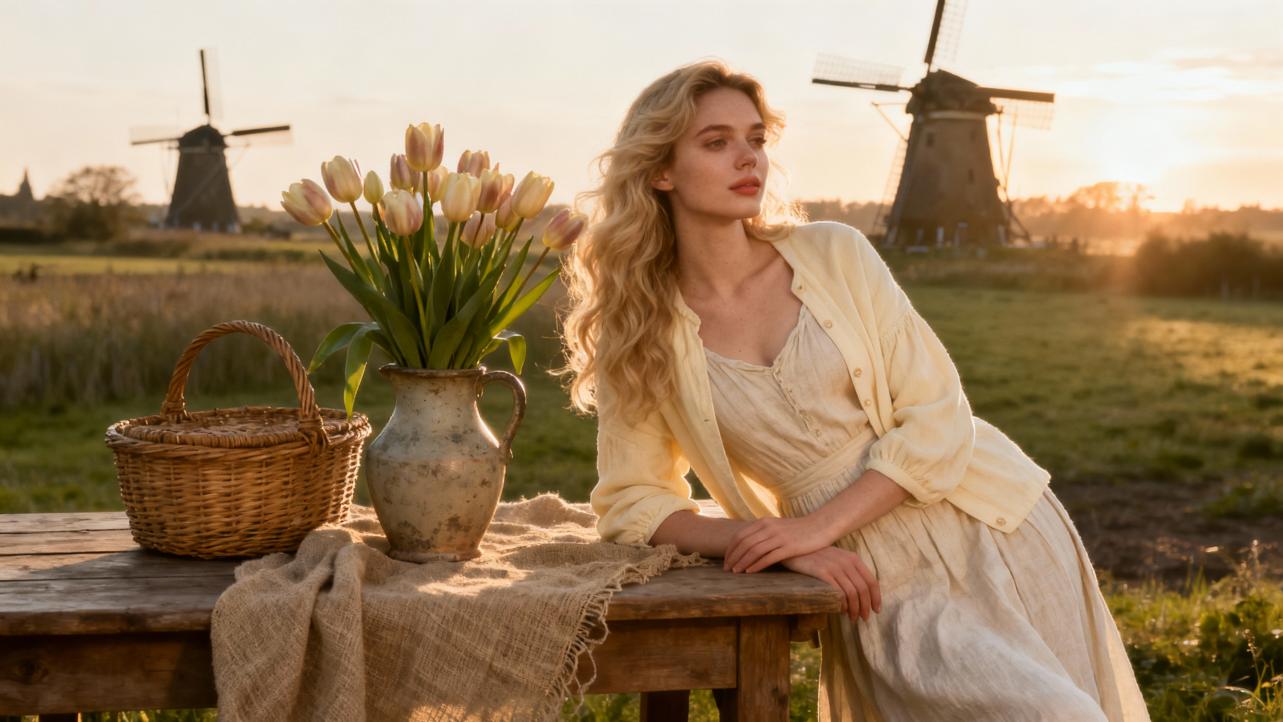
Do Dutch People Find Customized Tulip Elements Tacky?
Step off a train in the Netherlands in spring and you quickly realize something: tulips are everywhere. They run in bands of color across flat fields, blossom in neat city beds, appear in paintings and posters, and even wrap around gift tins and chocolate boxes. For many visitors, it raises a tricky question. If tulips are such a national icon, do Dutch people quietly roll their eyes at tulip-themed souvenirs and customized tulip gifts, or do they still find them charming?
As an artful gifting specialist and sentimental curator, I spend a lot of time at exactly this crossroads, where meaning meets design. Tulip motifs are ripe for heartfelt personalization, but they can also slip into cliché. The goal is not just to avoid tackiness; it is to craft tulip pieces that Dutch friends, Dutch‑loving friends, and design‑sensitive recipients genuinely want to keep.
Let us look at what the history and modern culture around tulips actually tell us, and how you can use customized tulip elements in a way that feels considered rather than kitschy.
Tulips And Dutch Identity: From Exotic Luxury To Everyday Symbol
Tulips did not begin as a Dutch flower. Research on tulip history describes them as wildflowers of Central Asia, cultivated in Persia and in the Ottoman Empire long before they arrived in Europe. In Istanbul, they became symbols of paradise, refinement, and imperial beauty. From there, bulbs and stories traveled west.
In the sixteenth century, botanists and collectors in the Low Countries fell in love with these exotic blooms. Dutch Waffle Company recounts how tulips quickly turned into status symbols, especially once rare colors and patterns appeared. In the early seventeenth century, demand rose into the notorious “Tulip Mania,” when some bulbs were reportedly traded for amounts comparable to a house on Amsterdam’s prime canals. An article from Dutch Health Store notes that this frenzy happened during the Dutch Golden Age, a larger economic and cultural boom that cemented tulips in the country’s imagination.
That bubble eventually burst, but tulips stayed. Today, the Netherlands is considered the world’s leading producer of tulip bulbs and exports, and tulip fields are a cornerstone of spring tourism. Dutch Waffle Company emphasizes that tulips became part of the national identity, tied to the country’s sandy, well‑drained soils, cool climate, and horticultural know‑how. Articles on Dutch culture and art describe how tulips appear in classic still‑life paintings as well as in contemporary landscape art, simultaneously symbolizing wealth, beauty, and the fleeting nature of life.
This deep historical and economic connection matters when you are thinking about customized tulip elements. The Dutch do not treat the flower as a fragile relic that must be kept on a pedestal. They grow it by the field, paint it, package cookies in it, and export it by the crate. Tulips are living culture.

Modern Tulip Culture: Festivals, Fields, And Souvenirs
To understand whether customized tulip motifs feel tacky, you have to look at how tulips are celebrated today.
Several sources describe tulip festivals as “living heritage.” In the Netherlands, Keukenhof near Lisse is often called the Garden of Europe. Research from Cutpopup and Dutch Waffle Company notes that Keukenhof spans about seventy‑nine acres and plants over seven million bulbs each spring. Visitors walk through themed beds, color‑blocked designs, and carefully curated combinations of tulip varieties. This is not minimalism. It is exuberant, intentional display.
Beyond Keukenhof, tulip festivals in places like Ottawa and Istanbul keep the Dutch tulip story in motion. The Canadian Tulip Festival in Ottawa exists because the Dutch royal family offered Canada one hundred thousand tulip bulbs after World War II as thanks for sheltering them. Each May, more than one million tulips bloom along Ottawa’s waterfront and parks in a public ode to friendship and peace. In Istanbul, the Istanbul Tulip Festival fills parks with intricate tulip patterns that explicitly honor Ottoman roots.
At these festivals, tulip imagery does not stop at the flowerbeds. An article from Cutpopup describes tulip‑themed creative products, especially three‑dimensional pop‑up tulip cards. These cards are engineered so that a flat card unfolds into a three‑dimensional bouquet of paper tulips. They are promoted as sustainable, reusable, and allergy‑friendly gifts, designed precisely for people who want to preserve the feeling of the festival once the real blooms fade. That is a form of customization: choosing a tulip card that can be inscribed, displayed, and revisited over time.
Meanwhile, Dutch Waffle Company happily wraps stroopwafels in tulip‑illustrated tins and gift boxes, inviting customers to pair their sweets with the visual language of tulip fields and Keukenhof. This is not the behavior of a culture that finds tulip motifs inherently tacky. It is the behavior of a culture that knows its icons and enjoys re‑interpreting them.

What Counts As “Customized Tulip Elements”?
Before judging taste, it helps to define the phrase itself.
Customized tulip elements can mean several layers of personalization. It can be as simple as choosing a tulip color palette that matches someone’s personality or interior. The Dutch Health Store article about Real Touch Tulips, for instance, is essentially a guide to color customization: soft white and pale yellow for calm, Scandinavian‑style spaces; light pink for romantic, shabby‑chic rooms; deep plum and rust for dramatic, bohemian corners.
Customization can also mean adding names, dates, or messages to tulip‑themed pieces. That could be a hand‑painted tulip tile with a couple’s wedding date, a carved wooden keepsake box with stylized tulips and a family name, or a three‑dimensional pop‑up tulip card carrying a handwritten note from a Dutch friend abroad.
Then there is design‑driven customization, where an artisan plays with tulip form and color itself. Articles on tulip varieties explain that tulips are far from uniform. There are classic, single‑flowered shapes, lush double tulips that resemble peonies, parrot tulips with ruffled, feather‑like petals, and fringed tulips whose petals are delicately serrated. Color palettes can be solid, softly shaded, streaked, or flame‑like. An artisan can deliberately choose parrot tulips in deep old pink for a vintage feel, or crisp white doubles for a contemporary minimal arrangement.
In all of these cases, you are not just buying an off‑the‑shelf tulip pattern. You are making choices. The real question is whether those choices feel thoughtful and rooted in the flower’s story, or lazy and overdone.

Do Dutch People Think Tulip Customization Is Tacky?
No single article claims to speak for every Dutch person, and taste is always personal. However, the available evidence does not paint a picture of a nation secretly embarrassed by tulip motifs. Instead, it shows Dutch brands and cultural institutions embracing tulips in surprisingly contemporary, often quite tasteful ways.
The Dutch Health Store piece on Real Touch Tulips is particularly telling. These artificial tulips are crafted with specialized coatings to mimic the velvety or matte finish of natural petals. The article describes careful attention to petal curvature, stem thickness, and subtle color transitions. Many stems come with lifelike bulbs still dusted with “earth,” a deliberate nod to tulips just pulled from Dutch polder soil. The arrangements are bundled in sheaves that feel like they came from a roadside farmer. Limited editions and seasonal colors channel the fleeting nature of real tulip fields, but with year‑round presence.
All of this effort would be unnecessary if Dutch audiences dismissed tulip decor as kitsch. Instead, the brand leans into heritage. It presents tulip‑themed, customizable decor as a way to bring authentic Dutch countryside spirit into modern interiors, with sustainability as a bonus benefit. That is a strong argument that in Dutch circles, the right kind of tulip customization is considered refined and even forward‑thinking.
Similarly, Dutch Waffle Company writes about tulips with pride and integrates tulip imagery into its gifts collection. Tulip‑decorated tins and packaging are offered as hostess gifts, souvenirs, and seasonal treats meant to travel abroad. The message is effectively, “Take a piece of Dutch springtime home.” There is no hint of apology.
When you look at Dutch art history, tulips have long been painted and printed in multiplicity. Seventeenth‑century still lifes showed meticulously rendered tulips as symbols of beauty and status. Contemporary Dutch‑inspired art still uses tulip fields and bouquets as cheerful, pastoral subjects. An article on tulips in Dutch culture and art even suggests tulip paintings and prints as versatile home decor pieces for modern apartments and offices.
Taken together, these sources suggest a clearer answer. Customized tulip elements are not inherently tacky in Dutch eyes. What feels tacky is not the tulip itself, but careless design: motifs that flatten a rich flower into a stereotype, or cheap materials that turn a beloved symbol into visual noise. When tulip customization is done thoughtfully, with attention to quality, color, symbolism, and story, it fits comfortably inside Dutch tradition rather than mocking it.
The Symbolic Language Behind Tulip Colors
If you want your customized tulip pieces to feel elegant and emotionally accurate, color is your most powerful tool. Several floristry sources, including Faful Florist, Flower Delivery Philippines, and others, outline a remarkably consistent language of tulip color symbolism that you can fold into your designs.
Here is a concise view of how tulip colors tend to be read, along with situations where each feels especially thoughtful.
Tulip color |
Common meaning |
Feels thoughtful when |
Red |
Deep, romantic or declared love; passion and commitment |
Marking anniversaries, proposals, or a long‑term partner’s milestone |
Pink |
Gentle affection, happiness, emerging love, gratitude |
Thanking a friend, celebrating birthdays or Mother’s Day, supporting someone kindly |
Yellow |
Sunshine, cheerfulness, optimism, friendship, good luck |
Sending “just because” encouragement or congratulations for a new opportunity |
White |
Purity, sincerity, new beginnings, sometimes farewell or remembrance |
Weddings, apologies, fresh starts, or gentle sympathy if the context is understood |
Purple |
Royalty, luxury, admiration, respect, dignified love |
Honoring mentors, elders, or celebrating big achievements with gravitas |
Orange |
Energy, enthusiasm, warmth, gratitude, strong bonds |
Marking shared projects, long friendships, or encouraging someone stepping into something bold |
Dark plum or near‑black |
Mystery, sophistication, depth, sometimes tragic romance |
Creating dramatic arrangements for art lovers or introspective occasions |
Variegated or parrot |
“Beautiful eyes,” creativity, joyful individuality |
Designing centerpieces for parties, artists, or highly expressive personalities |
When you customize a tulip element for someone with Dutch roots, pairing the national symbol with a color that precisely matches the relationship can feel especially respectful. A Dutch grandfather who values quiet elegance might love Real Touch tulips in cream and soft yellow more than a riot of neon colors. A Dutch‑American couple celebrating an anniversary might cherish a deep red and plum palette in a three‑dimensional tulip card because it mirrors the depth of their connection.
Color is customization that you can feel, even before reading any inscription.
Design Principles: How To Keep Customized Tulip Gifts Tasteful
If you want your tulip‑themed gifts to feel handcrafted and sentimental rather than touristy, certain design principles surface again and again in the tulip literature.
First, quality of materials and construction matters immensely. The Real Touch Tulips described by Dutch Health Store work because they are believable. Petals have the right weight and texture; stems curve naturally; bulbs look as if they still remember the field. In the same way, a wooden tulip ornament carved with care or a hand‑embroidered tulip napkin feels more cherished than a mass‑produced trinket printed with pixelated flowers. Even if you are working with paper, thick card stock and crisp engineering, as in the three‑dimensional tulip cards highlighted by Cutpopup, immediately elevate the piece.
Second, restraint in composition keeps tulip motifs from feeling overwhelming. Keukenhof may plant millions of bulbs, but each bed is carefully curated. One pathway might be all soft whites and creams; another might stage a deliberate contrast between orange and purple. In gifting terms, this translates to choosing one or two tulip varieties and a tight color family rather than crowding every tulip shape and hue you can find into a single item.
Third, anchor your customization in story. Tulips are loaded with history. Articles from Canada’s tulip festival organizers and from Dutch cultural sources frame tulips as symbols of peace, friendship, and renewal, especially in the context of wartime solidarity and spring’s return. If you engrave a date on a tulip‑patterned keepsake, or print a small line of text inside a tulip card, let it reference a real shared moment: a visit to a tulip field, a move to a Dutch city, or a spring when something important began.
Fourth, consider sustainability as part of tastefulness. The Real Touch Tulips article explicitly contrasts artificial tulips with the environmental cost of constantly purchased fresh bouquets. They note the heavy water usage, transport, and packaging of cut flowers, and they point out that long‑lasting faux tulips create less waste. Cutpopup makes a similar argument for three‑dimensional tulip cards, emphasizing that they do not wilt, trigger allergies, or require maintenance. When you choose materials that respect both the planet and the symbolism of renewal, your customized tulip elements carry quiet integrity.
Finally, let cultural context guide your level of playfulness. In a Dutch family kitchen, a hand‑painted tulip mug with a quirky pattern may be adored precisely because it balances national icon and daily life. For a formal business thank‑you to a Dutch partner, a more subtle tulip motif on high‑quality stationery or a limited‑edition Real Touch arrangement in classic white and cream may feel more appropriate.

Pros And Cons Of Customized Tulip Elements, Especially For Dutch Recipients
Like any strong symbol, tulips come with both advantages and pitfalls when you personalize them.
On the positive side, tulips are rich enough to hold layers of meaning. Articles on tulip symbolism across cultures underscore that tulips stand for love, renewal, peace, resilience, even international friendship. That makes them emotionally flexible. A single tulip motif can speak to romance, remembrance, or hope, depending on color and context. For people with Dutch roots, tulips add an extra dimension: they become a bridge between personal sentiment and cultural identity.
Customized tulip elements can also be surprisingly timeless. Historically, tulips have cycled through Ottoman textiles, Dutch Golden Age ceramics, Art Nouveau glass, and contemporary home decor. Pieces that echo this lineage—such as a tulip pattern inspired by Delftware or a stylized tulip reminiscent of Ottoman tiles—can feel classic rather than trendy. When you personalize these with initials, dates, or lines of text, you are adding a note to an ongoing cultural melody instead of scribbling over it.
There are practical benefits as well. Sustainable, durable tulip pieces such as Real Touch bouquets or sturdy pop‑up tulip cards keep a memory alive far longer than a real bouquet would. They can be displayed year‑round, and many are easier to ship internationally than fresh flowers, which fits the cross‑border friendships tulips often represent.
On the negative side, tulips are so closely associated with the Netherlands that they can become a stereotype if handled carelessly. A tourist magnet covered in bright tulips and windmills is an easy shorthand for “Dutch,” but to someone who grew up there, it might feel as generic as an “I ♥ NY” magnet feels to a New Yorker. Over‑branding, clashing colors, and flimsy materials send your gift in that direction.
There is also a risk of miscommunication if you ignore color symbolism. A bouquet or design dominated by yellow tulips, for example, usually feels cheerful and friendly according to floristry sources, but white tulips can carry both the idea of new beginnings and the echo of farewell or mourning, depending on the culture. If your customized piece is meant to celebrate, but your palette whispers goodbye, the emotional note may land oddly.
Ultimately, the pros outweigh the cons when you approach customization with intention. Most Dutch people live daily with tulips in their fields, markets, and media; they are used to seeing their national flower interpreted in countless ways. What they tend to notice, like anyone else, is whether your tulip motif has heart and craft behind it.
Tasteful Tulip Gift Ideas Inspired By Dutch Traditions
To make this more concrete, imagine a few tulip‑themed pieces rooted in the research rather than in clichés.
You might create a keepsake box with a lid featuring hand‑carved, double tulips in cream and pale yellow, echoing the “timeless classics” palette described in the Real Touch Tulips article. Inside the lid, you could inscribe a date and a short line about a shared trip to a tulip field. The carving style could nod gently to Dutch folk art without copying any one pattern. A Dutch recipient would see tulips they recognize, rendered in calming colors and natural wood rather than loud plastic.
Another possibility could be a three‑dimensional pop‑up tulip card designed as a mini Keukenhof bed. Using Cutpopup’s concept of engineered paper bouquets, you could choose a color spectrum that follows the symbolism table: white and pink tulips for a wedding keepsake, for instance, or orange and purple for a bold, creative collaborator. A handwritten note beneath the pop‑up that references the history of the Dutch–Canadian tulip friendship would turn the card into a story rather than a generic thank‑you.
For home decor, you could assemble a Real Touch tulip arrangement in a Dutch‑inspired palette: soft white, classic red, and a touch of deep purple, as suggested by the Dutch Health Store guidance on color moods. Add a small tag explaining why you chose each color, drawing on the symbolism described by floristry sources. Red for enduring love, purple for admiration, white for a new chapter. The customization here is quiet but deeply personal.
None of these ideas rely on piling tulips and windmills together. They use tulips as a language, spoken with care.
FAQ: Tulip Etiquette With Dutch Friends And Loved Ones
Is it still meaningful to give tulip‑themed gifts to someone who grew up around tulips?
Yes, if you move beyond the obvious. Sources from Dutch brands show locals happily buying tulip decor and tulip‑illustrated gifts when the quality is high and the story feels genuine. Focus on well‑made items, intentional color choices, and personalization that references a real shared memory or value. That combination feels more like a tribute than a stereotype.
Are artificial tulips considered “fake” in a bad way?
Not necessarily. The Real Touch Tulips described by Dutch Health Store are explicitly praised for their realism, durability, and eco‑friendly advantages over constantly buying fresh bouquets. They are framed as a modern way to honor Dutch tulip tradition while reducing waste and maintenance. For many recipients, especially those who travel often, have allergies, or dislike seeing flowers wilt, beautifully made faux tulips are a thoughtful upgrade, not a downgrade.
What is the safest tulip palette if I am unsure about symbolism?
If you want universal appeal with a Dutch sensibility, research suggests leaning into soft whites, creams, pale yellows, and gentle pinks. The Real Touch Tulips article highlights these as timeless, elegant options that fit many decor styles, while symbolism guides describe them as carrying messages of sincerity, happiness, and new beginnings. You can then add a short note explaining your intention so the emotional meaning is unmistakable.
In the end, the question is not whether Dutch people find customized tulip elements tacky in some blanket way. The more helpful question is whether your particular tulip piece feels like it carries the same care that Dutch growers, designers, and festival curators have given this flower for centuries. When you honor that care—through thoughtful color, quality materials, and a true story behind your customization—your tulip gift is far more likely to be cherished than chuckled at, wherever it lands in the world.
References
- https://flowerdeliveryphilippines.net/blog/embrace-elegance-exploring-the-beauty-of-tulip-flowers/?srsltid=AfmBOorlGROCaMFWusZmldyG5i8N__x50ahV_BMEBZ0jPM0097ygFtfM
- https://news.artnet.com/art-world/a-brief-history-of-tulips-in-art-2283374
- https://by-lin.com/the-fascinating-history-of-the-tulip-flower-inspired-by-natures-beauty/
- https://tulips.co.uk/blooming-inspiration-how-tulips-shape-art-design-and-fashion/
- https://www.bourkesflorist.com.au/blog/colours-of-tulips-what-does-each-shade-symbolizes-and-its-meaning?srsltid=AfmBOorXmgslDnXiHBLWY2HxfeZM0cJpOmX0cgyNMiOdzdItcXxA6Pfq
- https://cutpopup.com/tulip-festivals-in-europe-the-culture-and-creativity/?srsltid=AfmBOopuIQEdT_aGj1JGebsuy1axloMAPu5ZrwoMNAJjEiPG-fHe16yo
- https://dutchhealthstore.com/dutch-tradition-meets-modern-decor-the-story-behind-our-real-touch-tulips-and-how-to-choose-the-perfect-color-palette/
- https://www.lemon8-app.com/@the.notorious.bbg/7493308515390554666?region=us
- https://www.theeconomicbotanist.com/post/tulips-in-fashion-and-home-decor-a-timeless-inspiration
- https://www.wanderlustingk.com/travel-blog/white-tulip-meaning
