

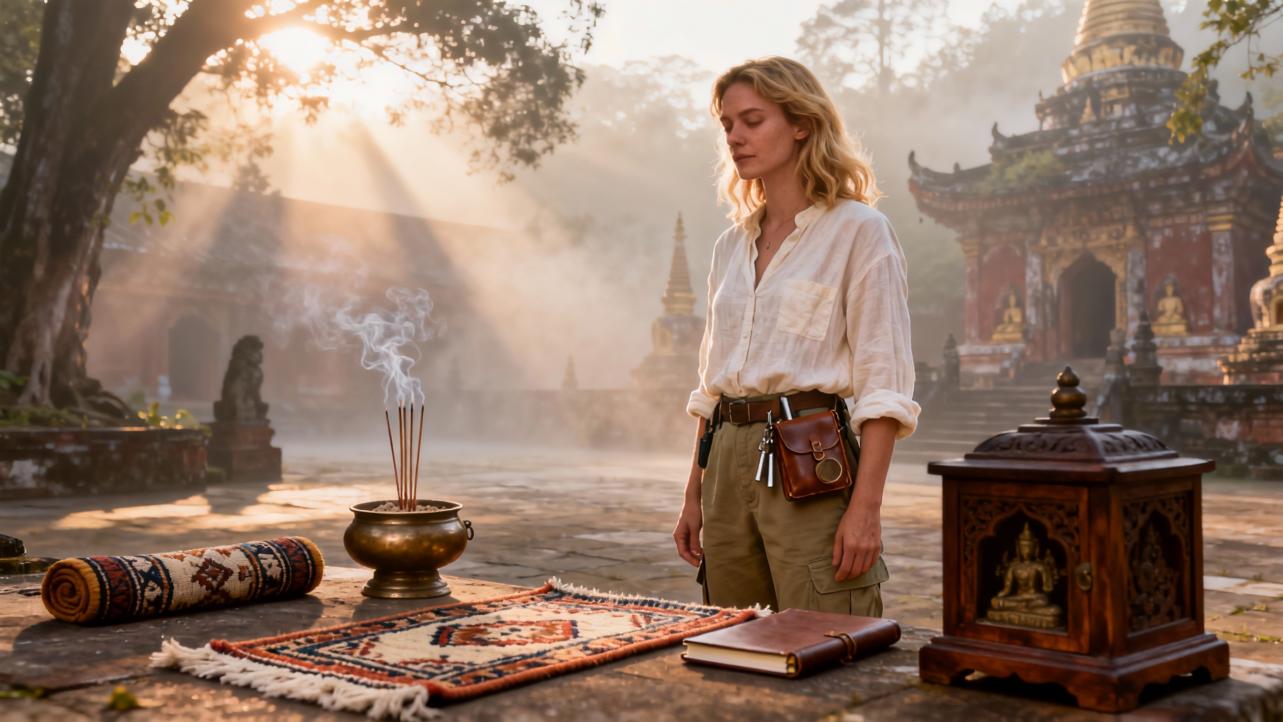
Understanding the Spiritual Significance of Stupa Pattern Customization in Myanmar
When you fall in love with a Burmese pagoda silhouette, you are not just admiring an elegant curve. You are looking at a carefully woven pattern of earth, sky, story, and intention. For those of us who cherish artisanal, heartfelt gifts, the stupa of Myanmar offers one of the richest symbolic “pattern libraries” you could ever translate into jewelry, home decor, textiles, or personalized keepsakes.
In Myanmar, stupas are not only landmarks on the skyline. They are spiritual diagrams you can walk around, pray beside, and, in a more intimate way, reinterpret in the objects you give to the people you love. Understanding how Myanmar’s communities shape and customize these patterns is the key to designing pieces that are not just pretty, but profoundly meaningful and respectful.
This guide will walk you through what stupas mean in Buddhist tradition, what makes Burmese stupa patterns distinctive, how communities in Myanmar “customize” them over centuries, and how you can translate those ideas into customized gifts with spiritual integrity.
1. What Is A Stupa, And Why Does It Matter In Myanmar?
In Buddhist tradition, a stupa is a sacred monument that began as a burial mound. According to studies summarized in sources such as Wikipedia’s overview of stupas and essays from Fabrizio Musacchio and Evam Ratna, early stupas were solid earthen or brick mounds raised over relics. After the Buddha’s passing, his cremation remains were divided and enshrined in multiple stupas, and under Emperor Ashoka the relics were redistributed into a legendary eighty‑four thousand stupas. Over time, the humble mound evolved into a precise spiritual architecture.
Writers from Boudha Mandala Hotel and Evam Ratna describe the classic stupa as a three‑part body. There is a square base that symbolizes the earth and grounded mindfulness, a dome that suggests the spacious, fluid nature of mind, and an upper structure of spire and umbrellas that evokes fire, air, and space and the ascent toward awakening. The stupa is not meant to be entered. The practice is to walk around it clockwise, to offer lamps or flowers, to sit nearby in stillness, and to let the form remind you of the path to wisdom.
In Myanmar, the stupa is everywhere. Architectural historians writing on Burmese and Myanmar architecture note that the country’s landscape is dominated by Buddhist religious structures: stupas and pagodas, temples and monasteries, often in brick and stucco, sometimes sheathed in gold. Early Pyu and Mon builders adapted Indian and Sri Lankan stupa forms into something distinctly Burmese. By the time the Pagan (Bagan) kingdom flourished from the eleventh to thirteenth centuries, there were over ten thousand religious monuments on the Bagan plain alone; two to two and a half thousand still stand today, making Bagan one of the densest concentrations of Buddhist structures in the world.
Locally, the word “paya” refers broadly to a sacred shrine, while “zedi” names the bell‑shaped stupa at its center, as explained in research compiled by Grokipedia. These stupas often house relics, scriptures, or revered images. They are focal points for pilgrimage and everyday devotion, and they structure cities and villages as much as they structure prayer.
For a gifting artist or sentimental curator, that means every Burmese stupa pattern you borrow carries this history. You are not decorating with a tower shape; you are quoting a reliquary of memory and vows.

2. The Spiritual Code Inside Stupa Geometry
Before we can talk about customization, it helps to understand the “default settings” of stupa symbolism. Several sources converge on the same key insight: the stupa is a three‑dimensional mandala, a kind of spiritual blueprint that encodes the path to enlightenment.
Writers from Boudha Mandala Hotel and Evam Ratna explain that the base of the stupa corresponds to the earth element and to ethical stability. In design terms, that square or stepped platform is the place of grounding, of promises you can stand on. The dome, often called the “anda,” is compared to water and to the open universe of thought and feeling. It evokes compassion, receptivity, and the vastness of Dharma teachings. Above that, the harmika and rising spire are linked to fire, air, and space: the heat of insight, the clarity of wisdom, and finally the boundless openness beyond conceptual thinking.
Evam Ratna further unpacks the spire into thirteen symbolic steps associated with stages of practice, from refining moral discipline to reaching full awakening. In some traditions, the stupa also embodies the five wisdom Buddhas, each associated with a direction, a color, and a transformation of a specific mental poison into wisdom. The result is not random ornament. It is a layered spiritual code.
Scholars of Myanmar’s architecture add local nuances. In the Bagan region, as described in studies of Pagan period architecture and symbolism, a canonical Burmese stupa consists of square terraces with central stairways on the four sides, followed by one or two octagonal terraces, then a circular bell‑shaped dome, and finally a ringed conical spire topped with a metal umbrella called an hti. The terraces can be read as levels of the cosmos and steps on the path. The bell profile, especially once it develops a slight concavity and “shoulders,” becomes a signature Burmese gesture of fullness and grace.
If you translate this symbolism into a customized design, imagine a simple ring or bracelet divided into thirteen tiny circles or ridges, each standing for one step on the journey. When you tell your client that story, every notch becomes a little vow instead of a random texture.

3. What Makes A Stupa Design Specifically Burmese?
Across Asia, stupas evolved into many shapes. The survey work of Approach Guides and Fiveable notes that in India and Sri Lanka stupas remained closer to hemispherical mounds, while in East Asia they stretched into multi‑story pagoda towers. Myanmar, by contrast, embraced a distinctive bell‑shaped stupa on terraced bases, usually crowned by a slender spire and hti.
According to the article on Burmese architecture from Burma Burma and detailed studies of Burmese pagodas, several features distinguish Myanmar’s stupas and pagodas.
First, the surface treatment. Burmese stupas are often gilded, literally wrapped in gold leaf. Shwedagon Pagoda in Yangon, cited both in Buddhist travel writing and in Myanmar architecture surveys, rises well over three hundred feet and is entirely clad in gold plates, with a crowning finial studded with thousands of diamonds, rubies, and sapphires, including a single emerald of about seventy‑six carats. At sunrise and sunset, the surface becomes a living light show that draws pilgrims and artists alike.
Second, the narrative patterns. In Bagan, stupas such as Shwezigon carry hundreds of glazed terracotta plaques depicting scenes from the Jataka tales, traditional stories of the Buddha’s previous lives. Researchers working on Bagan’s symbolism and Pagan period architecture describe rings of these plaques arranged along the terraces, each tile a tiny chapter in a much larger story. This creates a banded pattern of images and inscriptions encircling the structure.
Third, the experimental geometries. Bagan architects did not limit themselves to square plans. The Dhammayazika Pagoda, for example, uses a pentagonal base so that four sides can honor the four Buddhas of the current world age, while a fifth shrine faces the future Buddha Maitreya. Scholars note that this pentagonal plan is a doctrinal innovation turned into geometry: a new pattern to hold a wider spiritual horizon.
Fourth, the structural crown. The hti, the tiered metal umbrella finial that tops most Burmese pagodas, echoes the royal crown. Studies of Burmese pagodas emphasize that this hti symbolizes both spiritual protection and the cosmic Mount Meru at the axis of the universe. Its tiers and fringe detail are almost like jewelry in their own right.
For giftmakers, those features suggest several families of patterns you can draw from: shimmering gold or metallic layering, rings of tiny narrative motifs, pentagonal or four‑plus‑one layouts, and crown‑like finials.
The table below gathers some of these elements and translates them into design language.
Stupa element in Myanmar |
Spiritual meaning (from sources) |
Inspiration for customized gifts |
Square or stepped terraces (Bagan prototypes) |
Earth, stability, stages of practice; a platform for circumambulation described in Pagan studies and Boudha Mandala writing |
Layered square frames in wall art, stepped bases for candle holders or incense stands, or stacked wood coasters symbolizing “steps” in a relationship or journey |
Bell‑shaped dome with soft shoulders |
Compassion, fullness, and the Buddha’s presence, noted in Bagan symbolism and Burmese pagoda profiles |
Curved pendants or bowls that echo the bell profile, soft silhouettes for vases, or cushion shapes that cradle keepsakes |
Pentagonal plan with five shrines (Dhammayazika) |
Honoring four past Buddhas plus future Maitreya, as analyzed in academic studies of Bagan |
Five‑petal motifs, five‑pointed mandalas, or a set of five charms customized with family members’ names or virtues |
Hti umbrella finial |
Royal and cosmic protection, axis of the universe per Burmese pagoda studies |
Tiny umbrella or crown details on jewelry, a sculpted finial on a keepsake box, or embroidered “umbrella” motifs shading names or dates |
Rings of Jataka plaques around terraces |
Storytelling, moral teaching, and merit‑making, described in Pagan period research and Myanmar architecture notes |
A bracelet or textile border with sequential icons telling a shared story, such as five scenes from a couple’s milestones |

4. How Myanmar Communities Customize Stupa Patterns Over Time
When you work with patterns in your studio, you think in terms of layers, revisions, new palettes. Myanmar’s builders and devotees have done something similar with stupas for centuries, although on a very different scale and with deep religious intentions.
4.1 Layering And Encasement: A Living Record
An important theme in research on Buddhist architecture, especially in studies gathered by Buddhistdoor and by scholars of socio‑political symbolism in Buddhist structures, is the practice of encasement. Instead of demolishing an aging stupa, later donors would build a new shell around it, enlarging the monument while preserving the original core.
At Indian sites such as Vaishali, early mud stupas were encased multiple times with brick, then stone. The same pattern appears in Myanmar. An article on symbols of socio‑political ideologies in Buddhist architecture notes that in the fourteenth century Pinya period, King Uzana repeatedly enlarged existing stupas, giving Mahtaw Zedi a diameter close to ninety‑five feet and another stupa nearly one hundred fifty feet across, both by wrapping new masonry around earlier cores. In Bagan, Shwezigon and other stupas have received successive layers of gilding and structural repairs after earthquakes.
This is architectural customization across generations. Each encasement adds its own proportions, moldings, decorative bands, and sometimes updated iconography. The visible pattern you sketch in your notebook is often the latest chapter of a long story, not the first.
In sentimental design terms, this suggests a beautiful metaphor. A locket whose inner layer is inscribed with a private phrase, with an outer layer that can be re‑engraved as life unfolds, quietly echoes the way a stupa shelters its earliest core while allowing new devotion to blossom around it.
4.2 Color, Gilding, And Material Choices
Burmese architects and donors are also bold with surface customization. The Burma Burma article on Burmese architecture emphasizes how gilded surfaces, colored tiles, and hand‑carved woodwork turn architecture into visual pedagogy. The Shanti Travel guide to Myanmar’s monuments points out that Shwedagon Pagoda is not only gold‑covered but also adorned with thousands of precious stones, while whitewashed structures like Hsinbyume Pagoda near Mingun transform the same spiritual grammar into a dreamlike, snow‑white wave of seven terraces representing the mountain ranges encircling Mount Meru.
Contrast that with many Bagan stupas, whose exposed brick and stucco carry a warmer, earthier tone. Researchers on Pagan period architecture note that some stupas were later gilded or clad in metal plaques, as with Lokananda on the riverbank, while others retain only traces of paint or glazed plaques.
For customized gifts, you can think of three broad material moods inspired by this spectrum.
A gold‑inspired palette reflects public celebration, radiance, and aspiration. It suits milestone gifts such as weddings or ordinations and pairs well with faceted surfaces that catch the light, just as gold leaf on Shwedagon catches sunrise.
A white‑inspired palette, echoing Hsinbyume or freshly plastered stupas in smaller towns, suggests purity, simplicity, and fresh beginnings. It lends itself to baby gifts, recovery milestones, and quiet home altars.
A brick‑and‑earth palette references Bagan’s landscape. It feels rooted, ancestral, and slightly nostalgic, perfect for memory pieces, family history projects, and rustic interiors.
You do not need to copy any one pagoda exactly. Instead, you can choose your “material customization” according to the story and mood you want the piece to carry.
5. Designing Customized Stupa‑Pattern Gifts With Spiritual Integrity
Once you honor the depth of the stupa language, you can begin to play with it in a way that is both creative and respectful. This is where your role as an artful gifting specialist comes fully alive.
5.1 Clarifying Intention: What Are You Blessing Or Honoring?
Buddhist sources, including Evam Ratna and the Burmese pagoda classifications summarized by Grokipedia, distinguish different types of stupas by what they enshrine. Some hold physical relics such as bones or hair (dhatu stupas or datu zedi). Others contain objects associated with the Buddha or great teachers, such as bowls or robes (paribhoga stupas). Still others honor scriptures (dhamma zedi) or act as commemorative markers with images or footprints (udissaka zedi).
Even when you are crafting a miniature stupa‑pattern object that obviously contains no historic relic, this typology can guide your intention. If you are designing a pendant for someone grieving a loved one, the concept of a relic stupa may inspire you to include a tiny compartment for ashes, a strand of hair, or a handwritten word. If you are creating a gift for a teacher or student of the Dharma, a dhamma‑style stupa pattern might pair beautifully with engraved excerpts of a favorite teaching or the title of a cherished scripture.
Clarifying this intention first is like choosing which temple you are walking toward before you start your journey. It will quietly inform every pattern decision that follows.
5.2 Translating Architecture Into Patterns
The next step is translation: taking three‑dimensional architecture and turning it into motifs that fit on paper, metal, wood, or textile.
Studies of Pagan period architecture show that a classic Burmese stupa can be broken down into terraces, an octagonal zone, a bell, and a spire. Fabrizio Musacchio’s essay on stupas reminds us that the circumambulatory path is just as important as the central mound. Evam Ratna explains the mapping of the five elements and the thirteen steps of the spire. Each of these is a pattern opportunity.
Imagine you are designing a twelve‑inch wooden plaque for a couple’s anniversary. You might create a central bell silhouette, then surround it with three concentric squares to echo terraces, then add a ring divided into thirteen small dots. Those dots are not randomly spaced. Each one represents a step of growth the couple has walked through together. Around the outer border, you could place five slightly larger symbols, aligned roughly with the directions associated with the five wisdom Buddhas, each chosen to express a virtue the couple wants to cultivate, such as patience or fearless action.
Or think of a set of five stacking bowls inspired by the pentagonal plan of Dhammayazika Pagoda. Four bowls carry symbols or colors associated with four key moments in the Buddha’s life, reflecting the way Tibetan and other traditions recognize stupas for eight major events. The fifth bowl, perhaps slightly different in tone, is left intentionally simple for “what is not yet known” and is given as a wish for the recipient’s future.
In each case, you are using Myanmar’s architectural and symbolic vocabulary as a grammar to write a very personal sentence.
5.3 How Literal Should You Be? Pros And Cons Of Specific Symbolism
One of the biggest decisions in stupa‑pattern customization is how literally you echo Burmese prototypes. There are real advantages to both detailed and simplified approaches, and also some subtle risks.
The table below outlines some of these, drawing on concerns raised in studies of Buddhist architecture, such as the GNL article on socio‑political symbolism and travel guidance from Shanti Travel, which remind us that these sites are living religious spaces.
Design approach |
Upside |
Possible drawbacks |
Close replica of a famous pagoda (for example, a miniature Shwedagon profile with multiple terrace levels and a detailed hti) |
Deep connection to a specific sacred site; easier to explain using well‑documented stories and legends; may feel especially powerful for someone who has visited that place |
Can feel overwhelming or “too religious” for recipients who are not Buddhist; risk of cultural or spiritual appropriation if treated purely as decor without context |
Symbolic echo (using bell shapes, terraces, and an umbrella motif, but not copying any one monument) |
Keeps the essence of stupa symbolism while leaving space for personal interpretation; easier to blend with other design elements like initials or dates |
Requires more thoughtful storytelling from you as the giver or maker so the symbolism is not lost in abstraction |
Highly simplified geometry (for example, three stacked shapes or a single circle with a small crown) |
Very versatile, modern, and accessible for people of many backgrounds; can be integrated into subtle everyday pieces such as rings or small wall hangings |
If stripped too far, may lose its connection to the stupa tradition and become just “a nice shape,” which may be fine aesthetically but weaker spiritually |
For gifts that aim to be both respectful and widely wearable, many makers find that the middle path of symbolic echo works best. You retain bell curves, terraces, or umbrella crowns in a softened form, and you accompany the piece with a handwritten note that tells the story in warm, simple language.

6. Cultural And Ethical Care When Using Stupa Patterns
Stupas in Myanmar are not museum pieces. They are living centers of devotion, as described by Boudha Mandala Hotel, Buddhistdoor’s reflections on stupas, and Shanti Travel’s accounts of temple life. People circumambulate them at dawn, offer lamps and flowers, and bring their children to learn stories embedded in murals and plaques.
That living context asks for a little extra care from artists and givers who are inspired by these forms, especially if you or your recipients are not Buddhist or not from Myanmar.
Travel writers and architects alike emphasize that access to stupas is generally open. Boudha Mandala Hotel notes that people of any background can walk, sit, or meditate near stupas as long as they come with sincerity and respect. Shanti Travel highlights simple etiquette at Myanmar’s temples, such as covering shoulders and knees, removing shoes and socks, and walking clockwise around pagodas. Even if your work will live far away from Yangon or Bagan, absorbing this spirit of reverence can guide how you design and present your pieces.
It can also be meaningful to involve Burmese or Buddhist voices in your process, especially for larger commissions. That might mean consulting a local teacher or artisan for feedback on your sketch or, if you are collaborating with craftspeople in Myanmar, inviting their input on which motifs feel most authentic to them. Scholars of Burmese architecture, such as those writing in academic studies of Bagan and Myanmar architecture, stress how much local knowledge and craft skill went into developing distinctive elements like radiating brick arches and pentagonal plans. Echoing that collaborative humility in your own practice is a quiet form of honoring.
Finally, be transparent with recipients. Let them know that the pattern was inspired by Burmese stupas, that you have tried to treat that tradition respectfully, and that the piece is meant as a bridge of goodwill rather than a claim of ownership over another culture’s sacred symbols.
7. Optional Inspirations: Visiting Pagodas As A Sentimental Research Trip
If you ever have the chance to travel to Myanmar or to regions where Burmese stupas and pagodas are prominent, you can treat your visit as a kind of fieldwork for the heart.
Shanti Travel and Myanmar architecture sources describe several sites that are especially rich in pattern ideas. Shwedagon in Yangon, with its sea of smaller stupas and shrines clustered around the central gold stupa, presents layered compositions of bell shapes, tiered roofs, and jeweled finials. The Bagan plain, with over two thousand surviving temples and stupas, offers everything from grand, heavily restored stupas with glazed plaques to weathered brick towers with barely visible stucco masks and narrative bands. The white Hsinbyume Pagoda near Mingun, with seven wave‑like terraces representing the mountain ranges around Mount Meru, turns a cosmological diagram into a sculpted landscape.
To walk these places as an artful gifting specialist is to walk through a catalog of possibilities. You might sketch the way one shrine uses a simple ring of lotus petals at the base and file that away as a border for future textiles. You might notice how a line of butter lamps beneath a relief panel turns a static image into a living scene and translate that into a row of tiny gemstones under a stupa silhouette on a pendant.
Even if travel is not possible, reading the work of historians and architects who have studied Bagan and Burmese pagodas can give you the same layered perspective: pattern as cosmology, pattern as royal gift, pattern as everyday devotion.
FAQ: Stupa Patterns In Personalized Gifts
Is it appropriate for non‑Buddhists to wear or display stupa‑inspired designs?
Sources such as Boudha Mandala Hotel and Buddhistdoor emphasize that stupas welcome visitors of all backgrounds as long as they approach with sincerity. In the same spirit, stupa‑inspired gifts can be appropriate for non‑Buddhists if they are presented with respect and clarity. It helps to frame the design in terms of universal qualities it symbolizes, such as stability, compassion, and hope, and to avoid treating the motif as a trendy logo stripped of meaning.
What if I want to mix Burmese stupa patterns with other cultural symbols?
Cross‑cultural blending can be beautiful, but it benefits from care. Academic work on Myanmar architecture shows how Burmese builders themselves merged Indian, Sri Lankan, and local ideas over centuries. Following that example, try to understand each symbol on its own first, then combine them in a way that feels like a genuine conversation rather than a collage. Always ask whether any of the elements you are using has restrictions or specific ritual functions in its home tradition.
How can I explain the symbolism without overwhelming the recipient?
Think in layers, just as Myanmar’s builders did. You do not need to deliver a full lecture on Bagan’s architectural history. Instead, choose one or two key meanings to highlight in a simple note. For example, you might write that the stepped pattern echoes the terraces of Burmese stupas and stands for the steps you and the recipient have walked together, or that the bell shape comes from pagodas in Myanmar and is a reminder of the quiet sanctuary you wish them. You can always offer a few recommended readings later for those who want to go deeper.
When you work with stupa patterns from Myanmar, you are not only creating a beautiful surface. You are curating a tiny, portable piece of sacred architecture, then tailoring it to a unique heart, milestone, or relationship. My hope is that understanding the spiritual grammar behind those terraces, bells, and crowns helps you design gifts that feel less like objects and more like blessings quietly placed in someone’s hands.
References
- https://www.academia.edu/129825763/Symbolism_Of_St%C5%ABpas_In_Bagan_Mayanmar
- https://en.wikipedia.org/wiki/Myanmar_architecture
- http://www.shin-ibs.edu/documents/pwj3-20/2.5_Chemburkar.pdf
- https://diluo.digital.conncoll.edu/Asianart/uncategorized/religious-structure-through-the-eastern-and-western-gaze/
- https://scholarspace.manoa.hawaii.edu/bitstream/10125/17263/1/AP-v46n1-202-232.pdf
- https://seasite.niu.edu/burmese/Cooler/Chapter_3/Part2/pagan_period_2.htm
- https://www.khanacademy.org/humanities/ap-art-history/introduction-cultures-religions-apah/buddhism-apah/a/the-stupa
- https://www.buddhistdoor.net/features/stupas-a-reflection-on-what-they-symbolize/
- https://burmaburma.in/blog/a-home-in-history-exploring-burmese-architecture
- https://www.gnlm.com.mm/symbols-of-socio-political-ideologies-in-buddhist-architecture/
