

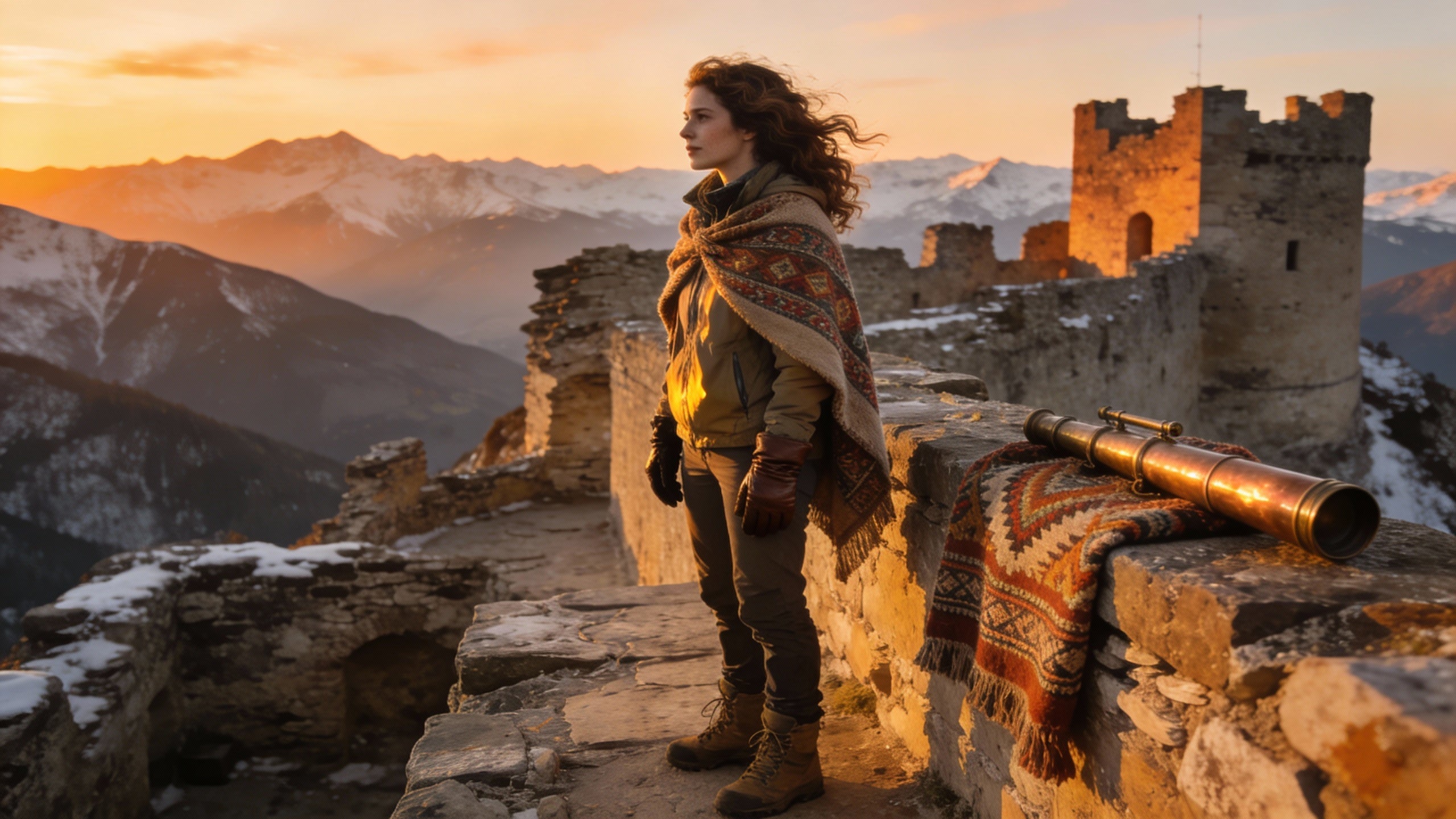
Understanding Tajik People’s Connection to Mountain-Themed Custom Products
Mountains, Memory, and Why They Matter for Gifts
When you design a gift for someone from Tajikistan or someone who loves Tajik culture, you are almost always designing for a mountain heart. More than 90 percent of the country is mountainous, and nearly half of its territory lies above about 10,000 ft, according to geographic overviews from EBSCO. In some eastern districts, villages cling to the sides of deep valleys in the Pamir and Fann ranges, surrounded by glaciers, high passes, and steep pastures.
Development researchers working in the Pamirs describe communities where only about 0.4 percent of the land can be farmed and that tiny strip depends entirely on glacial meltwater. A case study of food culture in the Pamirs explains that terraces, fields, and even local grain varieties are shaped by this harsh geography. When winter storms close passes for months and temperatures in the highest regions can plunge toward around -76°F, mountains are not just scenery; they are the frame of life itself.
In parallel, young Tajik voices speaking through global mountain forums describe the Pamir Mountains as “a long-lasting cultural heritage” and a defining symbol of their city and community. That sense of home in the peaks is echoed across Tajik literature, crafts, and daily rituals: mountains are protectors, providers, and sometimes threats, but rarely neutral.
For an artful gifter, this means that a Tajik mountain-themed product is never just about a pretty skyline. It touches memory, survival, and pride. This article draws on field projects documented by organizations such as the Aga Khan Foundation, the World Bank, UNESCO, Advantour, and the Smithsonian’s Center for Folklife and Cultural Heritage to help you understand that connection and turn it into meaningful, personalized, and ethical creations.

How Tajik Mountain Life Shapes Taste and Symbolism
A Landscape That Writes Itself into Everyday Life
In the high Pamirs and other upland regions, mountains dictate what people grow, what they eat, and how they show hospitality. The food culture case study from the Pamirs describes a “mountain culture” where diversity is a survival strategy. Farmers grow an astonishing range of cereals and pulses, including many kinds of wheat, barley, peas, chickpeas, and lentils. They often sow them together and then harvest and mill them as a single flour so that one loaf of bread contains at least one grain and one legume.
Imagine a small village field. Out of the entire landscape around it, only a sliver is arable. If the valley offered 1,000 acres of land in total, a similar 0.4 percent share would amount to about 4 acres of actual farmland. That is how tight the margin can be in some mountain zones. The result is a deep respect for soil, seeds, and the slopes that hold them in place.
This same case study emphasizes that in Pamiri mountain culture, hospitality, reciprocity, and collaboration are not optional niceties; they are “indispensable to survival and honored virtues.” Food is the main expression of wealth and generosity, often shared from one plate and even one spoon. Bread and tea have a nearly sacred aura, confirmed as well in broader cultural profiles of Tajikistan that underline bread’s special status at major celebrations.
When you picture a mountain-themed gift for someone with these roots, think less in terms of extreme-sport branding and more in terms of shared bread, steaming tea, and slopes that hold precious terraces in place.
A simple real-world example makes this concrete. Consider a hand-carved bread board designed for a Pamiri family now living abroad. Instead of generic peaks, the artisan carves a gently stepped hillside running along one edge, echoing the terraces that feed the village, and adds a tiny engraved motif of cereal and pulse grains along the rim. The recipient does not just see “mountains”; they see the memory of shared bread that sustained their family.
Mountains in Color, Dress, and Embroidery
Tajik mountain identity is also worn on the body. On the Pamir Plateau, traditional Tajik costume is so distinctive that it has been recognized as intangible heritage at the national level. Research on Tajik costume from the high plateau describes a consistent triad of colors: red, white, and black. Red connects to ancient sun symbolism and is associated with happiness, beauty, and honor; it dominates young women’s clothing and many men’s ornaments. White carries meanings of purity, luck, and blessing and usually appears intertwined with red. Black, often used in men’s outer garments, suggests gravity and power.
Embroidery is central. Women learn it from childhood, stitching geometric suns, stars, and abstract plant forms onto hats, coat cuffs, and dress hems. Cylindrical women’s hats, for example, often have a grid or radiating pattern on the top and continuous motifs on the sides that create a sense of rhythm and movement. Many designs combine stylized flowers such as pomegranate blossoms and chrysanthemums with triangles, sunbursts, and star shapes. Ethnographers interpret these as expressions of closeness to nature and a spiritual yearning for sky, sun, and light, all of which are compelling in a high-mountain landscape.
UNESCO’s documentation of chakan embroidery in Tajikistan adds further detail. Chakan pieces, widely made by women and girls, depict nature and the cosmos in symbolic and mythological forms. Motifs express hopes, wishes, and ideas about the unity of humans and nature. These embroideries appear on shirts, dresses, headscarves, curtains, cradle covers, and more, and they are especially prominent in bridal dress and festival clothing.
For a mountain-themed custom product, this means that colors and motifs already carry a layered language. A simple skyline in black and white may feel flat compared with a composition that weaves in red for joy and sun motifs for life. As one practical example, an artisan designing a mountain-inspired scarf for a Tajik bride might choose a field of rich red satin, border it with repeating triangular peaks, and fill those peaks with chakan-style floral galaxies. The result is not just “mountain scenery” but an extension of the visual language already used in weddings and festivals.

What Makes a Mountain-Themed Gift Feel Authentically Tajik?
Hospitality and Food as Mountain Symbols
In many Tajik mountain communities, the most heartfelt gifts are edible or tied to the table. The Pamirs food culture study shows how local grain-legume mixtures are milled together into nutritious flours that anchor daily meals. Traditional drinks such as green tea accompany every meal, as cultural surveys of Tajik cuisine emphasize, and are a key gesture of hospitality.
This has powerful implications for gifting. A tea set etched with mountain silhouettes but divorced from any reference to shared hospitality may feel decorative but impersonal. By contrast, a custom tea tray that combines mountain ridges with tiny engraved teapots, or a ceramic teapot painted with both peaks and stylized cereal stalks, quietly connects the mountains to the experience of sitting on a floor cushion with friends, pouring hot tea while snow piles up outside.
Consider a simple calculation that illustrates how deeply food and land intertwine. In the Pamirs study, researchers recorded at least 151 botanical varieties of wheat and 124 varieties of legumes in local fields. If a family keeps only a dozen of those varieties in active use on their land, their everyday bread still carries more genetic diversity than many entire supermarket grain aisles in lowland cities. Designing a bread cloth or knife handle that references these mixed fields through interlaced grain and vine motifs acknowledges the richness hidden inside a humble loaf.
Clothing, Caps, and Wall Hangings as Portable Landscapes
Embroidery, weaving, and clothing often act as portable landscapes for Tajik people who move between valley, city, and even other countries. Advantour’s overview of traditional crafts highlights suzane, large rectangular embroidered textiles that decorate walls, cover beds, and serve as important wedding gifts. Their designs often depict a blossoming garden embedded with protective symbols: pomegranates for fertility, knives and peppers to ward off evil, lamps for purification, birds for luck.
The same source describes embroidered skullcaps as key elements of national dress, with black-and-white designs featuring almond or pepper shapes and dense vegetative patterns. UNESCO’s chakan description confirms that such embroidery remains a core part of bridal ensembles and festival clothing.
Personalized mountain-themed gifts that respect this tradition work with the existing grammar instead of replacing it. For example, a custom suzane for a couple who grew up in the Pamirs might keep the classic circular garden medallions but introduce a gently rising line of triangles along the bottom edge, suggesting the silhouette of nearby peaks. Small stitched birds could be arranged so that they seem to fly up from valley to mountain, symbolizing migration or a journey.
Because knowledge of embroidery is often passed down within families or through master–apprentice teaching circles, commissioning such a piece also supports living networks of women artisans. Smithsonian reporting on the women-led Gulzar cultural center in Dushanbe notes that many of the artisans it helps to connect with markets are women working in traditional textiles. In practice, this means your custom wall hanging does not just depict mountains; it sustains the people who have embroidered mountain stories for generations.

Translating Mountain Heritage into Custom Products
Choosing Motifs and Materials that Honor Place
Designing an authentic Tajik mountain-themed gift is partly about choosing motifs and materials that echo real landscapes and crafts. The table below distills several evidence-based elements from the research and suggests ways to use them.
Element or motif |
Cultural grounding in Tajik or mountain life |
How it can translate into a custom product |
Mountain ridges and terraces |
Pamir and Fann regions are steep, with tiny bands of arable land shaped by centuries of terrace agriculture, described in food culture studies of the Pamirs. |
Engraved terrace lines on bread boards, carved ridges on wooden serving trays, or embossed mountain bands on leather journals. |
Sun, stars, and sky shapes |
Tajik costume and chakan embroidery incorporate sunbursts, stars, and radiating patterns that symbolize light, hope, and cosmic order. |
Mountain silhouettes filled with star and sun motifs on scarves, wall art, or ceramic cups, merging peaks with the night sky. |
Floral and garden imagery |
Suzane embroidery uses gardens, pomegranates, and flowers as symbols of fertility, blessing, and protection, as documented in Central Asian craft surveys. |
Combining a band of mountains with a “garden” of stitched or printed flowers at the base on table runners, cushion covers, or wedding textiles. |
Eagle and other strong creatures |
Research on Tajik costume on the Pamir Plateau notes eagle imagery as a symbol of strength, freedom, and courage. |
Metal jewelry or embroidered patches where an eagle soars over a stylized Pamir skyline, personalized with initials or a special date. |
Natural fibers and carved wood |
Traditional Tajik crafts rely on cotton, silk, and durable woods such as walnut and apricot; cultural centers like Gulzar promote local, eco-friendly textiles as an alternative to fast fashion. |
Choosing handwoven cotton or carved wood bases for gifts, or sourcing from certified organic mountain cooperatives when possible. |
An example can clarify how these pieces come together. Imagine a Fairtrade cotton table runner woven by a cooperative similar to the Bio-Kishovarz group, which cultivates around 6,000 hectares (about 15,000 acres) of Fairtrade land in Tajikistan at altitudes roughly between 1,000 and 2,300 ft. The base cloth remains simple and durable. Along one edge, a designer adds a subtle printed line of mountains; along the opposite edge, embroiderers from a Gulzar-like atelier stitch a row of pomegranates and stylized suns. The runner can be customized with a family name and a meaningful date, but every element of its story—from the cotton fields to the motifs—stays rooted in real Tajik mountain contexts.
Personalization that Respects Tradition
Personalization is the heart of artisanal gifting, yet it carries responsibility. In Tajik embroidery traditions like chakan and suzane, motifs have particular placements and rhythms. UNESCO notes that chakan craftswomen follow a sequence of steps from choosing fabric and thread, to drawing ornaments, to stitching, to assembling garments. These methods are often learned through years of attentive apprenticeship.
Rather than asking artisans to place a large foreign logo or name in the center of a piece, it is usually more respectful to integrate personal details into existing pattern flows. For instance, a pair of initials could be hidden among vine tendrils, or a wedding date could appear as tiny stitched numbers along the inside hem of a dress or shawl.
Gulzar’s founder speaks about the need to balance innovation and tradition by giving artisans professional, marketing, and design support while still honoring their creative voice. This suggests a healthy workflow for personalized mountain-themed products: share your story and sentiment, listen carefully to the artisan’s cultural reasoning, and then co-create a design that feels like a natural extension of their practice.
A real-world style example might be a hand-embroidered cap for someone from Gorno-Badakhshan who now lives far from the Pamirs. The artisan keeps the classic round shape and dense floral geometry but subtly shapes one band of pattern into gentle triangles that echo the outline of the local range. Inside the cap, just at the edge, they stitch the person’s name in small script. To an outside eye, it is simply a beautiful Tajik cap; to the wearer, it is a tiny mountain homeland they can put on each morning.
Marking Weddings, Navruz, and Homecomings
Tajik culture marks time through festivals and life-cycle ceremonies where mountains often stand quietly in the background. Navruz, the spring festival around March 21–22, is the country’s largest celebration, rooted in pre-Islamic traditions and now recognized as a national holiday. Families clean their homes, visit relatives, prepare special dishes such as sumanak from sprouted wheat, and sometimes perform fire-related rituals, according to cultural profiles of Tajikistan.
Weddings are another major canvas for craft. UNESCO’s account of chakan notes that in Khatlon region a chakan shirt is a key element of a bride’s dress, and grooms wear skullcaps embroidered in similar patterns. Advantour’s craft overview adds that suzane panels are cherished wedding gifts designed to bring beauty and protection into the couple’s new home.
Mountain-themed personalization can enhance these occasions when used thoughtfully. For a Navruz table, a designer might create a runner where the center field remains a traditional garden of flowers and fruits, while thin embroidered lines at both ends trace a mountain horizon in green, symbolizing the high pastures that will soon awaken. For a wedding suzane, peaks could be integrated into the border that represents the protective “wall” around the household, especially meaningful for couples whose families came from highland villages.
Even homecomings can be marked this way. Imagine a young person returning to Dushanbe after years working abroad. A handmade leather journal with a debossed city skyline alone might feel generic. A more resonant choice would be a journal cover where one half shows the stylized silhouette of Dushanbe’s modern monuments, while the other half shows simplified outlines of the Pamirs, joined by a band of chakan-inspired stars. This acknowledges both the urban present and the mountain roots that many Tajiks still claim, as writers have observed when discussing the tension between modern redevelopment and artisans’ efforts to guard cultural memory in the capital.

Sustainability and Ethics in Mountain-Themed Gifting
Supporting Mountain Livelihoods, Not Just Mountain Imagery
Mountains in Tajikistan are not only cultural icons; they are fragile economic foundations. World Bank analysis on forest resilience notes that about 90 percent of the country is uplands or mountains, yet only around 6 percent of land is arable, much of it degraded. Land degradation has cost up to an estimated 10 percent of national GDP, and the economic cost of doing nothing is calculated as roughly six times higher than actively restoring landscapes.
Projects such as the Environmental Land Management and Rural Livelihoods initiative have already helped farmers restore around 44,235 hectares, or approximately 110,000 acres, of land and adopt more sustainable pasture and water management practices. The newer Resilient Landscape Restoration Program for Central Asia, including a Tajikistan component, continues this work through tree planting, pasture rehabilitation, and support to communities forming pasture and forest user groups.
On a more intimate scale, the Aga Khan Foundation’s work in rural Tajik districts shows how mountain livelihoods can grow through cooperative models. Their Mountain Societies Development Support Programme has helped small producers form clusters to share equipment and training. One rice cluster, for instance, co-financed a small tractor that can cultivate about 0.2 acres per hour. Compared with manual cultivation that can take three to four days for the same area, this single machine dramatically frees time and labor for other tasks, while a member-friendly rental system spreads the benefit.
The same program highlights a beekeeper in the Aini mountains who expanded his honey production after training on winter hive management and marketing, and a women’s dairy cluster that turned surplus milk into value-added products such as qurut and smetana. These stories matter for gifting because they point to concrete ways your orders can support real people. Honey from a mountain beekeeper packaged in custom-printed jars with Pamir peaks, or wool products sourced from dairy-farming households who also keep sheep, can carry not only symbolism but also income back into highland communities.
By choosing suppliers aligned with such programs, or explicitly looking for Fairtrade certifications like those held by cooperatives producing organic cotton and peanuts in Tajikistan, you help ensure that mountain-themed products are not built on the erosion of the very landscapes they romanticize.
Choosing Longevity over Fast Fashion
The women-led Gulzar cultural center in Dushanbe has positioned itself as a counterweight to fast fashion by promoting locally produced textiles such as ikat fabrics made from local cotton and silk. Its founder frames this work as encouraging “slow fashion,” where garments last longer, carry cultural stories, and give artisans dignified incomes. The center’s earlier NGO work created a database of around 8,500 artisans across Tajikistan, many of them women from remote mountainous areas whose skills were previously invisible to markets.
This perspective translates directly to gift design. A mountain-themed T-shirt printed on a low-quality blank might look charming for a season but soon ends up in a landfill. A hand-embroidered shawl or woven wall hanging, even at a higher price, is more likely to be cherished, repaired, and passed down. The cost per year of use can easily become lower for the durable piece. If a $25 mass-produced item is worn for one year and discarded, and a $100 hand-embroidered scarf is worn lovingly for ten years, the annual “cost of joy” is actually less for the handmade item, not even counting the benefit to the artisan.
Ethical mountain-themed gifting, therefore, favors materials and techniques that age well: hardwood carving, dense weaving, quality dyes, and repairable construction. It also favors designs that respect forests and pastures. Incorporating imagery of reforestation or mixed crop fields, for example, can visually echo the World Bank’s and local communities’ efforts to restore landscapes.
Avoiding Cultural Tokenism
There is a risk, especially from afar, of flattening Tajik mountain culture into a few clichés: a snow-capped triangle, a yurt, perhaps a generic eagle. Yet the research reviewed here shows a far more intricate picture, with pre-Islamic rock art, layers of Persianate art, Islamic decorative traditions, and contemporary innovations all shaping how mountains appear in material culture.
Urban redevelopment in Dushanbe, as described by cultural journalists, sometimes replaces older neighborhoods with big new monuments that reference ancient empires. At the same time, artisans quietly preserve more complex designs and memories in workshops and studios. For a gift designer, this is a gentle warning. Elevating only the most glamorous, imperial, or “Instagram-ready” imagery can unintentionally echo top-down narratives that sideline everyday mountain lives.
Ground your designs in specific stories: a Pamir field where mixed grains grow, a women’s embroidery circle in Khatlon, a bee yard in Aini, a youth group restoring forests in a mountain valley. When you mention these stories to your customers, cite their sources by name—World Bank for landscape restoration, the Aga Khan Foundation for rural producer clusters, UNESCO for chakan, the Smithsonian and Gulzar for artisan networks—so recipients can sense that your work rests on careful listening rather than quick internet searches.
In other words, let the mountain be more than a logo. Let it be a landscape of relationships.

Designing Your Next Tajik Mountain-Themed Custom Piece
If you are about to brief an artisan, launch a product line, or commission a one-off heirloom, you can now translate this understanding into concrete steps. Begin by asking which mountain relationship you want to honor. Is it the memory of glacial valleys and bread shared from one plate, the joy of colorful wedding textiles, the resilience of farmers restoring eroded slopes, or the courage embodied by an eagle on a dancer’s costume? Choose one or two themes to keep the design focused.
Next, select motifs that have grounding in Tajik craft traditions. Combine peaks with sunbursts and stars from chakan or costume embroidery, or pair terraces with garden and pomegranate patterns from suzane. Keep color symbolism in mind: red for happiness and honor, white for purity and blessing, black for power and depth. If you are working with an artisan who learned within a family or master–apprentice chain, invite them to suggest which patterns feel appropriate for your occasion.
Then, decide how personalization will appear. Names and dates can be tucked into vine stems, border lines, or interior linings so they feel like whispers rather than billboards. For a Navruz runner, the year might be stitched discreetly near a corner sprig; for a wedding shawl, initials could be hidden among flowers. This approach respects the visual integrity of the tradition and keeps the piece timeless.
Finally, check the ethical backbone of your commission. Ask where fibers or wood come from. If possible, support cooperatives engaged in organic and Fairtrade practices, or clusters and centers that document tangible benefits for mountain communities. Remember that in Tajikistan, doing nothing about land and forest degradation is estimated to cost many times more than investing in restoration; your choice to purchase from initiatives that restore rather than exhaust the land aligns your gift with a broader story of healing.
Short FAQ
Is it appropriate for someone who is not Tajik to give Tajik mountain-themed gifts?
Yes, when done with respect. Root your design in documented Tajik motifs and stories rather than generic “mountain chic,” credit the artisans and cultural sources you drew from, and avoid presenting your interpretation as the definitive Tajik mountain image. Think of yourself as a guest at someone else’s mountain home and design accordingly.
How can I be sure my mountain-themed product is not accidentally offensive?
Work closely with Tajik artisans or cultural advisors whenever possible. Ask whether particular motifs are reserved for weddings, mourning, or other specific contexts. Use sources such as UNESCO’s chakan description, documented craft surveys, and profiles of artisan centers like Gulzar as starting points, not substitutes for direct conversation.
What if I cannot source materials directly from Tajikistan?
You can still honor Tajik mountain culture by using quality natural materials, referencing Tajik motifs accurately, and supporting Tajik-led organizations through donations or storytelling partnerships. Make it clear in your labeling where the item was made and which traditions inspired it, so you do not blur lines between homage and imitation.
In the end, a Tajik mountain-themed gift is most powerful when it feels like a small piece of the highlands that someone can hold: a reminder of sun on snow, of terraces etched into rock, of bread and tea shared in rooms warmed by stories. When you design or choose such a piece with care, you are not just sending a product; you are sending a little echo of the mountains themselves.
References
- https://folklife.si.edu/magazine/women-artisans-central-asia-tajikistan
- https://en.wikipedia.org/wiki/Culture_of_Tajikistan
- https://www.carecprogram.org/uploads/Tajikistan-Proud-Mountain-Nation-1.pdf
- https://voicesoncentralasia.org/the-art-of-the-wood-carving-in-tajikistan/
- https://akf.org/article/boosting-tajikistans-economic-potential-2/
- https://ucentralasia.org/media/bllawjt1/web-caf-central-asia-mountains.pdf
- https://ich.unesco.org/en/RL/chakan-embroidery-art-in-the-republic-of-tajikistan-01397
- https://blogs.worldbank.org/en/europeandcentralasia/why-tajikistan-must-strengthen-resilience-its-forests-and-restore-its
- https://www.b4fn.org/case-studies/case-studies/food-culture-in-the-pamirs/
- https://bioone.org/journals/mountain-research-and-development/volume-31/issue-1/MRD-JOURNAL-D-10-00109.1/Agricultural-Biodiversity-in-the-Tajik-Pamirs/10.1659/MRD-JOURNAL-D-10-00109.1.full
