

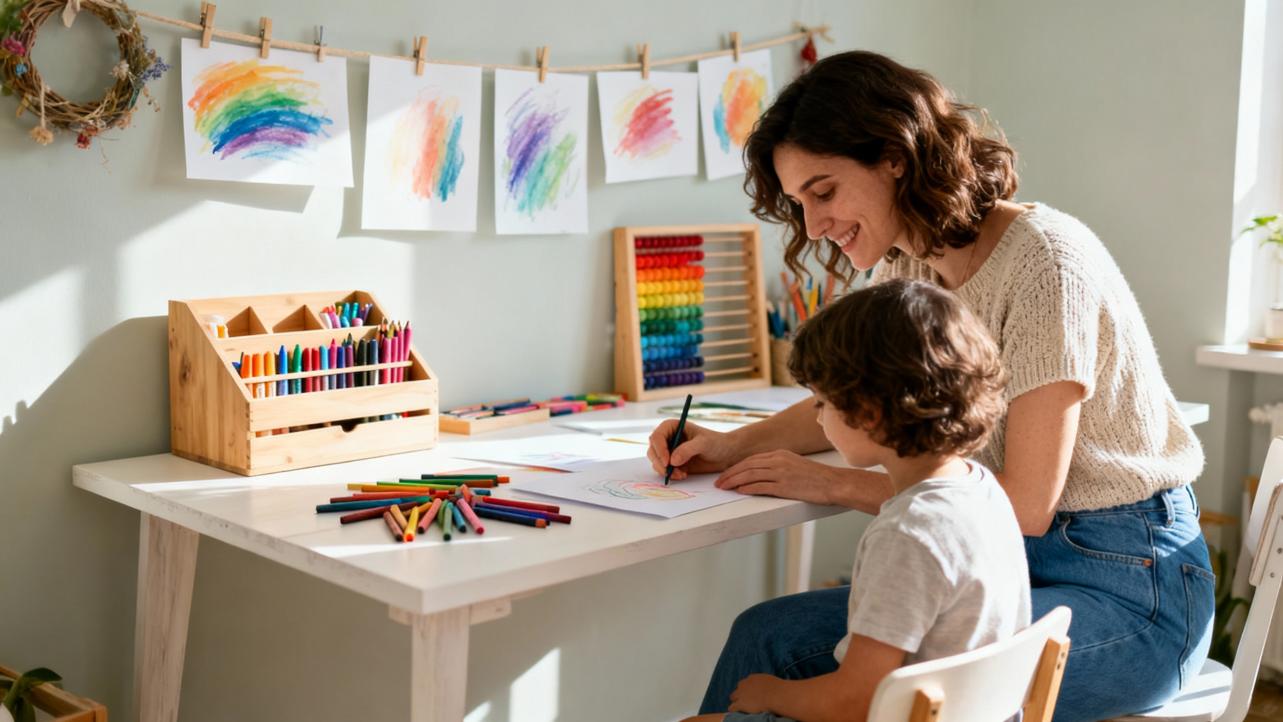
Transforming Children’s Art into Professional-Quality Gifts with AI
There is a moment every parent or grandparent recognizes: a small hand reaches out with a crumpled drawing, eyes shining, waiting for your reaction. In that instant, you are not just receiving paper and paint. You are being trusted with a piece of their inner world.
As an artful gifting specialist and sentimental curator, I see these moments as the raw material for the most meaningful gifts we can give. Today, AI tools are letting us take children’s art even further, turning fridge masterpieces into professional-quality books, wall art, textiles, and keepsakes while still honoring the heart behind every scribble.
This is not about replacing handmade magic with technology. It is about preserving it, amplifying it, and sharing it in ways that will last far beyond the life span of construction paper and tape.
Why Children’s Art Makes The Most Cherished Gifts
Research on children’s preferences gives us a helpful starting point. A study shared on the National Institutes of Health platform tested 4‑ to 12‑year‑olds with handmade versus factory-made items. Across several experiments, children expected others to prefer the handmade option, especially for nonfood objects made by a parent or local artisan. When they chose handmade, their explanations focused on love, effort, and relationships rather than perfect quality.
That is exactly what makes a mug drawn by a five-year-old or a quilt printed with their paintings so disarming. Even very young children understand that time and effort signal care.
Broader data from Pew Research, cited in the same body of work, shows that just over half of US parents with 6‑ to 17‑year‑olds reported at least one child taking art, music, or dance lessons in the past year, and many of those families earn under $30,000. Creativity is not a niche hobby; it is a mainstream, cross‑income way families connect.
When we take children’s art seriously enough to bind it into a hardcover album, print it on canvas, or turn it into fabric, we are sending a powerful message: your ideas are worth professional treatment. AI now gives us more ways than ever to do this without losing that handmade soul.

From Fridge Gallery to Forever Keepsake: Your Main Paths
Families usually face the same problem that services like 4everBound, Plum Print, Scribble Art, Mimeo Photos, Artkive, and Shutterfly all describe: piles of art in drawers, on the fridge, and stacked on desks that feel too sentimental to toss and too messy to keep.
Most long-term solutions fall into three broad approaches.
Approach |
What It Is |
Great For |
Pros |
Considerations |
Binding originals |
Physically binding the actual artwork into a hardcover book |
Tactile keepsakes, handprints, certificates, school papers |
Preserves texture and original materials; extremely sentimental |
Bulky to ship; more expensive per book; originals are locked into that one object |
Digitized photo-based keepsakes |
Scanning or photographing art and printing books, calendars, wall decor |
Sharing with many relatives; reducing physical clutter |
Multiple copies; easier to store and mail; supports many products |
Requires decent photography or scanning; originals still need storage or curation |
Using AI tools to refine, upscale, or artistically “reimagine” drawings |
Turning simple drawings into polished, gift-ready designs |
Can create cohesive styles, fix smudges, and reach print-ready resolution for large items |
Learning curve; risk of over-stylizing if the child’s style is not deliberately preserved |
Most families benefit from mixing all three. For example, keep a few physical treasures, digitize the full story into books, then selectively use AI to transform a handful of standout pieces into showstopping gifts.

Step One: Curate and Capture Their Creations
Before AI comes into the picture, you need to gather and digitize the art with care.
Gently Declutter Without Losing the Story
Bloggers who specialize in kids’ art and family design, like those behind Little Red Window, Moms and Crafters, DIY Playbook, and Outside The Box Creation, share a similar pattern.
They acknowledge that young artists can be incredibly prolific. Artwork floods in from daycare, preschool, and long afternoons at the kitchen table. Families often fill walls, refrigerators, and boxes in the garage. When kids grow up and parents eventually downsize, those boxes are often the first things to be thrown away.
Instead of keeping everything or feeling guilty about recycling, many parents create a rhythm. During the year, everyday doodles are enjoyed and then quietly let go; the pieces that make everyone’s eyes light up stay in a special folder or keepsake box. Some families label the back with the child’s name and year so the story is not lost later.
Services like 4everBound build their entire offering around this curation moment. They provide shipping kits and then bind original artwork, schoolwork, and photos into yearbook-style hardcover books with options for 30, 60, or 90 pages. Plum Print sends a box, digitizes even 3D crafts and jewelry, and then designs photo books or other keepsakes, with a turnaround of about three to five weeks. Scribble Art focuses on printed art books built from digitized images and is praised in testimonials for offering quality comparable to older mail‑in services at about half the cost and faster turnaround.
Whether you DIY or use a service, the first key step is the same: decide which pieces are part of your child’s story, then give those pieces a safe temporary home while you move on to digitizing.
Photographing and Scanning for Professional Results
Digitizing is where you lay the technical foundation for AI and professional printing.
Several sources, including a Shutterfly guide and a detailed project from The Mom Hour, converge on practical best practices.
If you are scanning, set your scanner to at least 300 dpi and save files as JPEG or PNG rather than PDF. That resolution is typically sufficient for high-quality notecards and many book formats, and it gives AI tools enough detail to work with. Even slightly three-dimensional collages usually scan well on a flatbed; you can gently press the lid to keep them in place.
For oversized pieces that do not fit on your scanner, photography is your friend. Lay the art flat on a simple background, such as a sheet of white poster board, in bright but even natural light. Place the art near a window but out of direct harsh sunlight to avoid deep shadows. Hold your camera or cell phone directly above the artwork so the edges are straight, turn off the flash, and shoot at the highest resolution available. Later, crop and rotate the image so the art fills the frame.
Families who make notecards with children’s art, like the author at The Mom Hour, often rename files clearly with the child’s name and subject, such as “Violet-Flowers” or “Reid-Butterfly.” This small habit pays off when you are designing gifts or uploading to AI tools; you will not have to guess which file belongs to which child or project.
Once you have a clean digital library, the magic of AI can begin.
Step Two: Use AI to Reimagine While Honoring Their Vision
When people hear “AI art,” they often picture a machine inventing images from scratch. That is not the goal here. The approach described by platforms like deep-image.ai treats your child’s drawing as the star of the show, not a rough draft to be discarded.
What Image-to-Image AI Actually Does
Tools such as the AI Generator at deep-image.ai work in an image‑to‑image mode. You upload a child’s drawing or painting, and the AI uses that image plus a short text description as its starting point. It then produces a new image inspired by the original.
In practical terms, that can mean turning a simple crayon sketch of “a man using a hose to water a giant tree” into a lush, storybook-style forest scene. Or transforming “a little girl and two plush friends going to school” into a whimsical illustration with detailed backgrounds and lighting, while keeping the basic pose and relationships intact.
Because these tools also offer upscaling and background refinement, they are particularly helpful when you want to print at larger sizes, such as canvas wall art or fabric repeats, without losing clarity.
A Child-Centered AI Workflow
A child-centered workflow, adapted from deep-image.ai’s own step-by-step guide, tends to follow a gentle arc.
You begin by choosing one of your child’s drawings together. Ask them what the drawing is “about” in their words. Their explanation often contains delightful details that never made it onto the paper but are crucial to their concept.
You then upload the image into the AI Generator and choose an option that allows the tool to consider the entire image area, not just a cropped center. This respects their composition, including quirky edges and background details.
When you type your text prompt, you echo your child’s description as closely as possible. Instead of rewriting “dragon” as “majestic European dragon in cinematic lighting,” you might say, “friendly green dragon with three short wings flying above the playground.” If the child used certain colors or included special friends or a favorite stuffed animal, mention those as well.
If you enable upscaling either during generation or as a follow‑up step, the tool will increase the resolution, making the image suitable for higher‑quality printing. At this stage, you generate and look at the result together.
Sometimes the first version feels off. That is part of the process. Deep-image.ai emphasizes playful experimentation, using a “Back to edit” option to tweak prompts and rerun variations. You and your child might decide to add “at sunset” or “in the snow” or remove an element that feels out of character.
After one or a few iterations, you download the final image and save it next to the original scan. You now have both the authentic drawing and an AI‑reimagined counterpart, ready for professional gifts.
Keeping The Handmade Spirit Intact
The question many thoughtful parents ask is whether AI will flatten their child’s style into something generic. Research on handmade value suggests a helpful balance.
The developmental study mentioned earlier found that children value handmade items partly because of the story of who made them and the visible effort, even when the handmade version is imperfect. For nonfood gifts, they often prefer the imperfect handmade option over a polished factory-made one. For food, they care more about quality and appearance.
Taken together with the qualitative insights from art-and-science educators, this suggests a practical rule: use AI to support, not erase. Let the original artwork live in your album, portfolio, or a side-by-side layout. Use AI versions when you need durability, high resolution, or a particular style for textiles and large prints, and be transparent with your child about the collaboration.

Step Three: Turning AI-Ready Files into Professional Gifts
Once you have clean scans and, optionally, AI-enhanced versions, you can transform them into gifts that feel like they came from a boutique studio rather than a kitchen drawer.
Heirloom Art Books and Story Albums
Several services show different ways to turn scattered art into cohesive books.
4everBound binds original artwork and schoolwork directly into hardcover books with 30, 60, or 90 pages at tiered prices. Their focus is on tactile, in‑house production and a yearbook-like feel. This is ideal when the physical paint strokes and paper textures matter to you, and you are comfortable mailing in the originals.
Plum Print takes a different route by digitizing everything for you, including sculptures and crafts. You pay a deposit, receive a box, send in the art, and then review a digital proof of your book. They also give you access to an online gallery so you can order softcover or hardcover books and other products. Their pricing reflects the labor involved but solves the problem for families who do not want to do any scanning.
Scribble Art, highlighted in customer testimonials, positions itself as a more affordable printed art book service that avoids long turnaround times. Parents and grandparents report that the final books are “every bit as nice” as those from older, more expensive services.
You can incorporate AI-enhanced pages into these books in a few ways. Some families pair each child’s original drawing on one page with the AI reimagining on the facing page, turning the book into a kind of collaborative exhibition. Others group AI-enhanced images into a “fantasy section” while leaving everyday school pieces in a more documentary style.
Platforms such as Shutterfly, Mimeo Photos, and general photo book providers also let you design your own layouts with scanned and AI‑edited images. One Mimeo Photos guide suggests including written work—poems and stories—alongside art to capture a fuller portrait of creativity over time.
Wall-Worthy Decor and Canvases
Turning children’s art into wall decor is one of the easiest ways to make a home feel sophisticated and sentimental at the same time.
Companies like Mimeo Photos and Shutterfly produce canvas, framed prints, and even metal wall pieces from uploaded images. A kids’ art blog from Mimeo Photos encourages parents to treat even simple handprint paintings as abstract art; once they are printed on canvas, those early smears can look refreshingly modern.
DIY tutorials, such as a keepsake canvas project from Skye High Interactive, show how to collage many pieces onto a single large canvas using decoupage mediums like Mod Podge. Parents cut and layer artwork onto a blank canvas, seal with multiple coats, and end up with a single story-rich piece that can hang for years.
AI fits beautifully here as a behind-the-scenes helper. If a drawing is low contrast or smudged, AI upscaling and enhancement tools can clarify lines and colors while keeping the recognizable forms. For series of canvases, AI can gently harmonize color palettes so that pieces created months apart feel cohesive on the wall.
At home, interior design writers like Emily Henderson and DIY Playbook’s Casey Finn recommend intentional display systems—pinboards, magnetic strips, and interchangeable frames—so that children feel their art is honored without overwhelming the space. A cluster of AI-boosted canvases alongside a rotating gallery of originals can strike that balance: polished enough for the living room, but still unmistakably theirs.
Textiles, Wearables, and Cuddly Keepsakes
This is where the concept of “professional quality” really shines. When kids see their art on something they can wear or cuddle, it changes the way they see themselves.
Fabric printing services highlighted on creative blogs, including Spoonflower’s projects with kids’ art, let you turn digitized drawings into fabric. Those fabrics become aprons, tea towels, tote bags, quilt squares, and custom pillow covers. One Spoonflower article even suggests making matching aprons for the whole family to wear while baking cookies together during the holidays.
DIY makers share countless examples. Moms and Crafters features children’s art turned into potholders, duvet covers, embroidered decor, and play clothes that cleverly cover stains. Crayola-sponsored projects from Hey Let’s Make Stuff use kids’ coloring pages to decorate trays, pencil boxes, and magnets. Wild Revival Gardening explores using Cricut and sublimation techniques to put kids’ designs on coasters and home decor.
On the commercial side, Plum Print’s marketplace lets families put children’s art on throw pillows, aprons, and tote bags and even sell them, with a portion of proceeds going toward toy wish lists, college savings, or charity. Other companies mentioned in craft roundups, like Budsies, Plushy Gift, and Make My Plush, can transform a child’s drawing into a custom stuffed animal.
AI’s strength here is pattern and resolution. You can take a small doodle, ask an image‑to‑image AI tool to create a repeating pattern that keeps the quirky shapes, and then upload that pattern to a fabric printer. For stuffed animals, AI can help refine a flat drawing into a more three‑dimensional illustration that clarifies where ears, limbs, and facial features are meant to go, making it easier for pattern designers or services to interpret.
The key is to involve the child. Let them choose which drawing becomes a dress, which character becomes a plush friend, and what colors are “non‑negotiable.”
Stationery, Calendars, and Everyday Magic
Not every professional-quality gift needs to be large or expensive. Everyday items can quietly carry a lot of emotion.
The Mom Hour outlines a thoughtful tradition of turning a year’s worth of paintings into printed notecards. Art is scanned at high resolution, uploaded to a notecard printer such as VistaPrint, and then laid out edge‑to‑edge on folded cards with a tiny “Art by [Child’s Name]” on the back. Sets are bundled into variety packs and given as Christmas gifts to relatives.
Mimeo Photos and Shutterfly both describe similar projects. Custom calendars feature different pieces each month, often with special dates and messages printed directly on the pages so they function as both planner and gallery. Personalized greeting cards, especially for holidays and birthdays, are a favorite with grandparents who live far away.
Shutterfly’s own guide summarizes a dozen gift categories that work beautifully with kids’ art: wall prints, family cards, coffee mugs, jewelry charms, keychains, notebooks, plates, puzzles, ornaments, blankets, and more. Their recommendations for photographing artwork line up with the scanning advice earlier and can be used whether or not you choose to order through them.
AI enhancements are especially useful for stationery because small print sizes exaggerate flaws. A light touch of background cleanup, sharpening, or upscaling ensures that crayon textures and brush strokes stay visible without becoming muddy. For calendars, AI can help create consistent seasonal moods while letting the original art remain recognizable.
Pros and Cons: Original, Digitized, and AI-Enhanced
Every family has a different comfort level with technology and a different emotional attachment to paper originals. It can help to think in terms of trade-offs rather than absolutes.
Format |
Emotional Feel |
Best Uses |
Advantages |
Things to Watch |
Original paper |
Very high; carries physical history and texture |
Handprints, first drawings, certificates |
Direct connection to the moment; ideal for one-of-a-kind heirlooms |
Fragile; hard to share; easy to lose in moves |
Simple scans/photos |
High; captures authentic lines and colors |
Photo books, note cards, digital archives |
Easy to duplicate and share; supports many services; relatively low technical barrier |
Depends on your photography/scanning quality |
AI-enhanced images |
High if used thoughtfully; curated, polished feel |
Large prints, textiles, hero pieces in albums |
Can fix low resolution, unify sets, and create vivid scenes from children’s ideas |
Risk of losing “kid” style if over-processed |
Remember the developmental research on handmade value: children respond strongly to the story of who made an object. You can keep that story intact by involving them in each digital and AI step, letting them see the transformation, and pairing AI images with their originals rather than hiding the source.
A Simple Yearly Workflow for AI-Powered Keepsakes
In practice, the most successful families treat this as a gentle annual ritual, not a one‑time heroic project.
Throughout the year, you might display artwork on a pinboard or magnetic strip, then move favorites into a labeled box or folder. At the end of the school year, you sit down together, reminisce, and choose which pieces to scan and which a service like 4everBound or Plum Print should bind in their original form.
Once the artwork is digitized, you select a handful of drawings that feel ripe for AI enhancement. These tend to be imaginative scenes, characters, or places with clear stories behind them. Using an image‑to‑image tool, you and your child co‑create richer versions while keeping the original scans safe.
You then decide on formats: perhaps a hardcover photo book with both original and AI images, a canvas for the living room, a set of notecards for holiday gifts, and one textile or plush project for the child themselves. Services such as Mimeo Photos, Shutterfly, Scribble Art, Spoonflower, and Etsy‑based makers all offer different combinations of these items, and you can mix DIY approaches with professional printing.
Finally, when the gifts arrive, you tell the story. “You drew this when you were six, and we worked together to turn it into a book for Grandma.” That narrative is often as treasured as the object itself.
Frequently Asked Questions
Does using AI make the gift less “handmade”?
Not if you use it as a tool rather than a replacement. The emotional heart of the gift is still your child’s idea, lines, and color choices. AI is functioning more like a very patient digital assistant, helping with resolution, detail, and style so their concept can live comfortably on a canvas, a blanket, or a book cover.
How old should my child be to participate in AI projects?
Even preschoolers can join the process by choosing which drawings to use and helping describe what is happening in them. Older children can type prompts themselves, adjust settings, and treat it as a collaborative art project. The more agency they have, the more connected they will feel to the final gift.
What about privacy when I upload my child’s art?
Each platform has its own data and privacy policies, so it is wise to review them. As a general practice, avoid including identifying information such as full names, addresses, or school details inside the artwork files you upload. Many families are comfortable working with art that includes only first names or no text at all.
Is this approach only for big budgets?
Not necessarily. There are premium services with higher price tags, like some Plum Print products or 4everBound’s large volumes, but there are also economical options such as standard photo books, small prints, and DIY projects using local printers. One reason families use services like Scribble Art is that they provide professional‑looking books at a lower cost than older mail‑in competitors. AI tools themselves often offer free tiers or pay‑per‑image models, so you can experiment with just a few favorites.
When you treat your child’s artwork as both a creative archive and a design resource, and then gently invite AI into the process, you create gifts that feel both intimately handmade and impressively polished. You are not just saving paper from the recycling bin. You are curating a visual love letter they will be able to hold, wear, and pass down for years to come.
References
- https://pmc.ncbi.nlm.nih.gov/articles/PMC9642849/
- https://www.ascb.org/publications-columns/emerging-voices/how-art-can-teach-kids-science/
- https://blog.mimeophotos.com/turn-childrens-art-into-treasured-gifts-mimeo-photos
- https://scribble.art/?srsltid=AfmBOopAucxjbZI2q2LoggAGy6DtyCKpEib39J2kGuNemkZzNV6tzvI7
- https://stylebyemilyhenderson.com/4-ideas-to-display-and-store-kid-art
- https://wildrevivalgardening.com/gifts-using-kids-artwork
- https://heyletsmakestuff.com/turn-childrens-artwork-into-gifts/
- https://littleredwindow.com/awesome-crafty-ideas-to-turn-kids-art-into-keepsakes/
- https://www.momsandcrafters.com/ways-to-preserve-childrens-artwork/
- https://www.popsugar.com/family/what-do-kids-artwork-39100809
