

From Pixels to Brushstrokes: Comparing Computer‑Generated Textures and Hand‑Painted Techniques
Why Texture Choice Matters For Meaningful Art And Gifts
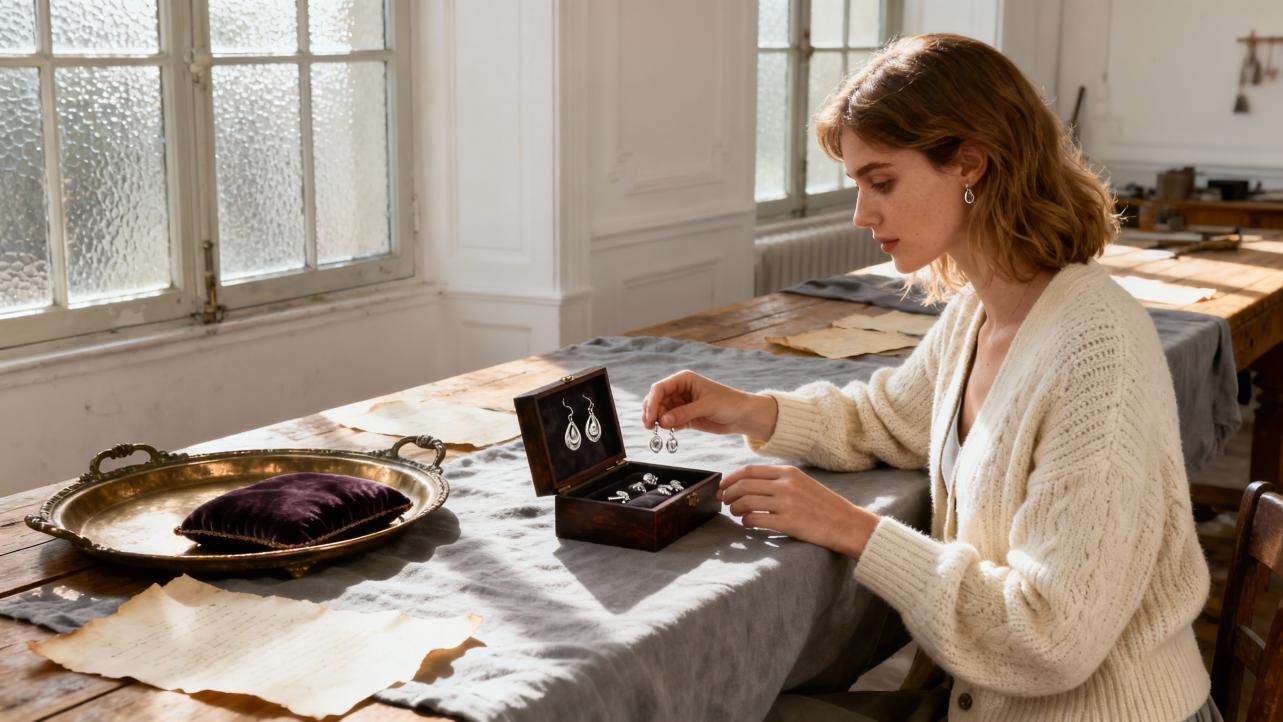
Every keepsake, from a hand-painted jewelry box to a custom game-inspired print, wears a “second skin.” That skin is texture: the grain of wood you can almost feel on a printed postcard, the velvety watercolor wash behind a wedding vow, the brushed metal look on a 3D‑printed figurine. Texture is what quietly tells your recipient, “This was made just for you.”
In visual effects and game art, educators and studios describe texturing as the process of adding detailed colors, patterns, and surface qualities to a model so it looks convincing and emotionally rich. A game art program at Rocky Mountain College of Art + Design, for example, frames texturing as what brings worlds to life, from wood grain and fabric folds to skin blemishes. A VFX article on befores & afters notes that textures define color, bumpiness, reflectivity, and transparency, and that they are central to whether an audience “buys” a CG character or prop.
For artisans and gift makers, the same principle applies. Whether you are painting directly on a physical object or designing textures for prints and 3D products, you are deciding how this gift will feel in the heart and in the hand. The big question is how to balance computer-generated textures with hand-painted techniques so your work stays efficient, beautiful, and deeply personal.

What Do We Actually Mean By “Texture”?
In digital art, texturing is often called “surfacing,” because it combines painted images with material settings. A portrait surfacing course on CG Cookie explains that textures control the base color (often called albedo), small surface details and bumps, and even how light scatters through skin for realism. The eyes in that course receive special attention, because believable sclera, iris patterns, and the wet edge of the eye meniscus make the whole character feel alive.
A high-end texturing tool like Mari, highlighted in an article from a SIGGRAPH blog, treats texturing as layered storytelling. Artists build maps that describe color, gloss, and micro-relief, then combine them into a shader. The same mindset exists in game art, where Rocky Mountain College of Art + Design describes techniques such as hand-painting, photogrammetry, procedural generation, and physically based rendering working together to create convincing surfaces.
In physical media, texture may be literally raised paint, marbled ink, or scratched paper. A design article on analog marbling describes swirling real house paint, water, and ink so that unpredictable, non‑repeating patterns emerge from fluid physics. Even when that marbled sheet is later scanned and used digitally, its origin as a one‑of‑a‑kind physical artifact is what gives it a special presence.
So when we compare computer-generated textures with hand-painted techniques, we are really comparing different ways to craft this second skin: algorithmic recipes versus human gesture, infinite repeatability versus one‑off uniqueness, and how those qualities show up in the gifts we create.

Computer‑Generated Textures: Speed, Scale, And Consistency
Computer-generated textures cover several families of methods. Each brings strengths that are powerful for production and can still be harnessed with care for sentimental, crafted work.
Procedural And Algorithmic Textures
Procedural texturing uses mathematical rules to generate patterns that can tile, scale, and adjust without visible seams. The befores & afters feature on modern 3D texturing explains that procedural methods excel on architecture, landscapes, science‑fiction environments, and industrial machinery. Because the patterns are driven by parameters instead of static images, an artist can dial in brick spacing, rust amounts, or moss coverage and have the changes ripple across a scene.
The SIGGRAPH article on Mari emphasizes that node-based workflows let artists build entire materials from masks, noise functions, and filters. Bake Point Filters in Mari allow curvature or other utility maps to be generated non‑destructively inside this node graph, so artists can iterate on the technical foundation while keeping their creative options open.
The strengths of procedural textures are clear. They are fast to adjust, easy to reuse on many assets, and ideal when you need consistency across a product line or a large environment. Production studios rely on them heavily because deadlines and unpredictable schedules demand flexible recipes.
The trade‑off, described by senior texture artist Michael Borhi in an interview for Foundry, is that overreliance on procedural node graphs can lead to work that is competent but not outstanding. He warns that when artists stop at the procedural stage, results can feel formulaic or “procedural‑looking,” and the subtle artistry that gives a surface personality never fully appears.
Scanned And Image‑Based Textures
Scanning and photogrammetry capture the real world directly. The befores & afters article describes workflows where terrain, textiles, and even human skin are scanned at high resolution, then processed into texture maps and “de‑lit” so they respond correctly to lighting in CG. For digital doubles of actors, these scans can be so accurate that it becomes nearly impossible to distinguish the digital version from the real performer.
A game art texturing overview from Rocky Mountain College of Art + Design explains that image-based methods are excellent for materials such as stone, metal, and wood. By starting with real photographs, artists gain a specific richness of detail that would be tedious to paint from scratch. At the same time, these sources must be carefully cleaned and mapped to avoid distortion when wrapped onto complex shapes.
In the gift world, think of scanned linen paper used as the digital background for a printed vow, or a high‑resolution photograph of vintage lace becoming the pattern on a custom scarf. These textures carry traces of the real world into a reproducible format.
Image-based approaches are fast and realistic, but they come with creative risks. A widely discussed thread on Polycount about realism, hand‑painting, and photosourcing notes that many shipped games reuse library textures repeatedly, tweaking them a bit as they go. The author, who has shipped multiple titles, argues that this is often necessary given budget and schedule, and that players rarely notice specific reuse. Still, they acknowledge that in a perfect world, sculpted and hand‑painted textures would create richer, fully owned results.
For sentimental gifts, heavy reuse of stock textures can make pieces feel generic if you are not thoughtful. The more your textures echo the defaults from popular libraries, the more your work risks blending into a crowded visual landscape.
AI‑Generated And Default Digital Styles
Text-to-image tools have made it trivial to generate complex, “textured” surfaces from a short phrase. A critical essay on AI art by a digital artist points out that many AI images gravitate toward a recognizable look: hyper‑detailed, glossy, high‑contrast scenes with dramatic lighting. This sameness is not magic but statistics. Diffusion models are trained on enormous web‑scraped datasets that lean heavily on concept art, anime, stock photography, and highly polished digital illustration. When you ask these models to generate art, they tend to average toward the center of that distribution.
The same article notes that popular prompt recipes like “highly detailed, 8K, cinematic lighting, trending on ArtStation” are copied and remixed across communities. Platform feedback loops favor saturated, eye‑catching images, reinforcing the default AI aesthetic. The result is what the author calls aesthetic flattening or “style collapse,” where the diversity of thousands of human artists is blended into a narrow visual band.
For a gift maker, this has practical consequences. AI can sketch ideas quickly or generate base patterns, but if you use it without strong direction, your texture library may start to look like everyone else’s. The article recommends treating AI tools as one stage in a broader creative workflow, not the final word: sketch with them, then edit, paint over, and composite, or even fine‑tune models on your own references to pull away from the default look.
In other words, computer-generated textures, whether procedural, scanned, or AI‑assisted, give you speed and power. Their weakness is that without a guiding hand, they can drift toward the average, while heartfelt gifts thrive on the specific.

Hand‑Painted And Analog Textures: Character, Story, And Soul
Hand-painted techniques, whether digital or physical, ask more of your time and attention. They repay that investment with textures that carry more of your personal touch.
Digital Hand‑Painting As Craft
In VFX and games, hand-painted textures are not old‑fashioned holdovers; they are often the preferred choice for characters, organic elements, and special props. The befores & afters article describes how artists use tools such as Substance 3D Painter or Mari to paint wrinkles, scars, pores, and stylized markings directly onto models. This approach allows them to embed specific narrative information into the surface: where a jacket has rubbed shiny at the cuff, how a teapot has chipped on the favorite side, or which side of a toy lion has sun‑faded fur.
The Mari article from the SIGGRAPH blog explicitly frames texturing as central to storytelling. Traditional miniature painters layered color, shadow, and detail by hand, and Mari’s modern nodegraph scales that philosophy to today’s asset counts. Even when complex procedural networks generate a base, artists switch into “painting mode” to push edges, balance colors, and break repetition.
A portrait surfacing tutorial on CG Cookie underscores how delicate this work can be. The instructor paints only the base color of the skin, relying on baked detail maps and procedural accents for pores and micro‑detail. The eyes are built by layering procedural textures and careful shading. Every step demands knowledge of UV layout, texture baking, and material behavior, but also an eye for what feels alive.
On the conceptual side, a Quora discussion about digital painting contrasts it with purely computer‑generated imagery. Digital painting is described as traditional techniques translated to a tablet and stylus. It is still “hand‑made,” just on a screen. The author emphasizes that digital paintings require as much thought, skill, and effort as oils or watercolor. Once the hardware is in place, this approach can be more durable and eco‑friendly than physical canvases, while preserving the warmth and texture of hand‑drawn strokes.
A long reflection on Muddy Colors about whether digital art is “real art” reinforces this. The painter describes years of intense practice, often spending days or weeks on a single piece in Photoshop, only to have viewers dismiss it as “just a photo.” They argue that tools are secondary; what matters is the creative labor and intention. That mindset directly applies to digital hand‑painted textures.
Physical Handmade Textures And Their Digital Afterlife
Analog textures bring in a different kind of magic. A design practice blog compares two images: one created by pouring marbled house paint, water, and ink on paper, and another created digitally with software effects meant to mimic marbling. At first glance, they look similar in complexity and contrast. Yet the author prefers the hand‑poured version, describing it as more complex and more enduring.
They attribute this to the underlying physics and chemistry. Swirling liquids, moving paper, and gravity generate patterns that are inherently non‑repeatable. Each swirl becomes a one‑of‑a‑kind visual asset that no software preset can reproduce exactly. The article notes that digital effects can quickly become visually dated, like default textures from early software eras that now feel stale. By contrast, handmade elements are framed as more “future‑proof,” precisely because they are unique and not tied to a particular software trend.
An abstract artist in a Facebook discussion adds nuance to this analog‑digital relationship. Their process starts with photographing their own physical paintings, then stretching, recoloring, and distorting the images for hours in a digital paint program. Importantly, they use no external images or datasets. All input material originates from their own work. They describe the computer as a tool for creative transformation rather than an autonomous creator, and point out that collectors happily buy these pieces as original art.
For artisans creating gifts, this kind of hybrid process can be powerful. You might swirl inks on a postcard, scan the result, then build a whole series of limited edition prints or custom invitations around that one analog seed. The physical chaos gives you uniqueness; the digital tools give you flexibility.
Time, Labor, And The Production Reality
The romantic image of painting every texture by hand runs into hard constraints in professional pipelines. On Polycount, an environment artist vents about seeing people criticized for using stock texture libraries. They argue that high‑poly sculpting, baking, and then hand‑painting every texture is a “colossal time sink,” and that most shipped games simply cannot afford that approach for every asset. In their experience on multiple shipped titles, schedules and budgets consistently forced a more pragmatic mix of photo‑sourcing and selective handwork.
Borhi’s interview for Foundry echoes this, but with a twist. He traces the evolution from 2D photo‑collage in early texture work to modern physically accurate workflows. Current pipelines emphasize speed and procedural setups, he notes, but the real creative value appears during the refinement phase, when artists sculpt, customize, and paint details on top. He encourages juniors to show fully textured assets rather than just tileable maps, because supervisors care about how artists handle surfaces in context.
For a small studio or a solo gift maker, the pattern is similar. You may dream of hand‑painting every inch of every product, but your reality includes shipping deadlines, holiday seasons, and real budgets. The challenge is to decide where your hand matters most and where you can lean on computer‑generated help without losing the soul of your work.

How People Actually Perceive Textures
When we compare computer-generated and hand-painted approaches, it helps to look at what perception research and industry experience say about how people read textures.
A study published on PubMed Central examined 151 visual textures, extracting 106 computational features from each image. Using feature selection and symbolic regression, the authors built models that predict aesthetic judgments along dimensions such as artificial–natural, disordered–harmonious, and an overall like–dislike score. Remarkably, for many of these properties, simple linear combinations of a handful of features achieved high goodness of fit, often with R² values above 0.8. The models generalized well to new textures in a test set.
This suggests that our aesthetic responses to textures correlate strongly with measurable properties like structure, contrast, and complexity. It also hints that whether a texture is hand‑painted or computer-generated is not the only thing that matters. A carefully tuned procedural texture can feel harmonious and appealing, while a carelessly painted one can feel chaotic, and the reverse is equally true.
A Journal of Vision study comparing material appearance editing in rendered images adds another layer. Participants with more experience in computer graphics systematically chose different parameter values for contrast and highlight spread compared to novices. Less experienced users tended to pick lower contrast and more spread‑out specular reflections, reported lower satisfaction with their adjustments, and spent less time on the task. Expertise, in other words, shaped both the visual outcome and the emotional response to the editing process.
In practice, this means that when artists say a CG texture looks “cold” or “too perfect,” their judgment is mediated by training and expectations. Anita Brown, an interior visualization artist, wrote about a debate between hand rendering and CGI where some designers dismissed 3D visuals as sterile. She countered that high‑quality CG images, built on real‑world dimensions and physically correct lighting, can be atmospheric and warm. The problem is not the medium, but the skill and care invested in it.
On the flip side, Brown notes that hand-rendered illustrations can be more forgiving. Their soft, whimsical qualities can make an average design feel charming, whereas CGI, grounded in real values, has nowhere to hide. That forgiving quality is part of why hand-painted textures can lend warmth to heartfelt gifts even when the underlying shapes are simple.
A visualization paper on nonphotorealistic rendering goes further, arguing that painterly, multi‑scale textures help viewers understand complex data. By combining an underpainting that captures overall structure with textured strokes that encode details, the authors create images that reveal different information at different viewing distances. They even use natural textures like weaving and pebbles because these patterns carry multiple data dimensions without overwhelming the eye. For us, this reinforces a simple, sentimental truth: layered, painterly textures invite people to linger, discover, and feel.
Computer‑Generated Versus Hand‑Painted: A Comparison At A Glance
To anchor the contrast, it helps to lay the two approaches side by side. The nuances are richer than any table, but the broad tendencies look something like this:
Aspect |
Hand‑Painted / Analog Textures |
|
Speed and scalability |
Fast to generate and adjust; ideal for large scenes and product lines, especially using procedural and scanned methods. |
Slower and more labor‑intensive; better suited to hero assets and one‑of‑a‑kind or small‑batch pieces. |
Consistency and control |
Excellent for matching style guides, texel density, and PBR standards across assets and lighting conditions. |
Highly controllable locally, but harder to keep perfectly consistent across many pieces without digital help. |
Visual uniqueness |
At risk of sameness or “default look,” especially with popular libraries and AI prompts, unless heavily customized. |
Naturally unique, especially with analog techniques like marbling; even digital hand‑painting tends to vary. |
Storytelling detail |
Great at encoding fine physical detail and material behavior, especially with scanned sources and carefully tuned shaders. |
Great at encoding emotional nuance, brush character, and suggestive rather than literal detail. |
Learning curve |
Requires technical understanding of pipelines, shaders, UVs, and sometimes node graphs and optimization. |
Requires drawing or painting skills and observation; digital tools add another layer but mirror traditional art. |
Perceived “warmth” |
Can feel cold or generic if rushed; can feel rich and inviting when crafted with care and layered refinement. |
Often read as personal, whimsical, or soulful, even when technically imperfect. |
For artisanal gifts, the sweet spot often lies in choosing which strengths you need for a given piece and blending methods where it makes sense.
Choosing The Right Approach For Artisanal Gifts
The right technique depends less on ideology and more on the kind of connection you want to create, how many copies you need, and how you like to work.
When you are crafting a one‑off heirloom, such as a hand‑painted keepsake box or a single wedding ketubah, leaning toward hand‑painted textures makes emotional sense. The tiny variations in brush pressure, the way a wash blooms unexpectedly, or the imperfect edge of a gold leaf accent become part of the story. If you later scan this artwork to create matching thank‑you cards or a digital backup, you are still rooting the textures in a physical moment that happened once.
For repeatable but personal product lines, such as a series of prints or seasonal stationery sets, computer-generated textures can carry more of the load. Procedural paper fibers, subtle noise, and PBR‑ready inks allow you to keep consistency from piece to piece. At the same time, you can weave in hand-made accents: a scanned marbled panel behind a digitally typeset poem, or a hand‑painted floral motif tiled over a procedurally textured linen background. The design practice article on analog textures specifically recommends this kind of mix to avoid falling back on dated software defaults.
If your art lives primarily in digital form but you sell physical prints, your textures still need to hold up under close inspection. Here, a game art mindset helps. The Rocky Mountain College of Art + Design overview stresses that textures are often the heaviest burden on the graphics hardware, so artists must manage resolution and detail carefully. In print, your “hardware” is paper and ink. Overly noisy or poorly scaled textures can look muddy when printed, while thoughtfully painted or generated surfaces feel crisp and tactile.
Hybrid workflows can give you the best of both worlds. Borhi’s recommended mindset is to use procedural and scanned approaches as a foundation, then switch into painterly refinement. You might generate a tileable wood grain pattern, project a photograph of a real board to introduce complexity, and finally hand‑paint knots, scratches, and stains specific to a beloved family table you are commemorating in an illustration. In VFX, befores & afters describes similar hybrids where scanned skin becomes the base for hand‑painted wrinkles and scars, bringing characters to life.
On the production side, the Polycount discussion suggests a pragmatic approach. The author concludes that both hand‑painting and photo‑sourcing have their place, and that real projects, schedules, and budgets vary. Their advice to environment artists translates neatly to gift artisans: educate yourself in both techniques, become efficient with each, and then choose per project rather than from dogma.

Practical Tips For Blending Techniques With Heart
Once you accept that both computer-generated and hand‑painted textures have a role, the question becomes how to combine them in ways that honor your vision and your recipients.
One helpful practice, borrowed from VFX and game studios, is to create a small style guide for your gift line. The befores & afters article notes that productions maintain a shared visual language with mood boards, color palettes, and texture styles. Even in a tiny studio, a single page describing whether your textures lean more toward soft watercolor edges, crisp ink lines, or grainy film can keep you from drifting into generic procedural looks.
Another transferable concept is texel density, discussed in the VFX texturing article. In CG, artists ensure that the texture pixel density feels consistent across nearby objects, so one prop does not look razor‑sharp while another looks blurry. For printed gifts, this translates into being mindful of how detailed a texture is relative to the size of the object. A hyper‑detailed pattern that looks beautiful on a poster might feel cluttered on a small tag. Scaling your textures so detail feels even across your collection makes the whole gift ensemble more harmonious.
Do not underestimate the power of quick paint‑overs. Borhi recommends 2D paint‑overs of rendered images as a way to diagnose aesthetic issues without getting lost in technical settings. In your context, printing a proof, then drawing or painting directly on it to explore changes can reveal what your textures are missing: perhaps a softer edge here, a warmer glaze there, or a hint of wear that makes an object feel loved rather than freshly manufactured.
When you use AI tools, be as intentional as you would be with any collaborator. The essay on AI’s default aesthetic warns that untuned models drift toward a particular glossy, high‑contrast look. To keep your work aligned with your own voice, bring strong reference images of your analog textures, curate your prompts away from cliché phrases, and always plan to edit, crop, and paint over the output. Treat the model as a brainstorming assistant, not as the author of your gift.
Finally, remember that traditional art skills are not old news. Borhi emphasizes that drawing from life and painting from photos sharpen observation and lead to richer digital texture work. The Muddy Colors reflection reminds us that hours of practice sit behind each “effortless” digital piece. Even a few minutes of sketching wood grain, fabric folds, or ceramic glaze from real objects can feed your understanding of what makes a texture feel honest, and that honesty is exactly what recipients sense when they hold a gift.

Brief FAQ
Is my work still “handmade” if I use computer-generated textures?
Several voices from digital art and abstract painting communities suggest that originality comes from authorship and intentional control, not from avoiding computers. The Muddy Colors painter argues that digital art is real art because of the human decisions and labor behind it, and the abstract artist who manipulates photos of their own paintings sees their results as original because all source material is theirs and they guide every transformation. If you design, select, and refine the textures yourself, even when software or AI helps along the way, the piece still reflects your hand and heart.
Do gift recipients really notice the difference between computer‑generated and hand‑painted textures?
Research on aesthetic perception of textures indicates that people’s like–dislike judgments correlate strongly with structural properties such as harmony, contrast, and organization, regardless of how the texture was made. A study in Journal of Vision also shows that experience in computer graphics changes how people tune material parameters and how satisfied they feel with the result. In practical terms, most recipients will not analyze whether your texture was procedural or painted. They will feel whether it is coherent with the object, harmonious in detail, and aligned with the story you are telling.
How can I keep AI‑assisted textures from looking generic in my gift work?
The critique of the “AI art look” points to dataset biases and repeated prompt formulas as the main culprits behind visual sameness. To avoid that, bring your own references into the process, avoid trending buzzwords when prompting, and consider generating more understated, quieter patterns rather than maximal details. Then treat the AI output as a rough underpainting: crop it, mix it with your analog textures, repaint key areas, and adjust color and contrast by hand. The more you intervene, the more the final texture will feel like a conversation between your taste and the machine, not a ready‑made style borrowed from the internet.
In the end, every texture you choose is a kind of love letter. Whether it begins as a line of math, a swirl of ink, or a stroke on a tablet, what matters is how thoughtfully you shape it into the surface of a story someone will hold onto. When you let technology handle repetition and let your hand handle meaning, your gifts gain both polish and soul.
References
- https://pmc.ncbi.nlm.nih.gov/articles/PMC4631837/
- https://cs.nyu.edu/media/publications/hertzmann_aaron.pdf
- https://www.rmcad.edu/blog/bringing-worlds-to-life-the-art-and-techniques-of-game-art-texturing/
- https://graphics.stanford.edu/courses/cs348b-99/L10/texture88.pdf
- https://graphics.cs.yale.edu/sites/default/files/tracing-vs-freehand_0.pdf
- https://jov.arvojournals.org/article.aspx?articleid=2772605
- https://blog.siggraph.org/2022/07/texturing-in-mari-an-artists-path-to-storytelling.html/
- https://www.researchgate.net/publication/220795338_Aesthetics_of_Hand-Drawn_vs_Computer-Generated_Stippling
- https://cgcookie.com/lessons/intro-to-textures-materials
- http://www.designartpractice.com/blog/28
