

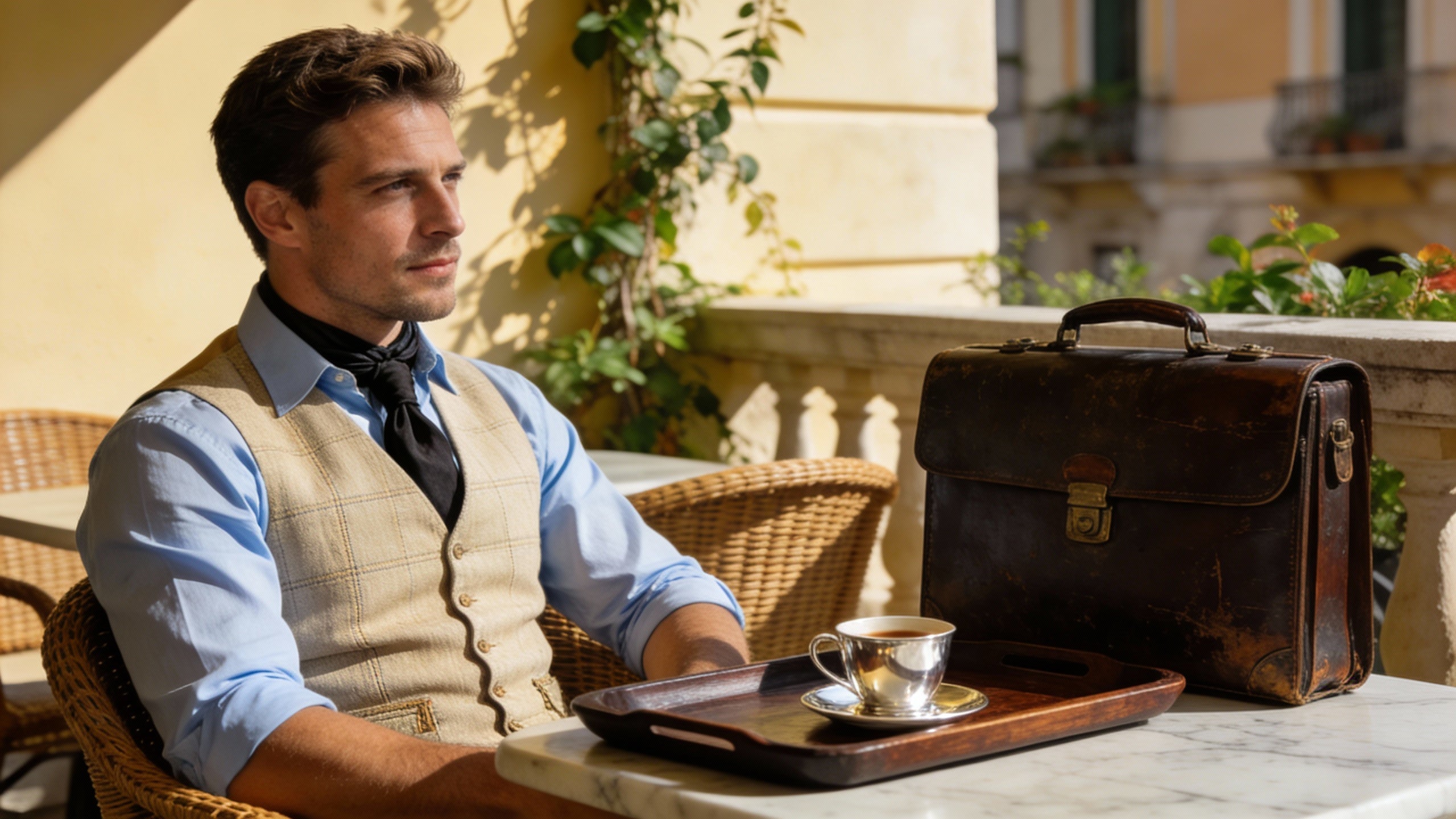
Croatian Pride, Tied with Love: Understanding Customized Tie Elements
Croatian ties are far more than slender strips of silk. In Croatia, the tie, or kravata, is treated almost like a handwritten love letter wrapped around the neck. As someone who spends a lot of time helping people choose meaningful, handcrafted gifts, I have seen again and again how a thoughtfully customized tie can carry family stories, cultural pride, and quiet emotions that are hard to say out loud.
To understand why customized tie elements matter so much in Croatian culture—and how you can honor that spirit in your own gifting—it helps to trace the journey from battlefield scarf to heirloom accessory, and then look closely at the colors, motifs, and craftsmanship that turn an ordinary tie into a sentimental keepsake.
From Battlefield Scarf to Symbol of Love and Loyalty
Multiple historical sources agree that the modern necktie has unusually romantic and patriotic roots in Croatia. Expat in Croatia, Real Croatia, and cultural pieces from outlets like Deutsche Welle all tell a similar story: during the Thirty Years’ War in the seventeenth century, Croatian soldiers wore knotted neckcloths as they served in European armies, including the French court.
In the Croatian Military Frontier, bright neck scarves helped soldiers recognize one another in the chaos of battle when uniforms were not yet standardized. According to Real Croatia, common soldiers typically wore cheaper fabrics, while officers received finer cotton or silk versions, so even then the tie signaled both belonging and rank. Several Croatian and European sources highlight a tender legend woven through this history: a soldier’s fiancée would tie a scarf around his neck as a token of love and fidelity before he left for war. Whether every detail of that story is literally true is less important than the fact that Croatians choose to remember it that way. It frames the tie not just as a military marker, but as a portable promise.
French observers were captivated. French kings Louis XIII and Louis XIV brought Croatian units into their service, and by the mid‑1600s a special unit named the Royal Cravates honored these soldiers and their distinctive neckwear. The French phrase “à la croate”—in the Croatian style—gave rise to “cravate,” and from there to “cravat,” “Krawatte,” “cravatta,” and the English “tie.” Writers from fashion historians to travel journalists, including Expat in Croatia and Cravat-focused brands, point to this Croatian connection as the most widely accepted origin story for the necktie.
If you have ever watched someone tie a tie for a graduation, a wedding, or a first big job interview, you have already glimpsed why this matters for gifting. The gesture echoes that early Croatian scene: one person tying a cloth at another’s throat, sending them into the world wrapped in protection, pride, and affection.

Heritage Woven in Silk: Why Croatians Take Tie Design Personally
Over time, the cravat escaped the battlefield and swept through European high society. It decorated the necks of kings, dandies, and generals. Manuals like “Neckclothitania” in the nineteenth century described elaborate ways of tying it, and by the 1920s the American tailor Jesse Langsdorf perfected the modern construction method—cutting the tie on the bias so it drapes fluidly and springs back into shape, as detailed by menswear historians and producers summarized by New Old Club and Expat in Croatia.
In Croatia, though, the tie never became just another accessory. It became a national symbol.
Croatia celebrates Cravat Day on October 18, recognized by the Croatian Parliament in 2008 as International Necktie Day, according to Real Croatia and The Atlantic’s coverage of the holiday. Croatian cultural organizations like Academia Cravatica and the ceremonial Cravat Regiment in Zagreb perform elaborate public rituals to honor the tie. Cultural travel pieces describe how ceremonies often encourage ordinary people to wear ties or cravats that day, turning city squares into living exhibitions of neckwear.
Perhaps the most dramatic expression of this pride came in 2003, when a gigantic red tie was ceremonially wrapped around the Roman amphitheater in Pula. Sources like Croatia-focused travel blogs and My Luxoria describe this installation as the largest tie ever created. It was over 2,600 feet long and roughly 80 feet wide, with a knot tied more than 65 feet above the ground using about 75 miles of thread, and hundreds of local schoolchildren helped stretch the fabric from the arena toward the city promenade. If you imagine laying that tie along a city street, it would run for about half a mile. This was not just a publicity stunt; it was a visual declaration that the tie is part of Croatian cultural heritage on the scale of major monuments.
Today, that heritage is curated in contemporary ways. In Zagreb, Cravaticum—the self-described first museum in the world dedicated exclusively to the tie—invites visitors into immersive exhibits where they can, among other things, walk through a tunnel of ties and design their own necktie on a digital display. Articles about Cravaticum emphasize that its founders intentionally blend education, art, and playful interactivity so the tie feels alive, not locked behind glass. It is museum-as-gift shop in the most generous sense: you walk out not only with an object, but with a deeper story to wrap around someone you love.
When you commission or choose a customized tie element within this context, you are not just picking colors. You are collaborating with centuries of Croatian memory.

Decoding Customized Elements: Color, Fabric, and Craftsmanship
A tie may look simple, but every element is a design decision that can either flatten the story or enrich it. For Croatian-inspired gifts, three layers matter most: color, fabric construction, and motif.
Color as a Quiet Love Letter
Color psychology can feel vague until you are choosing a tie for a specific person and moment. Croatian travel and lifestyle sources like My Luxoria explain how different tie colors are widely interpreted, and those interpretations align with broader color associations in Western style.
Here is a concise way to think about color meanings specifically for gifting, distilled from those sources and adapted to sentimental occasions:
Tie color |
Common meaning in Croatian-focused sources |
Gift message it quietly sends |
Red (bright) |
Passion, power, creativity |
“I believe in your bold ideas and want you to stand out.” |
Red (deep) |
Authority, trust, strength |
“I trust your leadership and admire your courage.” |
Purple |
Wealth, luxury, distinction |
“You deserve something rare, refined, and a little royal.” |
Black |
Sophistication, formality, solemnity |
“This is for life’s most serious, elegant moments.” |
Gray |
Modernity, subtle style |
“Your taste is contemporary, calm, and confident.” |
Green |
Rebirth, money, new growth |
“I see new chapters and opportunities opening for you.” |
Yellow |
Vitality, security in the West; mourning in China |
“You radiate warmth and optimism” (with a note of cultural awareness if the recipient has Chinese roots). |
Because yellow ties symbolize mourning in China, as My Luxoria notes, it is worth pausing if your recipient has strong East Asian connections. A Croatian-inspired gift can still be global and sensitive.
Imagine gifting a deep red Croatian tie to a partner starting a new company. You are not just handing over a splash of color. You are giving them a thread that historically signaled rank and bravery on the battlefield, recast today as energy and authority in the boardroom. Add a small handwritten card explaining why you chose that shade, and the color becomes a quiet love letter.
Fabric and Construction: What Makes a Gift-Worthy Tie
In Croatian culture, the tie is so important that quality is part of the respect you show by giving one. Heritage-focused menswear sources like New Old Club, together with Croatian brands profiled by Expat in Croatia and Visit Croatia, describe clear markers of a well-crafted tie.
First, there is the fabric and the way it is cut. A classic high-quality tie uses silk, often Grade‑A, cut diagonally at about a forty‑five degree angle to the fabric grain. This bias cut, popularized in the twentieth century by Jesse Langsdorf, gives the tie elasticity and a graceful drape. When you run it through your fingers, it should feel substantial but not stiff, with a gentle spring when you tug and release. New Old Club notes that this construction also explains why diagonal stripes on many ties run at an angle; they are a visual echo of the way the cloth was cut.
Inside, a good tie carries a natural interlining—frequently wool or a wool blend—rather than thick, rigid polyester. This inner layer is the secret to a knot that feels full but not bulky, and a blade that hangs straight instead of twisting. Croatian luxury brand Croata, for example, cuts its cravats in three parts on the bias and adds a cotton insert to balance volume and knot size, then hand-stitches the layers together. Their guidance is simple: when you stretch a tie slightly and let go, it should lie straight without twisting, and a small loop of thread on the back indicates handcraft and elasticity. That loop is not a loose string to clip; it is a tiny signature of care.
For a gift, this matters because construction is the difference between a tie that looks tired after a few wears and one that your recipient can reach for over many seasons. Even if your budget does not stretch to couture-level silk, you can still ask makers about how they cut the fabric, what interlining they use, and whether the tie is hand-finished. The answers tell you how much of the price is paying for true craft versus only for branding.
Motifs and Messages: From Glagolitic Letters to Personal Stories
If color is the emotion and fabric is the comfort, motifs are where Croatian pride shines most clearly.
Visit Croatia’s profile of the Croata brand explains how their designers draw on motifs such as pleter braiding, an interlaced pattern seen in early medieval stone carvings; Glagolitic script, an old Slavic alphabet that appears on Croatia’s euro cent coins; and traditional folk embroidery known as the “letter of the heart.” Translating motifs carved in stone or stitched onto linen into fine woven silk requires highly specialized artistry. Croata’s process goes from paper sketches to test weaves, so designers can judge whether lines remain crisp and colors hold their depth once translated into thread.
When you choose a tie that features Glagolitic letters, a pleter border, or even the iconic red‑white Croatian checkerboard, you are not just giving a pattern. You are placing a piece of cultural literacy at someone’s throat. For a Croatian diaspora family marking a graduation, a tie with subtle Glagolitic characters might say, “Your future is global, but your roots are honored.” For a friend who fell in love with Zagreb on a trip, a tie with a refined checkerboard motif could become a wearable postcard from a favorite city.
Even if you commission a completely bespoke design, you can borrow this mindset. Start with one symbol that truly belongs to the recipient—a river they grew up near, a song lyric, an architectural detail they love—and let that shape the motif. Croatian tie makers have shown that even the smallest repeated element can carry a whole story when woven thoughtfully.
How Croatians Celebrate Their Tie Heritage (and How You Can Join In)
Understanding Croatian pride in tie customization also means looking at how everyday people celebrate ties, not just how brands or museums present them.
Every October 18, Cravat Day and International Necktie Day invite Croatians and admirers worldwide to put on ties in recognition of this history. Real Croatia, The Atlantic, and Days of the Year all describe how the day is marked by parades, exhibitions, and playful public gestures: giant ties draped over monuments, ceremonies by the Cravat Regiment in Zagreb, creative tying competitions, and more. Necktie Day coverage emphasizes that the holiday is both fun and meaningfully rooted in Croatian culture.
There is also a strong do‑it‑yourself spirit. Articles about Necktie Day suggest hosting friendly tie fashion shows, organizing necktie trivia about Croatian history, and turning old ties into art pieces—headbands, bracelets, quilts, and other upcycled creations. These ideas align perfectly with the handmade gift mindset. A quilt sewn from ties inherited from a grandfather, for instance, becomes an intergenerational hug; each square preserves a moment when that tie was worn to a milestone event.
Cravaticum in Zagreb goes a step further by weaving interactivity into museum culture. Travel write‑ups highlight exhibits such as a tunnel lined with ties, a bulletproof tie, and a digital station where you can design your own. This matters for gifting because it shows that Croatians see the tie not as a frozen traditional object but as a living canvas. If you visit, you can treat the museum itself as part of your gift: spend time designing a custom pattern on‑screen, then use it as inspiration when you commission a real tie back home.
Heritage scientists, whose work is aggregated on portals like Science.gov, argue that documenting and creatively interpreting cultural artifacts is essential to keeping them alive—whether through 3D scanning of monuments or multimedia museum experiences. Croatia’s Cravaticum, Pula’s enormous tie, and Cravat Day all fit this global pattern: they use spectacle and storytelling to safeguard tradition in people’s everyday lives.

Designing a Croatian-Inspired Custom Tie Gift
Once you appreciate the emotional and cultural weight of Croatian ties, you can approach a customized tie gift with a curator’s eye rather than a shopper’s fatigue. Rather than scrolling endlessly through generic designs, start with the story.
Think first about the moment this tie will mark. Is it a wedding, a first job, a retirement, or a reunion with Croatian heritage on a long-awaited trip? For a wedding, you might lean toward black or deep navy for the main ceremony, but consider gifting a crimson Croatian-style tie for the rehearsal dinner or day‑after brunch, echoing those early red scarves of Croatian soldiers that symbolized loyalty and hope. For a graduation, a modern gray or green tie can signal new beginnings, drawing on the associations of rebirth and money that Croatian lifestyle pieces connect to green.
Next, choose one core motif. If your recipient has Croatian roots in a specific region, Expat in Croatia notes that the traditional podgutnica scarf from Turopolje, southeast of Zagreb, was historically tied under the throat of local soldiers and remains a part of folk dress there. A contemporary tie with a subtle stripe or miniature motif inspired by Turopolje patterns can whisper that regional connection without shouting. If your recipient simply loves Croatian culture more broadly, a Glagolitic or pleter pattern is both authentic and visually refined.
Then, pay attention to craftsmanship. When speaking with an artisan or browsing options from Croatian tie makers, ask how the tie is cut, what interlining is used, and whether the stitching is done by hand. New Old Club and Croata both emphasize that a good tie should rebound when lightly stretched and hang straight when held by the narrow end. Think about it this way: the way the tie moves on the body will become part of the wearer’s experience of your gift. A beautifully cut tie that settles back into shape after a long ceremony is its own kind of kindness.
You can add further personalization in gentle ways. Ask the maker, if possible, to include a small label or hidden stitch in a color that refers to a special date, or to place the pattern so that one particular symbol sits near the knot where it will be visible in photos. Even the way you present the gift can carry Croatian nuance: wrap the tie loosely rather than tightly folded, echoing the flowing lines of an early cravat, and include a short note about Croatia’s role in inventing the tie, perhaps mentioning Cravat Day or the Pula Arena tie. The recipient will feel that they are receiving not just a garment, but a slice of world culture tied to their own life.

FAQ: Croatian Custom Ties and Sentimental Gifting
How “Croatian” does a tie need to be to honor this heritage?
It does not have to shout with checkerboards and flags. Sources like Visit Croatia and Expat in Croatia show that Croatian pride in ties rests on history and craftsmanship as much as on motifs. A thoughtfully made tie using quality construction, chosen with awareness of the Croatian origin story and perhaps featuring one subtle Croatian element—a Glagolitic letter, a pleter stripe, a reference to the Cravat Regiment—can honor the heritage without feeling like a costume. The key is to know the story and share at least a little of it with the recipient.
Is a tie still a meaningful gift if the recipient rarely dresses formally?
Yes, especially in a world where ties are less obligatory and more expressive. Deutsche Welle notes that ties have shifted from rigid status symbols to flexible fashion accessories for all genders. That actually strengthens their role as gifts: wearing a tie becomes a choice, not a requirement. You can encourage a casual wearer to treat a Croatian tie as a special-occasion piece for anniversaries, art events, or even Necktie Day on October 18. Some gift‑givers pair the tie with an invite to a shared outing—a concert, a dinner, a museum visit—so the tie is worn for a memory you create together.
Can a custom tie be a meaningful gift for women and nonbinary people?
Absolutely. Expat in Croatia and Deutsche Welle both point out that ties have long been tools of empowerment and gender boundary‑crossing, from suffragists who wore ties in symbolic colors to cultural icons like Marlene Dietrich and Diane Keaton. A Croatian-inspired tie can be framed as a piece of wearable art rather than a traditionally “male” accessory. For a woman or nonbinary friend, you might choose a narrower tie, a silk cravat worn lower on the chest, or even commission a tie designed to be worn loosely over a blouse or shirt dress. The same Croatian heritage of independence and courage runs through the cloth, regardless of who knots it.
Closing Thoughts
Customized Croatian tie elements sit at a rare intersection of history, artistry, and heart. Behind every carefully chosen color, motif, and bias-cut piece of silk stands a story that stretches from seventeenth‑century soldiers and lovers to modern museums and family celebrations. When you gift such a tie, you are not simply helping someone match a shirt; you are placing a little strand of heritage in their hands and saying, “Your story deserves to be tied to something timeless.”

References
- https://www.academia.edu/41167717/An_evangelicals_guide_to_the_robes_and_vestments_worn_in_the_Church_of_England
- https://www.etd.ceu.edu/2016/miljan_goran.pdf
- https://academicworks.cuny.edu/cgi/viewcontent.cgi?article=1447&context=gj_etds
- https://files.eric.ed.gov/fulltext/ED399943.pdf
- https://scholarscompass.vcu.edu/cgi/viewcontent.cgi?article=5806&context=etd
- https://pmc.ncbi.nlm.nih.gov/articles/PMC8416363/
- https://www.science.gov/topicpages/c/cultural+heritage+artifacts.html
- https://2017-2021.state.gov/report/custom/b6e4c739d4/
- https://press.uchicago.edu/books/hoc/HOC_V6/HOC_VOLUME6_D.pdf
- https://admisiones.unicah.edu/scholarship/mPyAw7/1OK028/history_of_the-tie.pdf
