

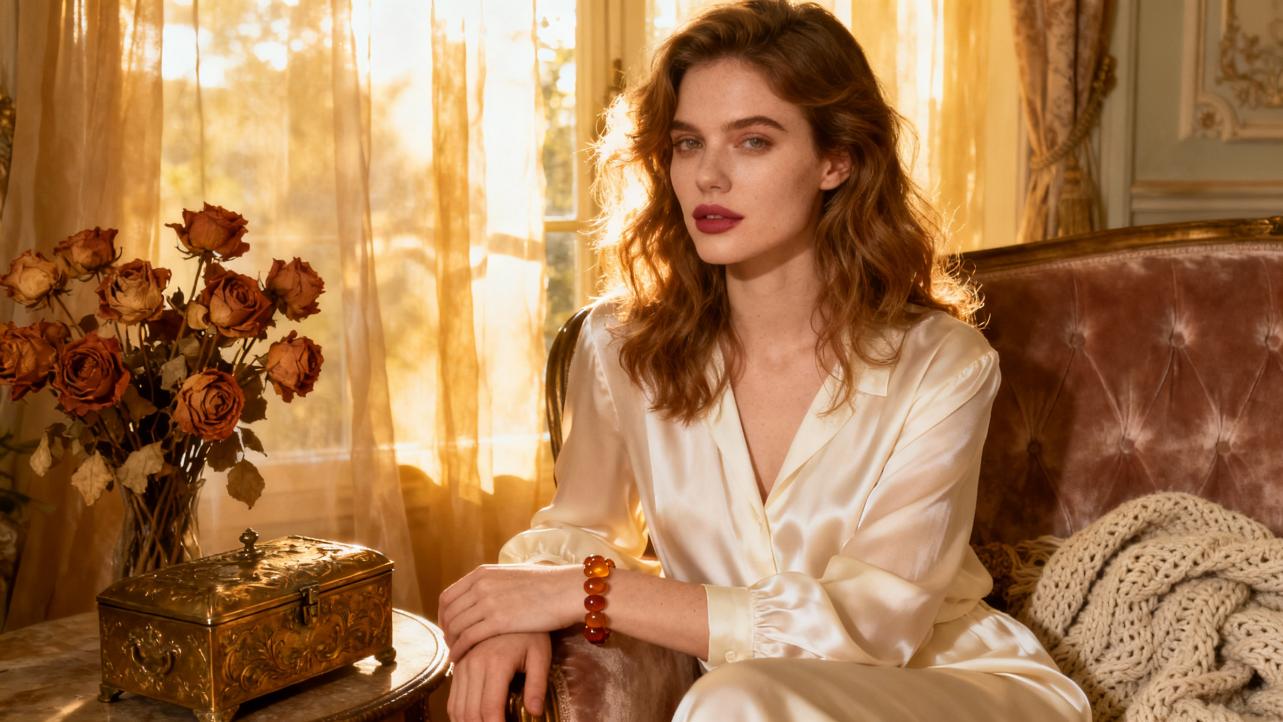
The Cultural Significance of Custom Amber Jewelry Gifts in Poland
Amber has been called many things in Poland: Baltic gold, frozen sunlight, even a tear of the gods. Yet when you watch someone clasp a warm amber bracelet on a loved one’s wrist, it becomes something else entirely. It turns into a story you can hold. As an artful gifting specialist, I have seen again and again how a custom amber piece, shaped by hand and chosen with heart, becomes less a fashion accessory and more a small, glowing heirloom.
In Poland, gifting amber jewelry is never just about color or style. It is about ancestry, regional pride, sacred stories, and everyday resilience. When you commission or handcraft a custom amber gift here, you step into a living tradition that stretches from Neolithic villages and the ancient Amber Road to contemporary studios in Gdansk.
In this article, we will explore what makes custom amber jewelry gifts so culturally powerful in Poland, how to choose and design a meaningful piece, and how to care for it so that it can travel through your family like the best kind of secret: quietly, lovingly, and for generations.
Amber: Poland’s Native Gem With A Story
To understand the emotional weight of an amber gift in Poland, you first need to understand what amber actually is. The Amber Museum and other scientific institutions describe Baltic amber as fossilized resin from prehistoric forests, formed roughly tens of millions of years ago when tree resin hardened, was buried, and survived long enough to become the warm, lightweight “stone” we know today. It often preserves tiny inclusions of plants, insects, or air bubbles, turning each piece into a miniature time capsule of ancient life.
In Polish, two words reveal how deeply this material is woven into the culture. “Bursztyn” is the everyday term, heard in markets and family stories. “Jantar” is the more literary name, familiar from poetry and old legends. Both refer above all to Baltic amber, the best-known and most commercially important fossil resin in this part of the world.
Historically, Poland’s coastline fed the legendary Amber Road, a trade route that carried Baltic amber to ancient Greek and Roman markets. Love Poland and the Amber Museum emphasize how central this trade was: amber from these shores traveled to Mediterranean temples, Roman salons, and even royal tombs. Today, that history is still visible. Walk through Krakow or Gdansk and you will find amber everywhere, from modest tourist keepsakes to high-concept designer pieces in silver and gold.
Economically, amber jewelry is far more than a quaint souvenir. According to Poland’s trade authorities, Polish amber and silver jewelry exports are worth around 300 million euro a year, with Poland now recognized as a world leader in amber jewelry production. Gdansk proudly calls itself the world capital of amber, and professional organizations like the International Amber Association reinforce standards of quality, authenticity, and design.
When you gift amber in this context, you are not just giving a gemstone. You are giving a piece of Poland’s native identity, its history of trade and craftsmanship, and its self-image as a place where something fragile and organic can become enduring.

Myth, Memory, And Protection: Amber In Polish Culture
Amber’s cultural power in Poland comes less from its price tag and more from the stories and beliefs that cling to it like sunlight.
Regional traditions in Kurpie, a forested area of northeastern Poland, are especially revealing. Cultural historians and the Amber Museum describe a local legend in which endless rain flooded the land for forty days. As people wept by the rising waters, their tears fell into the flood and turned into amber. The story echoes the ancient Greek myth of Phaethon, whose sisters’ tears became drops of amber, and it gives amber a distinctive emotional meaning: suffering transformed into something beautiful and enduring.
In Kurpie and other rural regions, amber was not just pretty. It was medicine, amulet, and dowry all in one. Research collected by Polish cultural writers shows that women were expected to own several strings of graded amber beads for marriage. Those necklaces carried very specific hopes. One strand protected against the evil eye and curses, another supported fertility and safe childbirth, and yet another promised health and strength for the new family. Often the beads were strung on red thread, a color believed to offer the strongest protection. In that world, an amber necklace was closer to a survival kit than a piece of jewelry.
Slavic spirituality adds another layer. As described by scholars of Slavic traditions, amber was linked to the sun and fire, associated with deities of light, craftsmanship, and fertility. Priests and healers wore amber in rituals, and burning amber was believed to purify spaces, break curses, and connect with ancestors. Archaeological finds across Slavic burial sites show beads and pendants placed with the dead, suggesting that amber’s golden glow was thought to guide the soul safely into the afterlife.
These beliefs did not remain in ancient history. Even into the 19th and 20th centuries, Polish families treated amber as a kind of portable pharmacy and spiritual toolkit. Amber smoke was used for respiratory issues, stones were worn close to the skin to ease fevers or headaches, and tiny pieces were sewn into children’s clothing to shield them from illness and misfortune. Some traditions even used water infused with amber as a folk remedy for childbirth difficulties and fertility.
Modern science has revisited a few of these claims. The Amber Museum, along with other sources, notes that Baltic amber contains succinic acid, sometimes described as a biostimulator with anti-inflammatory effects, and that amber-based oils and cosmetics appear in contemporary wellness and aesthetic medicine. At the same time, experts wisely recommend treating these properties as complementary, not as proven cures. For gifting, this nuance actually enriches the story. You can speak honestly about amber’s long-standing reputation as a healing and protective material while emphasizing that its most reliable gift is emotional: a feeling of warmth, continuity, and care.

From Amber Road To Gdansk Workbenches: A Living Craft
One reason custom amber gifts feel soulful in Poland is that they emerge from a craft tradition that is very much alive.
The Amber Route tourist project in Pomerania invites visitors to follow amber’s trail through museums, coastal locations, and artisan studios. In Gdansk’s historic center, you can step into compact workshops where local jewelers still cut, polish, and set Baltic amber by hand. These studios echo the ancient Amber Road but translate it into a modern, creative experience.
Travel partners and workshop organizers describe a typical jewelry-making session in Gdansk as a two-hour, hands-on class. Guests are invited to design a pendant or bracelet that reflects their own style and story, with regional amber and sterling silver at the heart of the materials table. Alongside amber, you may find leather, dried flowers, resin, and other stones, ready to be combined into something personal. Professional jewelers guide you step by step, adjusting the finished piece so it fits perfectly. The workshops are intentionally inclusive, suitable for all ages and skill levels, and often wheelchair accessible.
From a gifting perspective, this is powerful. The person who will receive the jewelry is not just handed an object; they are given the outcome of a small creative pilgrimage. Whether you attend the workshop yourself to craft a surprise or book it as a shared experience, the result is a gift layered with place, process, and presence.
Polish amber designers also work at the higher end of the spectrum. The Amber Museum and industry profiles highlight artists who push amber into avant-garde jewelry and sculptural works, proving that this material can be as contemporary as any gemstone. Their work shows up on runways, in galleries, and at international events promoting the Polish amber sector. When you commission a piece from such an artist, you tap into both a local artisan’s skill and a global design conversation.

Why Custom Amber Gifts Matter So Deeply In Poland
If we think like a sentimental curator, there are several recurring themes that make custom amber jewelry especially meaningful in the Polish context.
First is the idea of lineage. Families in regions like Kurpie or Kashubia have passed down amber necklaces for generations. Each bead may carry memories of mother, grandmother, and great-grandmother. Gifting a new, custom amber piece can symbolically extend that chain, even if you are creating the very first link for your own family.
Second is protection. Historically, amber was worn to shield against illness, misfortune, and malicious looks. When you give an amber necklace to a bride, or a bracelet to a friend facing a new chapter, you are echoing the old wish: may you be safe, may you be strong, may good things find you. In modern spiritual practices, amber still plays a gentle protective role. Jantar Studio describes amber malas and tasbihs used in meditation and prayer, where the warm, slightly grippy beads help focus the mind and invite calm. A custom strand of amber prayer or meditation beads can be a very intimate gift for someone navigating stress or transition.
Third is resilience through hardship. Historical accounts show that Polish families sometimes used amber as emergency currency, breaking off beads to trade for food or safety in times of war and upheaval. Amber held literal survival value. When we gift amber today, especially across generations or to members of the Polish diaspora, we are honoring that history of resourcefulness. It is a quiet way of saying, “Our people survived, and this small piece of sunlight remembers that.”
Finally, there is the theme of joy and celebration. Modern amber designers and lifestyle writers describe amber as strongly associated with holiday warmth, sun returning after winter, and wishes for prosperity. Amber ornaments and jewelry appear in Christmas and New Year traditions across Northern and Eastern Europe. In that light, a custom amber gift for a winter wedding, a December anniversary, or even Thanksgiving for a Polish-American family resonates with both seasonal and cultural symbolism.
Reading The Stone: Choosing Baltic Amber For A Personalized Gift
When you begin to design a custom amber piece, you are primarily working with a few key variables: color, transparency, inclusions, size, cut, and metal. Each decision shapes both the look and the meaning of your gift.
According to the Amber Museum and other expert sources, Baltic amber shows a wide spectrum of colors, from milky and pale to honey, cognac, greenish tones, and rare deep red or even blue. Some of these shades occur naturally; others are enhanced through controlled heating or clarifying processes. Transparency ranges from clear to cloudy to completely opaque. Love Poland and gemological references note that transparent amber with visible inclusions is often more valuable for jewelry, especially when those inclusions are insects. Opaque material, however, can be wonderfully expressive when carved or used in bold, sculptural designs.
Value and pricing are influenced by size, clarity, inclusions, and rarity, but custom gifts are rarely about chasing the highest market value. More often, you are balancing symbolism, aesthetics, and practicality. A piece with an insect inclusion might appeal to a nature-loving recipient who will see that tiny creature as a link to ancient forests. A milky, softly glowing cabochon might feel more soothing and understated for daily wear.
To help you think through the options, it can be useful to look at amber features side by side.
Amber feature or choice |
Emotional tone in Polish context |
Strengths as a gift |
Things to keep in mind |
Honey or cognac color |
Classic, sun-warm, often associated with vitality and prosperity |
Universally appealing, easy to match with clothing, immediately recognizable as amber |
Common shades, so focus on interesting inclusions or design if you want a one-of-a-kind feel |
Milky or opaque amber |
Gentle, nurturing, often linked to fertility, motherhood, and protection in folk belief |
Ideal for heirloom-style pieces or gifts for new parents and caregivers |
May show surface marks more easily; choose designs where softness is a clear aesthetic choice |
Green or modified red tones |
Slightly mysterious, modern, sometimes associated with transformation and passion |
Great for contemporary or statement jewelry, especially for fashion-forward recipients |
Some colors are created or enhanced by treatment; buy from trusted makers who label modifications clearly |
Rich inclusions (insects, plant fragments) |
“Time capsule” quality, connects the wearer to ancient landscapes and ancestors |
Fascinating conversation starters, perfect for science lovers and history enthusiasts |
Highly included pieces can be more fragile; mount them in protective settings and emphasize thoughtful care |
Silver vs. gold settings |
Silver is traditional in Poland and lets amber take center stage; gold reads as more luxurious and ceremonial |
Silver keeps pieces accessible in price, gold elevates formal or milestone gifts like weddings or anniversaries |
Think about the recipient’s usual jewelry metal and any metal sensitivities, and consider how you want the gift to feel day to day |
In Poland, most amber jewelry is still set in silver, which helps keep it relatively affordable and puts the visual focus squarely on the resin itself. Still, combining amber with gold can be very effective for special occasions, especially when you want to echo historic associations of amber with wealth and nobility.
Custom bead-based designs offer another layer of choice. Baltic suppliers describe loose amber beads in many shapes and finishes, from softly rounded forms to raw, irregular pieces with matte surfaces. Designers start by choosing size and shape, then refine the palette of colors and textures. For a personalized gift, you might choose slightly irregular, hand-shaped beads to emphasize the “crafted by human hands” feeling, or go for very uniform, polished beads to give your gift a more classic, refined character.

The Gifts’ Strengths And Challenges: A Thoughtful Pros And Cons View
Every material has its strengths and weaknesses. Amber’s qualities make it extraordinarily rich for sentimental gifts, but they also require thoughtful handling and expectation-setting.
From the “pro” side, amber is visually distinctive, light, and comfortable. The International Gem Society points out that amber is significantly lighter than most gems, which means even large pieces are pleasant to wear. Each piece’s unique patterning and inclusions make it impossible to duplicate, so your custom gift is inherently one of a kind. Culturally, amber carries deep associations with sunlight, protection, healing, love, and spiritual connection, as documented by the Amber Museum, Napoleona’s cultural articles, and many Polish folk sources. It is also relatively accessible in price compared to precious gemstones, so you can invest in artisan work and storytelling rather than purely in raw material value.
There are also challenges, which a responsible gifter should acknowledge. Amber is soft and easily scratched, with hardness low enough that rough wear, abrasive cleaning, or accidental knocks can leave marks. It does not tolerate high heat or harsh chemicals, so everyday habits like spraying perfume directly on the neck or using strong cleaners while wearing rings can damage it. These are manageable issues, but they mean amber may not be the best choice for someone who never removes their jewelry or works with tools all day.
Another concern is authenticity. Because Baltic amber is popular and relatively valuable, imitators and modified materials are common. Museums and gemological organizations note the presence of pressed amber (small fragments fused into larger pieces), younger resins such as copal sold as amber, and plastic or glass imitations. While pressed or reconstructed amber can still be beautiful, reputable sellers label it honestly and price it accordingly. For a custom gift with cultural meaning, you usually want natural Baltic amber with clear documentation of origin.
Finally, there is the question of healing claims. Traditional Polish and Slavic belief invests amber with significant protective and therapeutic powers, and modern wellness communities still promote amber oils, tinctures, and jewelry for stress reduction and pain relief. The Amber Museum and other scientific sources encourage a nuanced view: recognize succinic acid and other components as biologically interesting, respect the emotional comfort these traditions offer, but avoid treating amber as a medical solution. In gifting terms, it is wisest to frame amber as a symbol of warmth, resilience, and care, rather than a guaranteed health tool.
Designing A Meaningful Custom Amber Gift
So how do you move from admiration to an actual custom piece that feels as personal as a handwritten letter?
Begin by listening, even if the recipient is not in the room. Think about their relationship to Poland or the Baltic region, to nature, to spirituality, to color and style. Is this gift honoring a wedding, an anniversary, a new baby, a hard-won achievement, or a quiet moment of healing after loss? Each occasion suggests a different design direction.
Next, choose the form. For a wedding or engagement gift rooted in Polish tradition, a necklace with graduated beads can echo historic bridal strands while still feeling modern through a contemporary clasp or asymmetric detail. For someone who meditates or prays, an amber mala or tasbih, as described by Jantar Studio, can turn daily spiritual practice into a tactile reminder of your support. For everyday wear, a small pendant or bracelet in sturdy silver may be the most practical option.
Then consider color and texture. If you are celebrating new life, milky or lighter amber can gently reference folk beliefs around fertility and protection, without needing to be explained. For a passionate romance or bold career move, cognac or cherry tones feel richer and more intense. If your recipient loves the unusual, a green amber accent might suit them perfectly, especially in a clean, contemporary setting.
Personalization can also happen through symbolic details. Some couples choose to incorporate a single bead on red thread hidden inside a more complex design as a quiet nod to historic Polish protections without making it visually dominant. Others might ask the jeweler to include a bead containing a particularly meaningful inclusion, like a clearly visible plant fragment for a botanist, or a small air bubble that suggests a suspended breath for someone emerging from a difficult season.
From a craft perspective, artisans follow a sequence described by Jantar Studio and other professionals. They select raw amber pieces free of problematic cracks, design the jewelry on paper or in software, cut and shape the resin by hand, polish it to bring out its glow, and mount it in metal. Each step demands care, because amber can chip or fracture if mishandled. As a client, you can ask the jeweler to walk you through their process. The more you understand about how your piece is made, the more naturally you will be able to tell its story when you gift it.
For a truly immersive experience, consider creating the piece yourself in a Gdansk workshop. Travel providers describe sessions where you sit at a jeweler’s bench, choose from small piles of Baltic amber, silver findings, and accent materials, and gradually assemble your design with an expert at your elbow. At the end, you not only take home a finished pendant or bracelet, but also the memory of sawdust, quiet concentration, and the moment the amber first caught the light exactly the way you had imagined.
Finally, do not underestimate the power of presentation. A handwritten note that explains why you chose amber, what you know of its Polish stories, and which details you picked with the recipient in mind transforms a beautiful object into a deeply personal keepsake. In that sense, the most important customization is not the engraving or the special clasp, but the thought you articulate.
Caring For Amber Jewelry Gifts
Once a custom amber gift enters someone’s life, good care ensures that it can travel gracefully through time.
Care guides from the Amber Museum, Jantar Studio, and gemological organizations agree on a few core principles. Because amber is soft, it should be stored separately from harder gemstones and metals, ideally in a soft pouch or lined jewelry box. Direct sunlight and high heat can change its appearance over time, so it is best not to leave amber pieces on a hot windowsill, near heaters, or in a parked car for long periods.
Chemicals are another concern. Perfume, hairspray, strong cleaning agents, and alcohol-based products can dull or damage amber’s surface. Encourage your gift recipient to apply perfumes and cosmetics first, allow them to dry, and then put on their amber jewelry. When it is time to clean the piece, a soft, dry or slightly damp cloth is usually enough. Some gemologists allow very mild soap in lukewarm water for more stubborn dirt, but ultrasonic cleaners and abrasive polishes are strongly discouraged.
With rings and bracelets, which see more knocks and friction, it may be wise to remove amber before heavier housework, sports, or gardening. Pendants and earrings tend to be safer for daily wear. Many Polish artisans design protective metal settings for more fragile, inclusion-rich cabochons, striking a balance between visibility and security.
Shared with a gentle touch rather than as a rulebook, these care suggestions become part of the ritual. You are not saying “this is delicate, be careful,” so much as “this is a treasure; here is how to let it glow for a very long time.”
Frequently Asked Questions About Amber Gifts In Poland
Is Baltic amber “really” Polish?
Baltic amber is a regional material rather than a national one. Geological studies cited by the Amber Museum show that Baltic succinite comes from ancient forests once spread across what is now the broader Baltic area, with major deposits around today’s Poland, Lithuania, Russia’s Kaliningrad region, and parts of Ukraine. However, Poland has become a world leader in amber jewelry design and production, and amber is widely regarded as the country’s native gemstone. The famous Amber Road historically carried much of this material out through Polish lands, and modern exports confirm how central amber remains to Poland’s cultural and economic life.
How can I be sure my amber gift is genuine?
Because amber is widely imitated, the safest route is to buy from trusted sources. The Amber Museum and the International Amber Association recommend seeking out established jewelers, museum shops, and certified galleries, especially in cities like Gdansk that specialize in amber. Ask about certificates of origin indicating Baltic amber, and do not be shy about inquiring whether a piece is natural, treated, or reconstructed from smaller fragments. Gemological methods such as infrared spectrometry are used in labs and museums to distinguish amber from other resins and plastics, but as a customer your best tools are reputable sellers, clear labeling, and your willingness to ask questions.
Do the traditional healing and protective claims about amber have any scientific basis?
Traditional Polish, Slavic, and wider European cultures have long believed that amber supports health, eases pain, and protects against misfortune. Modern wellness articles add that wearing amber may help with stress or emotional balance. Scientific institutions like the Amber Museum note that Baltic amber contains succinic acid and other compounds of interest, and amber-based oils, creams, and masks appear in cosmetology and natural therapies. At the same time, they advise a critical, informed approach. Evidence for medical effectiveness when amber is simply worn as jewelry is limited, and amber should never replace professional care. For gifting, it is respectful and honest to frame amber’s “healing” qualities primarily as symbolic: an embodied wish for warmth, courage, and well-being, grounded in centuries of cultural memory.
When you place a custom amber necklace, bracelet, or strand of beads into someone’s hands in Poland, you are sharing more than a pretty object. You are passing along a little shard of prehistoric forest, a thread of family resilience, and a circle of stories that stretch from ancient myths to the present moment. Thoughtfully chosen and lovingly made, an amber gift does what the best handmade presents always do: it turns time, care, and memory into something the heart can wear.
References
- https://www.gemsociety.org/article/amber-jewelry-and-gemstone-information/
- https://app.advcollective.com/local-experts/jewellery-making-amber-workshop-gdansk
- https://baltic-amber.amberizon.com/the-mystical-allure-ambers-role-in-magic-and-ancient-folklore/
- https://barefootbushcraft.com/amber-the-golden-soul-of-the-slavic-people/
- https://happytovisit.com/gdansk-jewelry-making-workshop-with-amber/
- https://kizima.us/amber-festive-traditions-how-this-golden-gem-brings-joy-holiday-celebrations/?srsltid=AfmBOoq3mTlTH3JE2Or_7QCaGTiJGStMWS9v-FvwCUMshIfMfQqUg5vG
- https://polishfeast.com/polish-amber-tradition-parents-never-told-you/
- https://theabroadguide.com/gdansk-jewelry-making-workshop-with-amber/
- https://www.travelersuniverse.com/gdansk-jewelry-making-workshop-with-amber/
- https://ambermuseum.eu/en/aktualnosci/
