

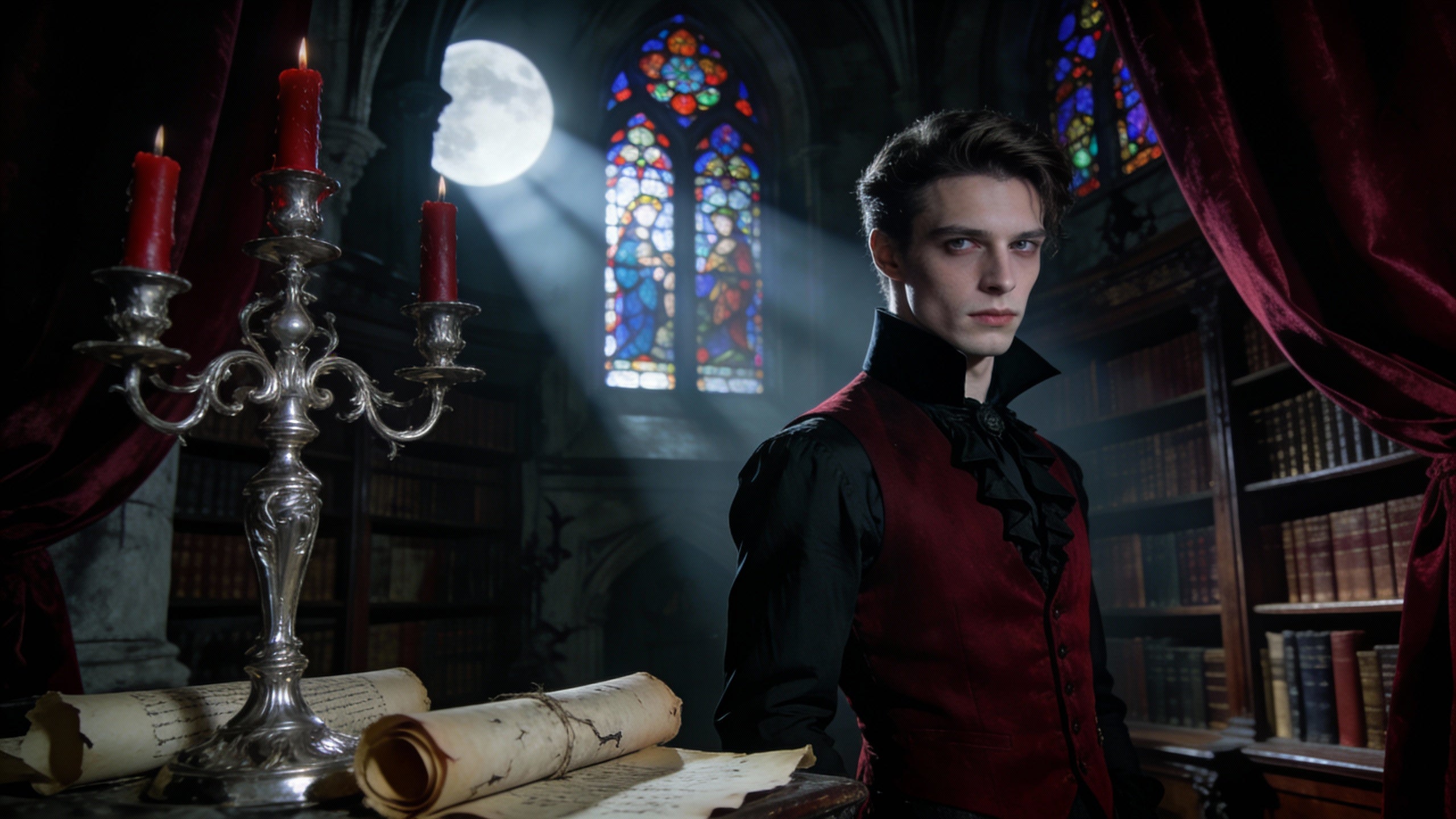
Understanding Romanian Perspectives on Customized Dracula Merchandise
When you hold a Dracula-themed keepsake in your hands, you are not just touching fabric, wood, or ceramic. You are holding a story that has traveled from a 19th‑century English novel, through Hollywood sound stages and comic book panels, to the cobbled streets of Transylvania. As an artful gifting specialist, the question I always return to is this: whose story are you really gifting, and how will it land with the people whose homeland is forever linked to this famous vampire?
To understand how to choose or design customized Dracula merchandise that feels meaningful rather than merely macabre, it helps to listen carefully to Romanian voices and to the scholars who study Dracula tourism, nation branding, and popular culture. Romania did not exactly ask to become “the vampire country,” yet the myth is now part of its global image and its gift shops. The way you curate a Dracula-themed present can either reinforce a stereotype or open a doorway to a richer, more nuanced Romania.
Dracula The Icon, Romania The Reluctant Host
Bram Stoker’s 1897 novel created the Dracula we recognize today: a charismatic, terrifying aristocratic vampire who has long since escaped the page. Literary scholars like C. J. Carter‑Stephenson describe Dracula as a character who has left literature altogether to become modern myth, endlessly reinterpreted in films, television, comics, merchandise, and even propaganda. A student writer at Trinity University has noted how the original Dracula was a pure horror figure, a monster meant to embody late Victorian fears about social change, rather than the brooding antiheroes of recent vampire romances.
All of that creative energy came largely from outside Romania. Stoker never visited Transylvania; he pieced together details from travel books and his own imagination. Over the next century, filmmakers and marketers layered more fantasy onto that foundation. By the time international tourists began arriving in serious numbers, they were already carrying a mental map of “Dracula’s Transylvania” built from screen versions and Halloween decorations rather than from Romanian history.
Researchers who look at tourism branding, such as Duncan Light in his work on Dracula and Romania’s image, and tourism strategists in articles like “Marketing the Count’s Way: How Dracula’s Myth Can Revive Romanian Tourism,” emphasize a simple but important point: Dracula is fundamentally an international brand that just happens to be set in Romania. This means foreign visitors often feel strong ownership over the story, even while Romanians themselves may have a more complicated, sometimes ambivalent relationship with it.
One way to visualize this is through the lens of online behavior. A recent cartographic study of Dracula tourism branding used TripAdvisor data and mapping tools to inventory vampire‑linked attractions across Romania. TripAdvisor hosts hundreds of millions of user reviews and hundreds of millions of monthly users. Even if only a tiny fraction of those travelers search for “Dracula” in a given year, that still represents hundreds of thousands of people whose first image of Romania is a fictional count. This global demand shapes what appears on T‑shirts, mugs, and handmade prints long before a local artisan gets to add their own touch.

What Research Reveals About Romanian Attitudes To Dracula
Romanian perspectives on Dracula merchandise and tourism are far from uniform. Academic and policy work paints a picture of negotiation rather than consensus.
A policy brief from the USC Center on Public Diplomacy describes a core nation‑branding dilemma. On one hand, the Dracula myth is a powerful place story that drives curiosity and visits, particularly toward Transylvania. On the other hand, Romanian authorities have often been reluctant to lean into a vampire image that feels disconnected from how they want the country to be seen: historic, creative, resilient, and modern, not gothic, backward, or blood‑soaked.
Studies summarized by tourism scholars Candrea and colleagues point out that destinations linked to strong place myths typically enjoy increased visibility and marketing opportunities. Dracula is, in this sense, a gift: a ready‑made narrative hook no other country can claim in quite the same way, because Stoker specifically located his count in Transylvania. Cosma and co‑authors argue that this gives Romania a unique competitive advantage. Yet the same authors also note that many Romanians hold mixed or negative feelings about being globally labeled “the land of Dracula,” especially when foreign media ignore everything else.
Ramona Harsan, writing about “Romania as an ongoing vampire story,” frames this as a kind of pop‑cultural détente. Rather than outright rejecting or fully embracing the Dracula stereotype, Romanian actors in tourism, culture, and education try to manage it, soften it, or weave it into broader stories about local heritage. A university program called “Dracula between Pop Culture and Tourism,” hosted by Transilvania University of Brașov, embodies this approach. It invites students and scholars to examine how Dracula imagery affects local communities and to imagine sustainable, community‑friendly ways to integrate the myth into tourism.
The cartographic study of Dracula attractions adds another layer. It shows a dense cluster of Dracula‑related sites across the Carpathian Mountains and Transylvanian towns, with sparser, weaker links in cities like Bucharest and Constanța. Historically, the socialist regime promoted Dracula experiences mainly for foreign tourists while celebrating Vlad the Impaler at home as a strict but heroic ruler. After 1989, plans for a large Dracula theme park were abandoned as authorities tried to distance the national brand from vampires and focus on a positive, modern image. Private entrepreneurs, tour guides, and small businesses, however, continued to run Dracula tours, themed accommodations, and souvenir shops, often without an overarching strategy.
In practice, this means that when you see a Dracula mug in a Brașov market or a hand‑drawn vampire poster in a Sibiu gallery, you are looking at a product of ongoing negotiation. There may be local pride in the creativity, but also fatigue at the cliché. There may be gratitude for the income, but irritation when visitors assume Romania equals Dracula and nothing more. Understanding this tension is the first step toward gifting Dracula in a way that feels thoughtful rather than tone‑deaf.
From Souvenir Rack To Story‑Rich Keepsake
If you walk through a tourist zone near Bran Castle or in the medieval center of Brașov, you will likely see two broad families of Dracula merchandise. There are mass‑produced items that could have been printed anywhere, and there are small‑batch or handmade pieces that clearly carry a local handprint.
Conceptual tourism articles like “Marketing the Count’s Way” argue that Romania’s Dracula offer is often fragmented and inconsistent. Some sites lean heavily into garish, horror‑movie imagery. Others focus on the historical Vlad Țepeș with almost no reference to the novel at all. Visitors can leave puzzled about what is history and what is fiction. That confusion carries over into the gift world. A glow‑in‑the‑dark vampire shot glass printed in a distant factory is very different, in intent and impact, from a hand‑inked linocut made by a Brașov artist who grew up hearing local legends.
The most meaningful customized Dracula gifts tend to do three things at once. They acknowledge the playful gothic appeal that draws travelers in. They connect that appeal to authentic Romanian places, materials, or stories. And they stay sensitive to the fact that this is a “light” form of dark tourism, to borrow the classification used in the cartographic branding study, not a license to trivialize suffering.
To help you feel the difference, consider the way an electronic publication titled “Tour Dracula Castle” is cataloged by a library platform. It is listed as a reference‑mode entry, with a moderate rating of a little under four stars out of five from more than four thousand user scores, and it sits alongside more scholarly titles such as Duncan Light’s “The Dracula Dilemma” and Simon Bacon’s work on transmedia vampires. Even in this purely digital context, Dracula material is treated in layers: fun and accessible on the surface, but tied to deeper cultural conversations underneath.
Your role as a gift‑giver or product designer is to choose the layers you want to highlight. Are you only sending a joke about vampires, or are you honoring Romania’s complex relationship with a world‑famous myth?

Designing Dracula Gifts With Romanian Sensibilities In Mind
Begin With Place, Not Just Fangs
Travel writing about Transylvania, including pieces that explicitly urge readers to go “beyond the legend of Dracula,” emphasizes that the region’s true beauty lies in its fortified churches, Saxon villages, medieval squares, and mountain landscapes. Researchers note how these elements of living heritage are increasingly recognized by organizations like UNESCO and supported through European Union cultural and infrastructure programs.
When you design or select a customized Dracula gift, you can quietly weave those real places into the fantasy. Imagine a hand‑printed poster where the silhouette of a bat is formed from the skyline of Sibiu’s old town, or a cotton scarf that layers maps of the Carpathian foothills beneath subtle vampire iconography. A carved wooden box could feature the peaked roofs of Brașov or the outline of Bran Castle, with a small interior engraving that nods to Stoker’s novel.
By starting from place, you signal respect for the host culture. You are saying, in effect, that Transylvania is not just a spooky backdrop, but a real region where people live, work, and create, and where the Dracula myth is only one thread among many.
Blend Myth With Authentic History
One of the recurring findings in analyses of Dracula tourism, from Duncan Light’s early work through more recent marketing studies, is that visitors frequently confuse the fictional Count with the historical Vlad Țepeș. Romanian authorities themselves have sometimes oscillated between emphasizing Vlad as a patriotic ruler and downplaying the more brutal parts of his legend. The result is a web of half‑overlapping stories.
Rather than trying to “solve” that confusion in a single object, a well‑designed customized piece can gently invite curiosity. For instance, a limited‑edition print could pair a stylized portrait of a vampire with a small caption explaining that Stoker’s Dracula is a fictional character inspired only loosely by medieval Wallachian history. A handcrafted leather notebook embossed with a bat motif might include an inside flap inscription mentioning both Bram Stoker’s 1897 novel and the real fortified churches of Transylvania that inspired modern visuals.
Tourism scholars who advocate for better integration of Dracula into Romanian branding often recommend combining “real places” with “imagined life.” For merchandise, this can mean pairing a gothic calligraphy quote from the novel with photographic details from a real Transylvanian village, or printing a map of Romania that marks both historical sites linked to Vlad and locations made famous by Dracula films. The goal is not to turn a keepsake into a textbook, but to whisper to the recipient that there is more to discover than just a set of fangs.
Let Romanians Lead The Story Wherever Possible
The most ethically grounded dark‑tourism scholarship stresses that local communities should have a say in how their stories are packaged and sold. The Brașov‑based event “Dracula between Pop Culture and Tourism” brings together students from multiple European universities to explore exactly this issue: how can the Dracula legend support, rather than distort, community development in southern Transylvania?
As a sentimental curator, I read that as a clear invitation. Whenever possible, commission your Dracula‑themed gifts from Romanian creators or from brands that are transparent about working with local artisans and guides. Ask makers what the myth means to them and which motifs feel right. Some may embrace humorous, cartoonish Dracula figures; others might prefer more subtle, atmospheric interpretations. Respecting those choices is part of the gift.
If you are customizing a batch of gifts for a small team or family gathering, consider including a short artist’s note with each item. A ceramicist from Cluj might write a sentence about growing up near the Carpathians and how they see Dracula as a bridge between local folklore and global pop culture. A woodcarver in Sighișoara might share that they intentionally blend vampire iconography with traditional floral patterns to signal that the myth has been “adopted” rather than imposed. Those notes become tiny acts of cultural diplomacy tucked into every box.

How Different Romanians Might React To Your Dracula Gift
Research on nation branding and hetero‑images, such as the RCIC’18 proceedings where Ramona Harsan’s article appears, reminds us that Romanians are not a monolith. Different groups live with the Dracula stereotype in different ways, and their reactions to a vampire‑themed present will vary.
Someone working in tourism in Bran or Brașov, for example, may be very pragmatic. A Dracula‑themed enamel pin, carefully designed and sold at a fair price, is part of the economic ecosystem that pays local bills. For this person, a well‑made customized item that keeps visitors interested while gently encouraging them to explore other aspects of the region may feel welcome and useful.
A historian, teacher, or cultural worker might be more ambivalent. Scholars like Light and Cosma have warned that overreliance on Dracula can overshadow Romania’s diverse heritage and reinforce an exotic, backward image. For this audience, a gift that incorporates context, craft, and nuance will land much better than a shallow joke. A carefully printed art book that juxtaposes scenes from Dracula films with photographs of real Transylvanian architecture, for instance, can open a thoughtful conversation rather than an eye‑roll.
Many ordinary Romanians, especially in big cities like Bucharest or Cluj‑Napoca, may feel mildly amused or indifferent. For them, Dracula is something foreigners get excited about. They might appreciate the humor in a minimalist Dracula T‑shirt if the design is stylish, but they might feel more touched by a gift that also acknowledges contemporary Romanian creativity, whether through a local designer’s signature, a modern illustration style, or a storyline that nods to tech start‑ups, music, or food culture rather than only to castles and coffins.
To capture these nuances, you can think in terms of how much the gift leans on stereotype versus how much it reveals. A hoodie plastered with dripping blood and “Welcome to Dracula Land” across the chest leans heavily on stereotype. A hand‑sewn tote that uses a limited color palette and a small, thoughtful bat motif paired with the name of a specific Transylvanian town feels far more like a bridge.
A Quick Look At Gift Styles And Their Emotional Temperature
You can imagine the spectrum this way.
Gift style |
What it says about Romania |
How it may feel to many Romanians |
Mass‑produced, generic Dracula caricature with no mention of real places or culture |
Romania is a fantasy horror set, interchangeable with any spooky backdrop |
Tiring, possibly irritating, especially if it is the only story being told |
Customized item that uses local place names or landmarks but relies on lurid horror imagery |
Romania is mostly scary and bloody, but at least it is somewhere specific |
Mixed feelings; useful for tourism income, but not something everyone would display at home |
Handcrafted piece that blends subtle Dracula motifs with traditional patterns or real landscapes |
Romania has a rich culture that includes, but is not defined by, Dracula |
More likely to be seen as respectful, creative, and even charming |
Story‑driven gift that includes a short explanation or artist note on myth versus reality |
Romania is a complex country telling its own story, with Dracula as one chapter |
Often appreciated as thoughtful and educational, especially by culturally curious recipients |
This table is not a rulebook, but it captures the direction in which many scholars and community programs encourage Dracula branding to move: from cliché toward layered, locally grounded storytelling.
Practical Guidance For Choosing Or Commissioning Customized Dracula Merchandise
When you are preparing to pick out a Dracula‑themed gift, especially one that will be personalized, it helps to pause for a moment and ask what you are really trying to express. Research across tourism branding and cultural studies offers some quiet signposts you can follow.
Think first about the recipient. A friend who devours gothic novels and has already read Bram Stoker’s original might delight in a more intense, atmospheric design. Someone whose connection to Romania is through family history may prefer a piece that foregrounds traditional motifs with only a whisper of the vampire. A colleague receiving a corporate thank‑you gift will often appreciate something more understated: perhaps a notebook with a debossed bat emblem and an interior page explaining the region’s literary heritage.
Next, consider how the gift positions Romania itself. Studies like “Dracula Tourism: The Impact on Romania’s Image” underline the tension between bottom‑up tourist demand for supernatural thrills and top‑down efforts to promote a broader cultural identity. Your purchase is part of that dialog. Whenever possible, choose items that also reference local crafts, landscapes, or languages. A ceramic mug thrown in a Transylvanian studio, glazed in colors inspired by regional textiles and bearing a small Dracula‑related motif, tells a very different story from a mug printed in a distant factory with no local connection beyond the word “Transylvania.”
You can also think about balance in your overall gifting. Imagine you are assembling a small bundle for someone who has always dreamed of visiting Romania. You might include one customized Dracula piece, such as a hand‑pulled screen print with their name tucked into a book‑like design, together with a non‑vampiric item: perhaps a small jar of Romanian honey, a postcard of fortified churches, or a piece of jewelry inspired by local folklore. This mix echoes recommendations from travel writers who advise pairing a symbolic Dracula stop, like Bran Castle, with deeper exploration of everyday Transylvanian life.
Ethical considerations matter as well. Scholars of dark tourism, drawing distinctions between playful “dark fun factories” and sites of real suffering, caution against glamorizing violence or tragedy. Dracula merchandise belongs on the lighter end of that scale, but it can still cross lines. Designs that revel in impalement imagery or associate Romania with cruelty alone may feel distasteful, particularly to people who know the region’s real history of hardship. Choosing designs that focus on atmosphere, mystery, and gothic romance keeps the tone closer to storybook than to spectacle.

A Short FAQ On Dracula Gifts And Romanian Sensitivities
Question: Is it disrespectful to give someone a Dracula‑themed gift from Romania?
Answer: Not inherently. Academic and tourism studies show that Dracula tourism is firmly established in Romania and that many local businesses rely on it. At the same time, authors like Cosma and Light point out that the myth can clash with the image Romanians want to project. A Dracula gift that is lazy or mocking may feel off. One that is clearly crafted with care, acknowledges real places, and does not reduce the country to a horror trope is far more likely to be received as playful and thoughtful.
Question: Should I avoid Dracula completely and buy only “authentic” folk art instead?
Answer: It does not have to be an either‑or choice. Conceptual tourism work, including “Marketing the Count’s Way” and the cartographic branding study, actually recommends integrating Dracula into broader heritage experiences rather than banishing him. A beautifully made item that gently layers the vampire myth over traditional patterns or landscapes can honor both the global story and local roots. Pairing a Dracula piece with non‑vampire gifts from Romania can also signal that you see the country as more than its most famous fictional resident.
Question: How much “Dracula” is too much in a customized design?
Answer: Think in terms of proportion and audience. For a dedicated horror fan, a bold, central Dracula motif may be perfect, especially if it references classic literature or cinema rather than pure gore. For a general audience or for Romanians themselves, many will prefer a subtler nod: a small symbol, a line of text, or a motif that rewards closer look. Research on tourist expectations suggests that when Dracula branding overwhelms everything else, visitors can feel misled or disappointed. The same is true in gift form. Let the vampire share the stage rather than hog the spotlight.
Closing Reflection
Dracula may have been imagined far from the Carpathians, but his shadow now falls across Romanian tourism, scholarship, and souvenir stalls in very real ways. When you choose or design a customized Dracula gift with sensitivity to local perspectives, you transform a familiar monster into a bridge between the stories you love and the people who live where those stories are staged. In that small act of care, a simple keepsake begins to feel less like a cliché and more like a conversation worth having.
References
- https://www.academia.edu/36805193/Romania_as_an_Ongoing_Vampire_Story_Count_Dracula_and_the_Pop_Cultural_D%C3%A9tente
- https://digitalcommons.denison.edu/cgi/viewcontent.cgi?article=1132&context=articulate
- https://research.library.kutztown.edu/cgi/viewcontent.cgi?article=1126&context=dracula-studies
- https://scholarscompass.vcu.edu/cgi/viewcontent.cgi?article=2344&context=etd
- https://eprints.bournemouth.ac.uk/38755/7/Final%20book%20chapter%20for%20Vampire%20Handbook.pdf
- https://web.cs.wpi.edu/~rek/Projects/Sibiu_Proposal_C21.pdf
- https://archive.cbts.edu/index.php/77sHh4/897195/Tour_Dracula_Castle.pdf
- https://safety.dev.colostate.edu/scholarship/HjPWPW/1GF059/OutOfTheTransylvaniaNight.pdf
- https://digitalcommons.cortland.edu/context/theses/article/1169/viewcontent/How_a_Book_Changed_a_Nation.pdf
- https://revistes.ub.edu/index.php/tourismheritage/article/download/47286/43109/140732
