

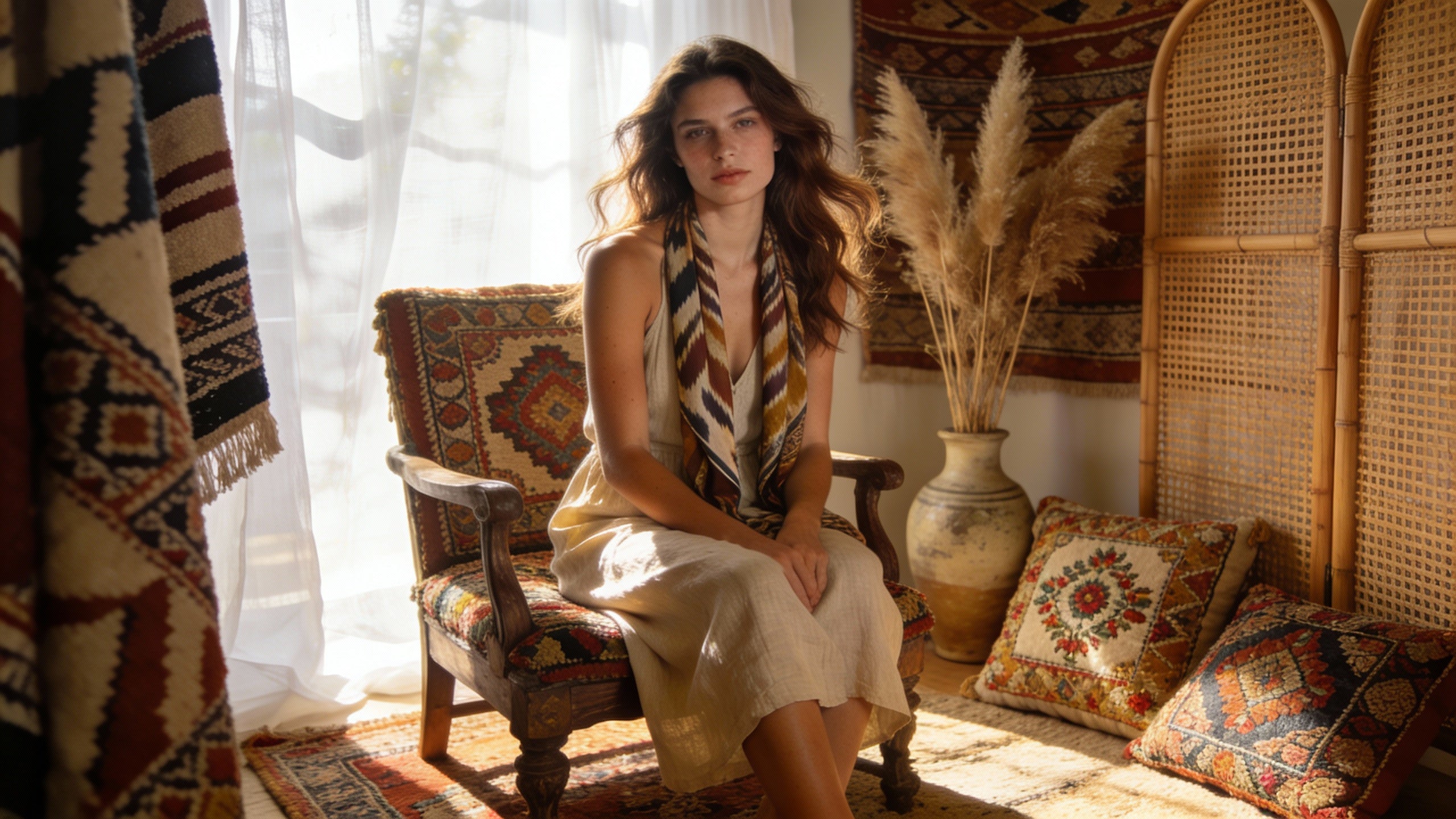
Understanding Uzbek Identity and Silk Road Customization Trends
Uzbekistan sits at the heart of the historic Silk Road, but for a gift lover, that history is not an abstract map line. It lives in the way a hand-embroidered suzani is draped at a family table, in the blurred edge of an ikat silk scarf, in the way a host presses hot tea into your hands and insists you take the best seat in the room. To understand modern Uzbek identity is to understand how these gestures and handcrafted objects still shape daily life, and how they are being customized for a new generation of givers and receivers.
In this guide, written from the lens of an artful gifting specialist and sentimental curator, we will explore how hospitality, faith, and craftsmanship define the Uzbek spirit, and how contemporary artisans are personalizing Silk Road artistry into meaningful, modern gifts. Along the way you will find practical advice on symbols, materials, pros and cons of customization, and how to support artisans respectfully whether you visit in person or shop from afar.
Silk Road Spirit: How Identity Feels in Everyday Life
Writers and cultural guides who work closely with Uzbekistan often describe the “Uzbek spirit” as a blend of deep-rooted hospitality, community, and craftsmanship shaped by centuries of Silk Road exchange. A travel article from Minzifa Travel paints a picture of guests being greeted like family, given the best seat and the first serving of food, and offered endless cups of tea as a gesture of respect and care. Hospitality, known as mehmondo‘stlik, is not just politeness; it is one of the moral pillars of identity.
Community is another. The traditional neighborhood structure, the mahalla, is where people check on one another, celebrate weddings, grieve losses, and quietly fundraise so that no neighbor faces hardship alone. Respect for elders, the weaving of faith into everyday decisions, and pride in living crafts create a social fabric that feels as carefully built as any piece of embroidery.
Historically, cities like Bukhara and Samarkand stood at the crossroads of global trade. UNESCO describes Bukhara as an oasis city over 2,000 years old that became a major intellectual and commercial hub of the Silk Roads, home to scholars and merchants from Persia, India, China, and lands west of the Caspian Sea. A historical study of the Silk Road from an Uzbek perspective emphasizes that cities like Bukhara and Samarkand were once as central to scholarly life as major Western universities are today, producing figures like al-Khwarizmi and Avicenna.
This matters for gifting because when you buy a ceramic bowl from Rishtan or an ikat robe from Margilan, you are not simply buying something “ethnic” or pretty. You are participating in an identity that has long equated prestige with knowledge, artistry, and the ability to welcome the stranger.
Imagine arriving as a guest in an Uzbek household. The table is laid with plov—fragrant rice with meat and carrots—alongside traditional non bread that is never placed upside down out of respect. Tea is poured, music may play softly in the background, and the walls around you might be lined with suzani textiles whose motifs bless the home and protect the family. In that moment, textiles, ceramics, food, music, and manners all collaborate to tell you, without a single speech, who Uzbeks believe they are.

Threads of Memory: Textiles at the Heart of Uzbek Identity
Among all Uzbek crafts, textiles are perhaps the most immediate and intimate. They touch the skin, line cradles and bridal beds, travel in suitcases, and now, increasingly, arrive on living room sofas in New York or Los Angeles. As Advantour explains, Uzbek fabrics are carriers of cultural memory and symbolism, with patterns that reflect nature, beliefs, and social structure.
Travel and textile writers consistently highlight a few key forms.
Ikat, locally known as abr or abro, is a resist-dye technique where yarns are tied and dyed before weaving, so that the pattern emerges directly on the loom with soft, cloud-like edges. BBC StoryWorks describes Fergana Valley ikat as bright, almost electric in its yellow, red, deep blue, and green motifs. The Malay-Indonesian word “ikat” means “to bind,” and that is exactly what happens: sections of yarn are tightly bound, dyed, loosened, and rewound so that even a tiny mistake shifts the pattern. Euronews notes that in Margilan, one dress-worth of silk can require yarn spun from around 2,000 silkworms that have fed on mulberry leaves.
Suzani, from the Persian word for “needle,” are large embroidered panels traditionally made for a bride’s dowry. Discoverstan and Silk Road-focused travel companies describe them as narrative textiles: suns, vines, flowers, and pomegranates stitched by women who are quietly recording their hopes, beliefs, and stories in thread. Each region has its own style; Bukhara is known for luxurious gold-embroidered work, while Fergana pieces often favor delicate floral details.
Then there is everyday wear, which is anything but plain. Central Asia Guide describes traditional men’s clothing centered around the chapan, a long, striped coat whose decorated edges and cuffs were once believed to protect the wearer from harm. Women’s dresses in khan-atlas silk shimmer with vivid colors, and their layered headgear and jewelry function both as adornment and as amulets.
If you are thinking about gifts, textiles are where Uzbek identity and customization align most naturally. A suzani can be chosen for its motifs that echo a couple’s story. An ikat robe might be tailored in a contemporary cut, but still keep pattern lines that have traveled the Silk Road for centuries.
From Mulberry Leaf to Ikat Robe
Understanding the journey of silk turns a beautiful scarf or robe into a small miracle.
Reports from Margilan’s Yodgorlik Silk Factory compiled by Advantour and Euronews show a process that remains remarkably hands-on. Silkworms are raised on mulberry leaves in family or collective farms. Their cocoons are gently boiled so that the fine filaments can be unwound, combined into stronger threads, and then washed and dried. At Yodgorlik, artisans still work on narrow wooden looms, with different masters responsible for each stage—preparing warp threads, tying the design, dyeing, and weaving.
Euronews notes that around 2,000 silkworm caterpillars, fed by leaves from nearly two mulberry trees, are needed to produce enough silk for a single dress. That is a powerful mental image for a gift-giver: your one special garment is the distilled care of thousands of tiny lives and weeks of human labor.
Traditional fabrics fall roughly into two families. Atlas is a glossy, all-silk ikat closely associated with weddings and celebrations; adras is a silk-cotton blend that is more durable and affordable, making silk accessible to everyday wardrobes and interiors. UNESCO has recognized Margilan’s atlas and adras production as an exemplary safeguarding practice, and museums like the Museum of Applied Arts in Tashkent give visitors a chance to see historic and contemporary pieces side by side.
From a customization standpoint, working with silk offers both beauty and responsibility.
Handwoven silk allows for small-batch, bespoke colorways and pattern scales, but it is labor-intensive and more expensive. Natural dyes—like pomegranate skin, indigo, saffron, and walnut—create nuanced hues and an eco-friendlier story but can be slightly less uniform than synthetic dyes. Artisans interviewed by Smithsonian Folklife and Azure Road emphasize that they often choose natural fibers and dyes not only for sustainability, but because garments simply feel better on the body.
When you commission or select a customized silk piece, you are balancing uniqueness, price, and the time an artisan can dedicate to your order.
Here is one way to think about it at a glance.
Choice |
Best when you want |
Things to keep in mind |
Handwoven, naturally dyed silk ikat |
A once-in-a-decade heirloom gift (wedding, milestone anniversary) |
Higher price, longer lead time, slight irregularities that prove it is human-made |
Silk-cotton adras from a workshop you can trace |
Everyday wearable luxury or home textiles that still hold cultural meaning |
Slightly more affordable, still labor-intensive; colors may vary by batch |
Machine-woven ikat-style print |
A casual, lower-budget nod to the Silk Road aesthetic |
Easier to standardize and ship, but little direct support for artisans and weaker storytelling value |
For a sentimental gift drawer, there is room for all three. The key is to reserve true handwoven silk for the occasions when you want to honor the full weight of the tradition.
Suzani, Embroidery, and the Storytelling Gift
Suzani textiles are some of the most evocative gifts you can give. Discoverstan and Silk Road Treasure Tours describe them as dowry cloths meant to bless a new household. Large circular medallions can represent suns or moons; vines stand for life’s continuity; pomegranates symbolize fertility and abundance; smaller floral motifs can correspond to regional stories or even personal memories.
Because a high-quality suzani can take months to stitch, artisans and wholesalers interviewed by Azure Road mention that prices for exceptional antique or museum-quality pieces can reach into the thousands of dollars in the United States. Many of these suzanis are stitched with silk thread on cotton or silk ground using chain stitch and couching techniques that create dense, almost sculptural surfaces.
For customized gifting, think in layers of scale and time.
A full-size suzani wall hanging, chosen for its story-rich motifs, can become the anchor of a couple’s living room and a future family heirloom. A pair of embroidered pillow covers or a table runner can carry similar symbolism in a more accessible format and price point. Some contemporary studios, like Human House in Tashkent documented by Smithsonian Folklife, even recreate historic suzani designs from high-resolution photographs, preserving the pattern in both digital archives and new textiles.
If you are commissioning a custom suzani-inspired gift, it helps to share the story you want the cloth to hold. For example, for new parents you might prioritize motifs associated with protection and growth—amulet-like shapes, strong vines, round sun medallions. For an entrepreneur, ram’s horns and seed forms from Andijan-style ceramic symbolism, which traditionally represent wealth and fertility of the land, translate beautifully into embroidered borders.
The pros are clear: custom embroidery can speak very personally and grows more precious with each passing year. The trade-offs are time and the need for a respectful design process. Rushing a piece or insisting on overly literal Western imagery can flatten the craft. Working patiently with an artisan, and allowing them room to interpret your story through their own visual language, keeps the soul intact.

Clay, Wood, and Metal: Everyday Objects that Carry Identity
While textiles often get the spotlight, Uzbek identity is equally present in ceramics, wood carving, metalwork, and even the tools used to make bread.
The Fergana Valley, according to regional cultural tourism networks and BBC StoryWorks, holds three main ceramics schools: Rishtan, Gurumsaroy, and Andijan. Each uses local red clay and a plant-ash glaze known as ishkor, but the colors and motifs differ.
Rishtan is famous for turquoise and blue glazes with fluid floral and geometric patterns. Potters there supplied tiles for royal palaces, and today visitors can see master studios where throwing, painting, and firing still happen in traditional kilns. Gurumsaroy artisans favor bright turquoise, deep blue, and dark brown designs on a white ground, with plant and nature-inspired motifs that symbolize prosperity and harmony. Andijan ceramics are known for their distinctive yellow and green palette and a symbolic vocabulary of lattice (protection), ram’s horns (wealth), arched shapes (faith), and central petals (fertility).
For a thoughtful gift, this symbolism is a treasure. A Rishtan bowl can become a shared “abundance bowl” on a kitchen island. An Andijan platter with ram’s horns might be a prosperity wish for someone starting a new business. Discoverstan notes that many authentic Uzbek ceramics bear a UBA mark, signaling that they are handmade and tied to recognized artisans.
Wood carving, especially in historic Khiva and Bukhara, turns architecture itself into a gift to the senses. Manzara Tourism describes ganch plaster carving and wooden columns in mosques and madrasas that echo the same geometric and floral grammar as textiles and ceramics. Everyday objects—carved chests, doors, and even the folding bookstands known as laukh—carry that artistry into domestic life.
There are charming smaller objects too. Travel and interior design writers highlight the chekich, carved wooden bread stamps used to decorate rounds of non before baking. Passed down across generations, these stamps hold family patterns as surely as a surname. As a gift, a well-made chekich connects directly to daily bread and shared meals, making it quietly perfect for housewarmings or Thanksgiving-style gatherings.
The pros of gifting ceramics and woodwork include durability, clear regional markers, and frequent opportunities for master classes that let you or your loved one experience even a small part of the making process. The main trade-offs are weight and fragility. Large ceramic platters are dramatic but hard to ship or carry; smaller bowls, tiles, or stamps often travel more happily and still carry rich meaning.

Modern Silk Road Customization Trends
If Uzbek identity is rooted in tradition, its expression today is anything but static. A recurring theme in sources like Smithsonian Folklife, Azure Road’s reporting on Ibu Movement journeys, Discoverstan, and BBC StoryWorks is that artisans are not simply preserving old forms; they are actively customizing them for contemporary life.
Fashion designers such as Lola Sayfi in Tashkent, founder of the brand Human Wear, reinterpret antique garments and patterns into modern silhouettes. Smithsonian Folklife reports how she collects historic clothing, studies old techniques, and then reimagines them in pieces meant to be worn now, often in natural fibers and with a strong emphasis on color. Her creative hub, Human House, functions as a gallery, workshop space, and performance venue for hundreds of artisans, making it easier for designers and buyers to find and combine different crafts in custom ways.
Textile designer Muhayo Alieva of Bibi Hanum, profiled in Azure Road’s discussion of modern Silk Road journeys, modernizes the traditional chipani robe and ikat patterns. Supported by grants from organizations like Ibu Movement, she runs a workshop model that allows women to work from home or part-time, creating flexible ways to participate in the craft economy. When you commission or purchase from such a studio, you are not only choosing a custom piece; you are investing in new work structures that support women’s economic independence.
International luxury houses have also turned to Uzbek ikat and silk. Discoverstan and BBC StoryWorks note collaborations where Fergana designs appeared in Gucci collections and global museum exhibitions. Euronews highlights that Margilan still hosts an annual silk festival, and that demand from fashion houses like Giorgio Armani and Oscar de la Renta has helped fuel a revival of high-quality Uzbek silk.
From a gifting and customization perspective, a few trends emerge.
Designers increasingly offer modular customization, such as letting you choose from a palette of traditional ikat patterns and then applying them to a modern coat, kimono-style jacket, or throw pillow. Workshops and cooperatives create limited-edition runs where colorways are tweaked for specific clients or seasons. Creative hubs like Human House curate multiple makers under one roof, making it easier to assemble coordinated “story sets”—for example, an ikat coat, a matching suzani clutch, and ceramic earrings that all share a pomegranate motif.
The opportunity is enormous: you can build highly personal gift ensembles that still remain faithful to Uzbek visual language. The risk is that in chasing trends, designs can be simplified, over-printed, or stripped of context until they become just another pattern.
Ethical Personalization: Keeping the Soul in Custom Gifts
Ethical customization means asking not only “What do I want?” but “How can this request honor the craft and the people behind it?” Guides from Discoverstan, Golden Eagle’s overview of applied arts, Manzara Tourism, and organizations like Ibu Movement converge on a few principles.
First, traceability matters. Whenever possible, buy directly from workshops, cooperatives, or galleries that can explain who made a piece, with what materials, and in roughly how much time. Markets like Tashkent’s Chorsu Bazaar, Samarkand’s Siab Bazaar, Bukhara’s trade domes, and artisan studios across the Fergana Valley give travelers a chance to meet makers face-to-face. If you are working from afar, look for retailers and nonprofits that publish artisan stories and emphasize “finding the hand” in each object, as Ibu Movement encourages.
Second, fair payment is part of the gift. Discoverstan and Travel and Leisure Asia both advise avoiding a bargaining style that forces artisans down to the last possible cent. In Uzbekistan, many craft families rely on these sales for their livelihood, and the cost of natural dyes, high-quality silk, or slow, precise labor is real. A handmade suzani that took months to complete will never be truly “cheap,” even if currency exchange rates work in your favor.
Third, consider cultural and legal boundaries. Voices on Central Asia and Manzara Tourism note concerns about historical garments and heritage pieces being exported without proper documentation or fair compensation. For most gift buyers, it is better to choose newly made items, possibly inspired by historic designs, rather than trying to obtain old robes or suzanis that might be subject to export restrictions.
Finally, honor the maker’s voice within your customization. Instead of dictating every detail, share the story or feeling you want the gift to carry and then ask the artisan how they might translate that into pattern, color, and form. This approach echoes the “master and apprentice” ethos described in Uzbek craft revival programs, where respect and learning flow both ways.

Practical Guide: Choosing and Commissioning Uzbek-Inspired Gifts
Now let us bring this down to your gift table.
Before anything else, begin with the recipient. Are you honoring a couple who love to host, a friend whose style is bold and fashion-forward, or someone who craves quiet, soulful objects? Uzbekistan’s crafts can meet all of these personalities, but in different forms.
For a host, consider a table-focused ensemble. A hand-painted ceramic platter from Rishtan or Gijduvan, combined with a suzani table runner and a wooden chekich bread stamp, creates a story of generosity and shared meals. When guests ask, you can share that the platter’s patterns draw on centuries-old floral and geometric designs, the suzani motifs echo protective blessings, and the bread stamp is a replica of tools used across Uzbek kitchens.
For the style devotee, an ikat garment is a powerful choice. Workshops documented by Advantour and Azure Road often offer contemporary cuts based on traditional chapans, jackets, or dresses. Choosing adras silk-cotton blends gives a soft drape that works in everyday wardrobes, while pure khan-atlas silk pieces feel more ceremonial. If you are commissioning a custom piece, work with the designer to balance pattern scale and color intensity so that the garment stands out but remains wearable in your recipient’s environment.
For someone who loves interiors, textile layering is your friend. Articles on interior design and Uzbek patterns point out how suzani can act as statement pieces in a living room or bedroom. Start with one focal textile—perhaps a suzani with strong medallions—then echo its colors in quieter supporting pieces, such as ikat-striped cushions or a small framed embroidery. This approach allows Uzbek motifs to harmonize with existing decor instead of overwhelming it.
Here is a simple way to match gifts with meanings.
Gift type |
Material focus |
Emotional meaning it can carry |
Suzani wall hanging or runner |
Silk or cotton, hand embroidery |
Blessing, protection, continuity of family or friendship |
Ikat robe, scarf, or jacket |
Silk or silk-cotton |
Courage, movement, connection to a wider world |
Rishtan or Andijan ceramic plate |
Locally sourced clay, ishkor glaze |
Abundance, prosperity, hospitality |
Chekich bread stamp |
Carved wood |
Daily gratitude, nourishment, the warmth of shared meals |
Gold-embroidered accessory |
Silk base, metallic thread |
Honor, celebration, recognition of achievement |
When ordering custom gifts or shopping in person, a few practical points can save headaches later.
Ask how an item was made. Is the textile handwoven or machine-woven, hand-embroidered or machine-stitched? Travel and Leisure Asia warns that some mass-produced pieces in bazaars may be imported and only mimic Uzbek styles. Handmade items tend to have small irregularities, richer textures, and clear stories from vendors who know the artisan personally.
Discuss care instructions. Natural-dyed silks may prefer gentle hand-washing or dry cleaning, while ceramics can vary in durability depending on firing temperature and glaze. Knowing whether a bowl is meant for display or for regular use with hot food will help your recipient cherish it properly.
Plan for payment and transport. Practical travel guidance for textile tours in Uzbekistan notes that while card acceptance is improving, small workshops and markets still prefer cash, especially US dollars in clean, new bills. ATMs can be unreliable, and there may be surcharges for card use, particularly on large purchases like carpets or vintage textiles. If you are buying larger or fragile items, factor in the cost and logistics of safe packing and shipping versus the romance of carrying them home in your own hands.
Above all, leave room for serendipity. Some of the most moving gifts begin with a planned category—you decide you want “a silk scarf”—and end with a completely unexpected piece whose pattern, story, and maker simply feel right.

FAQ
How can I tell whether a textile is truly handwoven or hand-embroidered?
Start with your senses. Handmade ikat fabrics and suzanis typically show slight variations in pattern, color, and stitch density. Travel writers and craft guides note that these irregularities are signs of human touch, not defects. When you run your fingers over a hand-embroidered suzani, you can often feel the raised texture of the stitches and see where threads begin and end on the back. Machine embroidery tends to look too perfect and flat, with patterns repeating exactly.
Ask the seller about the maker and the process. Authentic workshops and cooperatives in places like Margilan, Bukhara, and the Fergana Valley can usually explain which family or master created a piece, how long it took, and whether natural dyes were used. If answers stay vague or something seems too inexpensive for the labor involved, it may be a sign that the item is printed or imported rather than the result of local handwork.
Is authentic Uzbek silk worth the price premium as a gift?
If your goal is to give something that carries both beauty and a deep cultural story, the answer is often yes. Euronews highlights how many silkworms, mulberry leaves, and human hands go into even a single dress-worth of silk. UNESCO and Advantour stress that Uzbek silk and ikat weaving are not only aesthetically refined; they are part of intangible cultural heritage that sustains rural families and preserves traditional skills.
The premium you pay is not just for a material; it is for time, knowledge, and the survival of workshops that would otherwise be undercut by fast fashion. That said, silk-cotton blends like adras can offer a sweet spot of affordability and practicality, especially for wearables that need to withstand everyday life. For very casual gifts, or when budget is tight, consider a smaller authentic item such as a silk scarf or a set of handwoven coasters rather than a large but low-quality piece.
What if I cannot travel to Uzbekistan? Can I still commission meaningful, ethical pieces?
Yes. Organizations like Ibu Movement and creative hubs such as Human House have built models for connecting international buyers with Central Asian artisans, and many independent Uzbek designers now sell through curated online platforms. Look for retailers that focus on transparency, share artisan names or stories, and avoid generic stock photos.
When commissioning from afar, take advantage of digital communication to share your recipient’s story and preferences, but also be open to recommendations. Artisans know which motifs should or should not be combined, which colors age gracefully, and how to adapt traditional garments for different climates and styles. If you approach the process as a collaboration rather than a transaction, the resulting piece will feel less like “imported decor” and more like a shared creation.
Closing
When you choose an Uzbek-inspired gift, you are not simply decorating a room or updating a wardrobe. You are inviting the warmth of a Silk Road mahalla to sit at your table, letting threads of history and hospitality wrap gently around someone you love. In a world of quick clicks and forgettable objects, a thoughtfully chosen chapan, suzani, or ceramic bowl becomes what every artful giver secretly hopes for: a daily-use treasure that keeps telling its story long after the wrapping paper is gone.
References
- https://www.academia.edu/4910875/HISTORICAL_GENESIS_OF_THE_GREAT_SILK_ROAD_A_VIEW_FROM_UZBEKISTAN
- https://folklife.si.edu/magazine/women-artisans-central-asia-uzbekistan
- https://digitalcommons.unl.edu/cgi/viewcontent.cgi?article=1668&context=tsaconf
- https://voicesoncentralasia.org/a-brief-history-of-collecting-abr-clothing-from-uzbekistan/
- https://en.unesco.org/silkroad/content/bukhara
- https://alesouk.com/uzbek-textiles-are-taking-the-fashion-world-by-storm/?srsltid=AfmBOoruQ9xRfNCX5bWhImwMhaOjFyzriaa8kefDDbtCXlJevSm1Jmja
- https://www.azureroad.io/uzbekistan-textile-artisans-modern-silk-road/
- https://discoverstan.com/uzbekistan-artisan-crafts/
- https://followthethreadblog.com/dusty/
- https://www.manzaratourism.com/uzbekistan/revival-ancient-crafts
